Showing posts with label 2001. Show all posts

Wednesday, July 9, 2025

Tony Hawk's Pro Skater 2x


The first two entries in the Tony Hawk’s Pro Skater series have seen a fair share of remasters, including the amazing Tony Hawk’s Pro Skater 1 + 2 and the unimpressive Tony Hawk’s Pro Skater HD. What fewer people may know about is Tony Hawk’s Pro Skater 2x, an original Xbox launch title and port of Pro Skater 2 that also includes all of the levels from the original Pro Skater plus five new ones. While I didn’t initially pick this up when seeking out the main titles in the series, it was on my radar, and so decided to pick it up upon finding a copy in the wild so I could check out the new content. I’m glad I did play it, since it turned out to be superior to the original release in just about every way.

Wednesday, December 18, 2024

Sonic Adventure 2: Battle (GameCube)

Note: This review contains spoilers for Sonic Adventure 2.

Following the success of Sonic Adventure (SA1), development began on its sequel, Sonic Adventure 2 (SA2), but not without incident. Dreamcast sales struggled in spite of SA1’s success, so Sonic Team downsized and a portion of them moved to San Francisco, where they established Sonic Team USA. From there, development continued in earnest, with the goal of streamlining the design of SA1 and appealing to American sensibilities, including a greater emphasis on action, giving the six playable characters more equal playtime and capturing an “American” atmosphere for the setting. Although this gamble paid off, with strong critical reception and selling over 500,000 copies worldwide, Sega had already discontinued the Dreamcast months before SA2 launched, giving the game the distinct honor as the final Sonic game released on Sega hardware. Around this time, Sega had transitioned to third-party development and, a year later, released an updated GameCube port with additional multiplayer content, Sonic Adventure 2: Battle (SA2B), which became one of the bestselling GameCube games of all time. From then on, starting with 2003’s Sonic Heroes, Sonic the Hedgehog became a multiplatform series.

Thanks in part to SA2B, SA2 also maintains a reputation as perhaps the most important Sonic game ever made, not just for establishing a formula for the rest of the series moving forward, but also for its influence on the fandom. It not only introduced new characters that remain popular to this day, in particular Shadow the Hedgehog, but also has iconic moments that future games have referenced and a soundtrack that has proven memorable among those who have played it. SA2 would also not only get its own adaptation in the Sonic X anime alongside SA1, but influence the story of the upcoming Sonic the Hedgehog 3, which motivated me to finally play this game (through SA2B on GameCube due to cost and availability). Shadow the Hedgehog himself would get his own spinoff game, Shadow the Hedgehog, as well as his own Shadow Generations game alongside a remaster of Sonic Generations. I know that I myself wanted to play this game as a kid, but now that I finally have as an adult, I found it worth the effort, even if it’s showing some age now.

Tuesday, December 17, 2024

Millennium Actress

Note: This review contains spoilers for Millennium Actress.

Though his career was tragically cut short, Satoshi Kon’s work has left an impact on Japanese animation with his unique style of visual storytelling that blends the reality with the surreal. Of his four completed films, his second, Millennium Actress, is the only one I have seen, albeit through a sub-only DVD release from 2003. When I was younger and watched this for the first time, I wasn’t mature or well-versed enough in anime to fully appreciate it, though I decided to give it another chance years later after watching an airing of Kon’s only episodic anime work, Paranoia Agent, on Toonami. After doing so through that same sub-only DVD, and later an English Blu-ray, I was able to fully appreciate it and got very invested in the narrative.

Monday, October 23, 2023

Second Look - Devil May Cry


Note: This review contains spoilers for Devil May Cry

While the Devil May Cry series may be more popular than ever, the original game actually started off as more of a gamble, with its roots in the development of Resident Evil 4 (RE4). Fans of both franchises aren’t unfamiliar with the story, but it’s an interesting one nonetheless. The short version is that during development of RE4, the original version, directed by Hideki Kamiya, would have gone in a different direction from traditional Resident Evil (RE) titles by going for something more “stylish” and “cool”. The scenario for this version followed Tony Redgrave, an invincible man with superhuman abilities explained by biotechnology who would fight enemies within a gothic setting through more dynamic combat, while ditching the fixed camera angles and tank controls found within the previous RE games. Series producer Shinji Mikami found this iteration too far removed from RE to keep it within the same series, but instead suggested that Kamiya spin it off into its own IP. After some rewrites that affected the setting and scenario, including some influence from Dante Alighieri’s Divine Comedy, this game turned into Devil May Cry (DMC) and the rest is history.

I’m no stranger to the Devil May Cry series myself, as I’ve previously reviewed every game in the series. While I’m not really proud of how I’ve covered most of them, this rereview actually came up during my journey through the Resident Evil series, as I thought it would be more interesting to play it after RE4 with the context of its unique development. In the nearly eleven years since I last played it, I’d say that just like the original RE4, it’s showing its age and although it's rough in places, it still remains a great game in its own right.

Wednesday, November 17, 2021

Crazy Taxi (PS2)


The year 1999 saw the release of an arcade game from Sega known as Crazy Taxi, with its popularity and success leading to a port for the Sega Dreamcast in 2000. Not long after the Dreamcast was discontinued in 2001, ports of Crazy Taxi for PS2 and GameCube were released later that same year and has since been ported to other systems over the years. Of these ports, I happen to own the PS2 version that I found at a GameStop when they still sold PS2 games. I picked up this port since I had some experience with the arcade game, and only learned later that it retains all of the music and product placement found in both the original arcade version and the Dreamcast port. After deciding to give the game a closer look, I would agree with the idea that it encapsulates the time in which it was made, though found the port a little rough around the edges.

Saturday, March 27, 2021

Godzilla, Mothra and King Ghidorah: Giant Monsters All-Out Attack


Following the debut of Godzilla (aka Gojira) in 1954, the film proved popular enough to spawn arguably the best-known series of kaiju films that continues in some form to this day, even spawning a recent American-produced series of films known as the MonsterVerse that includes a crossover with King Kong. In the spirit of things, I decided to take another look at a Godzilla movie from 2001 I happened to own, dubbed Godzilla, Mothra and King Ghidorah: Giant Monsters All-Out Attack (JP: Gojira, Mosura, Kingu Gidora: Daikaijū Sōkōgeki) (GMK). What I watched in particular was the US DVD release from 2003, which featured the original uncut Japanese version with English subtitles. Though the 25th installment in the series, produced during the Millenium Era, the film bills itself as a direct follow-up to the 1954 original, which worked out for me continuity-wise since I’m not the most knowledgeable in the Godzilla mythos. The movie itself holds up pretty decently, though I had some minor issues with it.

Saturday, January 16, 2021

Jimmy Neutron: Boy Genius


Like other films we’ve reviewed, I have some personal history with Jimmy Neutron: Boy Genius. I have distinct memories of watching it in the theater when it originally came out, as well as the Nicktoon that spun off from it, The Adventures of Jimmy Neutron: Boy Genius. I actually liked Jimmy Neutron enough that years later, I would get the DVD of the film signed by Debi Derryberry, the voice of Jimmy Neutron, at San Diego Comic-Con. However, my memories of the actual film had faded away with time. When I learned that it was nearly 19 years old, however, I decided to give it another look with a completely fresh perspective. While it isn’t perfect, I did remember why I liked it so long ago.

Wednesday, October 28, 2020

Silent Hill 2: Restless Dreams (Xbox)


Silent Hill 2’s reputation for having one of the best video game narratives ever got me intrigued to play it, but for whatever reason I could never find an original PS2 copy. I did, however, happen upon an enhanced Xbox copy of the game and went for it, but still didn’t get around to it. With P.T. as my only frame of reference for Silent Hill, however, I felt more curious about Team Silent’s original take on the series and finally gave it a try. As it turns out, its narrative truly is one of the strongest I’ve ever seen in a video game, but it feels strange saying that the actual gameplay didn’t age very well.

Wednesday, September 23, 2020

Zone of the Enders (PS2)


As a fan of the Metal Gear series, I inevitably came across the title Zone of the Enders. While this 2001 mecha game did sell well enough to warrant a sequel, Zone of the Enders: The 2nd Runner, it’s best known for coming bundled with the demo for the highly anticipated Metal Gear Solid 2: Sons of Liberty in its initial release. As such, it developed a reputation as “the free game” that came with a full-priced demo, but still attracted a cult following of its own. I’ll admit that part of my attraction to this game was the fact that Hideo Kojima produced it, but a good amount of it was just to see what Zone of the Enders actually was. When I finally got my copy of the game, which, of course, came without the famous MGS2 demo disc, I played it at the first opportunity. I could definitely see the potential in the series, but this first game is definitely rough around the edges.

Wednesday, September 2, 2020

Tony Hawk's Pro Skater 3 (PS2)


Following the success of Tony Hawk’s Pro Skater 2, Activision launched the Activision O2 label for its extreme sports titles, which included Tony Hawk’s Pro Skater 3 among other stylistically-similar games. Around this time, the Pro Skater series and its ilk also began moving over to what were next-gen consoles at the time, including the PlayStation 2. After playing the first two Pro Skater games in anticipation of an upcoming remaster, I decided to continue exploring the series once again in order to keep the momentum going. Though not without flaws, Tony Hawk’s Pro Skater 3 features a number of improvements over the previous game and makes the transition well to the PS2 era.

Saturday, February 29, 2020

Recess: School's Out


One show I had watched in some form growing up was the Disney animated series Recess; though it originally aired as part of the One Saturday Morning block on ABC (before it was rebranded as ABC Kids), I remember watching it via reruns on Toon Disney (prior to its own rebranding as Disney XD), which was one of a few formative animation outlets for me as a child. For those who haven’t seen it, the show revolved around the misadventures of six fourth-graders (T.J., Vince, Gus, Spinelli, Gretchen and Mikey) as they make the most of the school year, with a heavy emphasis on what occurs on the playground during the recess period. During the show’s run, it had received a theatrically-released movie in 2001 known as Recess: School’s Out, however I never ended up actually watching it, and even then, I had only seen it in parts when it ran on TV. After having finally seen the movie in full, on what was coincidentally a few days off from the 19th anniversary of its US premiere no less, and spurred in part by the (as of this writing) recent passing of Jason Davis (Mikey), I found it to be a solid movie that holds up surprisingly well.

Saturday, August 24, 2019

Atlantis: The Lost Empire


When I first saw Atlantis: The Lost Empire in the theater as a kid in 2001, I remembered liking it, however I had missed the first few minutes due to arriving a little late; this small gap was filled in when I saw it again on DVD in 2002, which turned out to provide some additional context to the story. I had not thought about watching the movie again until a couple years ago, when I took a Quick Sketching class with Disney animator Ron Husband, who was the supervising animator for the character Dr. Joshua Sweet (Husband’s other Disney animation work also includes the goat Djali in The Hunchback of Notre Dame). It was also through that class that I learned legendary comic book artist and Hellboy creator Mike Mignola was involved in Atlantis’ production and his art was the inspiration for its art direction, which got me more curious about seeing it again. It wasn’t until recently that I actually got around to re-watching Atlantis, upon which I had begun to appreciate it more after a 17-year gap in viewings.

Wednesday, August 14, 2019

Spy Fox 3: "Operation Ozone"


Two years following the release of Spy Fox 2: “Some Assembly Required” in 1999, as well as a spin-off game called Spy Fox in: “Hold the Mustard” within the same year, Humongous Entertainment would release the inevitable third game, Spy Fox 3: “Operation Ozone”, in 2001. This would turn out to be the final game in the main Spy Fox series, with Humongous Entertainment itself going defunct in 2006. Upon getting to play Spy Fox 3, I found this state of affairs unfortunate, as it introduced a number of gameplay concepts that improved over Spy Fox 2 that contributed to a rather interesting experience.

Tuesday, October 9, 2018

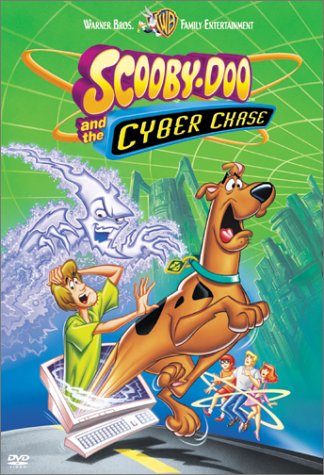
Scooby-Doo and the Cyber Chase


After we reviewed Scooby-Doo on Zombie Island, we’ve decided to review another direct-to-video Scooby-Doo movie, not only to celebrate its 17th anniversary, but also because we’ve actually owned a copy on DVD since its original release. That particular movie is Scooby-Doo and the Cyber Chase, a movie which represents many firsts and lasts for the Scooby-Doo franchise. I remember liking this movie as a kid, even watching it a few times, but looking back on it now as an adult, it’s more flawed than I had thought.

In a college computer lab run by Professor Kaufman (Tom Kane), two of his students, Eric Staufer (Bob Bergen) and Bill McLemore (Mikey Kelley), are working on gaming projects when a creature, the Phantom Virus (Gary Sturgis), is beamed into the real world from one of the games and tries to attack. The next day, the Mystery, Inc. gang visits Eric to try out a game he made based on their previous adventures, only to find out that the Phantom Virus is still roaming around the campus. The gang manages to find the Phantom Virus, only to be mysteriously beamed into Eric’s video game along with it. If they want to escape the game and figure out who created the virus, they’ll have to confront the Phantom Virus while beating all ten of the game’s levels.

At its core, Scooby-Doo and the Cyber Chase seems to take inspiration from Tron (1982), as both movies involve a human, or group in this case, being beamed into a digital world and having to fight their way back into the real world. Both also involve games in some form, though the games in Tron were based more on physical combat, which Flynn escapes before having to fight the Master Control Program, while Cyber Chase involves Mystery, Inc. overcoming various trials put forth by the various video game worlds they have to complete. While this observation has no bearing on the quality of Cyber Chase, it was one I made during the viewing for this review and I wanted to express it here.

The title screen of the fictional game created by Eric Staufer (Bob Bergen),
featuring Mystery, Inc. in their "classic" attire.

Apart from the Tron inspiration, Scooby-Doo and the Cyber Chase actually has some interesting ideas, mainly Mystery, Inc. having to fight a non-conventional digital monster that has the ability to control electronics. Additionally, the idea of traveling through a video game world apparently modeled after their previous adventures opens up some unique storytelling possibilities.

Unfortunately, Cyber Chase suffers from some rather lackluster execution. Whenever the Phantom Virus shows up during the game, his abilities aren’t fully taken advantage of and he’s more of a pushover until the final level of the game. On that note, his weakness, a super magnet, is also forgotten until it’s needed during the final level and the movie’s internal rules of the magnet’s strength aren’t completely clear. The Phantom Virus also seems to, for some reason, constantly leave clues as to who his creator is. When we do find out, the villain also does nothing to make themselves seem less guilty, which removes a lot of the tension from the finale. As for the game itself, the movie shows the contents of the first three levels, but then skips six of them in a glorified music video, only to more fully explore the tenth level.

By virtue of its prominence in the latter half, the tenth level of the in-universe game is one of the more interesting, apart from the somewhat realistic aesthetic of the city. It’s here that the more interesting ideas from the movie are more fully realized, including the appearance of some of Mystery, Inc.’s past villains and a more complete showcase of the Phantom Virus’ abilities. However, a majority of the encounter against past villains is shown through a music montage involving plenty of slapstick humor. Looking back on it, I feel the movie could have benefited from spreading out the appearances with previous villains across the game’s levels in order to give them proper screen time.

The Phantom Virus (Gary Sturgis) had potential as a villain, but fell short.

The post-credits sequence, which features Mystery, Inc. talking about their favorite parts of the movie, doesn’t really help with sorting out the internal logic of Cyber Chase, since this sequence not only implies that the characters had somehow filmed the movie, but also includes moments that weren’t even in the final product. I ran with it as a kid, but as an adult it felt more confusing.

I’ll also mention at this point that Cyber Chase contains quite a bit of slapstick humor by comparison with Zombie Island, which had more subtle jokes incorporated into the dialogue. In spite of this, there is a little bit of clever Scooby-Doo meta humor that addresses how Mystery, Inc. normally splits up while looking for a monster.

While not free of errors, the animation of Cyber Chase is smooth and holds up pretty well. The darker color palette introduced in Zombie Island has all but disappeared, leaving a noticeably brighter color palette against a world that’s still depicted pretty realistically. Considering the visual differences between Cyber Chase and later Scooby-Doo direct-to-video movies, Cyber Chase could be viewed as a transition between different interpretations of the franchise and different animation styles.

Story aside, the voice acting of Cyber Chase is well-done, with each of the actors lending the appropriate voices and energy to the characters. The soundtrack is also solid, though lighter in comparison with Zombie Island, which lends further credence to the idea that Cyber Chase is a stylistic transition. As is tradition, Cyber Chase features a version of the main Scooby-Doo theme, this time sung by three members of the B-52s, specifically Cindy Wilson, Kate Pierson, and Fred Schneider. This is accompanied by two original songs, “Hello Cyberdream,” written by Richard Lawrence Wolf and performed by David Nicoll and Wes Quave, and “Double Double Joint,” an instrumental written and performed by Richard Lawrence Wolf.

While both “Hello Cyberdream” and “Double Double Joint” are catchy, the former isn’t completely listenable out of context like “The Ghost is Here” and “It’s Terror Time Again” from Zombie Island. What doesn’t help is that the lyrics of “Hello Cyberdream” seem to more or less describe what’s happening onscreen during the montage in which it's used.

As with Zombie Island, Cyber Chase represents many firsts and lasts for Scooby-Doo. Cyber Chase is the final film in what’s considered the “dark era” of Scooby-Doo animation, which consists of the first four direct-to-video features and is marked by a generally darker color palette, more realistic tone and real monsters. As such, this is also the last film to have Mystery, Inc. in their attire from Zombie Island, returning to their “classic” attire from then on.

Scooby-Doo and the Cyber Chase features a brighter color palette
while keeping the more realistic appearances of Mystery, Inc.;
L-R: Scooby-Doo (Scott Innes), Shaggy (Scott Innes), Velma (B.J. Ward),
Daphne (Grey DeLisle) and Fred (Frank Welker).

On the voice acting side, Cyber Chase is the last time that Scott Innes voices both Scooby and Shaggy, though he has come back from time to time for commercials and games, the final time that B.J. Ward voices Velma and the first time that Grey DeLisle voices Daphne following the passing of Mary Kay Bergman.

Perhaps most notably, Cyber Chase is considered the last official Hanna-Barbera production, since afterwards, Warner Bros. would fully absorb the studio following the passing of William Hanna, to which Cyber Chase is dedicated. This film is also the first Scooby-Doo production animated entirely digitally, as opposed to animation cels, and is also the last movie to be animated by Japanese studio Mook DLE.

Appropriately enough, Cyber Chase is also the only Scooby-Doo film to receive a tie-in video game, which released on the PlayStation and Gameboy Advance the same year, 2001. Although we have yet to play either version, I’ll note that our DVD copy came with a handful of tips for playing through the game, although it’s disappointingly pretty basic information. On a much less important note, our DVD copy is also so old that it still has a 16-years expired coupon for Frigo Cheese Heads String Cheese.

One more minor note about Cyber Chase regards the Creeper (Scott Innes), a villain who appears during the final act and the only one actually from the original cartoon, Scooby-Doo, Where Are You! As with other Scooby-Doo media, this film continues the misconception that the Creeper has no dialogue apart from repeating his own name. However, in the original episode in which he appears, Jeepers, It’s the Creeper, he actually repeats the word “Paper” in reference to an incriminating photo of his identity.

The Creeper (Scott Innes) as he appears in Scooby-Doo and the Cyber Chase.

While Scooby-Doo and the Cyber Chase is very flawed on an objective level, especially with regard to its storytelling and internal logic, it’s still an enjoyable movie. I might personally attribute this to nostalgia, since I loved watching it as a kid for being one of the few pieces of media to represent video games in a more positive light, but I won’t really fault anyone for enjoying this film unironically. I would recommend this more to Scooby-Doo fans looking to relive their childhood or people who are going through a Scooby-Doo kick and are willing to watch something flawed, yet entertaining.

Friday, May 18, 2018

Shrek - It Ain't The Sharpest Tool In The Shed


Originally released in 2001, the original (Academy Award-winning) Shrek came out at a time when the Disney Renaissance had recently ended (and Pixar was not yet owned by them), shaking up the animation scene and putting DreamWorks Animation on the map. Shrek, based on a book by William Steig, has since become a multimedia franchise that set the tone for many of the studio’s follow-up films until the release of Kung Fu Panda in 2008, when the Shrek style of humor was falling out of favor. Though I first saw this movie when I was a kid, I had not seen it again for several years due to an overexposure to Shrek 2 and not getting around to my desire to rewatch the original until recently. While it has held up fairly decently in spite of its age, some aspects of the movie cause it to come off as rather dated.

While trying to enjoy his life of solitude in peace, Shrek’s (Mike Myers) swamp has become overrun by various fairy tale creatures who were thrown out of their homes by the ruler Lord Farquaad. Wanting to settle things with Lord Farquaad (John Lithgow), Shrek is accompanied by Donkey (Eddie Murphy), a talking donkey who knows the way to Duloc, Lord Farquaad’s residence. Shrek ends up winning a brief tournament and making a deal with Lord Farquaad to retrieve the princess Fiona (Cameron Diaz), whom Farquaad wants to marry, from a castle guarded by a dragon, in exchange for Shrek regaining the deed to his swamp.

The story of the original Shrek follows a more simplistic plotline, though this isn’t really a bad thing as it makes things easier to follow. I don’t know how much it differs from the original book, though the movie essentially takes the story beats of Disney movies at the time and places a different twist on them, with the title ogre character not exactly being your typical prince charming and yet still finding love in the end. While Shrek himself, like an onion, has a lot of layers to his character (a metaphor actually used in the movie), as does Princess Fiona, I can’t exactly say the same for Donkey or Lord Farquaad. While Donkey does have some emotional range aside from his wit, he comes off as more of an annoying chatterbox, leading characters (and possibly the viewer) to constantly want him to stay quiet for more than a few seconds. Farquaad doesn’t have much of a character either, being onscreen for less than ten minutes, though some aspects are evident through background design and visual gags and not entirely shoved in your face.

Shrek (Mike Myers; right) explains to Donkey (Eddie Murphy; left)
how ogres, like onions, have layers.

The animation hasn’t really stood the test of time, looking more or less unfinished by comparison to modern standards, however it is still watchable. This can be attributed to all-CG animation being in its infancy at the time (the last Pixar movie to come out was Toy Story 2), though it’s evident DreamWorks Animation put effort into making the animation look good for its time. That said, the liquid effects, especially mud, haven’t aged well at all.

As for the fairy-tale setting, while it is clear it’s meant to be a medieval aesthetic, there are some anachronisms such as modeling the façade of Duloc after a modern amusement park (including a parking lot, Farquaad mascot, turnstile and souvenir photo). That said, it otherwise sticks largely true to its art direction. This movie is also surprisingly minimal when it comes to pop culture references (ex. the magic mirror acts like a game show host and there’s a quip about celebrity marriages), though one that stands out is a reference to the (in)famous “bullet time” scene from The Matrix that has been parodied to hell and back. By comparison, its follow-up Shrek 2 contains even more pop culture jokes, which means to me that DreamWorks must’ve taken the wrong lesson from Shrek’s success when deciding to turn it into an ongoing franchise.

One of many anachronisms in the movie.

The voice acting is one aspect that has held up better, primarily amongst the four main characters. Mike Myers, prior to his career nosedive, gives a memorable performance as the titular Shrek character, his iconic Scottish accent allowing him to stand out from most of the other characters. Though his character can get grating, Eddie Murphy’s performance as Donkey makes sure that you won’t forget him anytime soon. Cameron Diaz and John Lithgow also do a good job with their respective roles of Princess Fiona and Lord Farquaar, Lithgow in particular being good enough to let you believe the character has more depth than he actually possesses. Though a bit character in this film, Conrad Vernon admittedly made the Gingerbread Man memorable, which may explain his (somewhat) expanded role in Shrek 2.

Unlike the Disney films it was making fun of, Shrek makes use of a number of licensed tracks, most notably the highly-memetic Smash Mouth song “All Star” during the opening credits and said band’s cover of The Monkees’ “I’m A Believer” towards the end. Rupert Holmes’ “Escape (The Piña Colada Song)” is also used briefly in one scene, though the song would later receive more association with Marvel Studios’ Guardians of the Galaxy. Donkey sings parts of a few other songs at different points in the movie, adding on to the aforementioned anachronistic pop culture references, though as with the other modern references they are brief and don’t really interrupt the narrative.

To say that Shrek made a splash on the internet is an understatement. In more recent years, the first film and its sequels made a resurgence in popularity via an ironic fandom that would become more unironic as time passed, including legitimate discussion on the franchise’s overall quality. Aside from various lines from the movies becoming memes on their own, a more tasteful meme for discussion is the previously-mentioned song “All Star” getting remixed and parodied into oblivion, with Shrek usually having some presence due to association. Chief among these is YouTuber Neil Cicierega creating the “Mouth” trilogy of remix albums that heavily feature “All Star” in some capacity, going so far as to include hidden references to the song that can only be found by digging into the sound files.

Rather notably, this movie takes some influence from some bad blood between DreamWorks co-founder Jeffrey Katzenberg and former Disney CEO Michael Eisner. Once Katzenberg was booted out of Disney and went on to co-found DreamWorks SKG (of which DreamWorks Animation is a subsidiary), he would later use the Shrek adaptation as an opportunity to get back at Eisner, to the point of having Lord Farquaad act as a caricature of him. The success of Shrek and its first sequel would also indirectly contribute to Eisner being eventually let go from Disney.

Lord Farquaad (John Lithgow) is a caricature of Michael Eisner.

After 17 years, the original Shrek holds up pretty well, though the animation quality (by modern standards), crass humor and dated references bog it down a bit. That said, the story and its message are still good and its characters are memorable, which makes the film watchable even today. If anything, this film has become better known for its impact on internet culture, though it’s worth a look for its historical significance in feature animation (it won the first Academy Award for Best Animated Feature after all) and makes for a generally enjoyable viewing. If you’re looking for a Disney parody that has better stood the test of time, I would instead suggest The Emperor’s New Groove, ironically made by Disney themselves and released just five months prior to Shrek.

Saturday, June 22, 2013

Stubs - Monsters, Inc.


Monsters, Inc. (2001) Starring the voices of: John Goodman, Billy Crystal, Mary Gibbs, Steve Buscemi, James Coburn, Jennifer Tilly, Frank Oz. Directed by Pete Docter. Produced by Darla K. Anderson. Screenplay by Andrew Stanton, Daniel Gerson. Original Story by Pete Docter, Jill Culton, Jeff Pidgeon and Ralph Eggleston.  Run Time: 92 minutes. U.S.  Color. Animated, Fantasy

While Pixar’s reputation has taken a hit lately, back in 2001, the computer-animation studio was riding high after their initial splash with Toy Story (1995), A Bug’s Life (1998) and Toy Story 2 (1999). Monsters, Inc. was the company’s fourth feature film. There seemed to be a definite pattern to Pixar’s success, besides a good story and top-flight computer animation, the first three films had featured talented actors: Tom Hanks, Tim Allen, Dave Foley, Kevin Spacey; music by Randy Newman and a supporting voice by John Ratzenberger (of Cheers fame).

Monsters, Inc. followed suit starring John Goodman from TV’s Rosanne and several Coen brothers films; and Billy Crystal, the stand-up comic, Saturday Night Live and Soap alum in the lead roles. And for the fourth straight film, songs by Newman, more than an hour’s worth. (Sadly none of the songs rise to the heights of “You’ve Got a Friend in Me” from Toy Story). Ratzenberger is also back in a small, but supporting role.

James P. Sullivan (Goodman), a big blue furry monster, is the top Scarer in Monstropolis, a city inhabited by monsters, which is powered by the screams of human children. The monsters enter through the child’s closet and capture the screams to turn the turbines. However, the times they are a-changing. Thanks to television and the internet, human children are much harder to scare and Henry J. Waternoose III (James Coburn) is determined to find a solution.

James P. "Sulley" Sullivan voiced by John Goodman
Sulley, as he’s known, lives with his assistant and bestest bud, Mike Wazowski (Crystal) a one-eyed green ball with arms and legs, whom, according to the story, have known each other since childhood (quick memory erase needed for the prequel). Sulley and Mike have a rivalry with Randall Boggs (Steve Buscemi), a chameleon-like monster, and Jeff Fungus (Frank Oz), a red-skinned three-eyed monster, for being the number one Scarer.

Mike Wazowski, voiced by Billy Crystal.
The one rule is never to bring back a child or even a hint of a child from the human world to the Scarefloor, as George Sanderson finds out when he accidentally brings back a sock. All hell breaks loose as agents from the CDA (Child Detection Agency) arrive and decontaminate him (shave off all his fur) and explode the offending sock, like it was a bomb.

Like any bureaucracy, there is paperwork, which Mike is supposed to file with Roz (Bob Peterson), a slug-like raspy-voiced monster who is the administrative clerk for the Scarefloor. But Mike would rather go on a date with Celia (Jennifer Tilley), the receptionist, who, like Mike has one-eye, but also has snakes for hair and tentacles for legs. Being a pal, Sulley offers to file the paperwork for him. And that’s when things start to go awry. Sulley goes on to the Scarefloor to retrieve the paperwork. There he discovers that a door has been left activated. (We learn later Randall left it there and Mike tells us it’s an attempt to cheat his way to the top).When Sulley investigates, he accidentally brings back a young girl, who he names Boo (Mary Gibbs), from the human side.

Roz, voiced by Bob Peterson.
Try as he might, Sulley can’t shake Boo. After several attempts to put her back, he ends up hiding her, when Randall returns to return the activated door to storage. Scared of facing George Sanderson’s fate, Sulley hides Boo in a bag and goes looking for Mike to help him. Mike is at Harryhausen’s (get it?) on a date with Celia for her birthday. While Sulley is trying to explain the situation to Mike, Boo escapes. Her being discovered results in the CDA being called to the scene. In the chaos that erupts, Sulley and Mike manage to escape and take Boo home, where they discover she is not toxic after all.

Mike on a date with Celia (Jennifer Tilley) at Harryhausen's.
The next day, they try to smuggle Boo into the factory and send her back, but Randall gets wind of the plan and tries to kidnap Boo, grabbing Mike by mistake. Randall reveals to Mike that he has built a Scream Extractor that will make the company’s current method of collection redundant. Sulley saves Mike from Randall’s experimentation, replacing Mike with Fungus.

Randall, voiced by Steve Buscemi.
Sulley reports Randall to Waternoose, but finds out that the two are really in cahoots. Waternoose exiles Sulley and Mike to the Himalayas. There they make friends with the Abominable Snowman (John Ratzenberger) who informs them there is a village nearby. Seizing on the opportunity to get back to the monster world and save Boo, Sulley runs off. Mike, who blames Sulley for their predicament, refuses to go.

Henry J. Waternoose III, voiced by James Coburn.
Sulley returns and rescues Boo from the Scream Extractor. Mike returns and apologizes to Sulley and together they fight and defeat Randall.

During the fight, Randall chases Sulley and Mike down the closet door conveyor belt through the warehouse where there are millions of doors. (Think the baggage claim scene in Toy Story 2 only on steroids.) Boo’s laughter activates the doors, and the chase goes back and forth between human and monster worlds. That is until Randall gets trapped in the human world in a southern trailer park, where Randall is mistaken for an alligator and beaten by hillbillies (LOL, backward hicks).

Boo’s door is sent by Waternoose and the CDA to the Scarefloor. Mike distracts the CDA agents while Sulley escapes with Boo and her door. But Waternoose isn’t done and follows. Waternoose is tricked into confessing his plan to kidnap children and gets busted by the CDA and their leader, who happens to be Roz.
Sulley and Mike say good-bye to Boo and return her home. Roz orders her door to be destroyed (shredded). Sulley ascends to the chairmanship of Monsters, Inc., replacing Waternoose. And he has a plan to end Monstropolis’ energy crisis.

Productivity is up when Sulley’s new plan is implemented. The monsters now enter the children’s room to entertain them. Laughter proves to be ten times more powerful than screams. Mike takes Sulley to show him Boo’s door, which he has been rebuilding piece by piece from the shredder. Sulley has kept the last piece as a keepsake and when he puts it back, the door activates. Sulley is then able to enter Boo’s room and the two are reunited.
Boo, voiced by Mary Gibbs.
The movie is funny, clever and ambitious. Chalk up another win for Pixar, which always seems to try and out do themselves. The film was a great success at the time and it still holds up a dozen years later. Just like the other Pixar films, Monster’s, Inc. was a financial success, further cementing Pixar’s then reputation as the little hit-making studio that never missed. Reality set in a few releases ago (can anyone say Cars 2?) and we now know that Pixar is mortal and not perfect, though they have yet to suffer an out and out flop.

If there is a problem with Monsters, Inc. it’s that there might actually be too much story for the intended audience. I know that I often complain about a lack of story in films, but in those cases it’s not really the quantity, but rather the quality. However, you can have too much. There is a balancing act that a company like Pixar has, trying to appeal to a family audience, which really means children, and trying to keep the adults entertained and engaged. This is not easy and sometimes Pixar films can get out of balance. In order to squeeze everything in, they resort to stereotypes as short cuts, like Sulley’s mentor, Waternoose, who is really evil. We’ve seen it before, so we accept it and move on. And the Himalayan bit seems tacked on, serving only as a way of getting John Ratzenberger into the film.

There are also some plot holes. To begin with, why are human children considered toxic? I don’t really think the film explains that very well. It’s just an accepted myth that every monster believes. Old man Waternoose obviously knows better as he is unafraid of Boo when he finally meets her, coupled with the fact he and Randall are planning to kidnap human children and bring them back to the monster world to extract their screams for power. But why the pretense in the first place, except to show us the storm-trooping CDA in action?

And for me, Mike’s return from the Himalayas happens much too quickly and easily. We’re told the Nepal village is a three day hike and we see Sulley flying down the hill on a homemade sled while Mike is back at the Abominable’s cave sulking. It is a perilous trip for Sulley, down the mountain in a snow storm, but Mike pops back at Monsters, Inc. within a few minutes of Sulley’s arrival; mad and throwing lemon snow cones, but no worse for wear. How did that happen? We all knew he would return, but his has no adventure or thought process attached to it. He obviously gets over his resentment very quickly; are we supposed to believe there is another sled ready to go?

I know you’re saying “bitch, bitch, bitch, it’s a kid’s movie”, but the holes/plot convenience are still there. Acceptance of bad storytelling starts when the audience is young and films like this are gateways to a lifetime of poorly written television, movies and web content to follow.

This is not to say that I don’t like Monsters, Inc. I had not seen the film in over a decade, so these comments are based on my most recent viewing, not when I watched it in the movie theater. The film holds up very well and even though Pixar is constantly striving to improve their renderings, this still looks very good and state-of-the-art.

The formula at Pixar was also changing. After their next film, Finding Nemo (2003), the films would start coming out one a year. Randy Newman would no longer be the only composer. Soon they would be eaten up by the larger Disney company and become a cog in that company’s larger production wheel. Some of the independent mindedness would start to think more corporate. Eventually, this would catch up to Pixar.

While I would definitely recommend Monsters, Inc., especially if you’ve never seen it, I don’t know yet if I can say the same for the prequel, Monsters University. I’m hoping the newer film can live up to the legacy of this one. But given Pixar’s recent offerings, I’m hopeful, but not overly optimistic.