Showing posts with label Toho. Show all posts

Saturday, April 18, 2026

Exit 8 (Film)


When the independent Japanese game The Exit 8 (JP: 8番出口) by Kotake Create was released in 2023, it made a big splash on the indie game landscape, inspiring numerous other games to put their own spin on its unique anomaly hunting mechanics. This popularity would eventually lead to it getting a Japanese live-action film adaptation, titled Exit 8 (JP: 8番出口), directed by Genki Kawamura, in 2025. The existence of the film adaptation intrigued me even as someone who hadn’t played the game but knew about it, more so when distributor Neon gave it a limited (sub-only) US theatrical run earlier this week. Not knowing when I’d have another chance to see it, I managed to secure tickets for the most convenient screening within my area and found it to be well worth the effort.

Sunday, October 20, 2024

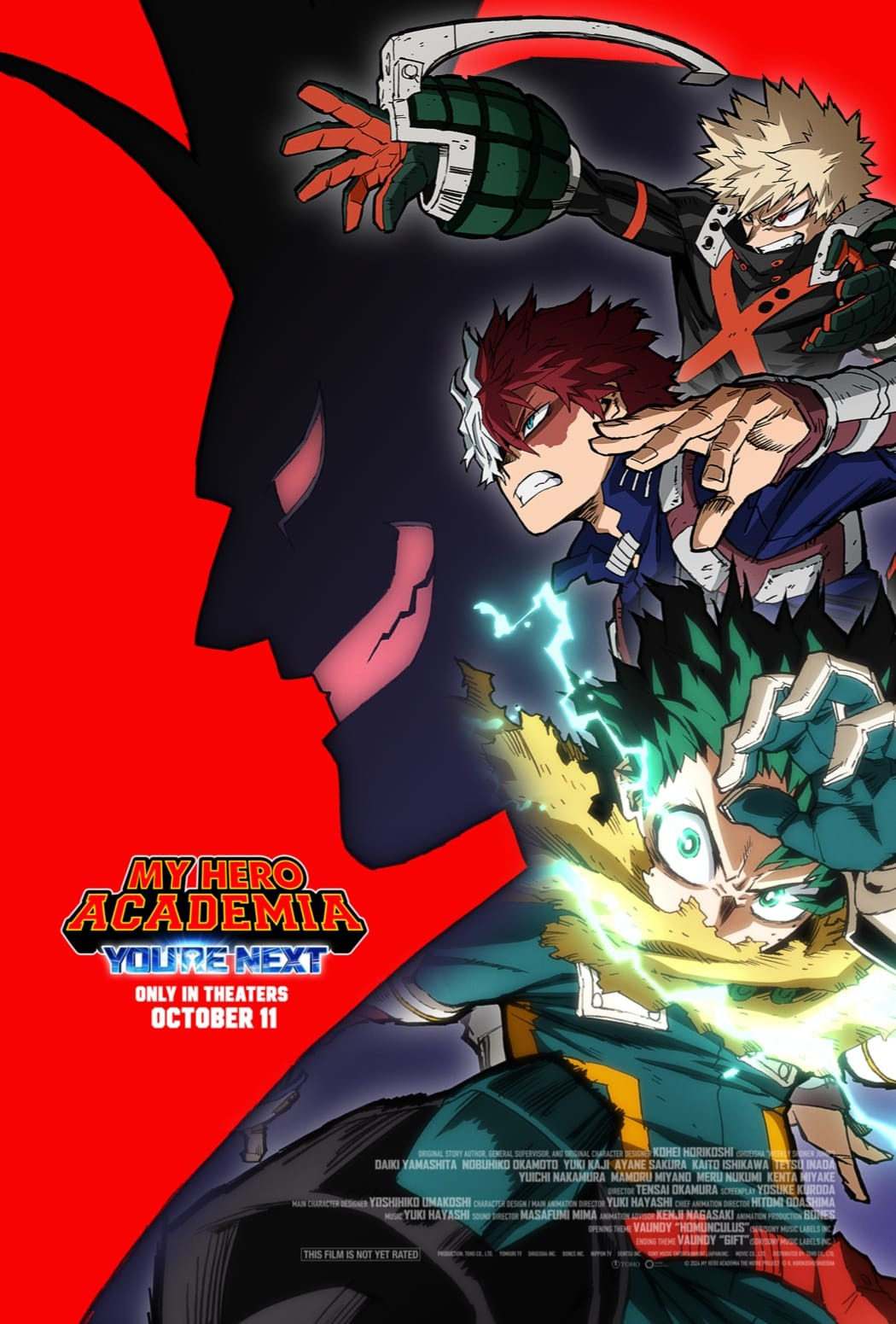
My Hero Academia: You're Next


Note: This review contains spoilers for My Hero Academia and My Hero Academia: World Heroes’ Mission.

Although the My Hero Academia manga has ended (arguably on an unsatisfying note), the anime isn’t yet finished, with a recently concluded seventh season and final upcoming eighth season to wrap everything up. In the meantime, animation studio Bones got to squeeze out one final film, You’re Next, which debuted during the seventh anime season. Since the film only just received an international theatrical release, we watched the dub and found that even though it’s not the best of the four films, it’s certainly an entertaining one and an improvement over World Heroes’ Mission.

Before I continue, I’d like to note that although the film is non-canon, it takes place between the Paranormal Liberation War and Final War arcs of the story, which translates to right between Season 6 and 7 for anime-only viewers.

Saturday, August 3, 2024

My Hero Academia: World Heroes' Mission


Note: This review contains spoilers for My Hero Academia.

After ten long years, the ever-popular My Hero Academia has reached its conclusion. This incredible milestone reminded us that although we had kept up with both the manga and anime, we still hadn’t seen the series’ third film from 2021, World Heroes’ Mission, despite owning the Blu-ray for quite a while. In honor of the manga’s finale, we thought we’d finally go back and take a look at this film and see what we had missed. Unfortunately, while it does continue the trend of incredible animation, certain developments make the story less satisfying than the previous film, Heroes Rising.

Wednesday, April 24, 2024

Spy x Family Code: White


If you’ve paid attention to the anime scene in any capacity with the last few years, it’s likely you’ve heard of Tatsuya Endo’s Spy x Family, a highly successful manga and anime series about a spy who forms a false family for the sake of an important long-term mission without realizing that his adopted daughter is a telepath and that the woman he marries is an assassin. This success paved the way for not only a second season of the anime, but also a feature film, Code: White, which recently received a wide theatrical release in the US. As fans of Spy x Family, we leapt at the opportunity for more original content and saw a dubbed screening at the earliest opportunity. Needless to say, we had a blast, even with some small criticisms.

Saturday, January 27, 2024

The Boy and the Heron

I don’t think I need to explain who Hayao Miyazaki or Studio Ghibli are. For decades, Miyazaki has built up a reputation as one of Japan’s greatest anime film directors, starting all the way back in 1979 with The Castle of Cagliostro and continuing through Studio Ghibli with such classics as My Neighbor Totoro, Kiki’s Delivery Service and the Academy Award-winning Spirited Away (also the highest-grossing Japanese film ever made until Mugen Train), to name a few. Following The Wind Rises in 2013, Miyazaki would announce his retirement from producing feature films due to his age, though this would be short-lived, as only three years later, after creating the short Boro the Caterpillar, he started work on his twelfth film, The Boy and the Heron (JP: Kimitachi wa Dō Ikiru ka, lit. How Do You Live?). Notably, the film took seven years to produce and didn’t have a robust marketing campaign ahead of its Japanese premiere, opting instead for a single poster image.

The poster in question.

While I wouldn’t consider myself a hardcore Miyazaki fan, as I haven’t seen all of his films yet, I have seen enough that I understand his talent as a director and why his works are so beloved to this day. In fact, what grabbed our attention with seeing The Boy and the Heron while we could still catch it in a theater was that it received animation awards despite competing against the boundary-pushing Spider-Man: Across the Spider-Verse. Unfortunately, as much as I wanted to like The Boy and the Heron, considering the director’s track record, I found it lacking where it mattered most: the story.

Saturday, January 7, 2023

Weathering With You


Note: This review contains spoilers for Weathering With You.

Back in 2016, Makoto Shinkai’s Your Name. put him on the map, with some critics hailing him as the next Hayao Miyazaki (whether or not this comparison is justified is up to you). At the time I had seen it, during a 2017 theatrical screening, I found myself not only loving it, but also curious in Shinkai’s other work, even if it would take me a while to do so. This would include his follow-up film, Weathering With You, which came and went in 2019 without quite the same level of fanfare. Still, my interest in seeing it didn’t go away and, three years later, I finally got my chance through the Blu-ray release, which, while enjoyable, ended up feeling like an odd step down from its predecessor.

Saturday, March 26, 2022

The Cat Returns

In 1995, Studio Ghibli released a film in Japan known as Whisper of the Heart (JP: Mimi o Sumaseba or If You Listen Closely), based on a similarly-named manga by Aoi Hiiragi, and later received an English dub in 2006. This movie features a minor character known as the Baron, who would prove popular enough that a spin-off film was released in Japan in 2002, titled The Cat Returns (JP: Neko no Ongaeshi or The Cat’s Repayment), based on the Aoi Hiiragi manga Baron: The Cat Returns (JP: Baron: Neko no Danshaku), and was dubbed in 2005. While the manga has been translated to English and is apparently still available for purchase online, I did not know about or read the manga before watching The Cat Returns, nor have I seen Whisper of the Heart. That said, after watching The Cat Returns in English through the Blu-ray release from GKIDS, I found myself pleasantly surprised by the film’s overall quality.

Saturday, January 22, 2022

Lupin III: The Castle of Cagliostro


Whether or not you’re aware of the anime/manga franchise Lupin III, there’s no understating the influence of Arsène Lupin III’s second feature-length adventure, The Castle of Cagliostro, best known as the directorial debut of the legendary Hayao Miyazaki. Scenes are often lifted from it or referenced in some fashion in both animated and live-action works and it’s one of the most, if not the most, well-known Lupin III adventures, despite its initial poor box office in Japan. At this point, over forty years after its initial release, Miyazaki’s involvement makes The Castle of Cagliostro a must-see for animation fans and students, though those who have seen other Lupin III works beforehand would have a different perspective. Indeed, our initial viewing of the film, through the Discotek Blu-ray set, came after we saw a few Lupin III anime and Lupin III: The First, which we enjoyed. As such, while we loved The Castle of Cagliostro, it noticeably feels different from what one would expect from Lupin III.

Wednesday, July 14, 2021

JoJo's Bizarre Adventure: Diamond is Unbreakable - Chapter I


Note: This review contains massive spoilers for JoJo’s Bizarre Adventure: Diamond is Unbreakable.

JoJo’s Bizarre Adventure, begun by mangaka Hirohiko Araki in 1987, tells the multi-generational story of the Joestar family and their continuing battle against the forces of evil. The series is split into currently eight Parts, each focusing on a different Joestar, with Part 3 introducing the concept of Stands, which are psychic powers reflecting the personality of the user. Part 4, Diamond is Unbreakable (1992-1995), tells the story of Josuke Higashikata and his misadventures in the fictional town of Morioh, solving mysteries about his hometown along the way.

I will admit that, while I had heard of JoJo’s Bizarre Adventure and was aware of its limited US import in my high school years, it didn’t really grab my attention until the series received a proper anime adaptation in 2012, and since then it has become one of my favorite anime/manga series in spite of whatever flaws it has. My curiosity was piqued when, at the height of the increased popularity of Diamond is Unbreakable following its anime adaptation, a live-action film based on the series, JoJo’s Bizarre Adventure: Diamond is Unbreakable – Chapter I (JP: JoJo no Kimyō na Bōken Daiyamondo wa Kudakenai Dai-Isshō), was announced in 2016 to be directed by prolific director Takashi Miike, though I held off on actually trying to watch the film until it had a proper release stateside. The opportunity finally presented itself when Viz Media brought it over in subtitled form on Blu-ray in 2020, though I did not end up actually watching it until some time later. As someone who has read the official English translation of Diamond is Unbreakable from Viz and watched the anime twice, once in subtitled form on Crunchyroll and once in English dubbed form through a Toonami broadcast, I thought it was a good movie overall, though it could have been improved in places.

Thursday, April 1, 2021

King Kong vs. Godzilla (1962) (American Cut)


A bit of an oddball in the Godzilla and King Kong franchises, the 1962 film King Kong vs. Godzilla was the third outing for both series and the first crossover between the two, with two different cuts of the film produced for Japanese and American audiences. While this would be a weird one-off crossover between two legendary monsters, it wouldn’t be until Legendary Pictures' MonsterVerse that the two titans would have their rematch in the 2021 film Godzilla vs. Kong. In preparation for this, I decided to see how their first battle played out for comparison, opting for a Blu-ray release of the American cut from 1963. While this cut is interesting to see, it proved to be enjoyable in more of a “so bad it’s good” sort of way.

Saturday, March 27, 2021

Godzilla, Mothra and King Ghidorah: Giant Monsters All-Out Attack


Following the debut of Godzilla (aka Gojira) in 1954, the film proved popular enough to spawn arguably the best-known series of kaiju films that continues in some form to this day, even spawning a recent American-produced series of films known as the MonsterVerse that includes a crossover with King Kong. In the spirit of things, I decided to take another look at a Godzilla movie from 2001 I happened to own, dubbed Godzilla, Mothra and King Ghidorah: Giant Monsters All-Out Attack (JP: Gojira, Mosura, Kingu Gidora: Daikaijū Sōkōgeki) (GMK). What I watched in particular was the US DVD release from 2003, which featured the original uncut Japanese version with English subtitles. Though the 25th installment in the series, produced during the Millenium Era, the film bills itself as a direct follow-up to the 1954 original, which worked out for me continuity-wise since I’m not the most knowledgeable in the Godzilla mythos. The movie itself holds up pretty decently, though I had some minor issues with it.

Sunday, January 17, 2021

Lupin III: The First


Since its initial publication in 1967, the Lupin III series created by the late mangaka Monkey Punch, which chronicles the misadventures of a gentleman thief descended from Arsène Lupin, has entertained audiences around the world through numerous iterations that continue to be produced to this day. While I was aware of the character for some time, I didn’t get my first true exposure to the series until Lupin III Part IV: The Italian Adventure, also known as Blue Jacket due to Lupin’s jacket color in said series, first aired on [adult swim]’s Toonami block, and from there I was instantly hooked.

I was then curious when I first heard about the series’ first computer animated feature, Lupin III: The First, through a Japanese trailer, finding the animation faithful to the series and being curious to see whether it would ever be dubbed into English. Later, I was even more curious about seeing this movie when an English version was eventually announced, especially when the first English trailer confirmed the return of the Blue Jacket voice cast, though I opted to wait until it was out on Blu-ray to see it due to a limited US theatrical screening taking place in the midst of the COVID-19 pandemic. Having finally gotten the chance to view it safely, I would say the wait was well worth it.

Saturday, January 2, 2021

My Hero Academia: Heroes Rising


While modern juggernaut My Hero Academia doesn’t show any signs of stopping anytime soon, the current hiatus with the anime, at the time of this writing, necessitated catching up with the story through the manga. This turned out to be a good choice, since the series’ second feature film, Heroes Rising, takes place within the manga’s timeline. Although I missed the limited US theatrical screening, I did obtain the film on Blu-ray and watched it as soon as I could. Overall, it’s an improvement over the previous film, Two Heroes, but a specific element of the finale left me scratching my head.

Saturday, August 3, 2019

My Hero Academia: Two Heroes


Since it began serialization in Weekly Shonen Jump in 2014, My Hero Academia, a manga about a boy named Izuku Midoriya born Quirkless (without superpowers) in a world where just about everyone has a Quirk, has been highly successful, spawning a popular anime series, three spinoff manga, two video games and a feature film, Two Heroes, with a second film, Heroes Rising, due later this year (the popularity in the US was also such that it almost shut down San Diego Comic-Con 2018). Two Heroes, the subject of this review, saw theatrical runs in both Japan and the US in 2018 and released to positive reviews from critics and grossed nearly $28 million dollars worldwide. While I hadn’t seen the movie during the limited US theatrical run, I did buy it on Blu-ray, but didn’t watch it until right after I had seen Episode 58 of the anime, which served as a lead-in, through a Toonami broadcast. Now that I have seen it, I found it a worthy addition to the My Hero Academia universe, despite a lack of accessibility.

Sunday, April 9, 2017

Your Name.


After its original release in Japan, Your Name., written and directed by Makoto Shinkai, proved itself a cultural phenomenon, breaking Japanese box office records and becoming the highest grossing anime film of all time. It released to critical and audience acclaim in its home country, which led to a US release by Funimation, both in English dubbed and subtitled formats, starting with a limited theatrical run. The success of the film intrigued me to where I watched it in the nearest location screening the dubbed version (I’m aware some locations only screened the subbed version). After my viewing, I can honestly say that the acclaim for Your Name. is well-deserved.

Mitsuha Miyamizu (Stephanie Sheh), a girl who lives in the country, and Taki Tachibana (Michael Sinterniklaas), a boy who lives in Tokyo, begin to have strange dreams about each other’s lives. These dreams are frequent enough that they eventually realize they are repeatedly swapping bodies, and lives, with each other. As the body swapping continues, they begin to leave more of an impact on each other’s lives while the true nature of their situation slowly comes together.

Though the story has elements seen in other films, including The Lake House and Freaky Friday, Your Name. manages to use these elements in an effective way. As the plot gradually ramps up, it’s easy to root for the main characters and want them to find each other and finally get together. The story manages to combine humor, drama and romance in an emotionally engaging and poignant combination, while also presenting its supernatural elements within a world that is itself presented as surprisingly realistic.

The realism of the film’s world is captured in simply phenomenal animation. Every single detail, down to the body language of the characters and appearance of anything from buildings to smoke, feels about as real as you can possibly get with traditional animation. This helps draw the viewer into the world and helps certain actions come off more realistically. What also helps is the expert use of lighting and a bright, life-like color palette.

In addition, the English voice acting is excellent in carrying the dialogue and allowing the viewer to become emotionally invested in the characters. Notably, the movie features a rather minimal use of music, as well as the occasional moment of complete silence, which increases the impact when music is an element in a scene and allows the original music by Radwimps to stand out, such as during a montage or the animated opening sequence.

Put simply, Your Name. is a must-see. While some plot elements have been seen in other movies, this film manages to combine them in an emotionally engaging way. The realistic setting is also an effective backdrop for the more supernatural elements, aided by some of the best traditional animation to date. With an anime film like this, it’s a shame that not a whole lot of people seem to be interested (if my screening was anything to go by). If you have the chance to see it during its theatrical run, do it as soon as you can. If you can’t, watch it on the inevitable home video release.

Sunday, October 16, 2016

Yo-kai Watch: The Movie


In 2013, Japanese developer Level-5 released Yo-kai Watch, the first in a series of video games where players search for and befriend Yo-kai, mysterious spirits who are responsible for all of life’s problems, big or small. After obtaining a Yo-kai’s medal, players can use them in battle against other Yo-kai, keeping each Yo-kai’s unique ability and Soultimate in mind when forming their team. The original game proved popular enough in Japan to warrant an anime adaptation starting in 2014 and a sequel game later that year, Yo-kai Watch 2, after which its popularity skyrocketed and became a cultural phenomenon, spawning a number of spin-off games and further tie-in merchandise, as well a third game, Yo-kai Watch 3, in 2016. It is also notable that, in Japan, the second Yo-kai Watch movie outperformed Star Wars: The Force Awakens in opening weekend ticket sales.

While the success of Yo-kai Watch in the US has been nowhere near as big as in Japan, it does seem to at least be gaining some steam, enough to warrant the release of Yo-kai Watch 2: Bony Spirits and Yo-kai Watch 2: Fleshy Souls. Thanks to Fathom Events, the US also received an English dub of the first movie as Yo-kai Watch: The Movie, which I decided to go see as a recent convert to the series.

Attendees also got an exclusive Hovernyan medal.

The Yo-kai Watch allows Nate Adams (Johnny Yong Bosch), to see the Yo-kai inhabiting the world around him. One day, however, he mysteriously has no memory of the watch until he sees the Yo-kai Meganyan (Johnny Yong Bosch), causing him to regain his memory and summon Whisper (Joey D’Auria) and Jibanyan (Alicyn Packard) to his side. After defeating a wave of Wicked Yo-kai, the trio go to Harrisville and meet Hovernyan (Johnny Yong Bosch), who takes them back in time by 60 years. There, they must convince Nate’s grandfather, Nathaniel Adams (Johnny Yong Bosch) to finish creating the Yo-kai Watch so they can stop the evil Yo-kai Dame Dedtime (Alicyn Packard) from keeping the human and Yo-kai worlds forever separate.
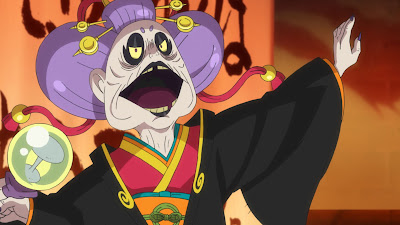
Dame Dedtime (Alicyn Packard) wants a world where humans never interacted with Yo-kai.

First off, the animation is very good. The bright color palette fits with the tone of the franchise and the characters move in a very fluid way, which aids some of the slapstick humor. Both the human and Yo-kai characters feel more polished in their designs and the backgrounds are impressively well-drawn and detailed. Certain scenes also show off great lighting effects, including light coming through the trees, the glow of a city at night or the heat of a factory furnace. The quality of the animation also shows through in the major fight scene in the third act, featuring moves from multiple Yo-kai and some fairly decent CG.

The story, which seems to be based on Yo-kai Watch 2 from my understanding, may not be the best to ever grace a movie screen, but it’s not overly complicated and is actually pretty easy to follow along, even for viewers who aren’t very familiar with the series. What helps is that the first few seconds succinctly re-introduce the concept of the Yo-kai Watch and offer some background to the series, all without slowing down the pace. Nate and Nathaniel both go through some good character development in their interactions with each other, plus Nathaniel and Dame Dedtime have rather interesting backstories which help them feel more three-dimensional. It’s also fairly easy for viewers to understand who the previously existing characters are, as they are re-introduced to Nate and the dynamics they share quickly sink in. Additionally, it’s good that the plot doesn’t take itself too seriously, allowing a lot of room for levity.

This leads into another primary aspect of the movie: the humor. As previously mentioned, there’s a fair amount of slapstick, but most of the humor comes from the dialogue, made more effective by the way the jokes are delivered. The character interactions aid the movie’s generally light-hearted atmosphere, particularly those between characters with conflicting personalities. Admittedly, it’s difficult to mention specific instances without spoiling the plot. This can be extended to expressing that the story also has its more serious moments and, true to the premise of Yo-kai Watch, there is no effort to hide the concept of death.

Another high point is the voice acting. During the credits, it was interesting to see how a fairly small number of people can voice at least five or six characters at once, proving that they have good range. One stand-out is Johnny Yong Bosch, who is able to voice Nate, Hovernyan and Meganyan and have them all sound completely different from each other. Alicyn Packard, Melissa Hutchinson and Brent Pendergrass, among others, accomplish the same feat with a combination of human and Yo-kai characters in a wide age range.

Left to right: Hoverynyan (Johnny Yong Bosch), Nathaniel Adams (Meyer DeLeeuw),
Whisper (Joey D'Auria), Nate Adams (Johnny Yong Bosch) and Master Nyada (Joey D'Auria).

Oddly enough, the movie also promotes exercise, as during the credits, the Yo-kai Sargent Burly encourages viewers to follow along with the Yo-kai exercise. Additionally, viewers are encouraged to follow along with movements made by some of the characters during a rendition of Gero Gero Po which plays during a separate credits sequence. Apart from mentioning that I saw kids at my screening participating, it’s simply a unique element worth mentioning.

One last thing I want to talk about is the short which played after the movie called The Legendary Poofessor. This short is animated more in the style of the anime, giving it more of a TV broadcast quality. Although I’m not usually a fan of humor involving bodily functions, the delivery in this short is actually pretty funny since Poofessor is a Yo-kai who causes those he inspirits to spout out random trivia seemingly without end, aka “diarrhea of the brain.” The short covers a very relatable issue and, overall, was a good way to cap off the Fathom Event.

Yo-kai Watch: The Movie is an example of a video game adaptation done right. It manages to make a video game plot fairly compelling and accessible, has an effective balance of humorous and serious elements and has very good animation to boot. The characters are all varied in their personalities and motives, helped by a good selection of talented voice actors. While a movie based on an anime series popular among children may not appeal to everyone, it is enjoyable by both kids and adults alike. In the event of a home video release, TV broadcast or extended screening, I would easily recommend Yo-kai Watch: The Movie for people and families who simply want to have a good time. It’s not the best thing ever, but it’s good for what it is and, in the end, that’s all that really matters.

Tuesday, December 17, 2013

Akira


Note: The following review is based on the HD remaster of the 2001 Pioneer/Animaze dub of Akira, as seen on Adult Swim’s Toonami block.

In 1960, a remake of Akira Kurosawa’s The Seven Samurai known as The Magnificent Seven came out, which transplanted the plot and themes into the form of a Western; as a sort of counterpart in animation, a dub of Osamu Tezuka’s Journey to the West would be released the following year and given the new title Alakazam the Great. These releases marked the beginning of the Japanese Invasion, which is like the British Invasion except that this movement would influence American animation rather than music. During the sixties, more feature films, especially those by Akira Kurosawa, who can be considered the Japanese counterpart of Stanley Kubrick, would be remade and also released later in the original form. Anime would also be brought over, including the well-known Astro Boy and Speed Racer. The seventies would see an increase in American releases of films and anime, to the point where animation later got outsourced to Japan due to the proficiency and inexpensiveness of the animation. Eastern influence in storytelling eventually led to the creation of Star Wars, which helped the Japanese Invasion greatly extend its life.

And thus, an entire movement was born.

Dubs of Space Battleship Yamato, known in America as Starblazers, and Science Ninja Team Gathcaman, known in America as Battle of the Planets, led to a combination of Japanese and American animation influencing pop culture of the eighties. Original shows to spawn from this influence include The Transformers, G.I. Joe and Thundercats (all of which are still relevant right now because media is always two decades behind), while dubs of Voltron and Robotech (which is really three completely separate anime stapled together) also hit the scene.

And thus, an entire generation will not stop moaning.

However, the biggest moment for Japanese animation came when Akira, the subject of this review, hit the silver screen in 1988. Based on Kastuhiro Otomo’s manga of the same name, the 1988 dub of Akira, rated PG-13, played in American theaters completely unedited with no localization and set in place the idea that Japanese animation was wholly separate from Western animation. As a result, the Japanese Invasion has continued to this day, though some may see it as winding down at the moment (and that’s another story for another time).

Akira’s release in 1988, as dubbed by Kodansha/Streamline, left a big impact and the series has continued to enjoy popularity to this day. In 2001, Akira would get dubbed again by Pioneer/Animaze for a special rerelease, though this time rated R. Those who enjoyed the earlier dub would later be satiated by Funimation’s more recent release of the movie, which includes both dubs as well as the original Japanese audio.

This month, Toonami has been airing movies throughout December as part of their Month of Movies, the first of which was Akira. Having never seen this landmark in Japanese animation, I decided to TiVo it and view it once I didn’t have to worry about College Finals anymore. Now that I’ve finally seen the movie, I’m not really sure I get it.

On July 16, 1988, a mysterious explosion destroys Tokyo and kicks off World War III. 31 years later, in 2019 AD, the rebuilt city of Neo Tokyo has fallen into disarray, with crime and gang activity on an upswing. Two rival biker gangs, the Capsules and the Clowns, engage in a turf war one night, which ends when Tetsuo Shima (Joshua Seth), one of the younger Capsule members, almost literally runs into an escaped government test subject: a child possessing powerful psychic abilities. Mere moments after this event, the army arrives to retrieve the child, but they also decide to take Tetsuo with them as well, much to the surprise of the other Capsule members, especially their leader, Shotaro Kaneda (Johnny Yong Bosch), who is also one of Tetsuo’s friends. Tetsuo ends up becoming a new test subject in the “Akira Project”, under the belief that he has latent psychic abilities and may have power on par with a mysterious boy named Akira, who is believed to have caused the explosion in Tokyo three decades prior. As the tests wear on, Tetsuo is slowly driven insane from a combination of his powers coming to the surface and an inferiority complex he has harbored since he was a child. When he becomes unstable enough, his abilities are enough to cause death and destruction wherever he goes. Once this occurs, it is up to Kaneda, his new ally Kei (Wendee Lee) and the remaining Capsule members to find him and put a stop to his powers before he destroys Neo Tokyo.

The explosion that started it all.

Akira’s story is rather interesting, as character relationships are explored and the scientific and political aspects are interwoven such that we know just how serious Tetsuo’s abilities threaten the state of living. There is a lot that the plot wants to show and it does so in a fascinating way. In the end though, I found the execution to be a little lacking. The story moves at a rather slow pace, though thankfully it picks up in the third act, and some minor characters, despite being given our full attention, are ultimately useless. What I noticed the most however is that throughout the entirety of the story, the interesting characters and plot threads seem to be going somewhere to try and tell us something, but when it’s all over I’m not entirely sure what it was. To clarify, the final moment in the film is Tetsuo transforming into a new universe, which happens to be the only way to stop him, with the visuals and final bit of dialogue hinting at something the director, Katsuhiro Otomo, seems to think is important enough to tell us, but I’m still puzzled as to what it might be; I feel a little stupid for not being able to figure it out and I’m not a fan of films which do this. Still, at least a particular Harry Partridge animation is now more hilarious than it was before.

Kaneda on his signature ride.

Visually, Akira couldn’t do anything to not impress me. The style is very reminiscent of Blade Runner, with Neo Tokyo having a highly detailed look and a run-down feel. I always liked the streaming effect applied to the lights of the motorcycles when they drove away and the way the animators rendered the flowing smoke is very amazing. The character designs are good as well, with (almost) completely realistic movement to help feel like a natural part of the world. I’d also find myself getting lost in tiny details such as scientific charts printing out at a certain speed and then folding on the floor in real time. Most impressive of all is the fact there is not a single computer-assisted animation in sight, which says a lot about the abilities of the animators. However, I thought that camera pans, and even the end credits, were a little choppy, though I don’t know if that’s the way the movie was made or if it’s caused by how the movie was broadcast. I must say as well that when people are shot or die, they show things in very graphic detail, so perhaps watching this isn’t for the faint of heart (it is rated R after all). In any case, I’d say that the animation is definitely Akira’s best attribute.

This effect is always cool.

Of course there’s also the audio, which is just great all around. The sounds of the city aid the atmosphere and guns and motorcycles sound pretty realistic (at least for the time). The voice acting in this 2001 dub is also very good, with enough variety so that everyone sounds distinct. Characters also have their lines spoken with a lot of emotional range, which is good for what they see and hear during their odd and sometimes beautifully disgusting journey. Also, the music is varied and pretty emotional, with dark techno or percussive pieces adding to the already dark atmosphere of the film. I have no complaints with the audio.

Before I end this review, I’d like to share something interesting. Akira occasionally mentions the 2020 Olympics, which are set to occur in Neo Tokyo in the movie. By an amazing coincidence, Tokyo has been selected to host the 2020 Olympics in real life. It’s amazing what movies can accidentally predict sometimes.

As a piece of anime history, it’s hard to ignore Akira’s popularity and influence. It feels like the Japanese answer to Blade Runner, with an interesting story set in an interesting world with interesting characters. Admittedly, it’s a very fascinating movie because its elements blend together in a way that you want to go on the ride it takes you on. However, also like Blade Runner, the story is pretty slow overall and in the end it doesn’t seem like it has much of a point. You might want to watch Akira for the sake of viewing a landmark film, but by the end you’ll know whether or not you’ll want to go on that ride again. I probably would, but not for a good while.

Thursday, December 27, 2012

Bleach: Memories of Nobody


Every year, there is a tradition that three of this blog's contributors share, myself included, which we refer to as "Movie Day." Every year on December 26, the day after Christmas, we do nothing but watch movies in our collection that we have yet to see on home video. These usually come from the ones that we got at Christmas, but we sometimes do manage to see at least one acquired from another time. This year, along with several Pixar shorts, we watched six films: Bleach: Memories of Nobody; Labyrinth; Magical Mystery Tour; The Artist; Finding Nemo; and Hugo. This review will cover the first of these films, Bleach: Memories of Nobody.

In case you didn't read my review of Bleach: Soul Resurrección, I am a fan of Bleach, the anime/manga franchise created by Tite Kubo about a high school student who becomes a substitute Soul Reaper who has to send souls to Soul Society as well as cleanse Hollows (evil spirits) so that they may be sent there as normal spirits. I personally have a love/hate relationship with Bleach, since there is a roller coaster of quality in Kubo's writing and there is so much that's both good and bad about it (ex. Interesting characters and ideas are introduced only to go nowhere or be taken too far). Regardless, I'm catching up with everything from before the Arrancar Arc and reading the Thousand Year Blood War Arc in Weekly Shonen Jump Alpha. More recently, I received some Bleach stuff for Christmas thanks to my interest in the series, and becoming more serious about it, including this movie, which was first released in 2006 and then brought stateside in 2008. As the first movie ever created for the series, Memories of Nobody is surprisingly self-sufficient.

After Ichigo (Johnny Yong Bosch) and Rukia (Michelle Ruff) eliminate a Hollow in a park, and the former escapes from paramedics, mysterious beings known as Blanks appear in Karakura Town. Before the two of them can do anything about it, a mysterious Soul Reaper named Senna (G.K. Bowes) arrives on the scene and eliminates them. However, another mysterious figure named Ganryu (Troy Baker) arrives on the scene, but disappears as quickly as he came. Ichigo later learns that the Blanks are souls without memories that have been detached from the normal cycle of souls, and that they are naturally attracted to one another, creating something called a Shinenju in the process. With no other leads, Ichigo decides to try and work with the unknown Senna to find the Shinenju and prevent a mysterious clan known as the Dark Ones from getting their hands on it and destroying both Soul Society and the World of the Living.

With the movie lasting a mere 93 minutes, its plot is a little simple, which actually works in its favor for the most part. It uses that hour and a half to its advantage by introducing newer as well as existing elements and expanding on them as much as it really needs to to create a surprisingly good story. For example, the Blanks aren't explained very well, but in the context of the movie and going by the fact that we never see them again, they really didn't need to be, since there is a reasonable amount of exposition that discuses what they are, where they are from and what they do. The plot also takes advantage of a theme of protection, which, while one of the more basic themes of movies, is expanded upon to apply to Ichigo, Senna and even Ganryu, which helps with understanding their motives. It can also get pretty emotional at times, especially as we learn more about Senna. I ended up getting pretty attached to her and feeling pretty sad about her, and her emotional range got me to like the character.

If anything though, the only real problems I actually have with the plot are both the fight with and a lack of expansion on Ganryu. Beginning with the latter, I was able to understand why he was trying to manipulate the Shinenju to his advantage, but after the credits had rolled, I realized that I still didn't know that much about the character, including how his clan ended up the way it did or why he became the man he is. As for the fighting, which ties into this, I actually felt that the fight between Ganryu and Ichigo was a little too short, since I never really got to know just how powerful the former is, which took a little of the edge from the climax away. While the interactions between Ichigo and Senna help to balance it out, I still feel like there could have been just a little more with Ganryu.

As for its animation, this film has a really good quality that looks like the show but with a much higher budget. By that, I mean that it looks better than the parts of the show that aired before it and certain things look beautifully done. The designs of the new characters also seem like ones that would actually come from Bleach and everyone looks consistent with how they are in the source media.

The score is also pretty good, with a combination of existing music from the anime and new music created for the movie. Every piece is used appropriately, enhancing and complementing each scene well. I also liked the voice acting, which is consistent with the show, allowing the new characters to have voices that match who they are. I don't really have any complaints here.

What I was most surprised by however was the movie's ability to make sense even to non-Bleach fans, hence my "self-sufficient" comment earlier. Among those in my immediate family watching the movie with me, one is getting more familiar with the series, one knew a little about it, and one knew absolutely nothing outside of me explaining who each character on the DVD menu was. The movie was able to explain characters and basic concepts in a way that even someone who knew nothing about the series was able to follow along and keep track of what was going on in the story. This I appreciated, since it allows the movie to stand up more as a separate entity than a film that is dependent on familiarity with the original source.

Bleach: Memories of Nobody is a surprisingly good movie. While not perfect, its plot and characters help to make it really enjoyable and worth watching. Fans of Bleach will like this film the most, but even outsiders might consider giving this one a try if they're looking for an animated feature with a good sense of what it is and what it's trying to accomplish. I'm glad I watched this feature, as it shows that a film based on a franchise can be written so even an outsider can get into it. If you're going to watch this but are unsure how much you'd need to know, fear not, for there is a handy theatrical program included with the DVD that will tell you all you need to know; be sure to read it before or after your viewing.