Showing posts with label Warner Bros. Animation. Show all posts

Saturday, September 30, 2023

Batman: The Doom That Came to Gotham

Among the most well-known Marvel and DC superheroes, Batman is unique in that he not only possesses no superhuman abilities, relying more on his wits, he’s a very versatile character. You can place him in just about any situation or tone and it somehow makes sense. From the more grounded Batman: The Animated Series to the sillier Batman: The Brave and the Bold or even the more fantastical Batman Ninja and Batman vs. Teenage Mutant Ninja Turtles, just about any situation works for the world’s greatest detective as long as there’s some sort of mystery to solve. In one of the more unique takes from back in late 2000, DC published a three-issue “Elseworlds” story written by Mike Mignola and Richard Pace called Batman: The Doom That Came to Gotham, which places Batman in a cosmic horror story heavily inspired by the works of H. P. Lovecraft. This story later got loosely adapted into a film of the same name in 2023.

Although I had not read the original comic story, the premise of The Doom That Came to Gotham piqued my interest since I had read some of Lovecraft’s work when I was younger and had been fascinated with different takes on it ever since. Unfortunately, while it hits many of the elements found in Lovecraft’s style of cosmic horror, and has a lot of potential within the context of Batman, the film doesn’t quite hit it out of the park.

Saturday, September 2, 2023

Batman: Mask of the Phantasm


Note: This review contains spoilers for Batman: Mask of the Phantasm.

While Batman: The Animated Series (Batman TAS) is one of the more highly-acclaimed Batman series, it was not my first introduction to the Dark Knight (that honor goes to The Batman (2004)), since I was literally too young to watch it when it was on. I have, however, since gone back and watched a select handful of episodes and found it to have earned its reputation. While I was also too young to see it in the theater when it came out, I had also seen Mask of the Phantasm, the first film based on the series, after hearing how good it was, though the untimely passing of Batman voice actor Kevin Conroy led me to give it another look in his honor. After a second viewing, I can see how one could argue that it’s one of the best Batman films, especially of the animated variety.

Saturday, August 26, 2023

Justice League: The Flashpoint Paradox


Note: This review contains spoilers for The Flashpoint Paradox.

In the leadup to DC’s (in)famous New 52 reboot in 2011, a now famous The Flash storyline known as Flashpoint was ran, which featured a limited series with a number of tie-in comics that all explored an alternate timeline. This arc would later be adapted in 2013 as Justice League: The Flashpoint Paradox, the first installment in the DC Animated Movie Universe (DCAMU). While I will admit to not caring too much about the movie when it first came out, I became more curious over time due to a combination of Reverse Flash memes based on it and watching the 2023 The Flash film, which also adapts the Flashpoint arc. After finally sitting down to watch it, by streaming it through Max, I liked it more than I thought I would, going so far as to find it a better Flash movie than the actual Flash movie.

Saturday, September 24, 2022

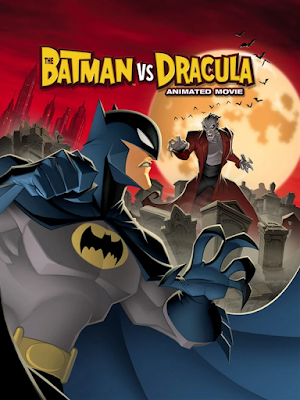
The Batman vs. Dracula


Note: This review contains spoilers for The Batman vs. Dracula.

Of all the Batman TV series out there, one that seems to fly under a lot of radars is The Batman (no relation to the 2022 film of the same name), which debuted on the Kids’ WB Saturday morning block in 2004 and ran for a total of five Seasons. I actually have some personal connection with this show, since it was the first Batman cartoon I ever watched as a kid, though admittedly I only ever watched the first three Seasons at the time. Perhaps lesser known is the one DTV movie based on the series, The Batman vs. Dracula, which came out in 2005 and escaped my notice even when it aired on TV. After finding out the movie existed while browsing HBO Max, I made the time to watch it and found something much more than I initially anticipated.

Sunday, October 31, 2021

Batman: The Long Halloween Part 1 and 2


Considering Batman’s 80+-year history, it seems there’s no shortage of famous stories to adapt into animation, a medium where his stories have had more consistent success than the live-action counterparts. One such story is The Long Halloween, a 13-issue miniseries by Jeph Loeb and Tim Sale, originally published monthly between 1996 and 1997. As with The Dark Knight Returns, this storyline received a two-part animated adaptation, though both parts would release much closer together, with Part One on June 22, 2021 and Part Two on July 27, 2021. Although I hadn’t read the original comic, its status in the industry made me curious enough to watch both parts of its adaptation through HBO Max, appropriately during the Halloween season. Even without knowing what happened in the source material, or any differences in porting it to a new medium, it still stands as one of the definitive Batman stories and a must-watch.

Sunday, September 19, 2021

Straight Outta Nowhere: Scooby-Doo! Meets Courage the Cowardly Dog


One Cartoon Network series I have distinct memories of watching growing up, and have seen reruns for on Boomerang, is Courage the Cowardly Dog (Courage), about a dog named Courage who must stand up to his fears as he protects his owners Eustace and Muriel Bagge from supernatural or otherwise evil happenings in the middle of Nowhere, Kansas. Since ending its run in 2002, not much has been done with the property aside from the 2014 The Fog of Courage special (which I was not aware of), so I was thrown off-guard by the announcement that the latest in the line of direct-to-video Scooby-Doo films would be a full-length crossover with Courage, known as Straight Outta Nowhere: Scooby-Doo! Meets Courage the Cowardly Dog (Straight Outta Nowhere). Though there is some precedent for a crossover in the form of old Cartoon Network bumpers, I was a bit on the fence on the idea even after watching a trailer, in part because of Courage creator John R. Dilworth’s lack of involvement and also the last DTV Scooby-Doo feature I watched, Return to Zombie Island, didn’t turn out that great.

What made me decide to give it a watch, however, was the unfortunate passing of Muriel Bagge’s original VA, Thea White, in the time between the release of the trailer and the movie itself, making this the last time she ever got to voice the character. After watching Straight Outta Nowhere through an Amazon Prime Video rental, I was pleasantly surprised by its faithfulness to Courage the Cowardly Dog, though it had maybe a little too much vinegar.

Saturday, September 11, 2021

Batman: Gotham Knight


Before the DCEU, there was a point where Christopher Nolan's The Dark Knight Trilogy colored the filmgoing audience's perception of Batman, for better or worse. The success of these films also led to an animated film project, Batman: Gotham Knight, which saw DC collaborate with multiple Japanese animation studios. I had no knowledge of its contents going in, but the idea intrigued me, which led me to stream it through HBO Max (if only because my DVR didn't catch the Toonami broadcast through their DC FanDome tie-in). Though I have mixed feelings on the Christopher Nolan films as a whole, I walked away pleasantly surprised by Gotham Knight.

Saturday, September 19, 2020

Batman: Year One


Of the many writers who have penned Batman stories over the decades, Frank Miller is one of the more interesting ones, if only for singlehandedly writing some of the most famous (The Dark Knight Returns) and most infamous (All Star Batman & Robin, the Boy Wonder) takes on the character. One of the highlights of his career, however, is Batman: Year One, published in 1987 with artwork by David Mazzucchelli, a story that was considered the official origin story of Batman until 2013’s Zero Year. I actually read this story myself for a comics class in college, though it was a version where they inexplicably recolored the original artwork. Though this story would get an animated film adaptation in 2011, I didn’t view it until a 2020 Toonami broadcast, after which I wondered why I didn’t watch it sooner.

Wednesday, June 3, 2020

Scooby-Doo! and Kiss: Rock and Roll Mystery


As the Scooby-Doo direct-to-video movies continued to be pumped out every year, it was hard not to notice from a casual glance that there was at one point more of a reliance on crossovers, including Hanna-Barbera’s own Blue Falcon, DC’s Batman (the Brave and the Bold version) and two movies with the WWE of all things. To be fair on the last one, crossing over WWE with other Hanna-Barbera properties such as The Flintstones and The Jetsons was in style at the time. One that stood out to me, however, was a crossover with the band Kiss, named Scooby-Doo! and Kiss: Rock and Roll Mystery. While I wouldn’t consider myself a member of the Kiss Army, I do enjoy some Kiss songs and I was curious to see how such a crossover would work, which I got the chance to do after recording a Boomerang airing of the movie. Though I wasn’t sure what to expect, I ended up enjoying to a degree, though it seemed more like a Kiss movie than it did a Scooby-Doo movie.

Saturday, May 16, 2020

Scooby-Doo! Legend of the Phantosaur


Note: This review contains spoilers for Scooby-Doo! Legend of the Phantosaur.

On this blog, we’ve covered films that we watched for their reputation, either good or bad. However, we haven’t covered many where just a specific iconic scene drew us in. Such is the case with 2011’s Scooby-Doo! Legend of the Phantosaur, the 16th installment of the long-running series of direct-to-video Scooby-Doo! films. While this one scene in particular, which I’ll go into later, was worth watching, the rest of the film felt very uneven.

Saturday, May 9, 2020

Scooby-Doo and the Alien Invaders


After having finally seen Scooby-Doo and the Witch’s Ghost, we decided to watch Scooby-Doo and the Alien Invaders, at least partly since the first four direct-to-video animated films, produced by Hanna-Barbera, form their own tetralogy of sorts. As I was watching the movie, I realized I had vague memories of seeing at least part of it somehow, though I had only recalled part of a minor subplot involving a jackalope. After seeing the whole thing in its proper context, I didn’t think it was quite as good as Witch’s Ghost, however it held up pretty well on its own merits.

Saturday, May 2, 2020

Scooby-Doo and the Witch's Ghost


Note: The following review contains spoilers for Scooby-Doo and The Witch's Ghost.

Following the success of Scooby-Doo on Zombie Island in 1998, which reinvigorated the Scooby-Doo brand, a follow-up film was released the following year, Scooby-Doo and the Witch’s Ghost, beginning the trend of annual DTV Scooby-Doo films of varying quality. I will admit I wasn’t too aware of this movie when it first came out, however, I decided I had to see it since it seemed to form a set as one of the first four DTV movies based on Scooby-Doo. After finally getting to see it, I found it to be a worthy successor to Zombie Island, though it overall falls just short of the preceding movie’s quality.

Saturday, October 26, 2019

Scooby-Doo! Return to Zombie Island


In the 21 years since Scooby-Doo on Zombie Island, the Scooby-Doo franchise has managed to remain stable enough for yearly direct-to-video films and the occasional new series to help it stay relevant, including Scooby-Doo! Mystery Incorporated and Be Cool, Scooby-Doo! To celebrate the 50-year anniversary of Scooby-Doo, Warner Bros. released Scooby-Doo! Return to Zombie Island, itself a direct sequel to Zombie Island. Since I liked the original film and had noticed from afar how goofy the DTV films had become, my curiosity was piqued and I wondered how they would try to follow up such a classic piece of Scooby-Doo media. About 80 minutes later, it seems that they made an attempt, but still fell far below the bar.

Friday, June 14, 2019

Batman vs Teenage Mutant Ninja Turtles


Batman is no stranger to odd stories, but none quite like IDW’s Batman/Teenage Mutant Ninja Turtles comic from 2015, a crossover between the two titular franchises. I had read it at the time and enjoyed it, so I was very curious to see the recent animated adaptation, Batman vs Teenage Mutant Ninja Turtles. This film represents an unlikely crossover between not only the two titular franchises, but also an unlikely deal between Warner Bros. and Nickelodeon, considering their status as rival companies. Fortunately, the end result is well worth the price of admission.

Saturday, May 25, 2019

Batman Beyond: Return of the Joker


Before watching this movie, I will admit I have not actually seen the Batman Beyond cartoon, nor have I seen Batman: The Animated Series. However, I am aware of both shows and their relation to the DCAU, as well as how highly praised they are (especially the latter). What spurred me to watch Batman Beyond: Return of the Joker, however, was learning about how well thought-of it and Batman: Mask of the Phantasm are, though let’s not get ahead of ourselves. Despite not having any prior knowledge of Terry McGinnis’ tenure as the dark knight, I found his battle against the Joker to be a very solid movie.

Tuesday, October 9, 2018

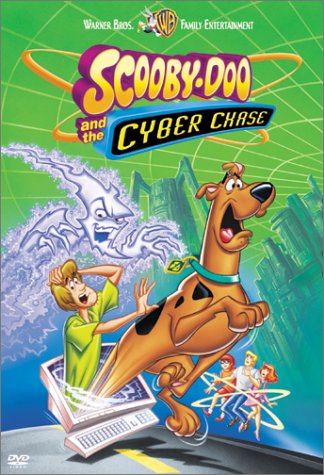
Scooby-Doo and the Cyber Chase


After we reviewed Scooby-Doo on Zombie Island, we’ve decided to review another direct-to-video Scooby-Doo movie, not only to celebrate its 17th anniversary, but also because we’ve actually owned a copy on DVD since its original release. That particular movie is Scooby-Doo and the Cyber Chase, a movie which represents many firsts and lasts for the Scooby-Doo franchise. I remember liking this movie as a kid, even watching it a few times, but looking back on it now as an adult, it’s more flawed than I had thought.

In a college computer lab run by Professor Kaufman (Tom Kane), two of his students, Eric Staufer (Bob Bergen) and Bill McLemore (Mikey Kelley), are working on gaming projects when a creature, the Phantom Virus (Gary Sturgis), is beamed into the real world from one of the games and tries to attack. The next day, the Mystery, Inc. gang visits Eric to try out a game he made based on their previous adventures, only to find out that the Phantom Virus is still roaming around the campus. The gang manages to find the Phantom Virus, only to be mysteriously beamed into Eric’s video game along with it. If they want to escape the game and figure out who created the virus, they’ll have to confront the Phantom Virus while beating all ten of the game’s levels.

At its core, Scooby-Doo and the Cyber Chase seems to take inspiration from Tron (1982), as both movies involve a human, or group in this case, being beamed into a digital world and having to fight their way back into the real world. Both also involve games in some form, though the games in Tron were based more on physical combat, which Flynn escapes before having to fight the Master Control Program, while Cyber Chase involves Mystery, Inc. overcoming various trials put forth by the various video game worlds they have to complete. While this observation has no bearing on the quality of Cyber Chase, it was one I made during the viewing for this review and I wanted to express it here.

The title screen of the fictional game created by Eric Staufer (Bob Bergen),
featuring Mystery, Inc. in their "classic" attire.

Apart from the Tron inspiration, Scooby-Doo and the Cyber Chase actually has some interesting ideas, mainly Mystery, Inc. having to fight a non-conventional digital monster that has the ability to control electronics. Additionally, the idea of traveling through a video game world apparently modeled after their previous adventures opens up some unique storytelling possibilities.

Unfortunately, Cyber Chase suffers from some rather lackluster execution. Whenever the Phantom Virus shows up during the game, his abilities aren’t fully taken advantage of and he’s more of a pushover until the final level of the game. On that note, his weakness, a super magnet, is also forgotten until it’s needed during the final level and the movie’s internal rules of the magnet’s strength aren’t completely clear. The Phantom Virus also seems to, for some reason, constantly leave clues as to who his creator is. When we do find out, the villain also does nothing to make themselves seem less guilty, which removes a lot of the tension from the finale. As for the game itself, the movie shows the contents of the first three levels, but then skips six of them in a glorified music video, only to more fully explore the tenth level.

By virtue of its prominence in the latter half, the tenth level of the in-universe game is one of the more interesting, apart from the somewhat realistic aesthetic of the city. It’s here that the more interesting ideas from the movie are more fully realized, including the appearance of some of Mystery, Inc.’s past villains and a more complete showcase of the Phantom Virus’ abilities. However, a majority of the encounter against past villains is shown through a music montage involving plenty of slapstick humor. Looking back on it, I feel the movie could have benefited from spreading out the appearances with previous villains across the game’s levels in order to give them proper screen time.

The Phantom Virus (Gary Sturgis) had potential as a villain, but fell short.

The post-credits sequence, which features Mystery, Inc. talking about their favorite parts of the movie, doesn’t really help with sorting out the internal logic of Cyber Chase, since this sequence not only implies that the characters had somehow filmed the movie, but also includes moments that weren’t even in the final product. I ran with it as a kid, but as an adult it felt more confusing.

I’ll also mention at this point that Cyber Chase contains quite a bit of slapstick humor by comparison with Zombie Island, which had more subtle jokes incorporated into the dialogue. In spite of this, there is a little bit of clever Scooby-Doo meta humor that addresses how Mystery, Inc. normally splits up while looking for a monster.

While not free of errors, the animation of Cyber Chase is smooth and holds up pretty well. The darker color palette introduced in Zombie Island has all but disappeared, leaving a noticeably brighter color palette against a world that’s still depicted pretty realistically. Considering the visual differences between Cyber Chase and later Scooby-Doo direct-to-video movies, Cyber Chase could be viewed as a transition between different interpretations of the franchise and different animation styles.

Story aside, the voice acting of Cyber Chase is well-done, with each of the actors lending the appropriate voices and energy to the characters. The soundtrack is also solid, though lighter in comparison with Zombie Island, which lends further credence to the idea that Cyber Chase is a stylistic transition. As is tradition, Cyber Chase features a version of the main Scooby-Doo theme, this time sung by three members of the B-52s, specifically Cindy Wilson, Kate Pierson, and Fred Schneider. This is accompanied by two original songs, “Hello Cyberdream,” written by Richard Lawrence Wolf and performed by David Nicoll and Wes Quave, and “Double Double Joint,” an instrumental written and performed by Richard Lawrence Wolf.

While both “Hello Cyberdream” and “Double Double Joint” are catchy, the former isn’t completely listenable out of context like “The Ghost is Here” and “It’s Terror Time Again” from Zombie Island. What doesn’t help is that the lyrics of “Hello Cyberdream” seem to more or less describe what’s happening onscreen during the montage in which it's used.

As with Zombie Island, Cyber Chase represents many firsts and lasts for Scooby-Doo. Cyber Chase is the final film in what’s considered the “dark era” of Scooby-Doo animation, which consists of the first four direct-to-video features and is marked by a generally darker color palette, more realistic tone and real monsters. As such, this is also the last film to have Mystery, Inc. in their attire from Zombie Island, returning to their “classic” attire from then on.

Scooby-Doo and the Cyber Chase features a brighter color palette
while keeping the more realistic appearances of Mystery, Inc.;
L-R: Scooby-Doo (Scott Innes), Shaggy (Scott Innes), Velma (B.J. Ward),
Daphne (Grey DeLisle) and Fred (Frank Welker).

On the voice acting side, Cyber Chase is the last time that Scott Innes voices both Scooby and Shaggy, though he has come back from time to time for commercials and games, the final time that B.J. Ward voices Velma and the first time that Grey DeLisle voices Daphne following the passing of Mary Kay Bergman.

Perhaps most notably, Cyber Chase is considered the last official Hanna-Barbera production, since afterwards, Warner Bros. would fully absorb the studio following the passing of William Hanna, to which Cyber Chase is dedicated. This film is also the first Scooby-Doo production animated entirely digitally, as opposed to animation cels, and is also the last movie to be animated by Japanese studio Mook DLE.

Appropriately enough, Cyber Chase is also the only Scooby-Doo film to receive a tie-in video game, which released on the PlayStation and Gameboy Advance the same year, 2001. Although we have yet to play either version, I’ll note that our DVD copy came with a handful of tips for playing through the game, although it’s disappointingly pretty basic information. On a much less important note, our DVD copy is also so old that it still has a 16-years expired coupon for Frigo Cheese Heads String Cheese.

One more minor note about Cyber Chase regards the Creeper (Scott Innes), a villain who appears during the final act and the only one actually from the original cartoon, Scooby-Doo, Where Are You! As with other Scooby-Doo media, this film continues the misconception that the Creeper has no dialogue apart from repeating his own name. However, in the original episode in which he appears, Jeepers, It’s the Creeper, he actually repeats the word “Paper” in reference to an incriminating photo of his identity.

The Creeper (Scott Innes) as he appears in Scooby-Doo and the Cyber Chase.

While Scooby-Doo and the Cyber Chase is very flawed on an objective level, especially with regard to its storytelling and internal logic, it’s still an enjoyable movie. I might personally attribute this to nostalgia, since I loved watching it as a kid for being one of the few pieces of media to represent video games in a more positive light, but I won’t really fault anyone for enjoying this film unironically. I would recommend this more to Scooby-Doo fans looking to relive their childhood or people who are going through a Scooby-Doo kick and are willing to watch something flawed, yet entertaining.

Saturday, September 22, 2018

Scooby-Doo on Zombie Island


If you’ve been alive for the last 20 or so years, you’re no doubt familiar with Scooby-Doo, one of Hanna-Barbera’s most successful franchises, in some form or another. Since the original 1969 cartoon, Scooby-Doo, Where Are You!, the iconic group of meddling teenagers and their Great Dane spawned numerous spin-offs and TV movies into the present day, although production of Scooby-Doo material had stagnated over time, with the various series and specials relegated to re-runs. However, the 1998 home video release of Scooby-Doo on Zombie Island proved popular enough that it more or less revived the franchise, which lead to the production of further spin-offs and yearly direct-to-video features, with no signs of stopping anytime soon. We’ve decided to take a look at Scooby-Doo on Zombie Island in honor of its 20th anniversary to see how well it holds up today.

After solving cases for years, the Mystery, Inc. gang grow bored of mystery-solving and go their separate ways. Daphne (Mary Kay Bergman) and Fred (Frank Welker) have started a successful TV series, Velma (B.J. Ward) becomes the owner of a bookstore and Shaggy (Billy West) and Scooby-Doo (Scott Innes) are fired from an airport security job after consuming food designated as contraband. After Daphne expresses a desire to see everyone again, Fred gathers everyone together on her birthday to go on a roadtrip while filming her newest show, which involves finding locations that are actually haunted. Their search leads them to a remote home in New Orleans on Moonscar Island. While the gang is initially skeptical about how haunted the island is, they gradually discover that this time, the monsters are real.

(L-R): Fred (Frank Welker), Velma (B.J. Ward),
Shaggy (Billy West), Scooby-Doo (Scott Innes) and
Daphne (Mary Kay Bergman) reunite to film Daphne's new show.

Compared with most other versions of Scooby-Doo, Zombie Island has a more realistic atmosphere and more mature storytelling. The film explores what happens to Mystery, Inc. after they become adults and it’s interesting to see their lives with varying degrees of success before they regroup to relive their glory days. As part of this more mature direction, the story features actual deaths and the gang encounter real monsters, mainly the titular zombies. There is also more of an effort to give the characters depth, including a hint of romantic interest between Fred and Daphne that gets explored to some degree during the plot. This interpretation of the Scooby-Doo mythos is one of the more intriguing ones because the audience gets to see the gang reacting to a fairly rare situation and the story manages to successfully take the source material more seriously. There’s also a little humor to balance out the horror, mostly through subtle jokes about the franchise, such as a visual gag where Shaggy opens a suitcase to reveal multiple sets of his classic wardrobe.

While the story is able to stand the test of time, there are minor faults. For one, the character Snakebite Scruggs (Mark Hamill) doesn’t serve much of a purpose outside of saving Shaggy from a group of alligators and expressing bitterness towards the presence of “tourists” on his fishing grounds. Additionally, since Zombie Island came out in 1998, the setting features outdated technology, mainly a non-digital video camera, that would feel out of place in any other time period.

What helps the movie hold up today is the still-impressive traditional animation. The animation of Zombie Island is more fluid and detailed than most other Scooby-Doo productions before and since and features a darker color palette that fits in well with the atmosphere. Naturally being direct-to-video means that this movie would have a higher budget than a standard TV series, but even then, it seems to top many of the other direct-to-video Scooby-Doo films of recent years.

The detail helps the animation hold up today.

Zombie Island also stands out with its choice of music. Where previous versions of Scooby-Doo used pop music, this movie goes for a harder alternative sound with original tracks “The Ghost is Here” and “It’s Terror Time Again” performed by Skycycle, along with a cover of “Scooby-Doo, Where Are You!” by Third Eye Blind. The original tracks add to the mood of the scenes they’re used in and are also memorable tracks in their own right, especially “It’s Terror Time Again.” The voice acting is also done well, as even though not all of the original voice actors returned for this project, the featured line-up captures the feeling of their respective characters.

On the subject of the voice acting, Zombie Island holds the honor of having the first permanent recast of the voice actors used within the franchise. Following the death of Don Messick, to whom Zombie Island is dedicated, Scott Innes became the voice of Scooby-Doo; Casey Kasem declined to reprise his role as Shaggy unless the character would be depicted as a vegetarian, so Shaggy is instead voiced by Billy West in a one-off role; Mary Kay Bergman replaced Heather North in the role of Daphne and B.J. Ward replaced Nicole Jaffe as Velma. In contrast, Frank Welker was the only original cast member to return and still continues to voice Fred.

I can’t really end this without addressing an interesting bit of trivia regarding the origins of Zombie Island. The reason the plot unfolds the way it does is that apparently, the script borrows elements from an unfinished episode of SWAT Kats: The Radical Squadron called “The Curse of Kataluna”, also written by Glenn Leopold, who wrote Zombie Island.

Scooby-Doo on Zombie Island is easily one of the better examples of the Scooby-Doo franchise. The darker and more realistic atmosphere, consistent tone, incredible voice acting and mature writing all help this movie stand the test of time. While I would recommend this movie to anyone even remotely familiar with Scooby-Doo, as it’s still perfectly enjoyable for adults, I would advise parents to keep in mind that the subject matter could be genuinely frightening for small children.

Saturday, June 23, 2018

Batman Ninja


Since its announcement last year, Batman Ninja quickly caught my attention with its intriguing trailer and the pedigree of its creative team. Said team included Takashi Okazaki, the creator of Afro Samurai; Kazuki Nakashima, writer for Gurren Lagaan and head writer of Kill la Kill; Yugo Kanno, composer for JoJo’s Bizarre Adventure and Psycho-Pass; Jumpei Mizusaki, who had directed the opening animations for JoJo’s Bizarre Adventure; and animation studio Kamikaze Douga, which had also animated the opening sequences for JoJo’s Bizarre Adventure. Now that I’ve viewed it through the physical Blu-ray release, I believe that the hype was mostly worth it.

As Batman (Roger Craig Smith) battles Gorilla Grodd (Fred Tatasciore) at Arkham City, he is caught in Grodd’s latest invention, a time displacement machine known as the Quake Engine, which sends him to Feudal Japan. While there, he meets up with Catwoman (Grey Griffin), who reveals not only that Gotham’s top criminals had arrived two years prior, but also that they had become feudal lords trying to conquer Japan and that the Joker (Tony Hale) has made a name for himself as Demon King Joker. Now Batman has to find a way to prevent Gotham’s villains from rewriting history and make it back to his own time.

The premise is rather interesting and one that isn’t actually that out of place for a Batman story. This particular story is able to deliver on its premise rather well and deliver a film that is undoubtedly Japanese with a distinct “anime” vibe laced throughout. However, the plot itself leaves a little to be desired. Outside Joker, Harley Quinn (Tara Strong), Gorilla Grodd and Catwoman, the other villains, Penguin (Tom Kenny), Poison Ivy (Tara Strong), Deathstroke (Fred Tatasciore), Two-Face (Eric Bauza) and Bane (Kenta Miyake), don’t really have much screen time or direct involvement with the plot. Bane, for instance, is there for more of a quick cameo than anything is not addressed at all afterwards. The remaining villains are also more of a background threat and don’t become relevant that much again until the finale, and even then, they feel mostly superfluous, almost like they could’ve been anyone and the plot would stay the same. A shame, really, considering that the idea of them fighting for dominance over Japan could’ve easily made them more relevant to Batman’s goal.

That said, what is there is still very engaging and easy to follow. What helps is the impressive animation by Kamikaze Douga that’s able to make the CG models look and feel two-dimensional. The character designs by Takashi Okazaki are also very unique and attention-grabbing, as they capture the essence of each of the characters involved while staying true to both the Batman mythos and the setting of Feudal Japan. One especially interesting design is Demon King Joker, which perfectly represents the Clown Prince of Crime. There are also a couple of traditionally animated sequences, including one which has a different art style altogether, one that’s a bit sketchier and is able to highlight the mood of that particular sequence.

Joker's (Tony Hale) design is very visually striking.

The voice acting is also very good, with a special nod to Roger Craig Smith as Batman and Tony Hale as Joker. Though Roger Craig Smith has voiced Batman before, notably the Arkham Origins and Unlimited incarnations, he has proven once again that he’s capable of carrying the role his own way. Tony Hale is new to the role of Joker and does a fantastic job portraying the character’s maniacal side while remaining humorous when necessary; I wouldn’t mind if Hale reprised the role in the future.

Batman Ninja is an interesting film. The sheer pedigree of the creative team shines through really well, although the plot has some issues that harm the execution of the story a little. The animation and voice acting are fantastic, however, along with Yugo Kanno’s score, which keeps it engaging and entertaining. I would recommend this to Batman fans as well as fans of anyone on the Japanese creative team. Those unfamiliar with Batman might be able to enjoy this as well, though the appearance of certain characters, particularly four different Robins, may require at least a passing knowledge of their existence.

Saturday, May 27, 2017

Batman: Assault on Arkham - A Better Suicide Squad


Last year, Warner Bros. released Suicide Squad, the third film in the DCEU. While Suicide Squad had promise, it failed to fully connect with its audience due to its odd pacing, overabundance of underdeveloped characters and poorly written script. Two years prior, DC and Warner Bros. released a direct-to-video animated film also based on the Suicide Squad, but this time set within the Batman: Arkham universe. Though its existence is perhaps not as widely known, it does manage to handle the concept of the team much better.

After Batman (Kevin Conroy) rescues Riddler (Matthew Gray Gubler) from a black ops assassination and returns him to Arkham Asylum, Amanda Waller (C. C. H. Pounder) invokes Priority Ultraviolet, which involves capturing and gathering a group of villains for the Suicide Squad. Said group is composed of Black Spider (Giancarlo Esposito), Captain Boomerang (Greg Ellis), Deadshot (Neal McDonough), Harley Quinn (Hynden Walch), KGBeast (Nolan North), Killer Frost (Jennifer Hale) and King Shark (John DiMaggio). Their mission is to break into Arkham Asylum and recover a thumbdrive hidden in Riddler’s cane, as the drive contains information about the Suicide Squad that Riddler acquired while employed by Waller and intended to make public. To keep the group in line, Waller has implanted nano-bombs within their necks, which KGBeast unwittingly demonstrates. At the same time the Suicide Squad set out on their mission, Batman is searching Gotham for the location of a dirty bomb planted by Joker (Troy Baker).

The Suicide Squad (Left to Right): Captain Boomerang (Greg Ellis),
Killer Frost (Jennifer Hale), King Shark (John DiMaggio), Deadshot (Neal McDonough),
Black Spider (Giancarlo Esposito) and Harley Quinn (Hynden Walch).

The plot, though simple, is executed well and does a good job at tying its two main threads together and balancing its core cast of villains. There is enough screentime for each Suicide Squad member, apart from KGBeast, to get a sense of who they are and how they interact with each other, even for the lesser-known characters. For example, there is sense of a budding romance between Killer Frost and King Shark as well as a competitive rivalry between Deadshot and Captain Boomerang. Naturally the 76-minute runtime doesn’t allow for any one of the characters to be fully fleshed out (especially KGBeast, Black Spider and Amanda Waller) and the audience is expected to already be familiar with characters and relationships as presented within the Batman: Arkham universe. Still, the story is at least accessible for the uninitiated.

The animation is also done very well and is faithful to the style of the Batman: Arkham games, including the more muted color palette. While the designs of the characters are very distinct from one another, Deadshot and Black Spider have somewhat similar designs when unmasked. Befitting its PG-13 rating, the movie also doesn’t shy away from hints at nudity, mainly with Harley Quinn and Killer Frost, or use of swearing. On that note, the voice acting is also pretty good, particularly the performances of Kevin Conroy and Troy Baker, the latter of whom does a convincing Mark Hamill impression.

Batman: Assault on Arkham is pretty good overall. Although the plot is simple, it does a good job of highlighting the characters and giving the audience an idea of who some of the more lesser-knowns are. The action does a good job of portraying each character’s abilities and the animation stays true to the style of the Batman: Arkham Universe. If you’re a fan of the Batman: Arkham games, then this is a worthy entry to watch. If you’re a fan of the Suicide Squad but found the 2016 DCEU film lacking, then consider viewing Assault on Arkham.