Showing posts with label Warner Bros.. Show all posts

Thursday, September 21, 2023

Stay Tuned


While many of my interests often edge towards the obscure or lesser-known, it’s not too often I seek something out solely because of a small portion of it. This is the case with Stay Tuned, a lesser-known film from 1992 that I somehow stumbled upon, in which the premise sounded interesting, but it was one small part of it caught my interest enough to want to watch it. After watching it through Amazon Prime Video, in which it was free for Prime members, I did find it worth the watch, though it did not really exceed my already-low expectations going in.

Saturday, September 2, 2023

Batman: Mask of the Phantasm


Note: This review contains spoilers for Batman: Mask of the Phantasm.

While Batman: The Animated Series (Batman TAS) is one of the more highly-acclaimed Batman series, it was not my first introduction to the Dark Knight (that honor goes to The Batman (2004)), since I was literally too young to watch it when it was on. I have, however, since gone back and watched a select handful of episodes and found it to have earned its reputation. While I was also too young to see it in the theater when it came out, I had also seen Mask of the Phantasm, the first film based on the series, after hearing how good it was, though the untimely passing of Batman voice actor Kevin Conroy led me to give it another look in his honor. After a second viewing, I can see how one could argue that it’s one of the best Batman films, especially of the animated variety.

Saturday, September 4, 2021

Batman Forever


Note: This review contains spoilers for Batman Forever.

Following Tim Burton’s acclaimed Batman (1989) and Batman Returns, Joel Schumacher was given the directorial reins for two follow-up films, Batman Forever and Batman & Robin, the latter of which is particularly infamous among Batman fans and general moviegoers alike. After having seen the other three films in the Burton/Schumacher tetralogy under different circumstances, I thought it only appropriate to complete the experience by watching Batman Forever, via HBO Max, starring Val Kilmer under the cowl and featuring Jim Carrey and Tommy Lee Jones as the Riddler and Two-Face respectively. Considering the two Tim Burton films are highly regarded and the latter Schumacher film popular to pick apart, Batman Forever was surprisingly more lukewarm than I expected.

Saturday, March 17, 2018

Yu-Gi-Oh! The Movie (Remastered)


Back in 2004, Yu-Gi-Oh! The Movie (aka Yu-Gi-Oh! The Movie: Pyramid of Light), first released in the US as a critical and commercial failure, mainly because it was impenetrable for non-fans. However, when I first saw the movie as a kid, I didn’t really care and was able to enjoy it (although it did spoil the outcome of the Battle City Arc of the anime, which hadn’t finished airing yet in the US). Over the years I have found that, mainly out of nostalgia, I can’t find it within me to not like the original Yu-Gi-Oh!, but my opinion of this movie would wane over time. In a surprising move, 4K Media, the remnants of 4Kids Entertainment after Konami absorbed them, decided to remaster the movie and distribute it for a limited run through Fathom Events. When the opportunity struck, I bought a ticket to see the extent of the remaster and for a brief nostalgia trip. Now that I’ve seen it again, the remastered picture did little to distract from the inherent flaws of the movie.

5000 years ago, the Pharaoh had defeated and sealed away Anubis (Scottie Ray), the Egyptian lord of the dead. Five millennia later, Yugi Muto had completed the Millennium Puzzle at the same time that Anubis’ tomb was discovered in an archeological dig, releasing Anubis’ spirit, which seeks revenge on the Pharaoh. In the present, Yugi has just won the Battle City tournament and gained possession of the most powerful cards in all of Duel Monsters, the three Egyptian God Cards: Obelisk the Tormentor, Slifer the Sky Dragon and The Winged Dragon of Ra. At the same time that Yugi evades a horde of duelists attempting to claim the God Cards for themselves, Seto Kaiba (Eric Stuart) tries repeatedly to come up with a strategy to defeat Yugi, but to no avail. He decides to confront the game’s creator, Maximillion Pegasus (Darren Dunstan), about a possible card made to counteract the God Cards. However, Kaiba doesn’t know that his actions are only helping Anubis with gaining his revenge.

Anubis (Scottie Ray) wants his revenge on the Pharaoh.

The story and plot for the movie have a pretty rough execution. The idea of the Pyramid of Light as an eighth Millennium Item as well as the presence of another ancient evil can come off as fanfiction, which is never a compliment, and Anubis himself has almost no personality and is motivated entirely by an ancient grudge. The main bulk of the movie is a duel between Yami (Dan Green) and Kaiba, which goes on for quite a while. Once Kaiba activates Pyramid of Light, which unwittingly sets Anubis’ plan into motion, the spirits of Yugi, Joey Wheeler (Wayne Grayson) and Tristan Taylor (Greg Abbey) are sucked into the Millennium Puzzle, where they encounter the spirit of Anubis and his army of the undead. These scenes, interspersed within the Yugi vs Kaiba duel, can prove more interesting, if only because they provide the occasional break from the rest of the action.

That said, the dialogue is pretty decent and there are some occasional moments of laugh-out-loud humor. This includes some subtle moments, including Pegasus being served a red wine spritzer after swearing off white wine spritzers, and some of the jabs that characters take at each other. Other moments, like Joey making a couple movie references, are funny if only because of how cheesy/dumb they are.

One notable element of the dialogue is that when 4Kids had originally dubbed this movie, they had made the bold decision to keep any and all allusions and references to death and dying rather than change any instance to mentioning the Shadow Realm (as they had done in their dub of the anime). While this doesn’t mean much now, it was rather surprising back in 2004.

The quality of the animation is sort of hit and miss. It’s generally a higher quality than Studio Gallop used when animating the show, but after 14 years it also feels like a relic of the 2000s. Though the character models are good for the time, there are some moments where it went noticeably a little off-model. Nothing too jarring, but noticeable enough that it didn’t help the movie age that well over 14 years.

Something about this movie that’s particularly notable is that until 2017’s Yu-Gi-Oh! The Dark Side of Dimensions, this was the only instance where cards depicted in the English version used translated English text instead of the altered format used in the anime. While this was rather surprising and impressive at the time, especially since they also tried to recreate card rarities, there are some noticeable errors with card layouts (such as flipped or mirrored cards). One that’s particularly noticeable is that when Yami activates the card Double Spell, the card shown instead is Diffusion Wave-Motion (fixed in the Japanese version; see below).


As for the remaster, it’s essentially the same movie but the picture has a much-needed touch-up for modern screens. The look of the remaster is generally very impressive, giving it crisper visuals which help the movie age a little better, though in some zoomed-in shots the quality dips somewhat. It would’ve been nice if they also took the opportunity to correct the errors in the English card text and art, though I understand that wasn’t really the point of the remaster.

The voice acting is pretty good for when it came out, especially Dan Green as Yugi/Yami and Eric Stuart as Seto Kaiba. Looking back on it now, though, it’s obvious that by the time The Dark Side of Dimensions had come out, the actors had greatly improved in their roles since.

As for the soundtrack, the actual score is fitting and has a similar style to the anime. One original song that plays during a scene of Kaiba flying the Blue-Eyes White Dragon Jet is a little cheesy, but still kinda works. However, a number of snippets of other songs play over the credits, which seemed to be for the sole purpose of promoting the soundtrack with the promise of original songs (including one performed by The Black-Eyed Peas for some reason).

At the time the movie first came out in the US, theaters gave away one of four special cards (in a unique one-card booster pack) with each ticket sold and retail stores sold an eight-card Exclusive Pack as a tie-in. DVD copies of the film also came with two cards from the theater-exclusive Movie Pack with the option to send in for the other two. As an additional bit of small trivia, Blue-Eyes Shining Dragon saw a TCG release through this pack two years before the card required to summon it, Blue-Eyes Ultimate Dragon, would. Another tie-in was the Yu-Gi-Oh! The Movie Ani-Manga (basically a screencap comic) which came bundled with Slifer the Sky Dragon’s original TCG printing; the screencaps in the Ani-Manga only highlight many of the animation errors.

Original theatrical release poster.

For this special re-release of the movie, viewers were also given an exclusive look at the first English dub episode of the new Yu-Gi-Oh! series, Yu-Gi-Oh! VRAINS. I’m not sure how much I can say except that, without having seen the Japanese version, it feels like 4K Media is giving more respect to the source material with great voice acting and good dialogue, including a funny reference to the idea that some people think a hotdog is a sandwich. I’ll note here that my screening of the movie had low attendance anyway, likely since it was a Monday night, but everyone else had left before and during the VRAINS preview, so I enjoyed what had become a private screening.

A Japanese poster for Yu-Gi-Oh! VRAINS. L-R (clockwise):
Yusaku Fujiki, Firewall Dragon, Decode Talker, Yusaku Fujiki (as Playmaker), Ai.

After 14 years, I can conclude that Yu-Gi-Oh! The Movie hasn’t really aged well. The remastered visuals are impressive and I wouldn’t mind getting it on home video if they offered it. However, the story is still pretty rough and Anubis, though designed by Kazuki Takahashi himself, is a rather flat villain without much going for him. The climactic duel also goes for a large amount of the 89-minute runtime, so that’s something to keep in mind. It’s also very difficult to recommend to anyone who isn’t already a Yu-Gi-Oh! fan, since it requires the viewer to already be pretty familiar with the source material. While fun as a nostalgic trip back to the original series, it’s a pretty rough movie overall, though for some that may be part of its charm.

Monday, August 8, 2016

Review Hub - DC Extended Universe


In 2011, DC Comics and Warner Bros. attempted to start their own Cinematic Universe to compete with Marvel, using Green Lantern as a springboard. Reception was less than impressive, and so this movie can be considered more of a false start. In 2013, Man of Steel was released, which was intended to launch a trilogy of Dark Knight Trilogy-esque Superman films. However, following the movie's success, it was instead decided that Man of Steel would be used as a starting point for what was later coined the DC Extended Universe, nixing the two Superman sequels in favor of a crossover with Batman. Though Man of Steel and Batman v Superman were released 3 years apart, things seem to have finally picked up steam after the release of the latter.

Below is a link to every review for each movie set within the DC Extended Universe including its false start, listed in order of release (links to Second Opinions and alternate cuts are listed next to the main review in parentheses). For the sake of brevity, the logos for each movie are displayed in lieu of posters to allow for future expansion. As we continue to follow this universe, review links will be added over time once we (re)view any future films.

Update (6/2/2017): Added Wonder Woman
Update (12/12/2017): Added Justice League
Update (12/16/2018): Added Aquaman
Update (4/6/2019): Added Shazam!
Update (12/28/2020): Added Wonder Woman 1984
Update (4/4/2021): Added Zack Snyder's Justice League
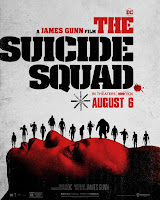
Update (8/8/2021): Added The Suicide Squad
Update (3/19/2023): Added Shazam! Fury of the Gods
Update (6/18/2023): Added The Flash

False Start


DC Extended Universe


Wednesday, November 26, 2014

Stubs – San Quentin (1937)


San Quentin (1937) Starring: Pat O’Brien, Humphrey Bogart, Ann Sheridan, Barton MacLane. Directed by Lloyd Bacon. Screenplay by Peter Milne, Humphrey Cobb. Story by Robert Tasker, John Bright. Produced by Jack L. Warner (Exec. Producer) Hal B. Wallis (Exec. Producer) Run Time: 70 minutes. U.S.  Black and White. Drama, Prison

After having successfully created the gangster film genre, Warner Bros. was starting to find itself under fire by the new production code of 1933 which was suddenly being enforced. A simple fix was to move gangster stars, like Edward G. Robinson (Little Caesar 1930) and James Cagney (Public Enemy 1931) into law enforcement in 
Bullets or Ballots (1936) and G-Men (1935) respectively.

But Warners was never one to walk away from a news story that could be made into a movie. They had already made a film about prison-life, I am a Fugitive From a Chain Gang (1932), and with the depression starting to come to a close, prisons were filled with the victims of the hard times who were being forced to share cell space with hardened career criminals. This, coupled with overcrowding and tales of prison guard brutality, was more fodder for the Warner Bros. By the end of the decade, Warner Bros. had released several prison films including: Alcatraz Island (1937), Blackwell's Island (1939), Each Dawn I Die (1939) and San Quentin (1937), which starred up and comers named Pat O’Brien and Humphrey Bogart.

An example of guard brutality opens the film. The prisoners are in the yard when some of them are being called to the Captain’s porch, which is where re-assignments and punishments are handed out. Captain of the Yard Druggin (Barton MacLane) dishes out punishment to a deaf prisoner, upping his time in solitary by ten day increments, because the prisoner can’t hear him. Such treatment leads to unrest amongst the prisoners, who protest their treatment.

Captain of the Yard Druggin (Barton MacLane) likes to dish out punishment.

The warden calls Druggin into his office to tell him that a new Captain of the Yard will be arriving tomorrow. Druggin, as it turns out, was an interim fill-in who thought he might get the job. The warden informs him that he lacks people skills and that they’re bringing in someone who does, Army trainer Stephen Jameson (Pat O'Brien). Druggin, not surprisingly, does not take the news well.

For his last night on active duty, Jameson goes to the Lorenz Revue with a couple of his fellow officers. His friends are ribbing him about his assignment, but Jameson is more interested in the captivating singer May Kennedy (Ann Sheridan), who is singing under the stage name, Mae De Villers. There seems to be a rule that every Warner Bros. sound era film in the 1930’s has a nightclub scene with a featured song. In this case the song is “How Could You," music and lyrics by Harry Warren and Al Dubin.

May Kennedy (Ann Sheridan) sings at the Lorenz Revue.

May’s kid brother, Joe "Red" Kennedy (Humphrey Bogart), a petty crook, shows up backstage. He asks May for some money, telling her he has a job offer in Seattle. But no sooner does she give him the money than the police arrive to arrest him for robbery. Shots are fired and Jameson, as well as other patrons, go backstage to see what’s the commotion. He sees Red being arrested, but Red doesn’t see him. Once the police take him away, Jameson moves forward to comfort May, but she’s up and the show must go on.

Red (Humphrey Bogart) shows up backstage and asks his sister for some money.

The next day is Jameson’s first day at San Quentin. Out in the yard, one of the prisoners, Dopey Rogers (Garry Owen), is shown reading from the Common Book of Prayers. While he is praying a couple of other prisoners give him a hot foot, much to the amusement of others in the yard.

The San Quentin prison yard as shown in the film.

When the Warden introduces Jameson, he tries to make a brief speech, but he is interrupted by a heckler. As punishment, Jameson makes him get up in front of the yard to sing. He’s shown later still singing though the yard is now empty.

Soon, Red shows up in a delivery of prisoners. With him is Sailor Boy Hansen (Joe Sawyer) who has been at San Quentin before. Red is unfamiliar with prison terms, like a weekend meaning ten years. Hansen takes him under his wing and show him the ropes. Red also meets Jameson for the first time.

Red arrives at San Quentin with Sailor Boy Hansen (Joe Sawyer).

Out in the yard, Red tells anyone who will listen that he’s got friends on the outside who will spring him. He talks so much that Sailor Boy plans a practical joke. Red hears his name and prisoner number called out. He’s told that he’s going to be sent back to San Francisco. But Red doesn’t think it’s so funny and in fact punches Hansen for his part in it. That punch lands Red in solitary for fighting.

Back at the Lorenz Revue, Jameson makes a point to bump into May. She invites him back to her apartment for some home cooking. There she opens up about her brother and the mistreatment he is no doubt receiving in prison.

Next, May goes to visit Red in prison, but gets caught passing money to him that Sailor Boy has told him is necessary for smokes and chocolate. Red get punished and May is called by Druggin to deal with Jameson, unaware that the two know each other. May is not happy to learn this is what Jameson does for a living, but he tries to explain to her that he thinks he can bring something better out of Red, who has lost all privileges for thirty days.

May visits Red in prison and gets in trouble for passing him money.

Twenty-nine days later, Jameson is conducting an inspection. Rogers is there. Jameson realizes that there is something mentally wrong with him and plans to talk to the board about moving him elsewhere. He also runs into Red again and offers that if he keeps straight and follows the rules, he’ll see time come off his sentence.

The next day, Red is working in one of the machine shops and is partnered with Sailor Boy. There are no hard feelings between them. They talk about escape out on the yard while playing dominoes. Rogers comes by proselytizing to the yard, but Sailor Boy and Red work together to knock him over, which again brings laughter to the yard at Roger’s expense.

Out on the yard, Sailor Boy and Red talk about escape.

When a guard accidentally drops his rifle into the yard, Rogers scoops it up. He shoots one of the guards and threatens everyone, prisoner and guard alike. Jameson shows up and manages to get the rifle away from Rogers, who is then taken to the hospital because he needs mental treatments. The prisoners, including Red, are impressed by Jameson’s bravery and decisiveness.

After getting no respect for so long, Dopey Rogers (Garry Owen)
snaps and takes revenge when a rifle falls into the yard.

Jameson’s approval drops when he starts changing the assignments, putting Red and others on the road gang, which displaces some who feel they’ve earned the privilege. Prisoner’s protest and strike rather than go to work. The yard nearly riots, but Jameson demands its clearance and sends everyone to their cells with no chow. Still it takes guards firing into the air to clear the yard. Still, the prisoners don’t go willingly, banging the pipes with their cups. Even turning off the lights on them doesn’t quiet them down.

Druggin, who has never gotten along with Jameson, uses the near riot to call a reporter friend of his at the Daily Chronicle. Soon headlines are everywhere about Jameson’s methods. The public outcry has Jameson brought before the prison board. There he explains what he’s trying to do and asks for a chance, which the board grants him.

After May visits Red, she asks to see Jameson, who is out in the yard. While Druggin watches on, May thanks Jameson for what he’s doing for her brother and apologizes for her earlier comments about prison guards.

While Duggin watches, May thanks Jameson for the treatment Red is receiving.

Meanwhile, Hansen plots a potential escape plan with his girl, Helen (Veda Ann Borg) when she comes to visit. He tells her that if he can get on the road crew then she could help him. Another prisoner, identified as Fink (Ernie Adams), overhears Hansen’s plans and goes to, what else, Fink to Druggin. His sign that he has something to say is to drop a piece of paper. While Druggin yells at him for littering, Fink tells him what he’s learned.

Sailor Boy hatches an escape plan with his girlfriend, Helen (Veda Ann Borg)

When Jameson gives Druggin the list of prisoners for the road gang, Druggin alters it to add Hansen to the detail.

While working together, Hansen tells Red about his plans, but Red, following advice he’s heard many times, tells him he just wants to keep straight and get out as soon as he can. But back in the bunk house for the road gang, which seems odd since they go back and forth to the prison, Red gets ribbed about his special treatment, which is credited to Red’s outside connections until one prisoner makes reference to May’s relationship with Jameson, hinting at, but not explicitly stating (this was made under the Production Code) Jameson is swapping sexual favors from May for treating Red with kid gloves.

Red doesn't take kindly to accusations about his sister.

Upset about the allegations, Red decides to teach Jameson a lesson and tells Sailor Boy he wants in on the escape attempt.

Later, back on the road gang, Helen’s car has a flat tire right in front of the crew. When the guards tell her to leave, she asks for help, suggesting that Sailor Boy and Red, who just happen to be nearby, could do the work.  The guard agrees, but hidden in a secret compartment under her tools are guns, which Hansen and Red use to aid their escape. Druggin, who knows Hansen’s plan, is taken hostage; he is later thrown from the moving car.

Druggin gets thrown from the moving car as Red and Sailor Boy make their escape.

Guards take chase and manage to blow a hole in the gas tank before crashing. The Sheriff takes over the chase. Running low on fuel, the boys carjack another car and send Helen on her own. The boys manage to get ahead of their pursuers by barely beating a train to a crossing, but their luck doesn’t hold out and before they can try that maneuver again, Red, who is driving, crashes the car. Sailor Boy is killed, but Red manages to get away, catching a ride on a passing train.

Sailor Boy gets killed in the crash, but Red survives.

The warden tells Jameson that the escape means his methods are through. But Jameson wonders how Hansen’s name got on the list and vows to find Red.

Meanwhile, Red is still out for revenge. When he hits the city, presumably San Francisco, he heads to a friend’s shop and demands a .38 and some slugs, as he puts it.

Jameson, with Red watching from the roof, goes to see May. Red comes into the apartment and shoots Jameson in the arm. Still, Jameson wants to help him and tries to convince him he’s been duped and to give himself up. When police arrive to check out the gun shots, Jameson hides his wound under a coat and hides Red as well. But after the police have left, Jameson and May find that Red has again escaped.

Still on the run, Red breaks into May's apartment when Jameson is visiting her.

But Red doesn’t get very far before one of the police watching May’s apartment shoots him as he goes over a wall. But Red is not easily stopped and makes it out of the city. He hitches a ride with a trucker, who notices something’s not right with him. Red insists he’s fine and is let off at the San Quentin turnoff. From there he hikes to the prison, but dies at the gate from his wound and the loss of blood. One of his last words to a guard is to “tell Jameson I came back.”

Shot between October 5 and November 10, 1936, the film had some retakes in January and March, 1937. One of the reasons for the retakes was that Jack Warner thought the ending was rather abrupt and wanted an additional scene added to the end in which "Capt. Stephen Jameson" is having breakfast with "May Kennedy" when he receives a phone call from the warden telling him that "Joe 'Red' Kennedy" has died. Director Michael Curtiz shot the additional scenes in January, 1937 but they were later reshot by Bacon in March after Pat O'Brien returned to the studio after a six-week vacation. A studio memo from Associate producer Sam Bischoff to Producer Hal B. Wallis complained that the sequence, as shot by Curtiz, was not a sufficiently serious ending to the tragic situation that had transpired. The final version of the film does not contain this additional scene.

Like so many Warner Bros. films from the 30’s and 40’s, it is sometimes the supporting actors who add that little extra something to the film. In this case, it’s Barton MacLane, who was a contract player at Warner Bros. in the 1930’s and 40’s. He began his career on the Broadway stage, making his debut at the age of 25 in The Trial of Mary Dugan in 1927. His first screen appearance is in an uncredited role in the Marx Brother’s Cocoanuts (1929). His first film credit was in His Woman (1931). But MacLane wasn’t through with Broadway. He wrote a play, Rendezvous, in which he played the part of Private Oakley. While the play only ran for 21 performances, it was enough to get him noticed and signed as a contract player to Warner Bros.

Regularly cast as a heavy or bad guy, MacLane sometimes played tough policemen, such as Detective Dundy opposite Humphrey Bogart’s Sam Spade in The Maltese Falcon (1941). He would also work with Bogart and director John Huston again in the film The Treasure of the Sierra Madre (1948). Other notable films MacLane appeared in include: Frisco Kid (1935) opposite James Cagney; Bullets or Ballots (1936) with Edward G. Robinson, Joan Blondell and Bogart; High Sierra (1941) again with Bogart; All Through the Night (1941) with Bogart and Conrad Veidt; San Quentin (1946), not a remake and in which MacLane plays a convict; The Geisha Boy (1958), starring Jerry Lewis; Pocketful of Miracles (1961), directed by Frank Capra; The Rounders (1965) starring Glenn Ford and Henry Fonda; and his last film, Buckskin (1968).

Barton MacLane played a lot of heavies in films.
When film work slowed, MacLane moved to TV, appearing in guest roles on shows as: Cheyenne; 77 Sunset Strip (1958); Perry Mason, four episodes from 1959-1964; Laramie (1960), four episodes in 1960, 1962 and 1963; The Munsters (1966); and Gunsmoke, two episodes in 1966 and 1967. He was one of the stars of the 1960 western series on NBC, appearing in 27 episodes; and appeared in 35 episodes of I Dream of Jeannie from 1965 to 1969.

When not acting, MacLane lived on a cattle ranch in Madera County, California, located in the Central Valley, and played several musical instruments, including the violin, piano and guitar. Born on Christmas Day, 1902, MacLane died on New Year’s Day 1969 from double pneumonia.

Joe Sawyer, who played Sailor Boy Hanson, was a Canadian-born actor who appeared in more than 200 films between 1930 and 1962, sometimes in uncredited roles. A stable at Warner Bros. in the 30’s, he appeared in such films as Jimmy the Gent (1934), Frisco Kid, The Petrified Forest (1936), Black Legion (1937), The Roaring Twenties (1939), The Grapes of Wrath (1940), Sergeant York (1942), Gilda (1946), The Killing (1956) and How the West Was Won (1962). He also appeared on Broadway in the play Casey Jones (1938) and on TV in such shows as Maverick, Bat Masterson, Sugarfoot and Peter Gunn. His is one of those faces you see again and again in films.

Joe Sawyer with Humphrey Bogart in San Quentin (1937).

The film’s director, Lloyd Bacon, is not someone who gets mentioned when talking about the greats or, as the French would say, auteurs. Still, he did direct over 100 films between 1920 and 1955. Bacon started out as an actor, appearing in about 40 films including Charlie Chaplin’s shorts The Tramp (1915), The Champion (1915) and Easy Street (1917).

Bacon began directing comedy shorts and moved on to features at about the same time sound came into use. A workhorse director for Warner Bros., Bacon is not remembered for having many classic films to his credit, though his name and his films frequently show up on Trophy Unlocked. While he was the director on 42nd Street (1933) and Footlight Parade (1933), his work is overshadowed by the choreography of Busby Berkeley. Bacon would direct several films starring James Cagney: Picture Snatcher (1933), Here Comes the Navy (1934), Frisco Kid (1935), Boy Meets Girl (1938) and The Oklahoma Kid (1939), but he’s not known for the actor’s signature gangster roles.

Director Lloyd Bacon.

Bacon would also direct A Slight Case of Murder (1938), Indianapolis Speedway (1939), Brother Orchid (1940), Knute Rockne All American (1940), Action in the North Atlantic (1944) and The Fighting Sullivans (1944). His last film would be She Couldn’t Say No (1954), starring Robert Mitchum and Jean Simmons. Bacon died in 1955.

There is an attempted earnestness about San Quentin. Deep down inside, the film wants to be the next I am a Fugitive from a Chain Gang, but it falls very short. The ending, with a dying Red trying to do good for Jameson and May, is a Hollywood ending if there ever was one. Druggin may get his comeuppance, but he is never held responsible for the wrongs he’s done and there is no sign that things will really change. In fact, since Jameson’s plans failed, his reforms seem more likely to be discarded than adopted.

We are also never shown how harsh the treatment really is, the way Fugitive from a Chain Gang showed us with beatings and harsh conditions. Like the long shots of the actual San Quentin prison yard, we are kept away from seeing actual mistreatment or suffering by the prisoners at the hands of those in power like Druggin. We are told rather than shown and that waters down the message.

Perhaps it was Hollywood at the time, trying to work within the confines of the Production Code, or it was simply bad filmmaking, but what could have been a powerful story of prisoner abuse gets shorted by a somewhat hard to believe (not to mention really convenient) relationship between the Captain of the prison yard and the beautiful sister of one of his newest prisoners. These kinds of romantic connections are better suited for comedy than a prison picture.

If you’re like me and want to see everything you can starring, or almost starring, Humphrey Bogart, then you should definitely see San Quentin, if only to see how far he would come. And there are better prison films out there if you’re interested in that genre of films, such as I am a Fugitive from a Chain Gang. San Quentin is not a bad film, just one that could have been better and could have meant more if it had been.

Interested in seeing this film? It is available at WBShop.com:

Free Shipping on All Orders Over $50!

Thursday, July 31, 2014

Edge of Tomorrow - Live. Die. Repeat.


Many of you have probably heard of the movie Groundhog Day, known for its plot involving its central character going through a time loop until circumstances allow him to break the cycle. This type of plot is also present in many other works, so much so that this type of plot is referred to as a Groundhog Day Loop, including a Japanese light novel by Hiroshi Sakurazaka called All You Need Is Kill, in which this same plot line is used to depict a soldier going to war against an alien threat. I have not read this light novel, but I have read its manga adaptation in the US Weekly Shonen Jump digital service, adapted by Ryosuke Takeuchi and illustrated by Takeshi Obata (best known as the artist of the Death Note manga by Tsugumi Oba). This adaptation was released during the time leading up to the release of another adaptation of All You Need Is Kill, being the movie Edge of Tomorrow, the subject of this review. While I enjoyed reading the manga version of the story, I had an interest in seeing Edge of Tomorrow to see how close/different it would be from the source material. Having seen this movie recently, I can say that, while it obviously takes some liberties with the plot, I actually enjoyed it for what it was.

The world has been invaded by an alien race called Mimics, with countries doing everything they can to put a stop to them, among the better soldiers fighting the Mimics being Sergeant Rita Vrataski (Emily Blunt). Through TV broadcasts, we are introduced to Major William Cage (Tom Cruise) from the US, who is later called to see General Bringham (Brednan Gleeson) in London about the Mimics. General Bringham soon reveals to Major Cage that he (Cage) is being sent to France in order to fight the Mimics on the front lines. When Major Cage refuses and makes threats to give a bad impression of the General, he is placed under arrest and knocked unconscious. Cage later wakes up at a base at Heathrow Airport, where he is in handcuffs and greeted by Master Sergeant Farrel (Bill Paxton); though Cage tries to get out of it, he is brought and assigned to J Squad, where he becomes acquainted with the soldiers there. The next day, Cage is put in a suit of armor, or Jacket, like his squadmates, though before they can be properly deployed onto a beachhead below them, the carrier they are flying in gets blown up; the members of J Squad make it down intact, though soon there are casualties. As Cage and his squad are facing off Mimics, all while Cage tries to ask how to turn his safety off, they eventually have to fend off a Mimic while taking cover in a pit. Cage manages to turn off his safety in time to survive the Mimic attack, taking out a blue Mimic in the process. However, he is taken out as well and is splattered in the Mimic’s blood. Afterwards, Cage wakes up at the base at Heathrow Airport, where everything plays out as it did the day before, though only he is aware of it.

Being a film adaptation of a book, specifically a Japanese light novel, it should be expected that there are differences between the two versions. However, the changes made to suit the movie work in its favor, giving it a unique feel while still preserving the basic story and terminology (they don’t even shy away from Rita Vrataski’s nickname in-universe, the “Full Metal Bitch”). The movie also takes opportunities to expand on parts of the story to suit the new narrative, though giving examples might create spoilers for those who have yet to see Edge of Tomorrow. The romance angle between the two leads (Cage and Vrataski) is an element preserved from the original All You Need Is Kill story, which the movie handles really well, coming off as feeling like a natural part of the story rather than feeling shoved in for the sake of a romance, helped by the performances of Tom Cruise and Emily Blunt portraying their respective characters near flawlessly. The movie also does a good job of explaining its mythos while keeping itself internally consistent, which is a must for this type of story.

William Cage (Tom Cruise) facing off against an unusual Mimic.

As mentioned, Tom Cruise and Emily Blunt perform their parts well, allowing their parts to feel more natural and thus you are able to feel for their characters. Tom Cruise in particular does well with displaying William Cage’s character arc as he goes from wanting to stay away from the field of battle to figuring out how to work with the hand that he has been dealt over the course of the movie. However, the actors portraying the secondary and minor characters in the movie also pull off good performances, with each character feeling unique given the amount of screen time they have and their personalities come across as believable within the context of the story.

The visual effects are also pulled off really well, with the CGI Mimics blending well into the movie and not feeling out of place with the rest of the action. I also enjoyed seeing the animation of the Mimics themselves, since, while it is of course a different interpretation of their appearance than in the manga adaptation, I thought their designs were interesting and helped set them apart from other depictions of aliens in other movies. Though the Mimics have a general appearance to them, there’s still some visual variety among the different types of Mimics so that they don’t seem monotonous. The designs of the Jackets that the soldiers wear are also interesting, seeing them in action even more so. There’s also some visual variety in the Jackets, even if it’s just an aesthetic difference, and I liked seeing how different parts of the armor work to activate different functions. Visually, this movie does not disappoint.

Edge of Tomorrow is not only a good interpretation of All You Need Is Kill (again, based solely on having read the manga adaptation beforehand), it also works well as a movie on its own. The acting from the main leads is very impressive and believable, the visual effects are pulled off well, and the story makes good use of the Groundhog Day Loop plot. This is a movie I would recommend for those who are familiar with All You Need Is Kill in some way, though I would also say to watch it at least once if you are a fan of action movies (and /or Tom Cruise) since it manages to work well on its own. Having enjoyed it myself, Edge of Tomorrow is a movie that I wouldn’t mind watching again.

Wednesday, April 30, 2014

Trophy Unlocked Special Announcement


Trophy Unlocked is proud to announce that we are now a member of the Warner Bros. Affiliate Program. What this means is that when you click one of our links and make a purchase through the Warner Bros. Shop or the Warner Archive Collection, or other affiliated shops, you will also be supporting Trophy Unlocked. On the sidebar we have a couple of links, but we will also be inserting links within each review when appropriate. So, going forward, you'll start to see links such as these:

Official Shop of Warner Bros  Official Shop of Warner Bros

If you're going to buy something from Warner Bros. anyway, we'd appreciate it if you did so through us.

Thank you for your continued support,

The team at Trophy Unlocked

Monday, February 17, 2014

The LEGO Movie - Everything Is Awesome!!!


LEGO has been a big part of growing up for me, as I would play with various sets a lot, and I would even play some LEGO games on PC (and, later, other systems). While LEGO has become less a part of my life over time, I still like seeing well-crafted LEGO creations and certain available sets pique my interest. The closest I have come to actually playing with them again lately is through Hasbro’s Kre-O Transformers sets, but we’re not here to talk about the competition; we’re talking about LEGO here. With my history with LEGO in mind, I was surprised to learn about The LEGO Movie through a trailer. I wasn’t sure about seeing it at first, but after the movie’s premiere, I decided I needed to see it after hearing about its positive reception, in addition to it seeming like a movie people would be talking about. While my experience with the movie wasn’t exactly the best (I don’t think the theater I went to had the movie loud enough), I nevertheless ended up enjoying it.

The movie begins with Lord Business (Will Ferrell) attempting to get his hands on a weapon known as the Kragle as a wizard named Vitruvius (Morgan Freeman) tries to stop him. Vitruvius is blinded by Lord Business in the process, allowing Business to get away with the weapon, but Vitruvius suddenly states a prophecy about the “Special” who will stop Business’ plans using an item called the Piece of Resistance. Not believing him, Lord Business kicks Vitruvius down a chasm. 8 ½ years later, in the city of Brickberg, ruled by President Business (Will Ferrell), an ordinary construction worker named Emmet Brickowski (Chris Pratt) goes about his day by following instructions along with everyone else in the city, though while the instructions mention spending time with others who care about him, it becomes evident that he is, in fact, a rather lonely individual. After the construction site Emmet works at has closed for the day, he sees a hooded figure digging through the site. When he is about to report them according to instructions, Emmet sees the figure is a woman and hesitates; Emmet then chases after her as she begins to leave, causing him to fall into a pit. After he lands, he sees a strange red object and, not knowing what instructions say, gives into his temptation to touch it, causing him to see a strange vision. Soon afterwards, Emmet wakes up in a strange room where he is interrogated, causing him to find out more than he ever knew about President Business and what he has just gotten himself into.

I wish not to delve too much into the movie itself, especially in regards to the story, since doing so will create major spoilers about what happens, although I will say that the story is actually pretty well-written and was better than I expected it to be. The animation of the movie is very interesting, in that it is done in CG while still (rather realistically) styled as if it was in stop-motion. This is especially amazing since everything is made up of LEGO bricks and accessories, which leads to a lot of very impressive effects and some creative use of the LEGO setting (I am not spoiling how). The voice acting is also good, with every voice actor displaying a good range of emotion and helping their respective character stand out and become memorable (they are also really good at bringing out certain emotions in you at times). The music also helps with this and is really good in general, including the song “Everything Is Awesome!!!” by Tegan and Sara with The Lonely Island, which is a very catchy song and will not leave your head for a while after you hear it.

The LEGO Movie is not only a good LEGO movie, it is also a great movie in general. The visuals are very interesting to look at, the story and characters are written well, and the movie gets really creative with its setting, which can lead to a great deal of hilarity at times. LEGO fans will definitely have a good time with this, no matter their age or reason for watching it. Even if you’re not a big fan of LEGO, just watching the movie may make you want to play with a set or two afterwards. My experience with the movie probably wasn’t the best, so I will likely be trying to watch it again on home video to make sure I catch everything, but despite that I had a really good time with it and I wouldn’t mind wanting to see it again. In short, as the movie says, everything is awesome.

Tuesday, December 17, 2013

Summer Wars


During the month of December this year, Cartoon Network’s revived Toonami block has been broadcasting a different anime movie each week for their Month of Movies, the first being the critically-acclaimed Akira, based on a manga series of the same name. Following Akira is another, similarly acclaimed feature, this one being a movie originally released in 2009 titled Summer Wars, the subject of this review. While I had not heard of this movie before, an ad I saw for it while watching Akira made the premise sound intriguing, so I became more interested in watching it, even after having already recorded it. While it is certainly a much different type of movie than Akira, I ended up actually liking Summer Wars, even though it has a few issues regarding the use of technology.

In the future, online communication has advanced to the point where a service called OZ was created, which handles nearly everything in everyday life. Kenji Koiso (Michael Sinterniklaas) and his friend Takashi Sakuma (Todd Haberkorn) are a couple of students who work part-time jobs as OZ moderators. As the two guys are working, a friend of theirs, a girl named Natsuki Shinohara (Brina Palencia), walks in and, while initially jealous of their jobs, wants to invite one of them on a trip to celebrate the 90th birthday of her great-grandmother; Kenji ends up being the one to go. On the way over there, Kenji, when asked, reveals that he almost represented Japan in a math competition, which surprises Natsuki. Once the two arrive at their destination, Natsuki lies to her great-grandmother, Sakae Jinnouchi (Pam Dougherty), that she and Kenji are in a relationship, which is something Kenji is forced to go along with. That night, after meeting the rest of Natsuki’s family that showed up, Kenji receives an e-mail through OZ, revealed to be a long string of numbers. Unaware of its purpose, Kenji cracks the code, getting a foreboding response from the sender. The next day, OZ has been hacked and malfunctioning, putting the entire world at risk. Realizing what he had just done and the news branding him as a criminal, Kenji must now figure out who was behind hacking OZ and put a stop to it before things get really out of hand.

The plot of Summer Wars is actually really interesting. The film has a handful of sub-plots that nicely feed into each other without one taking up too much focus, all of them neatly coming together in the end. While there is a fake-romance angle present in the movie, a lot of the OZ plot can get really suspenseful, especially towards the end. The story also moves along at a fairly decent pace, with a good amount of character development given to the main cast, including some to many members of Natsuki’s family. There is plenty of drama to go around in this story without making the atmosphere thick with it, but that doesn’t mean the movie doesn’t know when to lighten up, and at times a given scene can become very funny to help soften the mood. Overall, the story has a more light-hearted atmosphere than plenty of other animated movies, Akira included.

The land of OZ (no, not that one).
However, there were some things that bugged me about the premise, mainly the setup of OZ. Why would any internet user want to link everything personal to a single account, let alone handheld devices and sensitive tech such as medical equipment and, apparently, nuclear weaponry? From what I know, it takes much more than just simply typing in a passcode to launch a nuclear weapon, and you’d think special emergency equipment would be unconnected to the internet. Granted, I went along with the idea of OZ, since the movie goes out of its way to establish this hypothetical scenario in the opening minutes, but as the movie went on there were certain things linked to OZ that I felt had no business being connected to it, especially since much of the world’s turmoil in the movie comes from the network getting hacked. While I hope something like this doesn’t happen (I try to keep things separated as much as possible, including my choice of handheld devices), I can’t help but feel that perhaps Summer Wars acts as a sort of commentary on the state of today’s internet usage, especially a few years after the movie premiered, what with sites like Facebook and Google, more so the latter, slowly transforming into a real-life version of the fictional OZ network. Though some parts of the movie have ended up accidentally becoming true in real life, one can only hope the rest of it doesn’t end up becoming reenacted as well. This is not to say the story of Summer Wars is garbage, it’s just that some of the smaller details related to OZ made me scratch my head a little.

That aside, there are some other aspects of the movie that I would give praise to, one of them being the voice acting in the English dub. The English voice cast was chosen very well, coming from Funimation’s pool of voice actors, and I don’t think it could have worked out as well any other way. Michael Sinterniklaas does a good job portraying the math whiz Kenji, while Brina Palencia pulls off a solid performance portraying the female lead Natsuki, both of them displaying a good chemistry between their respective characters. Maxey Whitehead, who I recognize as the voice of Alphonse Elric from Fullmetal Alchemist: Brotherhood, does a good job with the important side character Kazuma Ikezawa, who displays a great knowledge of computers as he helps Kenji try to fix OZ’s hacking problem. There are other recognizable voice actors in this film from other Funimation dubs, among them Chuck Huber (Dr. Franken Stein in Soul Eater), Christopher Sabat (Vegeta and Piccolo in Dragon Ball, Roronoa Zoro in One Piece) and Eric Vale (Trunks in Dragon Ball, Sanji in One Piece) to name but a few, who all in general give off great performances in their supporting roles.

Kenji (left) using Kazuma's (right) computer in an attempt to fix OZ.
The animation is also handled well, with evidence that some amount of care was given to ensure that everything flowed smoothly. Interestingly, the real world and the world of OZ, while having a sort of uniform look, have somewhat differing art styles, which helps each one to stand out from the other. Though there is surprisingly little CG work when displaying OZ, there is just enough to help sell the idea, with whatever CG there is blending in nicely with the traditional animation on display, and while the real world does not look like your average stereotypical anime world, everything is stylized enough that it does not step into any uncanny valley territory (although admittedly some shots of specific objects, such as a suit of armor on display, look uncomfortably photorealistic when against an animated backdrop). I also enjoyed the music used in the movie, at times having a nice subtle electronic sound that really does well complimenting more serious moments of the story, especially around the climax.

One thing I’ve learned from watching a lot of movies is that not even animated films, Japanese anime included, are safe from product placement (there’s a good reason fans of the show Code Geass have the phrase “Pizza Hut supports the Rebellion”). As such, Summer Wars features some rather blatant product placement for Apple’s iPhone (I couldn’t tell you which model) and Nintendo’s (now outdated) DSi handheld. While the characters using them don’t go out of their way to discuss these products’ features, it’s still rather obvious since they are animated so accurately, especially in regards to the iPhone, and both are shown to connect to OZ. This, however, doesn’t really take much away from the movie, but it is nevertheless very overt.

Overall, Summer Wars is a very interesting movie. It tells a good story while also providing some rather intriguing commentary on how people use the internet, topped off with some good animation and voice acting. The product placement may be blatant and some technological stuff a little head-scratching, but otherwise Summer Wars is an anime movie I would recommend, mainly to fans of slice of life and/or sci-fi material, although it’s not something I would recommend showing to a child, reasons including mild instances of nudity and swearing among other things. In any case, Summer Wars can be taken as a (sort of over-the-top) cautionary tale of what would happen in a truly unified online world.