Showing posts with label Warner Home Video. Show all posts

Saturday, August 26, 2023

Justice League: The Flashpoint Paradox


Note: This review contains spoilers for The Flashpoint Paradox.

In the leadup to DC’s (in)famous New 52 reboot in 2011, a now famous The Flash storyline known as Flashpoint was ran, which featured a limited series with a number of tie-in comics that all explored an alternate timeline. This arc would later be adapted in 2013 as Justice League: The Flashpoint Paradox, the first installment in the DC Animated Movie Universe (DCAMU). While I will admit to not caring too much about the movie when it first came out, I became more curious over time due to a combination of Reverse Flash memes based on it and watching the 2023 The Flash film, which also adapts the Flashpoint arc. After finally sitting down to watch it, by streaming it through Max, I liked it more than I thought I would, going so far as to find it a better Flash movie than the actual Flash movie.

Saturday, September 24, 2022

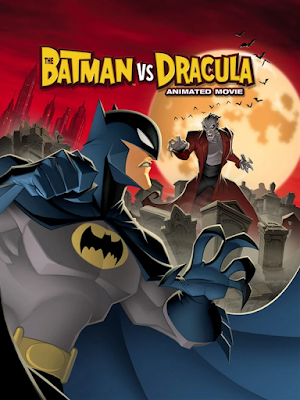
The Batman vs. Dracula


Note: This review contains spoilers for The Batman vs. Dracula.

Of all the Batman TV series out there, one that seems to fly under a lot of radars is The Batman (no relation to the 2022 film of the same name), which debuted on the Kids’ WB Saturday morning block in 2004 and ran for a total of five Seasons. I actually have some personal connection with this show, since it was the first Batman cartoon I ever watched as a kid, though admittedly I only ever watched the first three Seasons at the time. Perhaps lesser known is the one DTV movie based on the series, The Batman vs. Dracula, which came out in 2005 and escaped my notice even when it aired on TV. After finding out the movie existed while browsing HBO Max, I made the time to watch it and found something much more than I initially anticipated.

Saturday, September 19, 2020

Batman: Year One


Of the many writers who have penned Batman stories over the decades, Frank Miller is one of the more interesting ones, if only for singlehandedly writing some of the most famous (The Dark Knight Returns) and most infamous (All Star Batman & Robin, the Boy Wonder) takes on the character. One of the highlights of his career, however, is Batman: Year One, published in 1987 with artwork by David Mazzucchelli, a story that was considered the official origin story of Batman until 2013’s Zero Year. I actually read this story myself for a comics class in college, though it was a version where they inexplicably recolored the original artwork. Though this story would get an animated film adaptation in 2011, I didn’t view it until a 2020 Toonami broadcast, after which I wondered why I didn’t watch it sooner.

Saturday, May 2, 2020

Scooby-Doo and the Witch's Ghost


Note: The following review contains spoilers for Scooby-Doo and The Witch's Ghost.

Following the success of Scooby-Doo on Zombie Island in 1998, which reinvigorated the Scooby-Doo brand, a follow-up film was released the following year, Scooby-Doo and the Witch’s Ghost, beginning the trend of annual DTV Scooby-Doo films of varying quality. I will admit I wasn’t too aware of this movie when it first came out, however, I decided I had to see it since it seemed to form a set as one of the first four DTV movies based on Scooby-Doo. After finally getting to see it, I found it to be a worthy successor to Zombie Island, though it overall falls just short of the preceding movie’s quality.

Saturday, May 25, 2019

Batman Beyond: Return of the Joker


Before watching this movie, I will admit I have not actually seen the Batman Beyond cartoon, nor have I seen Batman: The Animated Series. However, I am aware of both shows and their relation to the DCAU, as well as how highly praised they are (especially the latter). What spurred me to watch Batman Beyond: Return of the Joker, however, was learning about how well thought-of it and Batman: Mask of the Phantasm are, though let’s not get ahead of ourselves. Despite not having any prior knowledge of Terry McGinnis’ tenure as the dark knight, I found his battle against the Joker to be a very solid movie.

Saturday, September 22, 2018

Scooby-Doo on Zombie Island


If you’ve been alive for the last 20 or so years, you’re no doubt familiar with Scooby-Doo, one of Hanna-Barbera’s most successful franchises, in some form or another. Since the original 1969 cartoon, Scooby-Doo, Where Are You!, the iconic group of meddling teenagers and their Great Dane spawned numerous spin-offs and TV movies into the present day, although production of Scooby-Doo material had stagnated over time, with the various series and specials relegated to re-runs. However, the 1998 home video release of Scooby-Doo on Zombie Island proved popular enough that it more or less revived the franchise, which lead to the production of further spin-offs and yearly direct-to-video features, with no signs of stopping anytime soon. We’ve decided to take a look at Scooby-Doo on Zombie Island in honor of its 20th anniversary to see how well it holds up today.

After solving cases for years, the Mystery, Inc. gang grow bored of mystery-solving and go their separate ways. Daphne (Mary Kay Bergman) and Fred (Frank Welker) have started a successful TV series, Velma (B.J. Ward) becomes the owner of a bookstore and Shaggy (Billy West) and Scooby-Doo (Scott Innes) are fired from an airport security job after consuming food designated as contraband. After Daphne expresses a desire to see everyone again, Fred gathers everyone together on her birthday to go on a roadtrip while filming her newest show, which involves finding locations that are actually haunted. Their search leads them to a remote home in New Orleans on Moonscar Island. While the gang is initially skeptical about how haunted the island is, they gradually discover that this time, the monsters are real.

(L-R): Fred (Frank Welker), Velma (B.J. Ward),
Shaggy (Billy West), Scooby-Doo (Scott Innes) and
Daphne (Mary Kay Bergman) reunite to film Daphne's new show.

Compared with most other versions of Scooby-Doo, Zombie Island has a more realistic atmosphere and more mature storytelling. The film explores what happens to Mystery, Inc. after they become adults and it’s interesting to see their lives with varying degrees of success before they regroup to relive their glory days. As part of this more mature direction, the story features actual deaths and the gang encounter real monsters, mainly the titular zombies. There is also more of an effort to give the characters depth, including a hint of romantic interest between Fred and Daphne that gets explored to some degree during the plot. This interpretation of the Scooby-Doo mythos is one of the more intriguing ones because the audience gets to see the gang reacting to a fairly rare situation and the story manages to successfully take the source material more seriously. There’s also a little humor to balance out the horror, mostly through subtle jokes about the franchise, such as a visual gag where Shaggy opens a suitcase to reveal multiple sets of his classic wardrobe.

While the story is able to stand the test of time, there are minor faults. For one, the character Snakebite Scruggs (Mark Hamill) doesn’t serve much of a purpose outside of saving Shaggy from a group of alligators and expressing bitterness towards the presence of “tourists” on his fishing grounds. Additionally, since Zombie Island came out in 1998, the setting features outdated technology, mainly a non-digital video camera, that would feel out of place in any other time period.

What helps the movie hold up today is the still-impressive traditional animation. The animation of Zombie Island is more fluid and detailed than most other Scooby-Doo productions before and since and features a darker color palette that fits in well with the atmosphere. Naturally being direct-to-video means that this movie would have a higher budget than a standard TV series, but even then, it seems to top many of the other direct-to-video Scooby-Doo films of recent years.

The detail helps the animation hold up today.

Zombie Island also stands out with its choice of music. Where previous versions of Scooby-Doo used pop music, this movie goes for a harder alternative sound with original tracks “The Ghost is Here” and “It’s Terror Time Again” performed by Skycycle, along with a cover of “Scooby-Doo, Where Are You!” by Third Eye Blind. The original tracks add to the mood of the scenes they’re used in and are also memorable tracks in their own right, especially “It’s Terror Time Again.” The voice acting is also done well, as even though not all of the original voice actors returned for this project, the featured line-up captures the feeling of their respective characters.

On the subject of the voice acting, Zombie Island holds the honor of having the first permanent recast of the voice actors used within the franchise. Following the death of Don Messick, to whom Zombie Island is dedicated, Scott Innes became the voice of Scooby-Doo; Casey Kasem declined to reprise his role as Shaggy unless the character would be depicted as a vegetarian, so Shaggy is instead voiced by Billy West in a one-off role; Mary Kay Bergman replaced Heather North in the role of Daphne and B.J. Ward replaced Nicole Jaffe as Velma. In contrast, Frank Welker was the only original cast member to return and still continues to voice Fred.

I can’t really end this without addressing an interesting bit of trivia regarding the origins of Zombie Island. The reason the plot unfolds the way it does is that apparently, the script borrows elements from an unfinished episode of SWAT Kats: The Radical Squadron called “The Curse of Kataluna”, also written by Glenn Leopold, who wrote Zombie Island.

Scooby-Doo on Zombie Island is easily one of the better examples of the Scooby-Doo franchise. The darker and more realistic atmosphere, consistent tone, incredible voice acting and mature writing all help this movie stand the test of time. While I would recommend this movie to anyone even remotely familiar with Scooby-Doo, as it’s still perfectly enjoyable for adults, I would advise parents to keep in mind that the subject matter could be genuinely frightening for small children.

Saturday, May 27, 2017

Batman: Assault on Arkham - A Better Suicide Squad


Last year, Warner Bros. released Suicide Squad, the third film in the DCEU. While Suicide Squad had promise, it failed to fully connect with its audience due to its odd pacing, overabundance of underdeveloped characters and poorly written script. Two years prior, DC and Warner Bros. released a direct-to-video animated film also based on the Suicide Squad, but this time set within the Batman: Arkham universe. Though its existence is perhaps not as widely known, it does manage to handle the concept of the team much better.

After Batman (Kevin Conroy) rescues Riddler (Matthew Gray Gubler) from a black ops assassination and returns him to Arkham Asylum, Amanda Waller (C. C. H. Pounder) invokes Priority Ultraviolet, which involves capturing and gathering a group of villains for the Suicide Squad. Said group is composed of Black Spider (Giancarlo Esposito), Captain Boomerang (Greg Ellis), Deadshot (Neal McDonough), Harley Quinn (Hynden Walch), KGBeast (Nolan North), Killer Frost (Jennifer Hale) and King Shark (John DiMaggio). Their mission is to break into Arkham Asylum and recover a thumbdrive hidden in Riddler’s cane, as the drive contains information about the Suicide Squad that Riddler acquired while employed by Waller and intended to make public. To keep the group in line, Waller has implanted nano-bombs within their necks, which KGBeast unwittingly demonstrates. At the same time the Suicide Squad set out on their mission, Batman is searching Gotham for the location of a dirty bomb planted by Joker (Troy Baker).

The Suicide Squad (Left to Right): Captain Boomerang (Greg Ellis),
Killer Frost (Jennifer Hale), King Shark (John DiMaggio), Deadshot (Neal McDonough),
Black Spider (Giancarlo Esposito) and Harley Quinn (Hynden Walch).

The plot, though simple, is executed well and does a good job at tying its two main threads together and balancing its core cast of villains. There is enough screentime for each Suicide Squad member, apart from KGBeast, to get a sense of who they are and how they interact with each other, even for the lesser-known characters. For example, there is sense of a budding romance between Killer Frost and King Shark as well as a competitive rivalry between Deadshot and Captain Boomerang. Naturally the 76-minute runtime doesn’t allow for any one of the characters to be fully fleshed out (especially KGBeast, Black Spider and Amanda Waller) and the audience is expected to already be familiar with characters and relationships as presented within the Batman: Arkham universe. Still, the story is at least accessible for the uninitiated.

The animation is also done very well and is faithful to the style of the Batman: Arkham games, including the more muted color palette. While the designs of the characters are very distinct from one another, Deadshot and Black Spider have somewhat similar designs when unmasked. Befitting its PG-13 rating, the movie also doesn’t shy away from hints at nudity, mainly with Harley Quinn and Killer Frost, or use of swearing. On that note, the voice acting is also pretty good, particularly the performances of Kevin Conroy and Troy Baker, the latter of whom does a convincing Mark Hamill impression.

Batman: Assault on Arkham is pretty good overall. Although the plot is simple, it does a good job of highlighting the characters and giving the audience an idea of who some of the more lesser-knowns are. The action does a good job of portraying each character’s abilities and the animation stays true to the style of the Batman: Arkham Universe. If you’re a fan of the Batman: Arkham games, then this is a worthy entry to watch. If you’re a fan of the Suicide Squad but found the 2016 DCEU film lacking, then consider viewing Assault on Arkham.