Showing posts with label The Beatles. Show all posts

Sunday, December 15, 2024

Stubs - Beatles ' 64

Beatles ’64 (2024) starring John Lennon, Paul McCartney, George Harrison, Ringo Starr. Directed by David Tedeschi, Produced by Martin Scorsese, Margaret Bodde Run time: 106 minutes. Black and White. U.S./United Kingdom. Documentary.

Every Beatles anniversary gets some sort of celebration, whether it’s the 50th anniversary of Sgt. Pepper getting a box set and a remix, or as with 2024, the 60th anniversary of The Beatles arrival in the U.S. To celebrate this occasion, there have been several releases during the year, including a Mega block set that re-enacted their first appearance on The Ed Sullivan Show, two separate Record Store Day releases, including 3-inch singles of all the songs they sang on that first show, a collection of vinyl mono releases from 1964, and now Beatles ’64, a “new” documentary that premiered on November 29, 2024 on the Disney+ streaming platform.

Monday, May 13, 2024

Stubs - Second Look - Let It Be


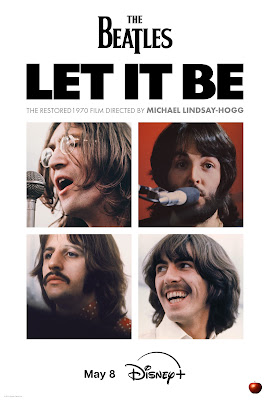
Let it Be (1970, re-released 2024) starring John Lennon, Paul McCartney, George Harrison, Ringo Starr. Directed by Michael Lindsay-Hogg Produced by Neil Aspinall Run time: 88 minutes (originally 80 minutes) Color, United Kingdom, Music, Documentary

Having waited nearly 50 years to rewatch Let It Be, your first reaction may very well be, what was all the fuss about? There is a mythology surrounding the film, perhaps more to do with what had happened soon before its release in May 1970, The Beatles' breakup, rather than what actually happens in the film itself.

Having more recently seen the longer, Peter Jackson version, Get Back, it is hard not to compare the two. The original film was intended to be a television documentary about The Beatles doing their first live concert since the Cow Palace on August 29, 1966. The film turned into a documentary of the group working, but still ended with a live performance, the unannounced, free, rooftop concert on January 30, 1969.

Sunday, November 28, 2021

Stubs: The Beatles: Get Back


The Beatles: Get Back
(2021) Starring John Lennon, Paul McCartney, George Harrison, Ringo Starr. Directed by Peter Jackson. Produced by Paul McCartney, Ringo Starr, Yoko Ono Lennon, Olivia Harrison, Peter Jackson, Clare Olssen, Jonathan Clyde United Kingdom, New Zealand, United States Color Run time: 360 minutes Documentary.

On January 2, 1969, with loose plans to do a live concert, The Beatles, at Paul McCartney’s guidance, gathered together in Twickenham Studios to rehearse, write songs and record for what was planned to be a TV Special. An ambitious project to write, rehearse and perform new songs, The Beatles gave themselves less than a month to pull it together. While the Deluxe Edition of the album Let It Be will attest to, they not only came up with enough material for an album, they also worked on songs that would appear on their last album Abbey Road and also on solo records from McCartney, Lennon and Harrison. The live concert finally found a home, the rooftop at Apple Corps, and took place on January 30, 1969.

In between starting the project and the concert, the recordings moved from a film studio to their own company, George Harrison would briefly leave the group, and keyboardist Billy Preston would join the sessions.

The TV Special would become the film Let It Be, and was seen by many to be documenting the disintegration of the greatest rock and roll group of all time. It didn’t help matters that the film was released after the group’s official breakup and that no member of the band went to the premiere.

Saturday, December 31, 2016

Stubs - Good Ol' Freda


Good Ol’ Freda (2013) Starring Freda Kelly. Director: Ryan White. Written by Jessica Lawson, Ryan White.Produced by Kathy McCabe Ryan White, Jessica Lawson. Run Time: 86 minutes. United Kingdom/USA Documentary

Loyalty thy name is Freda Kelly. As the personal secretary to Brian Epstein and as the head of the Beatles fan club, Freda knows a lot of dirt about the Fab Four, but she is not one to spill it. Rather, one of the few close associates not to have written a book, Freda gives away no real secrets in this crowd-funded documentary.

The title is taken from the 1963 fan club Christmas recording The Beatles recorded annually. Over the years, these recordings became more elaborate, but on the first one, they were much more casual and low key with the group sitting around a microphone speaking off-the-cuff and singing traditional carols like "Good King Wenceslas" and not so traditional ones like "Rudolph the Red-Nosed Ringo." When it was George’s turn to speak, he wanted to thank the Beatles Fan Club and Freda Kelly in particular, to which the other three yell “Good Ol’ Freda!”

A native of Dublin Ireland, Freda moved to Liverpool with her family in the early 1960s. After quitting school at the age of 16, Freda worked as a typist in a corporate typing pool. One lunch, two men took her to the Cavern Club, where she heard The Beatles, then a local band, play for the first time. She became a fan and continued to make the lunchtime trek to the Cavern, where she admits to having seen the group play nearly 200 times.

The Beatles were still in leather jackets and still had
 Pete Best as their drummer when  Freda first saw them play.

Due to the casualness of the environs, Kelly was able to get to know the band on a friendly basis, even spending time in the band’s room at the club along with other fans. On occasion, members of the band might give her a ride home, much to her father’s displeasure. He didn’t like the scruffy looks of the band, then still attired in leather jackets. Kelly got involved early in the group’s fan club, taking over running it when its founder lost interest.

At these lunchtime concerts, she also made the acquaintance of Brian Epstein, the son of the owner of the NEMS department store and a fellow fan of the band. Seeing their potential, Epstein would sign the band to manage and hired Kelly to be his secretary but never quit running the Fan Club.

With the group’s growing popularity, Kelly put some organization to the Club, even using her own home address as the club’s. Letters began to flow in, quickly becoming sacks of mail, which Freda attempted to not only answer but fan’s requests come true. As an example, she once had Ringo sleep on a pillowcase sent in by a fan.

Freda with Ringo.

Not only was she close to the band members, she also became close to their families, becoming like a daughter to Ringo’s mother, Elsie Starkey. So close in fact that when there was a reception at Liverpool City Hall for the band, the Starkeys had her invited as if she was one of their own. Angie McCartney, Paul’s stepmother, also appears in the film, speaking highly of Freda.

Freda also began to write a column in The Beatles Monthly, a fan magazine, a publication that would outlast the group by a couple of years, before it was decided to shut down the fan club in 1972 when Freda left on her own to spend more time with her husband and children.
While some of what she wrote in her Beatles Monthly column was gossip, Freda is very mum about the boys’ personal lives and, as an example, if she ever dated one of them in the early days. This is not a tell-all documentary.

Freda with Paul. There were once false rumors that they had wed.

The focus is squarely on Freda, who since leaving the Beatles’ employ has continued to work as a secretary, never talking openly about her previous position. She only agreed to the documentary after the birth of her grandson, wanting him to know that Grandma once did something extraordinary. There are interviews in her home as well as field trips to some of the famous locations around Liverpool where the Beatles performed or were honored.

As far as time-frame is concerned, like most Beatles documentaries, the emphasis is on the early days. Freda recounts how the members of the band would frequently come into Epstein’s offices at NEMS and how she would get them to sign autographs on the spot or backstage at shows.

When Epstein moved Beatles operations to London, Freda was not able to go, since her father forbade it. They kept her on in Liverpool and she would make frequent trips to London, but her daily contact would end. After Epstein’s death in 1967, she would continue on with the group, even appearing as one of the passengers in their first post-Epstein project, Magical Mystery Tour.

Freda between John and George during the filming of Magical Mystery Tour.

There is very little information discussed regarding the Apple years, but she apparently carried on with the fan club until 1972, when it was dissolved. She would continue to answer mail for the next three years on her own time. Also, there is no mention of the other bands that Epstein managed, even though none were ever as big. There are interviews with members of The Merseybeats, a band that played in the Cavern when the Beatles did and apparently still performs today, but no mention if they were also represented by NEMS or not.

Freda with George near the end of her 11-year employment.

For someone who spent 11 years with The Beatles, she has very little memorabilia, just four boxes that she keeps in the attic, having, she said, given the rest away to Beatles fans. She admits to always having been one herself so she could empathize with other fans' wants and desires. Freda never seemed to forget that she was in a special position. When she discovered one member of her then staff was trying to pass off someone else's hair as Paul's, she fired everyone since she didn't know who she could still trust.

Even as the Beatles were breaking up, Freda was still working for them.

While of the two surviving members only Ringo appears in the documentary, and even then only during the credits sequence, the Beatles are apparently squarely behind it, allowing archival footage as well as several of their own songs to be used; quite a feat for a documentary with a budget of about $60,000.

Freda Kelly, as she was when the documentary was
made; one of the unsung heroes of  Beatlemania.

Good Ol’ Freda shines the light on one of the unsung heroes of Beatlemania. No doubt there were other typists infatuated by the group when it played lunchtime concerts at the Cavern, but things might have been very different if it weren’t for dedicated people like Freda Kelly helping to shape their image. One more ingredient in the formula that made The Beatles the biggest act in the world.

For other Beatles films, see our Beatles Film Review Hub: http://trophyunlocked.blogspot.com/2014/02/review-hub-beatles-on-film.html

Sunday, September 18, 2016

The Beatles: Eight Days a Week - The Touring Years


The Beatles: Eight Days a Week – The Touring Years (2016) Starring: John Lennon, Paul McCartney, George Harrison, Ringo Starr Directed by Ron Howard. Written by Mark Monroe. Produced by Brian Grazer, Ron Howard, Scott Pascucci, and Nigel Sinclair. Black and White and Color. UK/USA Runtime: 138 minutes (95 minutes + Additional footage of the Beatles at Shea Stadium). Documentary

During the 1960s, The Beatles were the biggest act on the planet, so big in fact that Variety magazine named them the top entertainment icons of the 20th century. Pretty good considering they were only recording and releasing music for a little less than 9 years; from late 1962 to early 1970.

While many today don’t think of The Beatles as a live act, since their most celebrated work came after they stopped touring in 1966, seeing them live was a memorable experience for those who were able to afford the $2 to $4 for a ticket to see them and who had a ride to the concert, since many were too young to drive. Trying to capture that magical moment is the idea behind Eight Days a Week – The Touring Years which had a short theatrical release before ending up on Hulu and eventually on DVD and Blu-Ray.

In the early 2000s, a film archivist company, One Voice, One World, approached Apple Corps., the Beatles’ company, looking for a commission to gather fan-made footage of the group performing. During the rise of Beatlemania, there was also an increase in the home use of movie cameras (think of your cell phone but much larger and with film reels). The project stalled for a few years, until Jeff Jones, the head of Apple Corps., brought in the producer of the Bob Dylan documentary “No Direction Home" and the George Harrison documentary “Living in the Material World,” Nigel Sinclair.

Sinclair was working with director Ron Howard on the film Rush (2013) and asked him if he would be interested in working on the project. Howard, in turn, brought in his long-time producing partner, Brian Glazer. In addition to Howard, Glazer, and Sinclair, Scott Pascucci, the CEO of Bicycle Music, also serves as producer.

To enhance the sound quality, Giles Martin, the son of the Beatles’ music producer, George Martin, was brought in. Giles had worked on the music for the Beatles’ Cirque du Soleil Vegas show Love. Some of the sounds were originally recorded by the Beatles but never previously released.

While part of the hook for the film is that it includes crowd-sourced footage, a lot of the footage is really from pre-existing news sources, like press conferences and previously released footage from the Beatles’ first appearance on Ed Sullivan, their Budokan concert in Tokyo and their Shea Stadium concert, though there is some fan footage involved as well. A lot of it is hand-held, sometimes out of focus and sometimes blurry, but it was certainly as heartfelt as selfies are supposed to be. There was a shared experience for those who saw them live and it is their telling of that experience that can be very interesting and they get screen time as long as they are celebrities.

The Beatles perform in England when America was just a goal.

Sigourney Weaver, who saw them at the Hollywood Bowl in 1964, recounts her own adolescent fantasy of being noticed out in the crowd.

Whoopi Goldberg was someone I would never have associated with the Beatles, but apparently, their appearance on The Ed Sullivan Show had a real impact on her and her getting to see them at Shea Stadium was a true highlight for her. Her telling of that story is very moving. Surprisingly, the footage of the show looks really horrible on the big screen. Not sure why, but that has no impact on Goldberg’s story.

Elvis Costello, a fellow Liverpudlian and a musician, can speak of them on two levels, fan and contemporary. His insights as a fan growing up provide some great commentary about how fans reacted to their musical maturation.

Larry Kane, a Miami-based journalist who accompanied them on their 1964 tour, provides some very insightful recollections of his time with the group. It is from him that we see that they made an effort to be kind to their opening acts, that were largely ignored by the crowds. It is also through him that we learn the Beatles refused to perform in front of segregated audiences, which forced the Gator Bowl to allow blacks and whites to buy tickets and sit together.

Also interesting, but really unrelated to their live performance was the comments of Howard Goodall, a composer, some of whose work you might or not be familiar with. He speaks in wonderment of the Beatles’ accomplishment with melodies in terms of the work of Mozart.

The film loosely chronicles the Beatles' rise from their roots in the Cavern Club in Liverpool to super-stardom, occasionally stepping back from the progress to delve into other details, like their songwriting skills and their relationship with manager Brian Epstein, who doesn’t get mentioned until the Shea Stadium concert footage when he’s shown watching like a protective father from the sidelines. While Epstein may have failed to make them all the money they could have, he certainly succeeded in making them famous.

The Beatles perform in Washington D.C. during their first visit to the U.S.

Some time is also given over to their accomplishments in the studio, both in having number one albums, but also the maturation of their songs and the complexities that they couldn’t perform live on stage. George Martin, their producer and the most likely candidate for Fifth Beatle determination, helped shepherd them through this process and gets some of the credit he deserves.

The Beatles are also interviewed, providing the kind of insight that only one of them could provide. Paul McCartney and Ringo Starr were interviewed specifically for the film, while file footage of the late George Harrison and John Lennon were scoured for their insights.

The Beatles sound didn't come together until Ringo Starr joined the band.

The film hits certain highlights of the Beatles’ tours, though overall it seems a little American-centric. We see them in certain cities, but the predominant amount seems to be in the States, not England. That is not to say there aren’t performances in the UK, Japan, and Denmark, but their residence in Paris at the beginning of 1964 is shown in only as it relates to their coming to America.

Candlestick Park was the last concert The Beatles would play in front of a paying crowd.

One of my sons had a Popular Culture class in college and the professor made the asinine observation that A Hard Day’s Night (1964) was made to show audiences how they should react when they saw the Beatles. That declaration overlooked the fact that audiences were screaming for them long before United Artists had the bright idea to try and capitalize on what they thought was a fast-moving trend that would have worn itself out by mid-1964. This film is a testament that predominantly female audiences were screaming for them when they were still playing the Cavern Club and did not need to be instructed to do so.

It didn't take more than a couple of years before the Beatles tired of the "freak show" they were becoming. After the breakthrough year of 1964, 1965 seemed like a repeat. They toured and recorded extensively and made another film, Help! 1966 promised more of the same, but touring was getting to be too much of a grind and all four decided after Candlestick Park to stop touring altogether.

The film ends with the Beatles final performance on the rooftop of Apple Corp. in London. Even though the group was on the verge of breaking up in 1969, they were still a tight band and it really appears they still enjoyed playing with each other. Seeing this footage, in particular, is a reminder that there is still a viable Beatles documentary waiting for a new public release. Let It Be (1970) has not been seen for years and would be a welcomed release should the Beatles’ Apple Corps. decide to finally release it for consumption again.

The Beatles perform at Shea Stadium.

In the theaters, the film is accompanied by 30 minutes of a 50-minute concert film of the Beatles’ Shea Stadium show. Among their firsts were stadium shows. While not the first, Shea was the most famous. Originally shot by Ed Sullivan’s production company, this shorter version eliminates the opening acts but contains all of their performance. Remastered in 4K, the show doesn’t really look all that enhanced.

One of the predominant questions the Beatles were asked during their 1964 tour is what were they going to do when the bubble burst. The applause at the end of the film during the showing I attended proves that the bubble never did. The Beatles may have broken up but their legacy lives on as their songs, and the screaming fans still resonate in our ears.


For other Beatles films, see our Beatles Film Review Hub: http://trophyunlocked.blogspot.com/2014/02/review-hub-beatles-on-film.html

Wednesday, July 6, 2016

Stubs Goes Blu(-ray) - A Hard Day’s Night

Stubs Goes Blu(-Ray) is an occasional series wherein we reexamine a favorite classic that receives an enhanced presentation.


A Hard Day’s Night (1964) Starring John Lennon, Paul McCartney, George Harrison and Ringo Starr with Wilfrid Brambell. Directed by Richard Lester. Produced by Walter Shenson. Screenplay by Alun Owen. Songs by Lennon-McCartney. Run time 87 minutes. Black and White. British. Musical Comedy

My love of this film is nothing new. When I first started writing about film for Trophy Unlocked, the first film I wrote about was A Hard Day’s Night. I have managed to own this in every conceivable format, including Betacam and even a PC ROM version that took every other frame of the film. (I even for a while had producer Walter Shenson’s personal copy that I took photos from for a project at USC.) But the best version I’ve seen, short of in the theater, is the Criterion Collection’s Blu-ray version, which has been out for some time, but which I only recently had the time to watch. (So many movies, so little time).

There is nothing not to love about this film. A fictitious day in the life of what was at the time a force of nature, but which has, over time, been recognized as the greatest/biggest/most influential rock band of all time. So much has been written about them that I will not attempt to put my own spin on their story, but their music looms large in their legend and plays a very prominent role in the film. While most of the music was written specifically for the movie, including the title song, “Can’t Buy Me Love,” “I Should Have Known Better,” “If I Fell” and “And I Love Her,” they do perform one of their early greatest hits, “She Loves You,” one of the most infectious songs in all of pop/rock music.

In a script written specifically for them, by Alun Owen, the four Beatles come across as individuals with strong personalities and good senses of humor. While Paul doesn’t really get a vignette of his own, the others do with Ringo having received a lot of praise for his performance in the film. George, who is mistaken for a would-be actor, manages to deflate producer Simon Marshall’s (Kenneth Haigh) confidence in their resident teenager, Susan Canby, by giving his opinion and not caring how it’s taken. John has a shorter bit and interlude with Millie (Anna Quayle), who thinks she knows who he is until he convinces her he isn’t.

The supporting cast is also very strong, with all of them hitting their marks. They don’t get in the way of The Beatles and they are treated as more than just props for the humor, but there is a real give and take between themselves and with the Beatles. Wilfrid Brambell plays Paul’s other grandfather and given the obvious age differential seems to work well with them, especially Ringo, with whom he is paired with for part of the movie that sets Ringo out to parade about.

The Beatles are basically playing themselves or at least an idealized version of themselves and the film, made as quick exploitation, has turned into a classic of the rock film genre. Many groups have tried the formula from Gerry and the Pacemakers to The Ramones, but none has made a better film. A lot of that credit goes to director Richard Lester, who capitalizes on contemporary trends in filmmaking to bring the best out of everyone involved.

While The Beatles are certainly not Great Britain’s answer to the Four Marx Brothers, some comparisons are in order. Both rely on good screenplays and good chemistry with each member needing to be his own man, but also to work well within the confines of the group. And both groups seem to bring chaos with them to any given situation. The Marx Brothers are basically "controlled anarchy," while the Beatles’ presence destabilizes whatever situation they’re in.

Like Marx Brothers films, A Hard Day’s Night is funny, both verbally and visually. The dialogue, for the most part, sounds natural, giving the viewer the idea that they’re eavesdropping in on the group, rather than the fact they’re giving a bash at reading lines. The visual humor sometimes borders on the slapstick, as when Ringo puts down his raincoat in his best Walter Raleigh impersonation to let a woman avoid a mud pool, only to have her swallowed up by it.


John was busy the day they shot this sequence with Paul, Ringo and George.

There is an underlying sense of youthful rebellion under most of the film, as the Beatles keep running smack up against the “man”, whether it’s the regular train rider (Richard Vernon) they conflict with over the window and radio, the groundskeeper who chases them off the field they’re playing on during “Can’t Buy Me Love”, the TV director (Vincent Spinetti), who doesn’t know what to do with them, or even their own manager, Norm (Norman Rossington), whom Lennon constantly compares with a pig. But it is all played for fun, rather than for any overt political message.


The Beatles on tour, according to A Hard Day's Night.

Such was the phenomenon of the Beatles and the success of A Hard Day’s Night that it was mentioned in a recent college course, on Pop Culture, one of my sons took. The professor made the rather uninformed observation that the Beatles had made this film to show fans how to react to them. Perhaps he was unaware of the timing of the film, but it was made after they had already been to America and appeared on the Ed Sullivan show. They were not showing fans how to react, but showing how fans did react to them.

Seeing the film again is sort of like meeting up with an old friend after an absence of years. They are still warm and funny and can be counted on to make you feel good for the experience. Seeing the film again in Blu-Ray is a real delight. The camera work, much of which is handheld, still looks good and even better in high definition. The black and white cinematography is iconic, making the Beatles seem more uniform, or idealized than they really were.

John leans forward on the train to ask Paul "Who's that little old man?"

Any good film is worth seeing in the best possible setting. Theatrical films, even those in black and white shot in the Academy ratio, should be seen on the big screen. But if your local revival house or college classroom is not showing the film, then the next best thing would be the Blu-Ray. 

For other Beatles films, see our Beatles Film Review Hub: 
http://trophyunlocked.blogspot.com/2014/02/review-hub-beatles-on-film.html

Blu-ray screeencaps courtesy of Blu-ray.com

Sunday, February 9, 2014

Review Hub - The Beatles on Film


More than sixty years ago, on February 9, 1964, The Ed Sullivan Show featured performances by four musicians from Liverpool, England who had recently had a number one hit in the U.S. I Want to Hold Your Hand was the first of many number one singles and millions of record sales  for The Beatles in this country. (Just since 1991, The Beatles have sold 64.1 million albums in the U.S.; not bad for a group that broke up two decades earlier.)

To celebrate their first triumphant live appearance in the U.S., Trophy Unlocked  is proud to present The Beatles on Film Review Hub:


The Beatles: Get Back


Let it Be (1970, re-release 2024)


Beatles '64


Monday, February 27, 2012

Stubs - Let It Be


LET IT BE (1970) Starring: John Lennon, Paul McCartney, George Harrison, Ringo Starr, Billy Preston, Mal Evans, Yoko Ono, and George Martin. Directed by Michael Lindsay-Hogg. Produced by Neil Aspinall. Songs by John Lennon and Paul McCartney, George Harrison and Ringo Starr. Run Time: 81 minutes. Color. UK. Documentary

It all comes down to this. The penultimate project of the Beatles as a group before breaking up, Let It Be documents the disintegration of the band that defined music in the 1960s. What the documentary set out to do was something very different. After the unpleasant recording sessions for the previous album, The Beatles aka The White Album, the group wasn’t sure how to proceed. Despite the album’s title, the recording sessions had been less a cooperative effort, with Paul and John oftentimes recording in different studios. George Martin, the Beatles longtime producer, left for a holiday in the middle of the sessions and even Ringo quit the group for a couple of weeks, tired he was of how things were going.

By 1969, Paul had taken over leadership of the band. He was filling the hole left when John, who was more fascinated with Yoko Ono than the Beatles, abdicated his position as leader of the group. Paul wanted very much for the band to continue and looked for ways of creating harmony. His first idea was to tour again, but the others were not open to it. Then the idea was to play a live concert, but once again, despite throwing around a lot of ideas, they couldn’t decide on one. They finally decided on a TV special of the band performing new songs and it was suggested that they film their rehearsals as part of perhaps a companion special. To this end, the Beatles hired Michael Lindsay-Hogg, the director of some of their earlier promotional films for "Paperback Writer", "Rain", "Hey Jude" and "Revolution".

Filming began on January 2, 1969, at Twickenham Film Studios in London. Since the group was working with a film crew, they had to work more during the day rather than at night, which had become their preferred work time. The film studio, unlike Abbey Road Studios, where the group had done most of their recordings, was cold and austere. This combined with being followed around constantly by a camera crew and it is easy to see that tension within the group did not get better. 


Twickenham Studios was not conducive to recording and harmony. 
On January 10th, Harrison announced he was leaving the band (in a scene omitted from the film). While rehearsals and filming continued in his absence, Harrison did agree to return on the 15th. However, he had conditions, including moving the recording sessions to Apple Records and abandoning the idea of an elaborate live concert. 


George also wanted Billy Preston (l) to be in on the sessions.
However, filming was to continue for a feature film to complete the group’s obligation to UA for a third film. (UA did not accept their brief live appearance in Yellow Submarine as a Beatles film.)

On January 21st, filming began again. In order to improve the vibe, George invited Billy Preston, a keyboardist the Beatles had known since 1962 to join them. During these sessions, the Beatles apparently played many songs that were not featured in the film or would appear on a Beatles record. During the film, we do see the band run through McCartney’s "Teddy Boy", which appeared on this first solo album the next year. They also work on some songs that would appear on the next and last studio album, Abbey Road; "Maxwell Silver’s Hammer", "Oh! Darling" and "Octopus’s Garden".

In an effort to complete the film, the Beatles agreed on January 30th, to do a lunchtime rooftop concert. From those sessions, the next Beatles single "Get Back" and its B-side; "Don’t Let Me Down" would be culled.


The last Beatles live appearance was the lunchtime rooftop concert that ends Let It Be.
The final film shows the Beatles falling apart, but still managing to make some pretty good music along the way. One of the original concepts of the album was to just have the Beatles play, and the film retains some of that with Paul singing "Besame Mucho", a standard they no doubt covered in Hamburg and used in their Decca audition. The group also plays covers of "You’ve Really Got a Hold on Me", "Rip It Up", "Shake, Rattle and Roll", "Kansas City", and "Lawdy Miss Clawdy" and others from their Hamburg days, some which they had previously released.

Despite the bickering, which the film manages to document, including a famous exchange between George and Paul prior to the former’s departure, there is a feeling of nostalgia. Paul can be seen talking about footage of them he had recently seen of images of them following after the Maharishi Yogi looking like they were in a trance (if memory serves me.) The group also rerecords one of their earliest songs "One After 909", the original recording of which dates back to March 1963 and can be found on the Beatles Anthology 1 album.

And despite the discord one can sense while watching, the Beatles still manage to make some great songs, including "Get Back", "Don’t Let Me Down", "Two of Us" and "I’ve Got A Feeling", all of which seem to show the Beatles enjoying playing together. "I’ve Got A Feeling" is a throwback of sorts, as it seems to be a combination of snippets that John and Paul had written individually, a la "A Day In The Life" from the Pepper album.


John and Paul could make great music together. Here they're singing "Two of Us".
Overall, the quality of the film is not helped by the fact that the original footage was shot in 16mm, blown up to 35 mm and then edited from full-frame to a wider aspect ratio by cropping off the top and bottom of every frame. So the resulting film is grainy and the composition within the frames differs from what was originally shot.

There are two problems with writing a review of the film Let It Be. First is that the soundtrack album, produced by the infamous Phil Spector, features versions of songs not found in the film, leaves out "Don't Let Me Down" entirely and, of course, the songs are overdubbed, in some cases adding strings and a choir. An attempt to correct that, Let It Be…Naked, really isn’t much better. McCartney’s 2003 attempt to strip away Spector’s Wall of Sound, sometimes uses different takes than what appeared on the 1970 soundtrack. Naked also changes the running order and eliminates the ambient talking. So one can’t listen to either and remember how it was shown in the film.


The album Let It Be isn't a true soundtrack to the movie of the same name.

The second problem is that this final Beatles film has never been released on DVD, though it was briefly released on VHS in the 1980s. It is reported that the surviving Beatles, Paul, and Ringo, don’t want it released since it shows the group in a bad light. And that is true. 

This is not the happy go lucky Beatles of A Hard Day’s Night. This is the real group at the precipice of its own dissolution. But by now, everyone knows the story and no one would be shocked to watch them bicker their way through another project. The Beatles themselves discussed the end of the group in their own Anthology documentary series.

But for a group that wanted to give their fans the best they could, it is time to once again let the fans see the men behind the curtain. Let It Be should be released so that the fans of the group can see the reality of what happened and not rely on the memories of those who managed to see it before the Beatles withdrew it from the public.

For other Beatles films, see our Beatles Film Review Hub: http://trophyunlocked.blogspot.com/2014/02/review-hub-beatles-on-film.html

Saturday, February 25, 2012

Stubs - Yellow Submarine


YELLOW SUBMARINE (1968) Starring: John Lennon, Paul McCartney, George Harrison and Ringo Starr. Voices by: John Clive, Paul Angelis, Geoffrey Hughes and Lance Percival. Directed by George Dunning. Written by Lee Minoff, Al Brodax, Jack Mendelsohn and Erich Segal. Produced by Al Brodax. Songs by John Lennon and Paul McCartney, and George Harrison. Music by George Martin. Run Time: 89 minutes. Color. UK. Music, Comedy, Adventure, Animated

Of all the Beatles films, this one had the least involvement from the group. Based on the song “Yellow Submarine” released in 1966 as the double A-sided single with “Eleanor Rigby” both off the group’s Revolver album, the film began production in 1967. It wasn’t until after the group saw the completed work that they agreed to appear in the live-action cameo shown at the end of the film.

The roots for this project go back to the beginnings of Beatlemania. In 1964, the Beatles manager Brian Epstein was approached by Al Brodax, a cartoon producer who wanted to make an American TV cartoon series based on the group and their songs. While not enthusiastic about the idea, Epstein didn’t see any harm and agreed to do it and promised that the Beatles would cooperate with an animated feature, should the TV series be successful. The series ran for three seasons on ABC TV and in 1966, Brodax reminded Epstein of his promise. Neither Epstein nor the group was really excited about an animated film, but thought it would fulfill their commitment to UA for a third film.


Yellow Submarine has roots in the Beatles Cartoon series.
The story revolves around the magical Pepperland, a psychedelic playground that is attacked by Blue Meanies and their assorted co-horts. The Blue Meanies drain the color from Pepperland, and capture the protectors of Pepperland, Sgt. Pepper’s Lonely Hearts Club Band, in a bubble. In his last action, the Lord Mayor sends Old Fred, a sailor, off in a Yellow Submarine in order to get help.

Old Fred takes the submarine to Liverpool where he encounters an aimless Ringo, who is wandering the streets. After agreeing to help Fred, Ringo gathers his mates and the five take off for Pepperland. On the way they must navigate through the Sea of Time, the Sea of Science, the Sea of Monsters, the Sea of Nothing, the Sea of Heads and the Sea of Holes, which turns into the Sea of Green. In the Sea of Nothing, they encounter Jeremy Hilary Boob, the Nowhere Man whom the Beatles let join them onboard the submarine.


The Beatles and Jeremy Hilary Boob in the Sea of Holes.
After landing in Pepperland, the Beatles see that the landscape has been turned into miserable wasteland. The group dresses like Sgt. Pepper’s band and go to steal instruments from the high tower where the Blue Meanies have stored all the instruments they’ve stolen. They almost get away with it, but Ringo accidentally steps on a bagpipe. With the alarm sounded, the Beatles flee, retrenching themselves and sing “Sgt. Pepper’s Lonely Hearts Club Band”, which sends the Blue Meanies into retreat. The chief Blue Meanie retaliates, sending Glove after them, but John defeats it by singing “All You Need is Love.” The residents of Pepperland, revitalized, take up arms against the Blue Meanies and chase them back to the Blue Mountains from whence they came. The color is restored to Pepperland and the thorns turn into flowers.

The Blue Meanies.
Ringo frees the original Sgt. Pepper band by using a hole, from the Sea of Holes, to allow them to escape from the bubble they’ve been imprisoned in. There are some further skirmishes with the Blue Meanies, including their multi-headed dog, but as is always the case, the Beatles are victorious. When the chief Blue Meanie tries to kill Jeremy, he is instead transformed. When John offers friendship, the chief Blue Meanie has a change of heart.

With everyone singing and happy, the movie changes to the live-action appearance of the Beatles. When John sights “newer and bluer meanies in the vicinity of this theater”, the group sings a reprise of “All Together Now” to ward them off.


The Beatles make a brief appearance at the end of Yellow Submarine.
The animation for Yellow Submarine was markedly different from what had come before. The film’s art director, Heinz Edelmann, had been a pioneer in the psychedelic style. There was a prominent use of photographic images as backgrounds, vibrant colors and there was no effort made to completely feel the frame with animated images. The film reminds many of the art work popularized by Peter Max, though he had nothing to do with the film. Many characters were created for the film that had nothing do with the Beatles or their songs. Included amongst them are the Blue Meanies, the Apple Droppers, the multi-headed dog, the Lord Mayor, Old/Young Fred and Jeremy.


An example of some of the animation from Yellow Submarine.
The animated Beatles were based on the Beatles in their 1967 promotional film for their single “Strawberry Fields Forever.” And while Beatles music is obviously prominent throughout, only four songs were original to the movie, though not necessarily were written for it. The soundtrack gave the Beatles a chance to use songs that they mostly had sitting around: “Only A Northern Song” George’s ode to then Beatles music publisher Northern Songs; “It’s All Too Much”, another Harrison song which dates from the Pepper sessions; “Hey Bulldog” which dates from earlier in the year before the group’s sojourn to India; and “All Together Now” recorded during the Magical Mystery Tour sessions.


The animated Beatles with the Lord Mayor of Pepperland.
The soundtrack includes snippets of songs from several Beatle albums, including 1965’s Rubber Soul: “Think for Yourself” and “Nowhere Man”; 1966’s Revolver: “Yellow Submarine”, “Eleanor Rigby” and “Love You To”; 1967’s Sgt. Pepper: “Lucy In the Sky with Diamonds”, “Sgt. Pepper’s Lonely Hearts Club Band”, “With a Little Help From My Friends” and “When I’m Sixty Four” as well as the single “All You Need Is Love” and its B-side “Baby You’re a Rich Man”. George Martin composed the score music that was featured on the B-side of the original soundtrack album released after the film’s release. A digitally remastered soundtrack featuring only Beatles songs was released in 1999 to coincide with the release of the film on DVD. However, it was the original soundtrack that got the digital remaster treatment in 2009.

The film proved to be quite popular and spawned a second wave of Beatles-related merchandise and memorabilia, the first since the old days of Beatlemania. There was even more merchandise created when the film was finally released on DVD.

In many ways it’s hard to call Yellow Submarine a Beatles film; they did not do the voices or have anything to do with the production. However, it is still infused with their spirit and is based on their music. It is worth noting that this is the last time a happy Beatles group would be featured on celluloid.

For other Beatles films, see our Beatles Film Review Hub: http://trophyunlocked.blogspot.com/2014/02/review-hub-beatles-on-film.html