Showing posts with label A Hard Day’s Night. Show all posts

Wednesday, July 6, 2016

Stubs Goes Blu(-ray) - A Hard Day’s Night

Stubs Goes Blu(-Ray) is an occasional series wherein we reexamine a favorite classic that receives an enhanced presentation.


A Hard Day’s Night (1964) Starring John Lennon, Paul McCartney, George Harrison and Ringo Starr with Wilfrid Brambell. Directed by Richard Lester. Produced by Walter Shenson. Screenplay by Alun Owen. Songs by Lennon-McCartney. Run time 87 minutes. Black and White. British. Musical Comedy

My love of this film is nothing new. When I first started writing about film for Trophy Unlocked, the first film I wrote about was A Hard Day’s Night. I have managed to own this in every conceivable format, including Betacam and even a PC ROM version that took every other frame of the film. (I even for a while had producer Walter Shenson’s personal copy that I took photos from for a project at USC.) But the best version I’ve seen, short of in the theater, is the Criterion Collection’s Blu-ray version, which has been out for some time, but which I only recently had the time to watch. (So many movies, so little time).

There is nothing not to love about this film. A fictitious day in the life of what was at the time a force of nature, but which has, over time, been recognized as the greatest/biggest/most influential rock band of all time. So much has been written about them that I will not attempt to put my own spin on their story, but their music looms large in their legend and plays a very prominent role in the film. While most of the music was written specifically for the movie, including the title song, “Can’t Buy Me Love,” “I Should Have Known Better,” “If I Fell” and “And I Love Her,” they do perform one of their early greatest hits, “She Loves You,” one of the most infectious songs in all of pop/rock music.

In a script written specifically for them, by Alun Owen, the four Beatles come across as individuals with strong personalities and good senses of humor. While Paul doesn’t really get a vignette of his own, the others do with Ringo having received a lot of praise for his performance in the film. George, who is mistaken for a would-be actor, manages to deflate producer Simon Marshall’s (Kenneth Haigh) confidence in their resident teenager, Susan Canby, by giving his opinion and not caring how it’s taken. John has a shorter bit and interlude with Millie (Anna Quayle), who thinks she knows who he is until he convinces her he isn’t.

The supporting cast is also very strong, with all of them hitting their marks. They don’t get in the way of The Beatles and they are treated as more than just props for the humor, but there is a real give and take between themselves and with the Beatles. Wilfrid Brambell plays Paul’s other grandfather and given the obvious age differential seems to work well with them, especially Ringo, with whom he is paired with for part of the movie that sets Ringo out to parade about.

The Beatles are basically playing themselves or at least an idealized version of themselves and the film, made as quick exploitation, has turned into a classic of the rock film genre. Many groups have tried the formula from Gerry and the Pacemakers to The Ramones, but none has made a better film. A lot of that credit goes to director Richard Lester, who capitalizes on contemporary trends in filmmaking to bring the best out of everyone involved.

While The Beatles are certainly not Great Britain’s answer to the Four Marx Brothers, some comparisons are in order. Both rely on good screenplays and good chemistry with each member needing to be his own man, but also to work well within the confines of the group. And both groups seem to bring chaos with them to any given situation. The Marx Brothers are basically "controlled anarchy," while the Beatles’ presence destabilizes whatever situation they’re in.

Like Marx Brothers films, A Hard Day’s Night is funny, both verbally and visually. The dialogue, for the most part, sounds natural, giving the viewer the idea that they’re eavesdropping in on the group, rather than the fact they’re giving a bash at reading lines. The visual humor sometimes borders on the slapstick, as when Ringo puts down his raincoat in his best Walter Raleigh impersonation to let a woman avoid a mud pool, only to have her swallowed up by it.


John was busy the day they shot this sequence with Paul, Ringo and George.

There is an underlying sense of youthful rebellion under most of the film, as the Beatles keep running smack up against the “man”, whether it’s the regular train rider (Richard Vernon) they conflict with over the window and radio, the groundskeeper who chases them off the field they’re playing on during “Can’t Buy Me Love”, the TV director (Vincent Spinetti), who doesn’t know what to do with them, or even their own manager, Norm (Norman Rossington), whom Lennon constantly compares with a pig. But it is all played for fun, rather than for any overt political message.


The Beatles on tour, according to A Hard Day's Night.

Such was the phenomenon of the Beatles and the success of A Hard Day’s Night that it was mentioned in a recent college course, on Pop Culture, one of my sons took. The professor made the rather uninformed observation that the Beatles had made this film to show fans how to react to them. Perhaps he was unaware of the timing of the film, but it was made after they had already been to America and appeared on the Ed Sullivan show. They were not showing fans how to react, but showing how fans did react to them.

Seeing the film again is sort of like meeting up with an old friend after an absence of years. They are still warm and funny and can be counted on to make you feel good for the experience. Seeing the film again in Blu-Ray is a real delight. The camera work, much of which is handheld, still looks good and even better in high definition. The black and white cinematography is iconic, making the Beatles seem more uniform, or idealized than they really were.

John leans forward on the train to ask Paul "Who's that little old man?"

Any good film is worth seeing in the best possible setting. Theatrical films, even those in black and white shot in the Academy ratio, should be seen on the big screen. But if your local revival house or college classroom is not showing the film, then the next best thing would be the Blu-Ray. 

For other Beatles films, see our Beatles Film Review Hub: 
http://trophyunlocked.blogspot.com/2014/02/review-hub-beatles-on-film.html

Blu-ray screeencaps courtesy of Blu-ray.com

Sunday, February 9, 2014

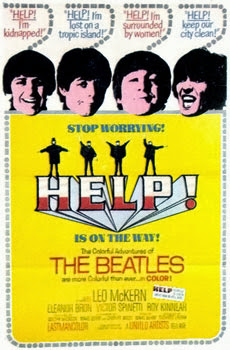
Review Hub - The Beatles on Film


More than sixty years ago, on February 9, 1964, The Ed Sullivan Show featured performances by four musicians from Liverpool, England who had recently had a number one hit in the U.S. I Want to Hold Your Hand was the first of many number one singles and millions of record sales  for The Beatles in this country. (Just since 1991, The Beatles have sold 64.1 million albums in the U.S.; not bad for a group that broke up two decades earlier.)

To celebrate their first triumphant live appearance in the U.S., Trophy Unlocked  is proud to present The Beatles on Film Review Hub:


The Beatles: Get Back


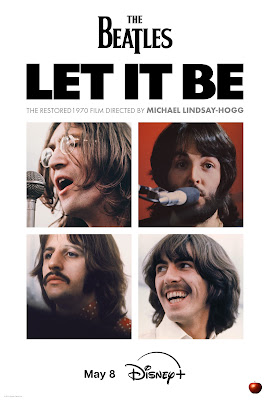
Let it Be (1970, re-release 2024)


Beatles '64


Sunday, April 10, 2011

Stubs - A Hard Day’s Night


File:A Hard Days night movieposter.jpg

A HARD DAY’S NIGHT (1964) Starring John Lennon, Paul McCartney, George Harrison and Ringo Starr with Wilfrid Brambell. Directed by Richard Lester. Produced by Walter Shenson. Screenplay by Alun Owen. Songs by Lennon-McCartney. Run time 87 minutes. Black and White. British. Musical Comedy

If you have never heard of or, more importantly, heard the Beatles, then I must say I’m sorry for you. While most of their music was produced over 40 years ago now, their body of work stands the test of time and their influence lives on. Several of their albums have to be mentioned in any list of great pop or rock albums. The band you may like now may have been influenced by them or by another group or musician that took up a guitar after hearing the Beatles. They are what is right with pop music, in that they not only reflect the times they’re in, but they also mark that time.

No one was bigger than the Beatles were as a group. And in this day of multi-channeled entertainment, I don’t see how one star or group could break as big as they were. I won’t go into their record setting career but they sold in the multi-millions and set records for most number ones. Considering they were only productive as a recording group from late 1962 to very early 1970, this makes these accomplishments all the more impressive. Coupled with that, they influenced the 1960’s in a positive way from breaking down barriers, to the peace movement, and even played a part in introducing Indian music and culture to the rest of the world. They were in many ways the 60’s encapsulated and it is sort of fitting that they broke up at the end of the decade.

But what made the Beatles such a big success? First and foremost was the music. If you listen to the other music that was popular in America when the Beatles came here, you can hear the difference right away. Rock and Roll had lost its way and instead of Elvis Presley and Chuck Berry, we were left with teen idols who left music in a near comatose state. The Beatles sounded alive and fun. Lennon and McCartney were masters of the 2 and half minute pop song.

The Beatles were both different and non-threatening. Their so called long hair, which is nothing by today’s standards, set them apart in both England and the U.S. But at the same time, they wore suits and ties. They had a clean cut look and to some degree image. While you might not want to let your teenage daughter be alone with one of them, you didn’t think they were here to burn the place down either.

The Beatles: Paul McCartney, George Harrison, Ringo Starr and John Lennon.
The Beatles were witty and funny. You just have to listen to their early interviews to hear their wit come through. And though they may have looked similar with their uniforms and mop tops, they each had distinctive personas that were played up in the press of the day.

All of these factors are on display in A HARD DAY’S NIGHT, their first and best film. Directed by Dick Lester, an American born British director; produced by Walter Shenson, an American born London based producer, and written by Alun Owen, a Welsh-born screenwriter, the film could have easily been nothing more than an exploitation film and still have been a success at the time. However, because these three tried to do more with the opportunity and saw something in the Beatles they could work with, the film lives beyond its release and its time.

This is a mockumentary that predates THIS IS SPINAL TAP by a couple of decades. Shot in a cinéma vérité style, (which is a fancy way of saying a style of documentary filmmaking), A HARD DAY’S NIGHT employs hand held cameras at times. The film‘s documentary quality is enhanced by the use of black and white stock. Most everyone who had seen the Beatles, except those who had seen them live, had seen them on their black and white television set or in black and white photos in the paper. For some reason, black and white captures the moment, almost setting the stage for the color saturation that was to come and explode in the second half of the decade with the proliferation of color TV and psychedelic images. Black and white was the era the Beatles would be leading us out of.

With a razor thin plot line, A HARD DAY’S NIGHT seems to capture a day in the life of music group, coming to town for a variety television show appearance. The Beatles are accompanied by their two managers, Norm (Norman Rossington) and Shake (John Junkin). For this trip Paul has in tow his grandfather (Wilfrid Brambell) who is supposedly nursing a broken heart. But it is the grandfather, a real mixer that throws grit into the otherwise smooth operating, well-oiled Beatles machine.

Who's that little old man? Wilfrid Brambell played Paul's Grandfather.

The subplot is the confrontation between the Beatles and the establishment or authority. This is played for laughs. Whether it is dealing with their own managers, or the television director (Victor Spinetti) or the police, one way or another the Beatles always seem to come out on top.

Authority figures: The Beatles' manager, Norm (Norm Rossington),
TV director (Victor Spinetti) and road manager, Shake (John Junkin)
On board the train, the Beatles deal with an older businessman who shows contempt for these young upstarts. He fought the war and rides the train regularly and feels that gives him more of a stake then they have. Leaving the kennel to Lassie, the Beatles spend the rest of the train trip looking for Grandfather, who is off romancing a younger woman. When the authorities lock him up with the luggage, Paul and then the rest of the Beatles join him in confinement, a situation they seem quite comfortable in.

"Hey Mister. Can we have our ball back?" 
Their routine, as the film points out is going from a train to a room to a room to a room. This is not the lifestyle for Grandfather, who escapes anytime he can. And it is Grandfather who convinces Ringo that he needs to get his nose out of his book and go parading. It’s advice which Ringo takes, going out on his own and leaving the fab four one short. While they’re out searching for him, the Beatles miss the dress rehearsal. Will they make it back in time for the final performance? Of course they do and they bring the house down.

Life on tour: A room to a room to a room.
Three of the four Beatles are highlighted in their own vignettes. (Paul was apparently written but did not make it into the final film.) George gets sucked into an audition for a show that he thinks is insipid and tells the producer that he and his mates “turn down the sound and say rude things” while the show is on. John is confronted by a woman backstage at the studio who is sure he is who he is. It’s all that John can do to convince her he isn’t.

And Ringo gets the longest stretch of the film alone. When he runs out on his own, he doesn’t know what to do. Everything seems to work against him. Just walking down the street he is recognized, which forces him to get a disguise, which apparently really works, as no one recognizes him from then on. After a poignant scene with a young boy skipping school, Ringo gets into trouble at a pub and gets arrested when a woman he is trying to help cross a mud puddle gets sucked into what is really a man hole.

Ringo is featured in his own vignette. Here his attempt at chivalry backfires.
At the police station is he reunited with Paul’s Grandfather who has been picked up for his own protection while trying to pass off fake autographed photos of the boys. Grandfather makes a break for it and gets the Beatles who run to rescue their drummer. After some running around for extra measure, they make it back in time for the show.

Despite missing rehearsals, The Beatles nail their appearance on the TV show.

A HARD DAY’S NIGHT catches the Beatles at the top of their game. At that point, they were the most popular and beloved people on the face of the earth. While they would continue to have great success for the rest of their careers, they would never be bigger or more dominant than they were in 1964. They were the first and biggest of the British invasion of rock bands.

Everywhere they went, photographers were there and girls screamed. I’ve always felt that if the Beatles had come about in this day and age they would have their own channel. How they could survive the scrutiny they were under without going crazy? As demonstrated in the movie, they did it with humor, talent and a sense of brotherhood amongst the four. But what makes this film have lasting significance is not the mock documentary quality it is the joy that radiates from the film. 

The soundtrack was only the third British Beatles album and the first to include only Lennon-McCartney penned songs. While all thirteen songs were written for the movie, only seven were included in the film, else the fear was it would become a musical. In the movie, the Beatles perform the new songs but also their first mega-hits: “She Loves You” and “I Want To Hold Your Hand”.

This is the fun side of Beatlemania. For those of us who weren’t there, the film not only gives a glimpse of the times, but why the Beatles rose to the “toppermost of the poppermost.” They were fun to watch and fun to listen to. And that sense of fun and joy has not diminished over the 47 years since the film premiered. It is impossible not to enjoy A HARD DAY’S NIGHT.

For other Beatles films, see our Beatles Film Review Hub: http://trophyunlocked.blogspot.com/2014/02/review-hub-beatles-on-film.html

Stubs (A look at older films) - Introduction

I’ve been asked to write reviews of older movies, so I thought it might be helpful to let you know what movies I favor, to at least have a starting point for further reviews. My favorite films are ones that when they are on TV or showing in a theater I can’t help but watch. I’m not professing that these are necessarily earth shattering films, or added something meaningful to lexicon of cinema. In fact, that’s a little too high brow for me. I had the misfortune of studying what was then called the New Discourse at USC years ago, which attempted to read things into movies that I never thought were there. The result of taking this sort of Film Criticism frankly made movies less enjoyable. Hollywood films, with their seamless structure and dream-like qualities were pooped upon and films that pushed the viewer out of the film, that is made you aware you were watching a movie, were praised. This seemed backwards to me. The qualities that had drawn me, and millions of others, to movies were wrong? But while I was being fed this load of drivel, I was also allowed to watch many old movies in history classes. 

Depending on how good the professor was the more I was able to learn, appreciate and enjoy them. I have been a film lover for most of my life and I hope that by sharing my love of these movies I might inspire you to seek them out.

Coming up with a top ten favorites list was hard. There are so many films to choose from and I’m certain that what I list as favorites now is subject to change over time. So far my list looks like this: