Showing posts with label RPG. Show all posts

Wednesday, July 8, 2026

Deltarune Chapter 5


Note: This review contains spoilers for Deltarune Chapters 1-4.

As promised at the end of Deltarune Chapter 4, Toby Fox has released Chapter 5 about a year later (and as a free update, as advertised). Naturally, as with Chapters 3 & 4, I played it as soon as I could and did my best to dodge spoilers throughout my run, keeping in mind that Toby Fox had stated in the newsletter that Chapter 5 would be lighter than the others before the game really gets heavy. Although I enjoyed the Chapter and am still excited to see what comes next, there were issues that I hope the remaining Chapters iron out.

Wednesday, June 18, 2025

Deltarune Chapters 3 & 4

Note: This review contains spoilers for Deltarune Chapters 1 & 2.

At the end of my review for Deltarune Chapter 2 (Chapter 2), I expressed hope that we wouldn’t have to wait another three years for Chapters 3-5. As it turned out, we had to wait four years for Chapters 3-4 and Chapters 5-7 are still in development. Despite this long wait, however, my hype never really went away, though it helped that I kept up with the development through Toby Fox’s newsletter. As promised, Toby Fox started charging for future chapters, though the price tag of $25 would ensure that those who paid now would get Chapters 5-7 for free when they officially released (as well as carry over their save data from the free version). Shortly after the website countdown ended, and after I managed to recover my saved data from a previous computer, I started playing Chapters 3-4 In earnest and did whatever I could to dodge spoilers throughout (I started grazing them towards the end, but nothing too major). While not without nitpicks, Deltarune proves itself worth the price of admission (so far).

Wednesday, October 27, 2021

Call of Cthulhu (Xbox One)


Note: This review contains spoilers for The Call of Cthulhu.

Regardless of one’s feelings about H.P. Lovecraft, there’s no doubt that his works are a continuing source of inspiration for other creative endeavors, including art, heavy metal songs, films and games. His perhaps best-known short story, “The Call of Cthulhu”, has alone inspired a lot of these, including a pen and paper RPG by Chaosium called Call of Cthulhu. Though I have no experience with that game, I had read enough of Lovecraft’s work that I had an interest in the 2018 video game Call of Cthulhu (aka Call of the Cthulhu: The Official Video Game), based on both the RPG and short story, to see how well it handled the source material. Though I found the experience intriguing at first, including the unique spin on Lovecraftian elements, a number of technical hiccups caused enough frustration that my opinion of the game sadly lowered the further I went on.

Wednesday, September 22, 2021

Deltarune Chapter 2

Note: This review contains spoilers for Deltarune Chapter 1.

After another three-year gap from the successful release of Deltarune Chapter 1, Toby Fox announced a surprise release of Deltarune Chapter 2 during an Undertale anniversary stream, which naturally caught fans off-guard. A countdown took over the official website and when it finished, the site revealed that Toby Fox had not only released it for free due to the state of the world during the COVID-19 pandemic, but that the upcoming Chapters 3-5 would be completed as a paid release sometime in the future. At the same time, Deltarune Chapter 2 was released alongside Chapter 1 on Steam and itch.io as a collective demo that would let you continue from whatever save data the player had from the original release of Chapter 1.

Since I had completed Chapter 1 when it originally came out, I watched the last portion of the countdown with great anticipation and downloaded the Steam release as quickly as possible. Though I wasn’t in a position to play the game all the way through in one go like before, I still dodged spoilers throughout my entire playthrough to better recapture the magic of completing Chapter 1 blindly. Based on how it turned out, it looks like Toby Fox has not only listened to feedback, but has opened up a lot more of the potential for Deltarune as a whole.

Saturday, March 14, 2020

Darksiders Genesis


As a longtime follower of the Darksiders franchise, I await the day when all four Horsemen finally have their own games and then one final game to tie everything together. That plan was delayed by the struggles of THQ, but now that Darksiders III seems to have been successful, I have renewed faith in a future with Darksiders IV. In the meantime, Darksiders Genesis has come along to help bolster the franchise with a new game without another long gap between sequels, as well as offer a new gameplay style and a story that takes place before the original game. With that in mind, I had a lot of fun with this game, more consistently than Darksiders III, but there are still some things Airship Syndicate needs to fix.

Thursday, November 1, 2018

Deltarune Chapter 1


Three years ago, Toby Fox released the critically-acclaimed Undertale, a friendly RPG where no one has to die. Early this year, we reviewed the PS4 release of the game and felt that, while not perfect, it was indeed a great game and worth at least one playthrough. Now, on October 31, 2018, Toby Fox has released a mysterious game called Deltarune Chapter 1 for PC and Mac, though it must be downloaded from its own dedicated website and comes with the stipulation that no one talk about it publicly for the first 24 hours. While this embargo will be lifted by the time this review is posted, I will still try to respect his wishes and not spoil anything about the game so that whoever is reading this can go in as blindly as possible. With that said, here are my thoughts on the experience.

A human named Kris arrives late to a class populated by monsters. With no remaining partners for a project, Kris is paired up with a delinquent monster named Susie. The two are sent to fetch new chalk from the school’s supply closet, but when they enter, they are dropped into an abyss. When they awake, they find themselves in a mysterious world already in conflict. Their search for an exit takes on an adventure where they discover more about themselves and how their actions can influence the world around them.

Without spoiling too much, Deltarune’s story seems to draw heavily from Undertale. Certain characters seem to fill much of the same roles and the general plotline occasionally echoes certain story beats. While the witty dialogue and the clever and emotional writing capture much of the same spirit as Undertale, and some allusions to that game are hard to ignore, the execution of the story is enough to give Deltarune its own identity and I personally got very invested in the world and characters. Talking about anything more specific beyond this point, including the ending, falls into spoiler territory.

The gameplay of Deltarune is also very similar to Undertale, but with a number of improvements that show that Toby Fox isn’t yet out of ideas. Some are minor, like a dedicated run button with an option to automate the action, while others are more major, such as introducing environmental hazards that can potentially drain your HP while out of combat.

The biggest difference is the change to the turn-based combat system. The player can now control a party and fights in third-person, which opens up new opportunities for interactions and allows for more visually interesting encounters. During combat, the player can choose between the same FIGHT, ACT and ITEM commands, but MERCY is now SPARE and there is now a dedicated DEFEND option. Actions during combat, such as using DEFEND and getting close to enemy attacks, can now build up TP, Tensions Points, that can be spent on new options from another party member’s MAGIC command.

With the Party system, the player chooses options that each party member will perform during their turn. However, it’s also possible for Kris to use ACT commands to direct his teammates to perform certain actions, including peaceful moves that affect every enemy at once. These new complications mean that it’s possible for the player to potentially end several conflicts peacefully within the same turn, but failure to plan ahead can mean a wasted turn and another round on the defensive.

During the enemy’s turn, a square Bullet Box appears in the center of the field with the player’s SOUL, represented with a red heart, in the middle of that. At this point, the player must dodge projectiles in a Bullet Hell-style minigame, made more chaotic by the fact that each enemy has their own unique bullet pattern, with projectiles and formations of varying shapes and sizes. Some fights also play with the confines of the Bullet Box itself, which can make dodging projectiles more complicated.

Also notable is the inclusion of 38 new compositions by Toby Fox, all of which perfectly contribute to the atmosphere of each area, particularly the new combat music. Some might say that Toby Fox has surpassed his already amazing compositions from Undertale, a sentiment I’m inclined to agree with.

Ultimately, Deltarune Chapter 1 is a very worthy successor to Undertale. The story is very emotionally engaging with memorable characters and improved music, plus the new combat system demonstrates Toby Fox’s ability to take something that’s already iconic and breathe new life into it by exploring its previously untapped potential. I would recommend you give Deltarune a try, though I will advise that you might get more enjoyment out of it if you've already completed Undertale.

You can download Deltarune Chapter 1 for free here: https://www.deltarune.com/

Monday, January 8, 2018

Undertale (PS4)


Back in 2015, Undertale launched digitally on PC to near-universal acclaim. When I first heard about the game on launch, I felt like I needed to play it, but despite eventually getting a Steam copy, I never got around to playing it. For some reason, it wasn’t until I got a physical copy (specifically the Collector’s Edition) on PS4 for Christmas that I finally took the plunge and completed the campaign just to see what all the fuss was about. After a few hours over the course of two days, I walked away thinking that Undertale really is a great game, but also feeling that in some ways the hype had tempered my reaction to the experience.

Long ago, Humans and Monsters co-existed until a war broke out between them. Victorious, the Humans used powerful magic to seal the Monsters underground, never to be seen again. Many years later, in 201X, a child wanders over to the site of the barrier between the worlds on Mount Ebott and falls through. Now they seek to return to the surface, which may prove more difficult than imagined.

The start of the opening backstory.

I won’t go too deeply into the actual story, since the very existence of certain characters can qualify as a major spoiler. However, I will say that the story that runs throughout the game, as well as the gradually uncovered lore, is pretty interesting. The player will also interact with a whole cast of characters, each with their own personality and dynamics that help them feel unique and memorable. For this reason, early-game characters Toriel, Sans and Papyrus became instant favorites. There are certainly some shocking or genuinely emotional moments, which I would attribute partly to the easy-to-follow, yet still somewhat complex plot, which holds the story together.

Of course, my reaction to some of these moments was tempered by the fact that I had been spoiled on certain parts of the game before I got the chance to play. I’ll admit that this is at least partly my own fault, but seeing fan stuff, as well as actual information about the game, online or at San Diego Comic-Con and WonderCon had taken away some of the surprise of the game during my playthrough. That said, I was able to dodge spoilers about one particular area of the game and the spoilers didn’t prevent me from figuring out why certain moments were meant to be shocking or impactful and I still felt genuine emotion during certain moments I remained mostly unaware of. Basically, being spoiled on this game ruined some of the surprise, but didn’t do much to diminish my own enjoyment of the story and characters.

Then there’s the gameplay. Undertale is a top-down RPG where the player can explore different areas of the Underground and interact with various NPCs and visit shops to buy and sell items or stay at an inn for a health bonus. Players can also equip items for various stat boosts and use other items to open up parts of the world or complete certain side events. When it comes time to fight bosses or enemies randomly encountered in the overworld, combat begins.

Undertale’s combat system is rather unique in that it combines elements from turn-based RPGs and Bullet Hell games into a hybrid system. The player is given four options: FIGHT, ACT, ITEM and MERCY. While FIGHT and ITEM serve pretty obvious functions, the two more interesting ones are ACT and MERCY. The MERCY mechanic is Undertale’s main selling point: that you can end any encounter non-violently. MERCY gives you the option to Spare a monster or to Flee (running away is a standard RPG move). To Spare a monster, the player will need to use the ACT function, which allows the player to Check an enemy’s stats or perform any amount of unique actions associated with each monster. Each monster is unique, with their own personality traits and quirks, so figuring out each sequence of ACT commands to gain the option to Spare them can be a puzzle of its own if the player chooses to play non-violently.

An example of combat.

Choosing any of the four main options will take up the player’s turn, at which point it becomes the monster’s turn and a white box will show up. Every monster has a unique pattern of attacks which the player has to dodge within this box. Dodging can get more difficult when faced with two or three monsters at once, so players are expected to stay on their toes during this segment. No matter how each encounter ends, the player will gain an amount of EXP and Gold, the latter of which can be spent at shops for better equipment and healing items.

While the overall gameplay is fairly unique and interesting, I overall found it kind of average and the more underwhelming aspect of the game. That’s not to say it was bad, far from it, but it felt a bit easy and less challenging than I had expected. This extends to one of the final bosses, which I had expected to be a big challenge based on how people talked about it, but ended up beating it in two tries. In fact, on the tougher bosses in the game, I got good enough at dodging, and maintaining a high amount of healing items throughout the game, that the low HP I maintained based on my choices became largely a non-issue. Still, I commend the game for at least trying something new and potentially laying the groundwork for a more refined version of the system later down the line.

I’ll also mention here that one central passive mechanic of the game is that it responds to your decisions. While these responses can be very minor and the idea of a game reacting to choices isn’t new, especially in popular games which have branching paths based around this, I will at least say that Undertale is able to take this concept to levels rarely seen in other games. I can’t say anything more without possibly spoiling something, but it’s certainly something to keep in mind while playing.

One notable aspect of Undertale is how its art style attempts to capture an old-school look with more simplistic graphics, likely due to how small the dev team and budget were. In spite of this artistic choice, it feels fitting after a while and is still capable of showing off a good amount of creativity with monster design. That said, the art style won’t appeal to everyone and whether or not the player can see past it will likely affect their enjoyment of the game.

The music is also rendered such that it evokes an old-school feeling, but it seems to work strongly in its favor. Toby Fox has composed a score that sounds like a mixture of piano and electronic which features heavy use of repeating leitmotifs. The result is a collection of songs which really fit the atmosphere and tone of the game at any given moment and a few of the tracks are highly memorable even outside the context of the game, due in part to the aforementioned repetition of leitmotifs. A few highlights from the soundtrack include Bonetrousle, Metal Crusher, CORE, Your Best Nightmare and MEGALOVANIA.

Part of this complete breakfast!

As mentioned before, I obtained a physical Collector’s Edition of Undertale on PS4 before I finally played the game. Along with the game, it also contained a physical 2-disc version of the soundtrack which came with seven additional tracks not found in the normal version (including the version of Bonetrousle featured in Undertale’s launch trailer) and a music box locket. The mechanism of the locket is of pretty good quality and we’ve determined that the locket plays the song Memory when wound up. However, it’s possible to briefly trigger the mechanism for a second if the locket is closed hard enough. Also, without spoiling anything, if you have the locket in your possession before playing Undertale for the first time, like I did, it will take on a greater significance once you've completed the story.

I thought it was worth it.

One final thing to note is that Undertale was surprisingly short. As stated on the game’s website, the average playtime is about six hours, although it took me a little longer over a couple of days due to how and when I played it. Additionally, the PS4 version keeps the aspect ratio of the original PC release, so the player has the ability to add a border around the game to fill in empty space and keep things interesting (especially if you select the Dynamic border).

Undertale is indeed a great game, but, as expressed by the developer, Toby Fox, it’s not perfect. The hybrid battle system and overworld puzzles can feel a bit too easy at times, even when facing some of the more challenging bosses. However, the game is more fondly known for its intriguing premise and concepts, unique and likeable characters, genuinely emotional moments and a rather memorable soundtrack even outside of the context of the game. The experience of Undertale won’t completely satisfy everyone, especially with how easy it is to find secrets on the internet, but it’s worth playing through at least once. If you’re a fan of RPGs or want to see a good example of a crowdfunded video game, try this game.

Saturday, October 22, 2016

Kingdom Hearts HD 2.5 Remix


[Note: This review was written in August 2015]

Since Christmas of last year, I had spent a lot of time playing through the second HD collection of Kingdom Hearts games, Kingdom Hearts HD 2.5 Remix. Going to the launch event at Disney Studios definitely piqued my interest in the collection, though of course I would’ve tried to get my hands on it anyway (I got the Limited Edtion with the pin). Since finishing it, I’ve had some time to collect my thoughts on it and while it’s not perfect, it’s certainly worth the purchase. As an additional note, this playthrough was done entirely on Critical Mode.

The first game in the collection is an HD version of Kingdom Hearts II Final Mix. This version of the game came out in Japan many years ago, but only now came to American shores, fulfilling the dreams of many Kingdom Hearts fans. Kingdom Hearts II Final Mix not only features new cutscenes, tying it in better with the events of other installments, it also comes with new features and improvements. It is now possible to access a new Drive Form, Limit Form, which resembles Sora’s costume from the original Kingdom Hearts and allows the player to tap into some of his best abilities from that game, including Dodge Roll as its Growth ability. It’s also possible to fight all of the members from Organization XIII from Chain of Memories, but with new moves and gimmicks to keep players on their toes. Also new is a secret area in Hollow Bastion which allows players to fight all 13 members of Organization XIII again, but with more aggressive moves, as well as the ability to fight Lingering Will, a boss originally introduced as further foreshadowing to Birth by Sleep. Apart from collecting puzzle pieces which are now scattered across the worlds, one can also find and satisfy a new Heartless group known as the Mushroom XIII. Completing three tasks in this version, satisfying the Mushroom XIII and defeating both the Data Organization XIII and Lingering Will, not only gives you special bonuses, but also a visual reward in the form of a crown that Sora permanently wears on his head (colored Copper, Silver or Gold depending on how many of these tasks are completed).

While the game does look a bit better and the combat system is just as good as ever, there are a couple of issues. One minor issue is that one of the Heartless, the Rapid Thruster, now drops HP balls instead of MP balls. While this doesn’t affect regular gameplay all that much, it does prevent one from level grinding in the Pride Lands as easily, so one must find another route. The other issue is a little more major, as it does affect the gameplay more greatly. During the final battle with Xehanort, one of his moves fires a series of black thorns at Sora and Riku, requiring one to use a Reaction Command to dodge them and land a blow. However, there is a small glitch where the final use of the command may not work correctly, resulting in damage. Since I played on Critical Mode (it grants the player 30 AP and AP is gained in intervals of 3, but EXP gains and HP/MP increases are halved), it resulted in me dying more often than necessary, so I was forced to work Riku’s Limit into my strategy more liberally.

The next game is an HD remaster of Birth by Sleep Final Mix. While this version is largely unchanged, the enhanced visuals are much more appealing to look at and there are more noticeable improvements than Kingdom Hearts II Final Mix. For one thing, the camera is now mapped to the right analog stick, which makes looking around the battlefield much easier. In addition, Shotlock commands now only require one shoulder button and one can now more easily lock onto Unversed enemies. There are also Unversed challenges placed around the worlds, which can award the player special bonuses as they are ranked. The biggest changes, however, are in the Mirage Arena and story. The Mirage Arena is no longer able to do multiplayer, but it has been rebalanced somewhat to better accommodate a single player, which is a very valuable trade-off. As for the story, Americans can now access a Secret Episode, unlocked after beating the Final Episode. This Secret Episode continues directly from where the Final Episode left off and is fully playable, also including a new array of chests to find and a unique and difficult boss to defeat at the end. Finishing this leads to new footage related to the main storyline of the franchise, although the final message is unnecessarily cryptic. Still, it’s good to finally be able to see it away from the internet.

Lastly, the collection includes HD cutscenes from Re:coded, a DS remaster of coded, originally released as a cell phone game in Japan. Watching it all takes over two hours, but while I’m satisfied in my knowledge of what it is, it doesn’t seem to have any real connection to the rest of the games. The plot renders itself nearly pointless by the end and the only purpose it seems to serve is to address one minor plot point in Kingdom Hearts II, wherein Jiminy’s Journal (post-Chain of Memories) simply says “Thank Naminé.” In the end, you could probably just skip it and not miss anything, but watching it will also give you trophies and an unlockable PS3 wallpaper, so there’s that.

Kingdom Hearts HD 2.5 Remix is worth playing. The graphical improvements are one thing, but accessing content previously exclusive to Japanese players, as well as various improvements to both gameplay and replay value, really help it stand out. While there are some small hiccups here and there, people who’ve been waiting to play the games on a single system, or fans who just want more out of the games that they love, should definitely buy this collection.

Saturday, October 18, 2014

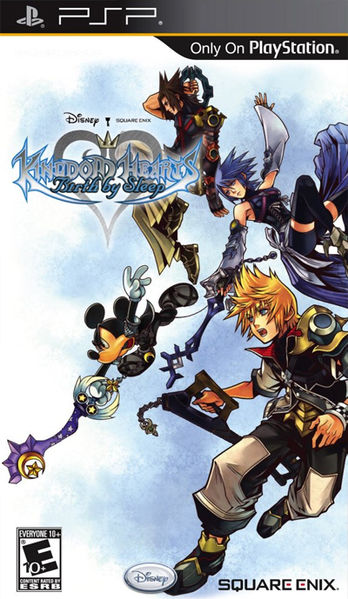
Kingdom Hearts: Birth by Sleep - An Important Stop


When I first played Kingdom Hearts about a decade ago, I was completely blown away. I was having a really fun time and when it ended, I was excited to learn of another game in the series. Since I didn’t have a Gameboy at the time however, I couldn’t really play Chain of Memories (and wouldn’t be able to until the PS2 remake, Re:Chain of Memories), so I ended up skipping to Kingdom Hearts II on PS2. I later learned that this was a bad idea, but since I’ve played Re:Chain of Memories, the story makes just a little more sense (at least as much sense as you can make out of Kingdom Hearts). As the years went on, more games came out, but on platforms that I had no access to, so I was bummed that my lack of a DS would prevent me from witnessing 358/2 Days (pronounced Three-Five-Eight-Days Over Two), though thankfully 1.5 HD Remix was able to fill me in on the details via redone cutscenes. Flash forward to the announcement of Kingdom Hearts: Birth by Sleep for the PSP handheld. The fact that I actually owned a PSP enticed me to play it, so much so that while walking to the bus during my first College semester, I went by the nearest GameStop and picked up a copy. I then proceeded to start playing as soon as I sat down and wouldn’t stop playing for a few weeks during the same semester. I would play during long wait times, particularly the hour or so before Astronomy class, and my sessions went on so long that I had to keep exchanging PSP batteries with my brother just so I could keep going. As I played Birth by Sleep for the first time (and wrote a terrible review of it on DeviantArt once I finished), it became my new favorite game in the series, overtaking Kingdom Hearts II. Having played it years later in anticipation of Kingdom Hearts 2.5 HD Remix, with greater knowledge of the inner workings of the game, I can say that this sentiment still rings true.

It began so simply...

In The Land of Departure, the Keyblade wielders Terra, Ventus and Aqua are all close friends. On the night before Terra and Aqua’s Mark of Mastery exam, which will determine who receives the title of Keyblade Master, Ventus decides to help the two practice and hone their skills. Afterwards, the three of them discuss their friendship, at which point Aqua decides to give everyone Wayfinders that she made to symbolize that their bonds of friendship are strong enough that they’ll be able to find each other no matter where they are. The next day, Master Eraqus, with Master Xehanort in attendance as a guest, begins the Mark of Mastery exam with Terra and Aqua, summoning orbs of light for them to destroy. However, something goes wrong and the orbs are imbued with darkness, causing their behavior to become erratic enough to pull Ventus into the fray. Once the crisis is over, Terra and Aqua have a one-on-one match to display their abilities. In the end, Aqua is declared the Keyblade Master by Master Eraqus because Terra let his inner darkness get to him at one point in the match. As Aqua goes to Eraqus to learn a valuable secret, Terra storms off and is confronted by Master Xehanort, who tells him about his inner darkness and convinces him that it isn’t something to be feared, but channeled and that going to different worlds will help him control it. Meanwhile, Ventus is in his room when he is suddenly confronted by a boy in a mask. The boy in the mask informs him that Terra is leaving, possibly forever, and that Ventus has one last chance to see him beforehand. Once the boy departs, Ventus runs off to where Terra is in an attempt to say something to him. However, Terra leaves in a hurry, causing Ventus to chase after him. Aqua, who has just arrived, tries to stop Ventus and tell him something, but she is too late. Once both Terra and Ventus are gone, Eraqus instructs Aqua to go after them, but keep an especially close eye on Terra, as he is worried about his darkness getting out of hand. Aqua complies, flying away from the Land of Departure in pursuit of Terra and Ventus.

Master Xehanort

It’s interesting to note that Birth by Sleep is a prequel of sorts, occurring ten years before the events of the original Kingdom Hearts. In this regard, it does its job well, establishing several key details that add some depth to the mythos and help explain how certain things came to be, including Sora and Riku’s connections with the Keyblade, the origins of Roxas and even the creation of Castle Oblivion. From a narrative standpoint, as in how it functions on its own, Birth by Sleep is written pretty well. It does a pretty good job handling its gimmick, which has you playing as three different characters, Terra, Ventus and Aqua, who travel to the same worlds, but not during the same points in time. Their independent plot threads do intertwine at times, which helps to establish connecting points to separate the story into distinct parts (ex. before and after the battle with Trinity Armor). As with the previous entries, there are some dark themes explored here and they go beyond the struggle between light and darkness in the heart. Because the three characters are effectively soldiers, darker themes are touched upon, including war, genocide, existential crises and feelings of trust and betrayal. These aren’t as explored as extensively as they would be in, say, Metal Gear, but the elements have enough of a presence that the overall narrative is very engaging and elicits good emotive reactions out of the player. Though admittedly the story can be a little confusing at times, what with the discussions of the Keyblade War and the χ-blade (pronounced Kye-blade) and whatnot, Birth by Sleep is an important milestone to hit to at least try and understand the story as it stands now.

Vanitas (left) is very important to the story.

While the story is very interesting to play through, the heroes do make plenty of mistakes. Terra, for the most part, is easily trusting of the people he meets, including Master Xehanort, and this comes back to bite him hard (though I won’t say how). Likewise, Aqua and Ventus’ stories also rely on them making one poor decision after another, which by the endgame seems to have only furthered Xehanort’s plans without them realizing it. Fortunately, they are able to reverse most of the damage that they cause, but it also comes at a great cost, which I will not reveal here for the sake of avoiding spoilers. In any case, I found it interesting how the Disney-inspired worlds were integrated into the plotline, even if the stories don’t quite match up with the source material (though one should expect creative liberties when putting a work from one medium into another, especially when fusing multiple continuities and independent stories together).

Gameplay-wise, Birth by Sleep is the best I’ve ever played in the series. As with Kingdom Hearts II, there is a further emphasis on action, but the twist here is that they’ve done away with the menu system entirely, instead going with a customizable command deck. The way the system works is that you are given a certain amount of slots (which increase over time to a maximum of eight) to insert commands representing certain physical or magical attacks as well as items. The d-pad scrolls through the commands and you press triangle to activate the one you want, after which there is a cool down period that must end before you can use it again. By using commands, a gauge above the list is filled up, which can lead to a unique finishing move or a new command style that enhances regular attacks and can lead to a more powerful finisher.

One of the most powerful styles: Ghost Drive.

These commands can also be melded together, similarly to Crisis Core: Final Fantasy VII’s Materia Fusion system, and combined with different crystals to attach various abilities which range from reducing cool down times to buffing or nerfing elemental damage. One of the most essential of these abilities, from my experience, is EXP Walker, which lets you gain 1 EXP for each step you take (for those who wish to know, the most reliable method to obtain it is to combine Blizzard and Aero in conjunction with an Abounding Crystal). In place of summons, the game introduces a D-Link system as well, which lets the player replace their command deck with that of another character that they have formed a bond with (ex. Terra, Ventus, Aqua, Snow White, Experiment 626, etc.). D-Links can be upgraded with a rare star drop that can attach different abilities to the character during usage, making them more powerful for the next activation; when the D-Link gauge isn’t full, it can be replenished with blue D-Link prizes.

The last system introduced is the Shotlock Command, which is activated by holding down L and R and then moving a target over enemies. Pressing X will trigger the Shotlock attack, though pressing the button when the targets are at maximum will not only fire off all the selected shots, but allow an additional barrage of the same attack as well. While these attacks are cool to pull off, the only problem is that the same buttons used to trigger them are also used to rotate the camera, which can be awkward if you’re really not careful.

One of the strongest Shotlock Commands: Ultima Cannon.

I realize that what I’ve written may sound a little confusing, but I think it’s the best system the series has had. Once you get into it it’s very easy and intuitive on top of being incredibly quick and responsive. By taking away a lot of the complexity of previous Kingdom Hearts games, including the already streamlined Kingdom Hearts II, it becomes much easier to manage the player character and figure out exactly what you want. Despite some of the minor flaws in the systems present, I hope that they not only keep the command deck in future Kingdom Hearts titles, but expand and improve on it as well for the best possible experience. It’s a natural evolution of the process and the only logical next step is to move forward with it.

Although Birth by Sleep was developed for the PSP, I’m genuinely impressed by its size and scale. There are several worlds to explore, each with a number of areas and secrets. Each area isn’t always available, in fact limited to how relevant they are to each character’s story, but this doesn’t change that the size of the game could easily rival its console brethren. Birth by Sleep feels as large, and as long, as any Kingdom Hearts game on the PS2 (and now PS3), a feat to be rightfully commended for. There is also a great attention to detail and a fittingly bright color palette with a lot of range. Every one of the Unversed enemies has a unique shape, save the ones that are merely palette swaps, and an easily identifiable color pattern that helps one to figure out exactly how to take them down. On the downside, the graphics aren’t the best, being on PSP and all, since the character models end up a little jagged in places and cloth textures don’t look particularly smooth. Despite this however, Birth by Sleep ends up being one of the best looking games on the handheld and can be seen as a technical marvel.

A Flood, one of the most common Unversed types.

The game also has plenty of challenge, especially on the higher difficulties (I played on Proud Mode), where the bosses can really knock you around like a piñata unless you go into battle fully prepared. No matter what difficulty you play on, you may find the Mandrake Unversed to be particularly annoying, as they attack by firing razor sharp leaves that always seem to match your elevation and they can fire them off in rapid succession to disrupt any combo you might have had going (which can further cause the meter on the Command Deck to start dwindling). The worst part is that not only can they inflict Poison and Confusion if you’re not careful, they don’t appear out of thin air like the other Unversed, rather they are already on the battlefield to begin with and can thus cause you as much pain and suffering as possible; I loathed Mandrakes every time I came across them.

Voice acting and music have always been a strong suit for Kingdom Hearts and this installment is no exception. Since I own the soundtrack, I believe that it contains some of Yoko Shimomura’s best compositions to date, with a grand mix of upbeat world themes and dark and foreboding battle pieces. Voice acting, however, is admittedly kind of a mixed bag. On one hand, we have phenomenal voice work by the recurring Disney characters, who mostly use the official Disney voice actors (for those characters whose voice actors are deceased, they have incredibly convincing sound-alikes). There are also surprise performances from Leonard Nimoy and Mark Hamill, each respectively voicing Master Xehanort and Master Eraqus. They both sound like they really put their heart into their work and their many years of experience have certainly paid off. On the other hand, we have the main trio; Terra, Ventus and Aqua. Terra, due to being voiced by Jason Dohring, sounds a little bored in his delivery, downplaying the emotions he should be feeling in certain scenes. However, when Richard Epcar takes over at some point during the plot (I won’t say how), his lines are overacted, which balances that out perfectly. Ventus is voiced by Jesse McCartney and actually gives a solid performance, mirroring his role as Roxas in Kingdom Hearts II. Lastly, we have Aqua, whose voice actress, Willa Holland, has nearly the same problem as Dohring, but not to the same degree. Should these characters return in the future, I hope that Dohring and Holland have picked up a thing or two to make their characters better rounded out.

Mark Hamill does a good job as Master Eraqus.

Before I end this review, I’d like to share some advice with prospective PSP players. You can play the three stories in any order you wish, but the best order is Terra, Ventus then Aqua. Playing in this specific order will lead to far less confusion than playing it any other way, plus it creates a smooth transition to the Final Story. I also highly recommend unlocking the secret video, Blank Points, as it is a good epilogue to cap off the events of the story. The easiest way to unlock it is to complete all of the campaigns on Proud or Critical mode (I would advise playing on Proud Mode, even if it’s your first time playing, since the difficulty will disappear after playing for a while). Finally, there are some settings that would be very beneficial to manipulate. There is the option to install the game to your memory card, which gives the advantage of reduced load times, and you have the option between 200, 400 or 624 MB, speeding up load times in an increasing number of areas for the game (combat, menus, moving between areas, etc.); I recommend doing a full install for best results. Also, there are two specific settings that you should immediately increase: Color Depth and CPU Speed. Upping the Color Depth to 32-bit will provide the best graphics, but sometimes causes slowdown as a result. Accelerating the CPU Speed prevents slowdown, counteracting the disadvantage of 32-bit Color Depth, but will cause the PSP battery to drain much quicker, so it is further recommended that you have an AC adaptor at all times (I call this combination “drain the battery mode” for a good reason). Follow all of these simple steps and you’ll have the best Birth by Sleep experience possible.

In the end, Kingdom Hearts: Birth by Sleep is what I would consider the best game in the franchise. The gameplay is streamlined and the controls are tight, all without sacrificing the spirit of earlier games or what made them good in the first place. Admittedly the story can be confusing at times, a given for this franchise, and the voice acting may not be perfect, but the game has a plotline that can, to some degree, operate independently of its brethren (though it does serve as the MGS4 of the group by explaining just about everything (for now…)). On top of that, the game is simply a well-crafted RPG that makes owning a PSP very worthwhile. If you haven’t played it yet, I see no reason to wait; it might also be a good excuse to buy a PSP and a play a good game that isn’t related to God of War.

Sunday, April 13, 2014

Second Opinion - South Park: The Stick of Truth


While I hadn’t seen much of South Park beforehand, having seen a handful of episodes and the movie (South Park: Bigger, Longer, and Uncut), it wasn’t until I saw a preview of the then-upcoming game, South Park: The Stick of Truth, the subject of this review, at the 2012 San Diego Comic-Con, that my interest grew. From what I had seen in that preview, I knew it would be imperative for me to see every episode of South Park I could in order to get the most out of the game, which I did over an extended period of time. While the preview I saw was from THQ, the company would unfortunately go bankrupt, causing the game to shift hands to Ubisoft for release, in turn leading to a number of delays (to the point where the penultimate 3 episodes of Season 17 (“Black Friday”, “A Song of Ass and Fire”, and “****ies and Dragons”) that lead up to the game, collectively known as the Black Friday Trilogy, made numerous jokes about it). Even then, from the small snippet of gameplay in 2012 to the night before the game’s release in 2014, I knew it was a game I wanted to play. Having played the game, with this review delayed by school work and my Bionicle Heroes review, I would say the overall investment in South Park was worth it to the very end.

You play as The New Kid, whose appearance you get to customize, who has just moved into the quiet little mountain town of South Park. When The New Kid’s parents insist he go out and make friends, he comes across Butters Stotch, who takes him to see Eric Cartman, the Grand Wizard of the Kingdom of Kupa Keep, who currently holds the Stick of Truth as part of a LARP campaign. Soon after The New Kid joins in the game, the Stick of Truth is stolen by the Drow Elves of Larnion, the enemy of the Kingdom of Kupa Keep, and Cartman tasks him to retrieve the Stick. What starts out as a fairly simple game of LARP eventually turns into something much bigger than anyone involved could ever think possible.

The eponymous Stick of Truth, right before being stolen by Drow Elves.

Due to having heavy involvement from series creators Trey Parker and Matt Stone, the story of The Stick of Truth feels and plays out just like an episode of South Park, especially in how the characters interact and how everything blows further out of proportion the more events play out. Numerous references and call backs are made to the show throughout, so only those who have already seen the show will get a good number of them, but they are still inserted such that prior knowledge is not required in order to enjoy the game. Of course, with South Park being a comedy series, the game is extremely funny, with every humorous moment, of which there is plenty, hitting more often than they miss; the show has its own ups and downs in regards to its humor, but, like the Black Friday Trilogy preceding it, this is one of South Park higher moments when it comes to laughs. Some of the jokes are based in pop culture references that will eventually make the game more of a product of its time, but the way they are executed is so hilarious that, unlike other games that do this, I don’t really mind it in the slightest. In essence, if you play this game, you are definitely guaranteed a laugh.

Once you join Cartman’s ranks, you not only get to choose your name (though everyone else calls you a different name(s) anyway), but also your Class, of which you have a choice between Fighter, Mage, Thief, and Jew (if you play as a Jew, damage output increases the lower your health is); I chose the first, mainly because I haven’t played many RPG’s that use a Class system. You can also customize your armor and weapons as you go, mainly to befit your Class, although the leveling-up system (not to mention some side quests) may require you to change your equipment a number of times over the course of the story. Certain scenarios in combat may also make you change out your weapons a few times as well, but you will find a strategy you’re comfortable with in no time. Interacting with residents of South Park also nets you Friends on Facebook in-game, allowing you access to Perks that can really help you depending on your play style.

Combat itself is similar to that of Penny Arcade’s Rain-Slick Precipice of Darkness series, having the turn-based system of Rain-Slick 3 and 4, but also having timing-based attacks like Rain-Slick One and Two. When you or your buddy (one of a select group of South Park characters) initiates an attack during combat, timing is very important, in that you have to press a button(s) at just the right moment in order to maximize the damage you deal to an enemy. These attacks can either target single enemies or a whole group of them (when multiple are present), and the ever-changing tactics of some enemies can make you make some important decisions on how to approach a given situation, including whether to use a ranged or melee weapon on a target. Some special attacks require PP to pull off, but they are often worth it in the end, such as being able to jump and perform a massive ground pound or having Princess Kenny summon a unicorn to ram an opponent(s). You can also use your Mana to fart on enemies (this game’s form of magic), with stronger farts requiring increasing amounts of Mana; this is the only stat that does not regenerate after an encounter. Certain residents of South Park can also be summoned, such as Jesus, in order to take care of an enemy, but only once per (in-game) day; they also all give their own excuse for not being able to take on bosses (some of whom are actually pretty easy to take down, even on a higher difficulty).

A small sample of combat in-game.

There are also a number of collectibles to be found in the game, including Chinpokomon and a number of useful items. Some of these items, however, are very miss-able, meaning you can’t go back and retrieve them once you’ve gone through certain story points, which can hamper one’s experience with the game a little bit. To this end, learning from my brother’s frustrations with this during his playthrough, I tried to get everything I could whenever I could, though I also used an online guide to make sure I grabbed everything.

The graphics of this game are very impressive, especially considering an engine capable of advanced 3D graphics was used to accurately replicate the 2D construction paper cut-out look of the show. This helps the game look and feel just like an episode of South Park, further increasing enjoyment of the writing and gameplay. Due to Parker and Stone’s ties to the development of The Stick of Truth, the two of them, alongside the returning South park voice cast, give performances that help the whole experience feel even more authentic. This is not getting into the background music, which generally would not sound out of place within the show (it even includes the show’s signature banjo music and ending credits theme), along with some (often humorous) recycled sound and music clips from the show that offer extra enjoyment for dedicated fans of South Park.

Once you find Jesus (among others), you can summon him during
combat once per day.

South Park: The Stick of Truth is not only a great South Park game, but also an amazing RPG experience in general. The whole thing feels as if it was ripped straight out of the show, providing a faithful South Park experience to those seeking it out. Prior experience with South Park is not required to have fun with the game, so fans of, or newcomers to, RPGs (within the appropriate age group) can safely be encouraged to seek it out, as it is very accessible to players with little to not experience in the genre, although watching the show beforehand is a necessity to understand and laugh at the numerous references and call-backs to previous episodes (I would highly recommend watching the Black Friday Trilogy at a minimum before playing The Stick of Truth for the first time). Admittedly, the game doesn’t take that long to get through, clocking in at roughly 12-15 hours depending on your actions, but getting the full South Park experience alone makes it all worth it in the end.

Wednesday, March 12, 2014

South Park: The Stick of Truth


In August, 2012, I wrote a review of South Park: Bigger, Longer & Uncut, declaring it one of the funniest movies I have ever seen. In that review, I mentioned South Park: The Stick of Truth, the subject of this review, as though it was going to be released in 2013. Though the game was certainly announced before I watched the movie that time, and I saw a preview for it at San Diego Comic-Con 2012, it wasn’t actually until last week that the game came out. This is due to multiple factors, the main ones being that South Park creators Trey Parker and Matt Stone kept rewriting the script and that THQ, the original publishers of the title, unfortunately went bankrupt, forcing them to sell off all of their assets and original IPs; in the end, Ubisoft gained the rights to The Stick of Truth. So numerous were these delays that South Park itself lampooned them during Season 17’s Black Friday Trilogy (“Black Friday”, “A Song of Ass and Fire” and “****ies and Dragons”). Some good did come out of these delays though, as it gave my brother and I more time to catch up with the entire run of South Park as well as see The Book of Mormon at the Pantages (long story short, go see The Book of Mormon). In true South Park fashion, we even finished catching up with the show the night before the game came out; there are still only three episodes out of 247 that we haven’t seen because Muhammad (“Super Best Friends”, “200” and “201”), so we’ll probably need to invest in the season sets to try and rectify that (though we did settle with text summaries). Since the game finally came out, I actually had a lot of free time, so after we rewatched the Black Friday Trilogy, I sat down and played through the whole game in the span of two days [Note: This review was delayed due to the reviews of Metal Gear Solid: Peace Walker and Metal Gear Solid: The Legacy Collection]. Would I consider all of that effort to catch up worth it in the end? Yes.

The original box art from when THQ was to publish the game.
It also would have had Kinect functionality so you could berate Cartman.

The New Kid (You) has just moved into South Park and is tasked by his parents, especially his dad, to go out and make friends. Soon after he leaves the house, he is greeted by Butters Stotch, who leads him to Eric Cartman’s house to join the Kingdom of Kupa Keep. When the New Kid successfully joins Cartman’s group, he ends up being roped into a city-wide Live-Action Roleplay (LARP) campaign revolving around an object known as The Stick of Truth. The Stick has great power, as whoever holds the stick controls the universe. Things go south when a rival faction, the Drow Elves of Larnion, successfully steals the stick. Cartman orders the New Kid to go and retrieve the Stick and, during his quest to become cool, what begins as a simple game escalates to a level that no one could ever have anticipated.

The Kingdom of Kupa Keep.

Through the course of the game, the plot plays out exactly how an episode of the show would. Over the course of three days, the New Kid experiences one strange event after another, culminating in one of the biggest, funniest and most ridiculous plot twists I have ever experienced in a video game. I really enjoyed the escalating antics of the story, as it really helped the immersion and the feeling that this really is an episode of South Park. Every single person in the game is completely in-character, with nothing about them out of place. The story is tightly written and I really can’t find any flaws with it.

One of the highlights of the script is its comedy. Trey Parker and Matt Stone have become two of my favorite comedians, though I’ll admit that not every episode of South Park can be a winner, and The Stick of Truth does not disappoint. Just about every single line, in some way, is funny. Almost everything the characters say is funny, the NPC reactions are funny, even one-off lines, sound clips or descriptions of items can be funny. Simply put, it is one of the most humorous video games I have ever played and I seriously could not stop laughing at times, especially when I had someone else in the room to laugh with. This is in part due to all of the references made to the show, all of which I understood due to my one-and-a-half years of binge viewing the series in my free time. However, if I had to find one flaw it would be that there isn’t enough dialogue during fights or within the world, such as during a specific mini-game. Eventually you begin to hear the same things being said repetitively, which dulls the sensation a bit until it gradually just ceases to have any humor value. In most cases the dialogue is varied enough that recycling through them can still lead to some great gems, but I think some work was needed in other areas.

Because of all the LARPing in the game, it’s only natural that The Stick of Truth would be a full-blown RPG. It has everything, from quests and collectibles to shops and item management. It all begins when you first enter character customization. The customization isn’t as deep as one would find in other games, mostly due to the art style of South Park, but there is still enough to make the New Kid resemble you if you’d like. When you join the Kingdom of Kupa Keep, you also pick a class, with a choice between Fighter, Mage, Thief and Jew (a “high risk high reward” class where the damage increases the lower your HP is); I chose Fighter because I like to focus on attack power in an RPG. Upon selecting your class, you are given a set of armor and weapons matching your class, but throughout the game you’re allowed to customize your character further by swapping out your weaker equipment for more powerful sets. Some pieces of equipment can even have items like stickers attached to them to grant additional effects, such as higher damage or siphoning an amount of health from a Bleeding enemy. The initial customization may be impressive, but the depth added over time during actual gameplay definitely is.

Combat in The Stick of Truth is turn-based, using mechanics which, from my experience, are similar to Barkley, Shut Up and Jam: Gaiden. Apart from a Health meter, the player, and their buddy (a selected South Park character), also has PP and Mana meters. PP is used to pull of special attacks, with different attacks costing a different amount of PP to activate. These attacks range from a rain of arrows to a buffing/debuffing blow horn or even Butters in his Professor Chaos persona inflicting a random effect determined by a spinning wheel. The Mana meter is used for casting magic, which in this context is how you manipulate your farts (believe it or not, farts are very important to the game). When used right, magic can be very useful and powerful, but unlike Health and PP it doesn’t regenerate after battle, so consuming mana potions (gassy food) is the only way to replenish what you’ve lost. All attacks, like in Barkley, require the completion of a short mini-game or timed button presses to determine how successful the attack is and how much damage it inflicts on a target. Summons, including Mr. Slave and Jesus, are also available once per in-game day, except against bosses, by completing a sidequest; afterwards you just need to talk to the character to regain their summon item. This system works well and the controller-friendly approach to it helps it be as smooth as possible.

What combat generally looks like.

While I do like the gameplay systems in general, I do have a few complaints. Sometimes while I’m fighting, the frame rate will dip for a second or the game will lag, causing me to miss important attack or block timing; sometimes the command wouldn’t register at all. I’ve also had the background music for fighting completely disappear, necessitating a reboot or a reload of my progress. In addition, the game in general is a bit easy overall thanks to the dynamic difficulty, where the game’s enemies level up with you. The most challenge it ever got was from a specific boss fight, and even then it was an optional one reached through a sidequest. That is not to say the final bosses weren’t challenging, but they weren’t on the same level as the optional boss. There’s also the collectible aspect, which is actually perfectly fine save for the fact that some are missable, such as six of the Chinpokomon. I missed two of them, so if I wanted to have them all, I’d need to restart the game from scratch. Some might also complain about the short length of the game, about 12-15 hours depending on how much you do, but personally I feel that the game doesn’t overstay its welcome and if you wanted to replay the game as another class, or to get every collectible object, it won’t take terribly long to do so.

Also, this area from the THQ version no longer happens.

The most notable thing about Stick of Truth however is how involved creators Trey Parker and Matt Stone were during the process. Disappointed by the quality of the South Park games on the market, the duo were actually more hands-on with the game Oblivion was trying to make by providing assets from the show’s entire run as well as offering advice on how to help the game stay true to the spirit of South Park. Oblivion even went so far as to modify the engine so that production of the game could be similar to an episode of the show, including the ability to change the look of a single object across the entire game with minimal effort. Fittingly, an engine normally used for 3D games, the Dungeon Siege III engine, was used to perfectly capture the 2D cutout look of the show. Parker and Stone also provided completely original voicework and wrote the script for the game, allegedly starting out at 850 pages before being trimmed down for production; there’s even a lot of original songs and music from the show used as background music, including the distinct banjo chords that open most episodes. As a result, the game feels exactly like an episode of the show, at times even feeling like you’re watching South Park before the time comes to remember that it’s a game. This is The Stick of Truth’s greatest feat, which I think will be very hard for future video game adaptations of TV shows to accomplish.

South Park: The Stick of Truth is not only one of the funniest games I have played this year, but also an early gem for this year. The turn-based combat, though simple, is fun and I felt totally immersed by the world presented. There are a few flaws here and there, including the sometimes inconsistent frame rate, but these are forgivable in light of how perfectly the source material is translated to video game form. Due to all of the references and callbacks the game makes to the show, I can only really recommend this to already existing fans of the show, as the uninitiated may be confused by these same references that can be important to the story. It may be possible to enjoy the game solely based on the mechanics, but it is most definitely made to cater to those who are already familiar with the show. In either case, I’d recommend watching the Black Friday Trilogy right before giving it a go; it’ll transition well into the plot and will get you into the right mindset to play.