Showing posts with label Disney Interactive. Show all posts

Saturday, October 18, 2014

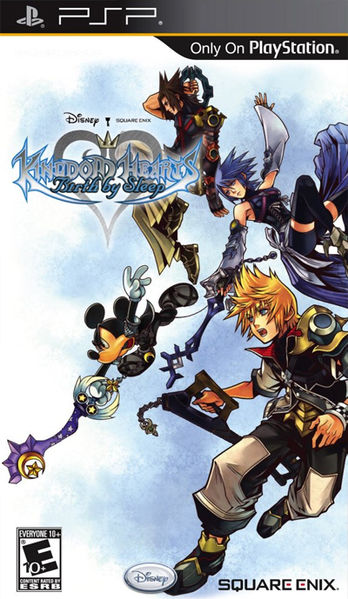
Kingdom Hearts: Birth by Sleep - An Important Stop


When I first played Kingdom Hearts about a decade ago, I was completely blown away. I was having a really fun time and when it ended, I was excited to learn of another game in the series. Since I didn’t have a Gameboy at the time however, I couldn’t really play Chain of Memories (and wouldn’t be able to until the PS2 remake, Re:Chain of Memories), so I ended up skipping to Kingdom Hearts II on PS2. I later learned that this was a bad idea, but since I’ve played Re:Chain of Memories, the story makes just a little more sense (at least as much sense as you can make out of Kingdom Hearts). As the years went on, more games came out, but on platforms that I had no access to, so I was bummed that my lack of a DS would prevent me from witnessing 358/2 Days (pronounced Three-Five-Eight-Days Over Two), though thankfully 1.5 HD Remix was able to fill me in on the details via redone cutscenes. Flash forward to the announcement of Kingdom Hearts: Birth by Sleep for the PSP handheld. The fact that I actually owned a PSP enticed me to play it, so much so that while walking to the bus during my first College semester, I went by the nearest GameStop and picked up a copy. I then proceeded to start playing as soon as I sat down and wouldn’t stop playing for a few weeks during the same semester. I would play during long wait times, particularly the hour or so before Astronomy class, and my sessions went on so long that I had to keep exchanging PSP batteries with my brother just so I could keep going. As I played Birth by Sleep for the first time (and wrote a terrible review of it on DeviantArt once I finished), it became my new favorite game in the series, overtaking Kingdom Hearts II. Having played it years later in anticipation of Kingdom Hearts 2.5 HD Remix, with greater knowledge of the inner workings of the game, I can say that this sentiment still rings true.

It began so simply...

In The Land of Departure, the Keyblade wielders Terra, Ventus and Aqua are all close friends. On the night before Terra and Aqua’s Mark of Mastery exam, which will determine who receives the title of Keyblade Master, Ventus decides to help the two practice and hone their skills. Afterwards, the three of them discuss their friendship, at which point Aqua decides to give everyone Wayfinders that she made to symbolize that their bonds of friendship are strong enough that they’ll be able to find each other no matter where they are. The next day, Master Eraqus, with Master Xehanort in attendance as a guest, begins the Mark of Mastery exam with Terra and Aqua, summoning orbs of light for them to destroy. However, something goes wrong and the orbs are imbued with darkness, causing their behavior to become erratic enough to pull Ventus into the fray. Once the crisis is over, Terra and Aqua have a one-on-one match to display their abilities. In the end, Aqua is declared the Keyblade Master by Master Eraqus because Terra let his inner darkness get to him at one point in the match. As Aqua goes to Eraqus to learn a valuable secret, Terra storms off and is confronted by Master Xehanort, who tells him about his inner darkness and convinces him that it isn’t something to be feared, but channeled and that going to different worlds will help him control it. Meanwhile, Ventus is in his room when he is suddenly confronted by a boy in a mask. The boy in the mask informs him that Terra is leaving, possibly forever, and that Ventus has one last chance to see him beforehand. Once the boy departs, Ventus runs off to where Terra is in an attempt to say something to him. However, Terra leaves in a hurry, causing Ventus to chase after him. Aqua, who has just arrived, tries to stop Ventus and tell him something, but she is too late. Once both Terra and Ventus are gone, Eraqus instructs Aqua to go after them, but keep an especially close eye on Terra, as he is worried about his darkness getting out of hand. Aqua complies, flying away from the Land of Departure in pursuit of Terra and Ventus.

Master Xehanort

It’s interesting to note that Birth by Sleep is a prequel of sorts, occurring ten years before the events of the original Kingdom Hearts. In this regard, it does its job well, establishing several key details that add some depth to the mythos and help explain how certain things came to be, including Sora and Riku’s connections with the Keyblade, the origins of Roxas and even the creation of Castle Oblivion. From a narrative standpoint, as in how it functions on its own, Birth by Sleep is written pretty well. It does a pretty good job handling its gimmick, which has you playing as three different characters, Terra, Ventus and Aqua, who travel to the same worlds, but not during the same points in time. Their independent plot threads do intertwine at times, which helps to establish connecting points to separate the story into distinct parts (ex. before and after the battle with Trinity Armor). As with the previous entries, there are some dark themes explored here and they go beyond the struggle between light and darkness in the heart. Because the three characters are effectively soldiers, darker themes are touched upon, including war, genocide, existential crises and feelings of trust and betrayal. These aren’t as explored as extensively as they would be in, say, Metal Gear, but the elements have enough of a presence that the overall narrative is very engaging and elicits good emotive reactions out of the player. Though admittedly the story can be a little confusing at times, what with the discussions of the Keyblade War and the χ-blade (pronounced Kye-blade) and whatnot, Birth by Sleep is an important milestone to hit to at least try and understand the story as it stands now.

Vanitas (left) is very important to the story.

While the story is very interesting to play through, the heroes do make plenty of mistakes. Terra, for the most part, is easily trusting of the people he meets, including Master Xehanort, and this comes back to bite him hard (though I won’t say how). Likewise, Aqua and Ventus’ stories also rely on them making one poor decision after another, which by the endgame seems to have only furthered Xehanort’s plans without them realizing it. Fortunately, they are able to reverse most of the damage that they cause, but it also comes at a great cost, which I will not reveal here for the sake of avoiding spoilers. In any case, I found it interesting how the Disney-inspired worlds were integrated into the plotline, even if the stories don’t quite match up with the source material (though one should expect creative liberties when putting a work from one medium into another, especially when fusing multiple continuities and independent stories together).

Gameplay-wise, Birth by Sleep is the best I’ve ever played in the series. As with Kingdom Hearts II, there is a further emphasis on action, but the twist here is that they’ve done away with the menu system entirely, instead going with a customizable command deck. The way the system works is that you are given a certain amount of slots (which increase over time to a maximum of eight) to insert commands representing certain physical or magical attacks as well as items. The d-pad scrolls through the commands and you press triangle to activate the one you want, after which there is a cool down period that must end before you can use it again. By using commands, a gauge above the list is filled up, which can lead to a unique finishing move or a new command style that enhances regular attacks and can lead to a more powerful finisher.

One of the most powerful styles: Ghost Drive.

These commands can also be melded together, similarly to Crisis Core: Final Fantasy VII’s Materia Fusion system, and combined with different crystals to attach various abilities which range from reducing cool down times to buffing or nerfing elemental damage. One of the most essential of these abilities, from my experience, is EXP Walker, which lets you gain 1 EXP for each step you take (for those who wish to know, the most reliable method to obtain it is to combine Blizzard and Aero in conjunction with an Abounding Crystal). In place of summons, the game introduces a D-Link system as well, which lets the player replace their command deck with that of another character that they have formed a bond with (ex. Terra, Ventus, Aqua, Snow White, Experiment 626, etc.). D-Links can be upgraded with a rare star drop that can attach different abilities to the character during usage, making them more powerful for the next activation; when the D-Link gauge isn’t full, it can be replenished with blue D-Link prizes.

The last system introduced is the Shotlock Command, which is activated by holding down L and R and then moving a target over enemies. Pressing X will trigger the Shotlock attack, though pressing the button when the targets are at maximum will not only fire off all the selected shots, but allow an additional barrage of the same attack as well. While these attacks are cool to pull off, the only problem is that the same buttons used to trigger them are also used to rotate the camera, which can be awkward if you’re really not careful.

One of the strongest Shotlock Commands: Ultima Cannon.

I realize that what I’ve written may sound a little confusing, but I think it’s the best system the series has had. Once you get into it it’s very easy and intuitive on top of being incredibly quick and responsive. By taking away a lot of the complexity of previous Kingdom Hearts games, including the already streamlined Kingdom Hearts II, it becomes much easier to manage the player character and figure out exactly what you want. Despite some of the minor flaws in the systems present, I hope that they not only keep the command deck in future Kingdom Hearts titles, but expand and improve on it as well for the best possible experience. It’s a natural evolution of the process and the only logical next step is to move forward with it.

Although Birth by Sleep was developed for the PSP, I’m genuinely impressed by its size and scale. There are several worlds to explore, each with a number of areas and secrets. Each area isn’t always available, in fact limited to how relevant they are to each character’s story, but this doesn’t change that the size of the game could easily rival its console brethren. Birth by Sleep feels as large, and as long, as any Kingdom Hearts game on the PS2 (and now PS3), a feat to be rightfully commended for. There is also a great attention to detail and a fittingly bright color palette with a lot of range. Every one of the Unversed enemies has a unique shape, save the ones that are merely palette swaps, and an easily identifiable color pattern that helps one to figure out exactly how to take them down. On the downside, the graphics aren’t the best, being on PSP and all, since the character models end up a little jagged in places and cloth textures don’t look particularly smooth. Despite this however, Birth by Sleep ends up being one of the best looking games on the handheld and can be seen as a technical marvel.

A Flood, one of the most common Unversed types.

The game also has plenty of challenge, especially on the higher difficulties (I played on Proud Mode), where the bosses can really knock you around like a piñata unless you go into battle fully prepared. No matter what difficulty you play on, you may find the Mandrake Unversed to be particularly annoying, as they attack by firing razor sharp leaves that always seem to match your elevation and they can fire them off in rapid succession to disrupt any combo you might have had going (which can further cause the meter on the Command Deck to start dwindling). The worst part is that not only can they inflict Poison and Confusion if you’re not careful, they don’t appear out of thin air like the other Unversed, rather they are already on the battlefield to begin with and can thus cause you as much pain and suffering as possible; I loathed Mandrakes every time I came across them.

Voice acting and music have always been a strong suit for Kingdom Hearts and this installment is no exception. Since I own the soundtrack, I believe that it contains some of Yoko Shimomura’s best compositions to date, with a grand mix of upbeat world themes and dark and foreboding battle pieces. Voice acting, however, is admittedly kind of a mixed bag. On one hand, we have phenomenal voice work by the recurring Disney characters, who mostly use the official Disney voice actors (for those characters whose voice actors are deceased, they have incredibly convincing sound-alikes). There are also surprise performances from Leonard Nimoy and Mark Hamill, each respectively voicing Master Xehanort and Master Eraqus. They both sound like they really put their heart into their work and their many years of experience have certainly paid off. On the other hand, we have the main trio; Terra, Ventus and Aqua. Terra, due to being voiced by Jason Dohring, sounds a little bored in his delivery, downplaying the emotions he should be feeling in certain scenes. However, when Richard Epcar takes over at some point during the plot (I won’t say how), his lines are overacted, which balances that out perfectly. Ventus is voiced by Jesse McCartney and actually gives a solid performance, mirroring his role as Roxas in Kingdom Hearts II. Lastly, we have Aqua, whose voice actress, Willa Holland, has nearly the same problem as Dohring, but not to the same degree. Should these characters return in the future, I hope that Dohring and Holland have picked up a thing or two to make their characters better rounded out.

Mark Hamill does a good job as Master Eraqus.

Before I end this review, I’d like to share some advice with prospective PSP players. You can play the three stories in any order you wish, but the best order is Terra, Ventus then Aqua. Playing in this specific order will lead to far less confusion than playing it any other way, plus it creates a smooth transition to the Final Story. I also highly recommend unlocking the secret video, Blank Points, as it is a good epilogue to cap off the events of the story. The easiest way to unlock it is to complete all of the campaigns on Proud or Critical mode (I would advise playing on Proud Mode, even if it’s your first time playing, since the difficulty will disappear after playing for a while). Finally, there are some settings that would be very beneficial to manipulate. There is the option to install the game to your memory card, which gives the advantage of reduced load times, and you have the option between 200, 400 or 624 MB, speeding up load times in an increasing number of areas for the game (combat, menus, moving between areas, etc.); I recommend doing a full install for best results. Also, there are two specific settings that you should immediately increase: Color Depth and CPU Speed. Upping the Color Depth to 32-bit will provide the best graphics, but sometimes causes slowdown as a result. Accelerating the CPU Speed prevents slowdown, counteracting the disadvantage of 32-bit Color Depth, but will cause the PSP battery to drain much quicker, so it is further recommended that you have an AC adaptor at all times (I call this combination “drain the battery mode” for a good reason). Follow all of these simple steps and you’ll have the best Birth by Sleep experience possible.

In the end, Kingdom Hearts: Birth by Sleep is what I would consider the best game in the franchise. The gameplay is streamlined and the controls are tight, all without sacrificing the spirit of earlier games or what made them good in the first place. Admittedly the story can be confusing at times, a given for this franchise, and the voice acting may not be perfect, but the game has a plotline that can, to some degree, operate independently of its brethren (though it does serve as the MGS4 of the group by explaining just about everything (for now…)). On top of that, the game is simply a well-crafted RPG that makes owning a PSP very worthwhile. If you haven’t played it yet, I see no reason to wait; it might also be a good excuse to buy a PSP and a play a good game that isn’t related to God of War.

Sunday, December 15, 2013

Kingdom Hearts HD 1.5 Remix - A Great Place To Start


With the announcement of Kingdom Hearts III at E3 2013, my passion for the Kingdom Hearts franchise became wholly renewed. I felt the time was right to jump back into the series, especially with the news that an HD collection would be on its way as well. In preparation, I replayed both the original Kingdom Hearts and the PS2 version of Chain of Memories titled Re:Chain of Memories. After getting the Limited Edition of Kingdom Hearts HD 1.5 Remix (stylized as Kingdom Hearts HD 1.5 ReMIX) on the day it came out, I began playing it, but was unable to finish it until recently due to college getting in the way. Since completing it, I found this collection to be very good, but overall a mixed bag.

The first game on the collection is a full HD remaster of Kingdom Hearts Final Mix. This is a truly momentous occasion, as it marks the first time this version of Kingdom Hearts saw a release in North America. Going through Final Mix is well worth it, as there are new cutscenes to watch, new keyblades to earn, new (and recolored) Heartless to fight and all new challenges to face. Playing this version in HD is also a step up from the original version, as the camera system is better, now being bound to the right stick rather than the shoulder buttons, the menu system is improved thanks to summons having a dedicated spot on the menu and introducing Reaction Commands from Kingdom Hearts II eases battle and world interaction. Overall, playing the game is less awkward, which makes it a lot more fun this time around. On top of that, the graphics are much nicer to look at, as they are more appealing to the eye than the original PS2 era graphics; this is due to the fact that they somehow lost the game, so they painstakingly recreated the graphics from the ground up and in the end there is no noticeable difference in the way characters move, they are just nicer looking. However, it is unfortunate that they couldn’t update the face textures during certain cutscenes, which makes it a bit distracting to see something like that so out of place with the rest of the animations. What makes up for this a bit is the new orchestral score for the game, which sounds more pleasant to the ear than the original version, which was created on a tone generator.

Pictured: The improved menu system and vastly improved graphics.

Next up is a port of Kingdom Hearts Re:Chain of Memories. While playing, I noticed some minor improvements, such as being able to collect all of the cards from the Japanese version and fixing a previous translation error, so now the Lethal Frame Sleight is spelled properly (however, they did manage to misspell “totaling” as “totalling”, so go figure). Even then, there are no graphical enhancements to speak of and the card battle system is still as annoying as it was before. The only incentive to replay this game here is to learn the story and see the introduction of Organization XIII, which is very essential to understanding later games in the series.

Lastly, we have (most of) the cutscenes from Kingdom Hearts 358/2 Days (read as Three Five Eight Days Over Two). These cutscenes combined are nearly three hours in length and are good for reminding people who have played the game of what happens, as well as see new content, without actually having to replay the game. As someone who was experiencing this story for the first time, I’m glad that I was able to fill in a gap of Kingdom Hearts knowledge by seeing what happens without having to buy the game, though I am aware that some context is lost in the simplification of certain scenes as text summaries which scroll by. Also, they look fantastic since they have the same visual quality as Kingdom Hearts Final Mix, but the story gets a little aggravating when the same three characters (Axel, Roxas and Xion) constantly go to the top of a clock tower to eat Sea Salt ice cream.

Axel in glorious HD!

Overall, Kingdom Hearts HD 1.5 Remix is a very good package. Kingdom Hearts has never looked or played better than in this collection and is the quintessential way to play the first game in the series. Re:Chain of Memories is a little annoying for returning players though and 358/2 Days is an essential story that unfortunately feels robbed of some important context. If you are a veteran of Kingdom Hearts, pick up this collection to at least play Kingdom Hearts Final Mix. If you are a newcomer however, this is the perfect way to start getting into the series.

Monday, July 22, 2013

Kingdom Hearts Re:Chain of Memories - A Necessary Link


By the time I post this review, typed mostly in the back of a car, I will have come back from San Diego Comic-Con International (2013 being my seventh visit within eight years), an annual convention which evolved from Comics and other niche media into a Hollywood-inspired pop culture and advertising battleground. With apologies to Penny Arcade, I’d like to describe it as a Pandemonium Box, since the experience, though worth the effort in the end, is very terrifying in both the preparation required for the experience and the subsequent survival of the mind, body and spirit.

"Yo dawg, I heard you like lines, so we put a line in your line
so you can stand in line while you stand in line!"

Of course, what you’re here for isn’t the war stories I might have to share about SDCC, but the promised review of an RPG which successfully blends Disney with Final Fantasy, so let’s get right on that.

After the runaway success of the original Kingdom Hearts, series director Tetsuya Nomura was allowed to create more. The result was Kingdom Hearts: Chain of Memories, a sequel of sorts created for the Gameboy Advance handheld. While I do own a Gameboy, I don’t own that game, so that is not the version I will be covering. Instead, I will be looking at Re:Chain of Memories, the PlayStation 2 remake of the game which was first released in Japan in 2007 as part of a “Kingdom Hearts II Final Mix +” package before coming stateside in 2008. So, in case the review title and opening image weren’t enough of a tip-off, keep in mind that this review is based entirely on the remake and that it is my only experience with this important and necessary stop in the Kingdom Hearts series.

Immediately following the events of Kingdom Hearts, Sora, Donald and Goofy follow Pluto in the hopes of finding King Mickey after disappearing through the door of Kingdom Hearts. However, they run into a mysterious hooded man who basically tells them to enter a place known as Castle Oblivion if they want to find the King. After entering, the same man appears and informs them that now that they are all inside the castle, they have begun to lose their memory of how to fight, so they will have to navigate the castle and perform combat using cards forged from their memory. Before disappearing again, he leaves a cryptic message that “To find is to lose and to lose is to find.” When the man leaves, Sora, Donald and Goofy decide to press on for the sake of finding King Mickey, Riku and Kairi. Unfortunately, the party is completely unaware of what exactly they’ve just gotten themselves into.

Box art of the original Gameboy release.

While the first game was pretty straightforward and dealt with the balance of light and darkness within our hearts, Chain of Memories decided it wasn’t going to do that. Instead, this game introduces the idea of memories within our hearts and how they affect us and our reasoning, with the result that it’s a little baffling at first to suddenly have this dropped on the player. I got used to this sort of dialogue after a while, especially after it’s revealed exactly what is going on, but I’m still unsure about how they’ve now established the heart as a sort of vessel for our mind and spirit, even if it’s excused by hearts being the central focus of the franchise. Aside from this, the story, or Sora’s side of it at least, takes many twists and turns as it establishes a secret organization operating in the shadows with its own agenda. The scope of their dark work isn’t revealed entirely, which is probably done to set up the next game, and while we are given some sort of grasp of the fact that they aren’t exactly human, there isn’t enough presented to let us know exactly who they are or what their goals are, but we do know it somehow requires Sora.

Apart from that, the game manages to create some good character moments, even if it gets considerably darker this go-round. As Sora advances up the floors of Castle Oblivion for instance, he starts to lose a sense of who he really is, which causes him to be an increasingly bigger jerk to his friends. It gets quite interesting to follow along with the dialogue and notice just what is happening through the ascension, since the changes are noticeable and eventually lead to a good payoff with some poignancy at the very end of the campaign. The villains are also set up in a way that we know their personalities, such as Larxene’s bitchiness and Vexen’s arrogance, but when any of them is killed in some way, you actually feel sorry for their loss, even if they aren’t completely sympathetic. That’s something that I actually like to see in a villain, not because it’s supposed to introduce a moral quandary, but for the reason that it makes them seem more like complete characters with hopes and aspirations in their own right. The new character Naminé is also one I grew to like, thanks to how she’s handled, though I don’t wish to spoil her role in the game so I’ll stop right there. In the end, I think that even though the story feels a bit incomplete, it’s written in a way that would get anyone excited to play the next game just to find out where it will all lead; I know I’m tempted.

You may love to hate Larxene.

While the story described above is something you can really get into, I have an issue with the story in each of the worlds you visit. The selection of worlds you can visit is almost exactly the same as the original Kingdom Hearts, minus The End of the World and Deep Jungle (the latter was made inaccessible after extensive programming due to copyright infringement on the estate of Edgar Rice Burroughs). Because of this, the stories play out in ways that are wholly familiar, though it plays out slightly differently to work in dialogue about memories and make that theme the central focus. Perhaps this was done to allow Gameboy users the chance to play these worlds if they didn’t play Kingdom Hearts for some reason, but after playing Kingdom Hearts, having to play through all of these worlds again became an exercise in tedium. While there are some things which carry over into the main plot, my favorite part of these levels soon became getting to the end as quickly as possible.

Though the story is overall pretty good, the real problems that this game may have lie in the central mechanic: cards. Cards are used in Chain of Memories for pretty much everything you do minus scrolling through menus, which is basically combat and constructing the worlds that you go through. Please allow me to explain both individually.

I’ll start with the world construction. At certain points in the game, you get World Cards, which determine the worlds that you may visit. You pick one World Card at a time and play that to completion; you may revisit worlds later, but any nonessential progress is erased when you leave one world for another. Once you’ve selected which world you want to go to, it is split off into a series of interconnected rooms. However, in order to access these rooms, you have to pick Map Cards, which are obtained by beating encounters with the Heartless enemies. The requirements can include specific card colors or numbers (or even specific totals). As a further bit of variety, whichever card you pick to form the room ahead will determine how your encounters will go, with effects ranging from stunned enemies to more effective weapons or items. This system makes sense to me for the Gameboy version because of the limited memory of the handheld, but I didn’t quite understand why they couldn’t have tried to use a different system for the PS2 version. If there’s one good thing about it, it may be that it gets you to keep fighting Heartless to get more cards. This, however, is negated by my frustration later in the game, when the restrictions eventually left me with a rather limited card pool that would take a long time to refill, especially since I got to this point at the final floor of the game. Then I had to reform the rooms for before the final boss because I left in order to get specific cards from an earlier world to improve my deck, leading to more frustration and card rationing because I was getting a little tired of playing.

The mysterious man from the beginning holding a World Card.

The other thing cards are used for is combat, in which there are a couple of mechanics in play. One is how cards are used for general attacks. To attack you select a card from a deck you can freely scroll through. After you select the card, you attack using its value, which can compete against a value of a card from the opponent; whichever number is higher wins. If one side manages to use a card with a higher value than the other, then the other card is broken and both the attack and accompanying animation are cancelled out. This seems simple, but the rules change when it come to using cards with a value of zero; they can break all cards and prevent them from being reloaded into the opponent’s deck (provided they actually use one), but they can also be broken by every other card.

If that still seems simple, then consider that you and certain opponents can also save back three cards to initiate what is known as a Sleight. The value of the Sleight is the total value of all three cards, which means that a high enough value will be hard to break by the opponent, though a zero card or higher valued sleight will also break the entire sleight. Oh and if you use a sleight, the first card in it will never reload into your deck unless you use an item card to place them back in. This system is something the game discourages, but is actually the quickest way to complete an encounter and makes the battles a lot more fun. Leveling up and completing certain requirements will unlock more Sleights Sora can access. Because of how the remake sets up the boss battles against the residents of Castle Oblivion, building a deck around these Sleights makes them more of a cakewalk, especially if you combine them with cards obtained from bosses, the most effective decks being focused around Sonic Blade, Ars Arcanum or Lethal Flame (a mistranslation of Lethal Frame). Sleight-based decks are very powerful, even against the final boss, and against the tough bosses can still have a degree of challenge that makes you want to keep going; unfortunately, it is only against the bosses that combat isn’t somewhat of a slog to go through.

Sonic Blade in action.

There’s one little caveat though that makes deck-building a little difficult before leveling up enough: every card requires points, including the enemy cards. This does make you reconsider how your build is done, especially if you don’t end up getting all the right cards to build your dream deck without grinding, but it also forces you to think a little economically with deck size and maximizing the potential of your deck. I was able to do this pretty well, but it wasn’t until near the end of the game that I could create something really effective, which was probably because my play style involved balanced distribution of rewards upon level-up.

Before I finish talking about the combat, I have a couple of criticisms, both of which involve a lack of explanation. The game tells you that you can switch between your regular deck and enemy cards at any time, but it doesn’t really tell you how, leaving me to fumble with things until I was forced to look it up out of frustration. The other is a lack of explanation on how Premium cards work. Premium cards have gold numbering and will reduce the number of Card Points that they require to be in the deck, but I had to learn the hard way that you don’t want them in your deck, since they don’t really reload when you use them. This severely affected how I tried to build my deck in the final hours of play due to some of the Nines and Zeroes I needed being Premium versions.

At this point I’d like to talk about the technical side of things, which would be the sound and graphics. In terms of how the game looks, this version of Chain of Memories appears to use the Kingdom Hearts II engine, which would make sense considering that it came out after that game hit shelves, but uses assets from both of the main games. The worlds feel similar to the original game if only because the textures are very much the same (there may be a graphical upgrade, but that’s beside the point), but the experience is altered based on the world-building mechanic to try and help keep these familiar worlds fresh (as a side note, I have no idea if the rooms you can create are any different from those in the Gameboy version). The final world is the only one that’s any different, but throughout Castle Oblivion I did recognize certain assets re-used from Kingdom Hearts II to create an aesthetic similar to one of the worlds from that game as well as to create the characters who reside within (the way I figured this out was noticing that the character Axel looked exactly the same).

Stock photo of Axel.

As for the music and voice acting, this is when the game hit similar territory. Almost all of the game’s music is recycled from the original Kingdom Hearts, which made listening to some of the looping tracks a little grating from repetition. I still like the music from these worlds, especially Neverland, and I understand retaining the feel of the first game, but I think I’d have wanted more variety than just some new stuff for Castle Oblivion, even though that too is recycled (it’s from Kingdom Hearts II). When it comes to voice acting, there’s something a little strange. Everyone sounds exactly as they should, particularly the Disney characters in battle, and the Castle Oblivion residents have voices which match both their appearances and personalities. The actual weird part however is with Sora’s voice, provided by Haley Joel Osment. I think Haley Joel Osment has proven himself as a voice actor, but based on how old Sora is supposed to be, it feels very odd hearing an older version of Osment voice the character. I got used to it, but I never thought it really felt quite right.

While this would be the point where normally I’d end the review, I still have one more thing to talk about: Reverse/Rebirth mode (the name is a bit of a pun in the original Japanese since both words sound like “Ribasu”). When you complete Sora’s campaign, you get to play a brand new campaign as Riku, which is an exciting prospect, but ends up being a bit disappointing until the final couple of worlds. The selection of worlds is exactly the same, but much like the Vergil mode in Devil May Cry 3: Special Edition, there’s no plot for him in each of them, which makes it a bit boring to go through them all again, especially when you consider that there’s usually only one Key Card to speak of. There is still a story centered around him, Ansem and King Mickey as he ascends the basement levels and the villains take an interest in him, though that was my only real motivation to keep playing at this point, even if it was written well.

Combat as Riku is almost identical to Sora, with a few changes. He uses a fixed deck in each world, which means that results may vary, although this means that he has can use every enemy card instead of select ones, and he can still use Sleights, but all of the good ones are only accessible through his new Dark Mode, accessed in turn by breaking cards with a high enough value difference until it totals the number at the end of a gauge. On top of that, he also gets a Rapid Break mechanic to fuel the gauge and a Duel system. The Duel system is very broken, since it can be easy to intentionally start one during a boss fight and when you win, a sleight is triggered that cannot be broken or blocked and always takes off a good chunk of health. When you put all of these together, Riku is simultaneously better and worse than Sora to use, though he was still very fun to use in the important fights because of his mechanics.

Riku in Dark Mode against Zexion (he can be fought now!)

As a final note, the game length is a bit different between the two modes. While it took me over 24 hours to complete Sora’s campaign, the time it took to beat Riku’s was only a little over eight hours, roughly a third of the time. I know through research that completing both modes allows access to previously unobtainable cards in Sora’s game via a New Game +, but I considered myself done after the base completions.

Kingdom Hearts Re:Chain of Memories may be a bit rough around the edges, but as a necessary stop in the franchise it’s actually not that bad. The story is well written and gets me wanting to play the next game when I can, but the card-based systems can be a little uneven because of how much can go in your favor when you just focus on using Sleight-based decks. The amount of recycling done to create the in-game world makes me wonder how much outside of voice acting wasn’t recycled in some way from three different games (I know they had to program everything, but that’s beside the point). Kingdom Hearts fans, at least the ones who are in it for the story and gameplay, will have to play this to understand what’s coming up next, but newcomers are advised not to play this just yet, since the franchise cannot be understood fully unless it is played in the proper order. I’d hope that it gets better from here, but thankfully, I already know that its future gets brighter.

Now I know what some of you might be wondering: Since I’ve never played the original Gameboy version, will I ever try to play and review that? The short answer is that yes, I’d love the opportunity to see how different it really is from this version, but the long answer is that at the moment I don’t really have the luxury since it’ll take a little time to hunt down a copy and then find the time to invest into playing it against some of my other plans. Until that point comes, consider this my definitive review of the Chain of Memories portion of the franchise.

Monday, June 24, 2013

Kingdom Hearts - Simple and Clean, But Hard to Let Go


The Kingdom Hearts series has been around for a long time, like, a long time (which equates to an epoch in internet years). Ever since the first game was released all the way back in 2002, the combination of Final Fantasy and Disney elements has attracted quite a lot of fans, myself included. When I first got my hands on this game as a kid, I found myself completely drawn in and become hooked to the point where I've also played Kingdom Hearts II and the PSP prequel, Birth By Sleep (I have quite the story to tell about that one, which involves complete enthusiasm and extensive battery juggling). In a sense, I have always been a Kingdom Hearts fan, but it has been quite a while since I last played one of the games, let alone the very first. When I heard about the upcoming HD collection however, which includes the Final Mix version of the original Kingdom Hearts as well as Re: Chain of Memories and the cutscenes of the DS game 358/2 Days, I became a little more interested in revisiting the roots of the series. However, this sentiment was solidified when Kingdom Hearts III was announced during Sony's 2013 E3 press conference for release on the PS4.

While the series has eventually become notorious for its jigsaw puzzle plot filled with retcons and still-to-be-answered questions, I'd like to put all of that aside for the moment so that I may review the original Kingdom Hearts for PS2. My return to the origins of Kingdom Hearts took me on a 30+ hour journey, but the time was well worth it and has rekindled my passion for the franchise.

Basically me while playing.

On Destiny Islands, Sora, Riku and Kairi want to explore other worlds beyond their own, going so far as to build a raft that would, in theory, take them there. The night they finish it however, a storm brews on the island, leading Sora to investigate as he runs into creatures known as Heartless. He finds Riku alone, who disappears into a portal of darkness, after which Sora obtains a mysterious object known as the Keyblade, an effective anti-Heartless weapon. Meanwhile, King Mickey has left his world to try and find a way to stop the Heartless, leaving Donald and Goofy to go and find the wielder of the Keyblade. Within a short time, Sora ends up in a world known as Traverse Town, where, after spending a good deal of time exploring, he runs into Donald and Goofy, who reveal their intentions for finding him. With some convincing, Sora agrees to go to other worlds with them in search of not only King Mickey, but also his friends Riku and Kairi during the quest to stop the Heartless from contaminating the newly connected worlds.

The story may not deal with heavy issues in the same way that games like The Last of Us or BioShock Infinite would, but its discussion of the light and darkness that exist within people's hearts, and how some people can easily allow themselves to get swallowed up by the darkness, is still something worth thinking about. How it chooses to explain itself is very much like something a video game would do, but the characters are written in a way that you can actually find yourself caring about them and sort of understanding what they are going through in search of their goals. Looking back on it, the story seems a bit simple, but its themes hint at some deeper meaning about how people tend to act as a whole that makes us wonder what we would have done were we in Sora or Riku's place. What really helps drive the point home is the cinematics, both through the in-game cutscenes and opening/ending pre-rendered sequences. These are very well done and tell the story at just the right speed to keep you invested, while the ending sequence that leads into the credits actually got me to cry because I realized just how attached I had become to the original characters. Since the story is also very self-contained but leaves the door open via the stinger for future adventures, it also gives the sense that not only is there more to come, but it gets me excited at the prospect (even with all of the games that are already out by now).

The first Heartless type you come across.

On this playthrough, I also fulfilled every requirement to get the secret ending (Seal all worlds, beat the Hades Cup and get all 99 Dalmation puppies). Finally seeing this through legitimate play actually gives me some sort of idea of what happens after the game as well as wanting to play the next game in the series. If that isn't a real teaser, then I don't know what is.

Combat is one element of the gameplay that is actually pretty easy to get into. Everything happens in real time and the player selects what Sora can do by selecting options from a menu, those being straight up attacking, casting magic or activating items, along with a context-sensitive fourth slot. Once again, everything is in real time, which means that if you need to use magic or items, you need to be quick in selecting the right one at the right time (I've miscast Stop when I meant to cast Aero for instance). Fortunately, there is also available customization for both a shortcut to cast three different spells as well as the list of items Sora carries at one time (there is no auto-restocking, so be careful). As Sora levels up from killing enemies, he also has access to an increasing number of abilities that can aid him in battle, which cost Ability Points (AP) to equip, so figuring out what your setup is going to be can be the key to victory.

An example of combat.

While I enjoy the immense amount of customization, which includes weapon variations and other articles, I do have to admit that the combat, while fun, has its own level of tedium. This isn't to say that it's completely that way, but the sheer amount of button mashing required from Sora gets a little tiring from the progressively larger waves of enemies. Although the waves get shifted after a certain point in the game, the only real difference when you finally figure out the strategy for each unique Heartless, of which there are many, is how much health they have. Despite this, the player must always stay alert, as even when you know what you're doing, it's possible for Sora to eventually be overwhelmed and lose, which means that acting quickly in a tense situation is still important and I appreciate the fact that they kept that element in. Still, there was a time during the Hades cup when my thumb actually began to hurt and, not wishing to undo whatever progress got me to the fight with Hades, I took a break before trying to get back into it. In general, the bosses each require their own strategy to defeat, which I like, though some are more fun to fight than others and the many stages of the final boss reflect what I can assume is the sum of Square's experience with boss design (I mean that in a good way).

I must say that the levels are, for the most part, very well constructed. Most of the worlds are based on a Disney property, or at least the Disney version of something, such as Agrabah from Aladdin and Neverland from Peter Pan. The care put into the design of each world is remarkable, as it feels pretty much like you went into the world of the movie and are able to explore it as you see fit. No two worlds are alike and the different sections of each one feel varied enough to not feel the same, but there are a couple of levels where it feels like that anyway. Monstro is perhaps the most notorious example of this, since every room feels almost exactly the same in what can only be described as a confusing mess of a maze. No matter how many times I have gone through Monstro, I can't really navigate my way to where I want without some kind of guide. Atlantica is in a similar situation, since it's a little difficult for me to figure out exactly where to go (not helped by the fact I haven't touched the game in under a decade). Platforming elements are also integrated into the worlds, which makes things more interesting, but also a little more frustrating when it comes to Hollow Bastion, a level you play if you love to get lost or fall off the edge by accident during combat.

Atlantica: What you see is what you get.

Then of course I have to mention the sheer number of characters from the Disney and Final Fantasy games that show up in Kingdom Hearts. The game box touts over 100 from Disney, which is a number that I'm willing to agree with. We've got a lot of iconic villains, princesses and heroes who have their own role to play within the larger whole. Some can join your party, some are summons and even more are bosses to overcome. Everyone who has a favorite character from the movies on display is guaranteed to find someone they'll particularly enjoy coming across (I was like that with the Hundred Acre Wood). What's even more interesting is how, even outside of their movie plots, they are all very much in character, which is a very nice attention to detail on part of the writers, who were no doubt influenced by Disney on that end.

What really helps the characters however is the voice acting. The original characters all have voices that match their appearance and act in a way that makes their motivations come across as more convincing and meaningful. For those who are from Disney or Final Fantasy, they are either voiced very well or sound exactly how they do in the source. It feels like they really went out of their way to capture the authentic voices. While it sounds like they used a lot of the original voice actors, they also managed to get some incredibly convincing sound-alikes for some of the characters, a detail which you probably wouldn't even think about while playing. However, that didn't seem to prevent them from making a blunder when dealing with the secret Sephiroth boss fight. Who would you get to voice the main antagonist of Final Fantasy VII, a man who had previously gone mad from learning that he was injected with a god, and at the same time someone who is perhaps the hardest fight in the entire game? Why, none other than Lance Bass of course!

Why?

Graphically speaking, Kingdom Hearts isn't the best looking PS2 game, but it definitely captures the feel of each universe very well and has its own special charm just for that. Some of the faces feel wooden as a character speaks, but I learned to not let it bother me and just go with it. The visuals are very good anyway, which is fortunate considering that it has actually aged pretty well, although you can sometimes see the angles in the polygons. The music is also scored very well, with music that fits each world well and gives combat a certain feeling. Sometimes however it sounds a little repetitive, though Neverland has easily one of the best themes, but it's interesting what they were able to accomplish just by using the PS2's tone generator.

In the end, Kingdom Hearts is an incredible game for the PS2 and is a must play for all. The story is a little simple but pretty effective and the combat, while repetitive at times, is very fun and customizable in approach. Atmospherically, the developer managed to retain everything good from their source material and created something that is a great marriage of two different worlds. Sora's journey may not be over after this game, but the rather self-contained approach is something that simply has to be admired and playing this will help you appreciate the hard work that went into this title. My passion for Kingdom Hearts has been renewed and I hope that it sparks something within you as well.