Showing posts with label Tai Yasue. Show all posts

Saturday, February 15, 2020

Kingdom Hearts III Re Mind + Concert Video (DLC)


Note: The following review contains spoilers for Kingdom Hearts III.

When I played Kingdom Hearts III last year, I liked it overall, but thought it had something missing within the comparatively weak storytelling and mishandled gameplay. A free Critical Mode patch fixed this, but the idea of paid DLC was still officially on the table. This came to fruition with Re Mind, a $30 expansion ($40 if you want exclusive concert footage) that promised additional story content related to the ending of the game, along with some additional bonuses. Naturally, I pre-ordered the $40 version and played it as soon as I could to see if it could fill in that part of game that felt incomplete. While it did accomplish that to some extent, it felt overpriced for the amount of content I got.

Saturday, March 2, 2019

Kingdom Hearts III


Thirteen years after the US release of Kingdom Hearts II and over five years after its surprise announcement at E3 2013, Kingdom Hearts III, the twelfth game in the Kingdom Hearts franchise, has finally been released to the world. Within that time, wild fan speculation turned into hype that grew with each new trailer released, though an early leak did cause some to initiate a media blackout for a month as opposed to only four days (the game launched in Japan on January 25, 2019, with a release in the US on January 29, 2019). I played for as long as I possibly could at every opportunity as soon as I picked up my copy of the Deluxe Edition, though once I finally finished, I took some time to process my thoughts before writing this review. As someone who had been genuinely waiting thirteen years for this game, I generally enjoyed my time and don’t regret it, but the experience was ultimately not completely satisfying.

Friday, February 17, 2017

Kingdom Hearts HD 2.8 Final Chapter Prologue


In the interest of holding fans over until the inevitable release of Kingdom Hearts III, Square Enix has released HD Remix compilations of already existing games in the series on PS3. Both of these Remixes, HD 1.5 and HD 2.5, collect two full games and a cutscene version of a third. Recently, in the interest of hyping up the end of the Dark Seeker Saga, they have released a third compilation, this time released on PS4, known as HD 2.8 Final Chapter Prologue. Unlike the other compilations, this one features an HD remaster of Dream Drop Distance, previously only playable on the Nintendo 3DS, as well as an original short game and an original CG movie which covers the events of an otherwise nonessential smartphone game. Essentially, this particular collection is meant to fully prepare players for the events of Kingdom Hearts III.


The first item in the collection is Kingdom Hearts Dream Drop Distance HD. While it may seem a challenge to port a game from a system with two screens to a system which only allows for one, the team definitely pulled it off. Immediately noticeable is the increased graphical capability, which better takes advantage of the screen size and allows every detail to be seen with better clarity. Beyond this are a number of gameplay tweaks to make the game more controller-friendly, mainly by assigning Dream Eater functions from the second screen to a sub-menu menu system not unlike Kingdom Hearts II. To explain, there is a sub-menu menu for activating special Dream Eater attacks and another for switching out an active Dream Eater with the one in reserve, though these can also thankfully be accessed like a shortcut menu from previous games.

There are a number of additional changes made to the HD version of Dream Drop Distance, including, but not limited to, extended Drop times, three Command Deck commands instead of two, gameplay in 60 FPS and the ability to view a map of the area by pressing the DualShock 4’s touchpad. There are also three exclusive Dream Eaters, Catanuki, Tubguin Ace and Beatalike, for players to create and bond with. While the Dream Eater mini-games have been reworked pretty well to fit with a DualShock 4 layout, the only complaint I have is that a mini-game where you pop balloons involves precision control with the touchpad, which feels awkward at first and takes a while to get used to, since you otherwise have no frame of reference for where your finger is in relation to the position of the balloons on the screen.

Weighing both the good and bad, Dream Drop Distance HD seems like the ideal way to play such an important game in the story. Its improvements are enough to feel right at home on PS4 and provide an ultimately smoother experience.


Next up is an original short game under the, rather lengthy, name Kingdom Hearts 0.2 Birth by Sleep -A fragmentary passage-. This game tells the story of Aqua’s journey through the Realm of Darkness after the events of the Secret Episode from Kingdom Hearts Birth by Sleep Final Mix. Since the story can be completed in about three hours or less, the story isn’t very deep. However, what we see from Aqua’s point of view does give her some semblance of closure and fairly neatly ties together the points from when we see her at the end of Birth by Sleep to when we see her in subsequent appearances. In addition, the framing device for the story, Yen Sid explaining Aqua’s past to Sora and Riku, serves nicely as both an epilogue to Birth by Sleep and the prologue of Kingdom Hearts III. In other words, this alone makes the game a must-play.

Apart from filling in previously-unseen details of Aqua’s backstory, 0.2 Birth by Sleep is also more or less a demo of the kind of graphics and gameplay players can expect from Kingdom Hearts III. In terms of graphics, it’s a major step up from previous games due to being rendered in Unreal Engine 4 with the new Kingdom Shader applied. While the lighting and environments are impressive, the character models, though well-detailed, end up with a texture resembling plastic, as they are a little too smooth. On the upside, it helps the series finally resemble the pre-rendered FMV sequences seen in previous installments.

Keyblade Master Aqua about to face off against a
Demon Tower enemy made of Shadow Heartless.

As for the gameplay, it feels like a number of gameplay elements from previous games have coalesced into a new whole. The game does away with the Command Deck, instead returning back to the classic Menu system as a base, along with the introduction of a second “page” for the shortcut menu to separate Magic from Items. On top of this base, the gameplay uses the MP system from Kingdom Hearts II, Shotlocks and the Focus gauge from Birth by Sleep and the presence of Flowmotion from Dream Drop Distance, though in a more limited form here. Additionally, the game introduces the ability to teleport between Save Points, Objectives which unlock clothing and color options for Aqua and Situation Commands, which operate as a more upgraded form of Reaction Commands. Magic now also leaves an effect on the environment, allowing for some new effects and interactions in combat.

Controlling all of the gameplay elements during combat felt very smooth and responsive, especially since everything was incorporated in a surprisingly effective way. Knowing that Kingdom Hearts III will introduce more mechanics on top of this, including the return of Summons and Drive Forms, it’s good overall that the developers decided to provide such a glimpse into what’s in store for the future of the franchise. While 0.2 Birth by Sleep is essential to play in more ways than one, it also manages to provide a pretty satisfying experience that may leave long-time fans wanting more.


The last item in HD 2.8 is an 80-minute original feature with the title Kingdom Hearts χ Back Cover (read as Kingdom Hearts Chi Back Cover). This film tells the story of a group known as the Foretellers, six apprentices who have been given important tasks to complete in the event that their master, the Master of Masters, disappears. Though it is meant more as a companion to the Kingdom Hearts χ game and its Unchained χ version, it feels like a potential substitute, as it is essentially the events of χ told from a different point of view. Its place as a distant prequel to the rest of the series allows it to explore certain story elements discussed in other entries, mainly the Great Keyblade War, and gives a new context to the Gazing Eye, a blue eye last seen in Xehanort’s Keyblade.

The mysterious Master of Masters.

As much as the feature sheds new light on the events of the series, it unfortunately doesn’t reach a solid conclusion, instead allowing its events to tie into the events of 0.2 Birth by Sleep and, presumably, Kingdom Hearts III. In addition, the narrative is driven by a single question, “Who is the traitor?” On the upside, the rendering is very impressive, as it also uses Unreal Engine 4 and the Kingdom Shader. Though the plastic feeling doesn’t completely go away, the fact that the important characters are all wearing clothing covering their features seems to make the aesthetic more visually appealing. While χ Back Cover isn’t a perfect movie, series fans are pretty much obligated to watch it, if only to feel like they’re staying in the loop.

Kingdom Hearts 2.8 Final Chapter Prologue is an interesting and worthwhile collection. The inclusion of an essential piece of the long-running puzzle and two pieces of original content are more than enough to make this a must-have for Kingdom Hearts fans. Fortunately, the quality of the contents help it to feel less like a mere obligation and the presence of original content in an HD collection for the series also helps justify the price tag. If nothing else, this entry confirms that it is indeed the final stop before the events of Kingdom Hearts III. Now all we have to do is wait just a little bit longer.

Friday, January 20, 2017

Kingdom Hearts 3D: Dream Drop Distance


Note: This review text was written in September 2014.

As you’ve probably gathered by now, I’ve been a huge fan of the Kingdom Hearts franchise since around the time the original game released in America. If there’s one thing from the franchise I haven’t been a fan of however, it would be the fact that, beginning from Chain of Memories, you have to own multiple systems in order to keep track of the ever-growing kudzu plot the story is infamous for. It was because of this that, after Birth by Sleep, my excitement went somewhat dormant until last year when my review playthrough of the original game rekindled that spark that had nearly gone out. What helped immensely was the release of Kingdom Hearts HD 1.5 Remix, which not only brought a modified Kingdom Hearts Final Mix over to the west, as well as Re:Chain of Memories with better graphics, but also included the cutscenes from 358/2 Days. That last one was a pretty big deal for me, since I never owned a DS to be able to play it, so I missed out on an important bit of the overall story. With the release of HD 2.5 Remix, we not only got Kingdom Hearts II Final Mix and a modified Birth by Sleep Final Mix, but also the cutscenes for Re:coded, which gave me another important link in the franchises’ chain of events (because, like Metal Gear, Kingdom Hearts is not a franchise where you can skip a game and be safe). With the Final Mixes released on PS3, I’ve finally been able to experience the entire story on a single system, something I had been hoping for since the Nintendo handheld installments.

However, there is one entry I didn’t include up there: Kingdom Hearts 3D: Dream Drop Distance for the Nintendo 3DS handheld. When this game first came out, and especially after the formal announcement of Kingdom Hearts III at E3 2013, I became frustrated for a couple reasons: 1) I do not own a 3DS handheld of my own, thus preventing me from playing the game, and 2) Dream Drop Distance is supposed to serve as the seventh main installment, as well as connect every game before it together so that it may flow directly into Kingdom Hearts III. Since these two points presented such a large obstacle with being able to understand the highly anticipated Kingdom Hearts III (by now I’ve been waiting about ten long years), I was fortunately able to borrow a 3DS and copy of Dream Drop Distance from a friend, Tyler Uslan. So during the five days (29:50 in “man hours”) I had borrowed both the game and system, I decided to play on Proud Mode to more easily unlock the secret ending, though the other rationale was that I had already beaten Kingdom Hearts II and Birth by Sleep on that same difficulty level.

So, without further ado, let’s dive into the world of Dream Drop Distance and see whether or not the journey was worth it.


Sometime after the events of Re:coded, Sora and Riku are summoned to Master Yen Sid’s tower for an important meeting. The threat of Master Xehanort’s return is looming near, so the two of them are to take the Mark of Mastery Exam to try and grow strong enough to counter him. As part of the exam, Sora and Riku are sent off to awaken seven sleeping worlds disconnected from the others. These worlds are inhabited by Dream Eaters, creatures born from darkness that seek out the Keyholes of Sleep found there. The duo is encouraged to work alongside the benevolent “Spirit” Dream Eaters while extinguishing the malevolent “Nightmare” Dream Eaters. Should they succeed in their task, they will gain new powers that signify them as true Keyblade Masters. When Sora and Riku begin at Traverse Town, however, they are immediately separated, existing within separate versions of the same world. As they try to figure out what’s going on, a mysterious figure in a black coat enters the equation, leading to revelations that will forever alter the course of Sora and Riku’s lives.

Discussing the story is a little tricky, considering its placement in canon and how mixed I feel about it. Since I have gone the spoiler-free route in my other Kingdom Hearts reviews, I will attempt my discussion along those same lines. However, I feel that I may need to include minor spoilers, so there will be white text where necessary.

The story, at first, is pretty straightforward, since Sora and Riku have to reawaken seven sleeping worlds to complete their Mark of Mastery exam. However, the true mystery begins when the man in the black coat is revealed to be Young Xehanort. As the plot advances, we also see appearances by Xemnas and Ansem, Seeker of Darkness, mostly to provide insight on what makes a heart a heart as well as the nature of dreams. Interspersed with the main plot are scenes in Radiant Garden and the Mysterious tower involving Axel, who has mysteriously been restored along with some of his former cohorts from Organization XIII, but he can’t figure out where Braig (Xigbar) and Isa (Saïx) are. As the mysteries pile on each other, we do eventually receive the explanations we seek, though I’m having a hard time with how I feel about it. To put it simply, the answers involve time travel and forward planning that rivals, or even exceeds, Sōsuke Aizen from Bleach or The Joker from The Dark Knight. The number of retcons involved in the full explanation, which even go as far back in time as Birth by Sleep, creates a rush of confusion since it seems impossible for Tetsuya Nomura to have planned that far in advance for the series. On the other hand, possibly due to me understanding Metal Gear Solid 2 after multiple playthroughs, I have to commend Nomura for being able to come up with an explanation, and motivation for the big bad, that manages to not negate previous games and actually works with the entire timeline; after a while the whole thing begins to make a frightening amount of sense. After the ending of course, as well as the secret ending (Another Guardian of Light (which I highly recommend unlocking)), I’m waiting very (im)patiently to see just what Kingdom Hearts III will do with all of the new knowledge presented.

Put simply, this game's story is Xehanort's fault.

Gameplay for Dream Drop Distance uses some mechanics previously introduced in the series, though it also adds some new things to the equation. For one thing, combat still heavily involves the command deck from Birth by Sleep, though the ability to meld commands together is now missing. This disappointed me, since trying to find good command combinations or exploiting lists, whichever came first, provided a great source of fun and discovery for me and the bore of grinding was mitigated by how awesome my commands would be when they proved useful (though let’s face it, even then it wasn’t always fun when leveling up lesser versions of commands). Since this time you have to do literally every other possible thing to gain new commands, and some commands are harder to obtain than others and/or require playing as Sora or Riku, it became a chore to try and figure out where the commands came from and I groaned every time it had to come from a Dream Eater (more on them in a bit). The ability to buy multiple copies of the awesome Balloon spell and raise their levels for fusing into a better version, like Balloonra or Balloonga, would have made for a less stressful experience when trying to have a specific deck combination for difficult boss fights or just plain fights in general. Otherwise, the command deck operates the same way as before, down to the most powerful commands taking up more slots, although it’s annoying how even rearranging commands will reset all of the timers for each command, forcing me to play the waiting game.

Balloonga in action.

And that waiting game is something to really worry about going through considering the game’s Drop mechanic, which is somewhat based on your Distance (get it?). As you play through either Sora or Riku’s story, a Drop Gauge will slowly go down no matter what you do, even if you are just standing around. When the gauge is fully depleted, the action immediately stops and you switch over to playing as the other character. From a narrative standpoint, this makes sense, since it allows the player to experience both stories simultaneously. When viewed from a gameplay perspective however, it quickly becomes one of the most annoying mechanics ever. As soon as that Drop Gauge hits zero, you are absolutely done with the current character, even if you’re in the middle of a fight, including bosses. If you want to continue the fight, you have to Drop back, which can be done manually, but as soon as you get back to the fight, you have to start all over again with all enemies, or the boss, at full health. It isn’t quite as bad when you’ve just barely started the fight, but I’ve experienced a scenario plenty of times where my foe is within an inch of their life and, just before the final blow is struck, I Drop to the other character and float helplessly in space, which is incredibly frustrating to watch.

Fortunately, there are some things which can alleviate the problem, though only a little. As you kill “Nightmare” Dream Eaters, you gain Drop Points (DP) that act as a sort of currency once you perform a Drop, allowing you to purchase bonuses for the next character ranging from deceleration of the Drop Gauge to Attack/Defense boosts and even extra items. Naturally, I always went for Drop deceleration, since then I could play as Sora or Riku longer and finish a task in order to trigger access to more worlds. There’s also an item called a Drop-Me-Not, which can be consumed to increase the length of the Drop Gauge while in the field. Unfortunately this is a command that may not always see use, so trying to use it and then switch it out creates the aforementioned hassle of resetting all command timers.

Though the Drop mechanic isn’t completely satisfactory, there’s a new ability called Flowmotion that almost totally makes up for it. When dashing or landing on certain surfaces, which includes some Dream Eaters, Flowmotion is triggered, creating new opportunities for rapid movement between other Flowmotion surfaces or getting off some Flowmotion attacks, which are weaker than most other attacks but are pulled off with incredible speed. The downside to Flowmotion is that you can still take damage while using it, and you aren’t able to activate commands, but the quick maneuverability it provides is the greatest benefit of the system and its use quickly becomes essential during some of the more difficult boss fights.

A Flowmotion command, specifically Kick Dive, in action.

Speaking of the boss fights, if you thought Organization XIII from Kingdom Hearts II or the final boss of Birth by Sleep was difficult, the bosses of Dream Drop Distance can make those guys seem like pushovers by comparison. Sure they start out easy enough with Hockomonkey, a Nightmare Dream Eater, but over time the bosses start going from mostly annoying, like Holey Moley, to absurdly difficult. The worst of it for Sora was the Spellican Dream Eater and the “Final Bosses” of his portion of the campaign. By the time you reach the final world of the game though, the Dream Eaters you fight as regular enemies can easily overpower you if you’re not careful and the bosses seriously make any Sephiroth fight feel like a light breeze. What compounds this is when Riku has a section near the end where he has three boss fights in a row with no time to change the command deck, so having the Dark Splicer ability really comes in handy to break their tactics, unless of course there’s an attack that can break right through this technique. But he’s not even done then, since he has two more consecutive boss fights afterwards (fortunately with opportunities to switch commands). I’ll warn you now that going in full throttle won’t work against them, so you’re going to have to simplify everything down to the basics, with very liberal use of Dark Barrier and Counter Aura combined with conservative use of the Balloon series of spells and other long-range magic, as well as two or three Cure spells. I don’t normally give much boss advice in my reviews, but since I beat the game on Proud Mode while a little under-leveled, LV 36 Riku and LV 33 Sora, I figured I’d make someone’s life easier with this knowledge.

Of course, I still need to discuss the primary feature of the game: Dream Eaters of the “Spirit” variety. In combat, these replace Donald and Goofy, and prospective Disney characters, as party members, operating as a purely offensive force combining physical attacks and magic (though thankfully no item usage). You can have up to three Dream Eaters on you at once, though only two are on the field with you at a time, so you can switch between your active Dream Eaters and the one in reserve with the touch screen. As Dream Eaters fight with you, they earn Link Points to fill up a Link Meter. When the meter is full, you can tap their icon to gain new abilities based on which character you are playing as; when playing as Sora, he briefly gains a new attack in tandem with the Dream Eater until the meter empties, but when playing with Riku, his attack style changes based on the Dream Eater(s) he’s linked with. When both active Dream Eaters have full meters, an icon appears between both portraits to allow Dual Linking, combining their strengths to form stronger and often more unique links.

But there’s more to Dream Eaters than just their combat prowess. In order to add more to your party, or just have more options, you’ll need to create them in one of a couple ways. The first, and most common, method is to combine Dream Pieces obtained from defeated Nightmares and follow a recipe or experiment from scratch. Right off the bat the game will give you the resources for a Meow Wow (as Sora) or Komory Bat (as Riku), but it’s good to experiment to find out which Dream Eaters suit your play style (and you don’t know it yet, but you want to have a Tyranto Rex as soon as possible). The other method is to scan AR Cards with the 3DS’ rear cameras, which is useful for obtaining specific rare Dream Eaters. Three AR Cards can be found with the main game, but an additional two can be found in the Mark of Mastery Edition for a total of five of these special cards. While borrowing the game, I was unable to use any physical cards, but I was able to trick the 3DS into accepting my Smartphone as an AR card by finding scanned pictures online and blowing them up on the screen; alternatively you can use full-color print-outs of the cards.

A Tyranto Rex Dream Eater.

Dream Eaters provide more than one gameplay twist though, in that they become your primary source for obtaining new abilities and commands outside of chests or story events. To do so, you spend Link Points earned by any given Dream Eater on their Link Board, with each space on the board costing a different number of Link Points. It doesn’t sound too bad at first, but a few annoyances with the system quickly pop up. For one thing, all Nightmares that you defeat will only grant one Link Point no matter how strong they were, so you end up having to devote your time to your Dream Eaters if you hope to get anywhere fast. The game does provide a way to do so, but in the form of a full-blown virtual pet simulator, where you can stroke/pet your Dream Eaters for more EXP, Affection and Link Points, or you can use a number of training toys, which usually cost Munny, to speed up the process. Due to my time constraints with borrowing the game, I became frustrated after a while from having to do this to get the most out of my Dream Eaters, not helped by how the aforementioned petting/stroking with the stylus for a while is the only way to change their disposition, and changing a Dream Eater to all four of their dispositions is the only way to unlock more spaces on the Link Board. When you’re strapped for time or simply don’t care about virtual pet simulators, the process is a pretty tedious one to go through for the chance at the most useful commands/abilities (Protip: use the Water Barrel training toy). However, I’m aware that there are those who would buy this game specifically because of the virtual pet elements, as well as those who would enjoy this aspect regardless, so this is really more of a selling point if you’re in that camp (and there’s nothing wrong with that).

Beyond the combat, there are a couple of things which provide extra gameplay, those being the Link Portals and Flick Rush mini-game. Link Portals are like a sort of challenge mode, where you complete certain objectives with specific conditions for the chance to get Dream Pieces. Due to my time constraints, I ended up not using any of these (my apologies), although I know that people have used Link Portals to farm some particularly hard to get Dream Pieces, as well as the fact that certain portals are next to impossible to complete, so go at your own risk. Flick Rush is a bit different though, kind of like the Mirage Arena from Birth by Sleep with some major differences. In Flick Rush, you use cards like in Chain of Memories to have your three Dream Eaters fight against other teams of Dream Eaters to complete Flick Rush Cups. Each victory grants Medal Points, which you can spend at the Medal Shop for new commands and items. Flick Rush is actually a little fun, with a system that is easily addicting and is a good gateway to obtaining more Balloon spells. Plus, you can play Flick Rush with other people via the 3DS’ StreetPass functionality. Also notable is that, as far as I’m aware, this is the first Kingdom Hearts game with post-game play, meaning you can continue even after the credits roll, so the game now has further replay value, including a New Game+ feature where you can carry your Dream Eaters and abilities over to the next playthrough; always a good inclusion.

Before I really move on, I’d like to mention one great feature: Mementos. Due to the placement of Dream Drop Distance within the chronology of the franchise, there’s quite a bit of continuity lockout involved in the story (ie. starting with this game is like starting Metal Gear with Guns of the Patriots or Ground Zeroes). Thankfully, whenever something revolving around a previous plot point comes up, the game will automatically unlock a Memento summarizing a previous game. This is a really good idea for helping people that really are starting with this game, although as a veteran I find that there’s a downside. Yes the summaries are pretty comprehensive, but the way they are written is such that the information given is most important to the part of the story where it was unlocked, so you’re not really getting the full story or the entire context for certain scenes. For the purposes of Dream Drop Distance it works reasonably well, but to truly understand what’s going on, it’s best to experience the story through HD 1.5 and HD 2.5 Remix beforehand.

Or just get this.

For a 3DS game, Dream Drop Distance has some very impressive graphics. While obviously not quite as good as the HD Remixes, it does rival or even exceed the capabilities of Birth by Sleep or the PS2 entries (I’d chalk this up to more advanced technology). Everything is very clear thanks to the bright color palette and I like the designs of the Dream Eaters as well as Sora and Riku. The Disney-based worlds also maintain their unique visual style very well, although The Grid, based on Tron: Legacy, has the same problem as Port Royal from Kingdom Hearts II whenever the human characters share the screen with Sora or Riku, creating an unsettling contrast in styles. In know that characters from The World Ends With You are also included in the game, but since I have no prior experience with the game, I can’t really say how faithful they are represented visually or vocally.

Speaking of vocals, the voice acting is great as usual, with all of the Disney characters sounding how you’d expect them to sound, though I think Jiminy Cricket was a little different in his voice this time around from what I remember (well, it is a different voice actor after all). Haley Joel Osment and David Gallagher both continue to do a great job respectively as Sora and Riku, although they are, for some reason, in younger bodies through most of the game, so it sounds weird to hear the adult voices coming out of them in this case. The original characters also continue to have great voices, though it’s understandable if some players are getting tired of Axel due to his increasing plot presence and screen time.

Kingdom Hearts: Dream Drop Distance is a rather interesting game. The combat remains fun, but the problem with command timers and the need to take care of Dream Eaters to get the most out of them is a bit of a drag (for me due to the conditions I was under). But despite its flaws, the game is very fun to play and if I had my own 3DS and copy of the game, I would totally play it again. The story, though confusing, makes a lot of sense when you sit and think about it and there was a surprising thrill from getting past the difficult bosses while a little under-leveled, with a huge adrenaline rush after defeating them. All Kingdom Hearts fans should play this, no matter how much of the legendary hype they got sucked into, and new fans could theoretically start with this game, but as I said before, it’s really for the best to go through the HD Remixes on PS3 first.

And with all of that said, just remember: this leads to Kingdom Hearts III.

But first...

Saturday, October 18, 2014

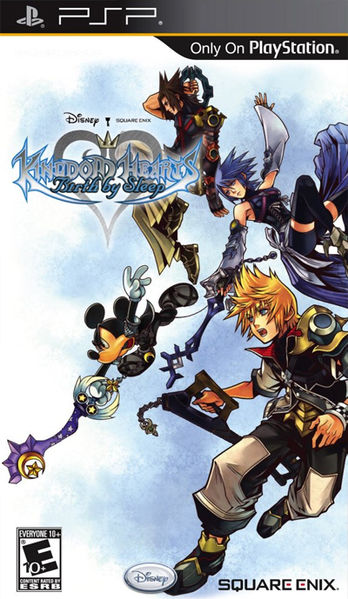
Kingdom Hearts: Birth by Sleep - An Important Stop


When I first played Kingdom Hearts about a decade ago, I was completely blown away. I was having a really fun time and when it ended, I was excited to learn of another game in the series. Since I didn’t have a Gameboy at the time however, I couldn’t really play Chain of Memories (and wouldn’t be able to until the PS2 remake, Re:Chain of Memories), so I ended up skipping to Kingdom Hearts II on PS2. I later learned that this was a bad idea, but since I’ve played Re:Chain of Memories, the story makes just a little more sense (at least as much sense as you can make out of Kingdom Hearts). As the years went on, more games came out, but on platforms that I had no access to, so I was bummed that my lack of a DS would prevent me from witnessing 358/2 Days (pronounced Three-Five-Eight-Days Over Two), though thankfully 1.5 HD Remix was able to fill me in on the details via redone cutscenes. Flash forward to the announcement of Kingdom Hearts: Birth by Sleep for the PSP handheld. The fact that I actually owned a PSP enticed me to play it, so much so that while walking to the bus during my first College semester, I went by the nearest GameStop and picked up a copy. I then proceeded to start playing as soon as I sat down and wouldn’t stop playing for a few weeks during the same semester. I would play during long wait times, particularly the hour or so before Astronomy class, and my sessions went on so long that I had to keep exchanging PSP batteries with my brother just so I could keep going. As I played Birth by Sleep for the first time (and wrote a terrible review of it on DeviantArt once I finished), it became my new favorite game in the series, overtaking Kingdom Hearts II. Having played it years later in anticipation of Kingdom Hearts 2.5 HD Remix, with greater knowledge of the inner workings of the game, I can say that this sentiment still rings true.

It began so simply...

In The Land of Departure, the Keyblade wielders Terra, Ventus and Aqua are all close friends. On the night before Terra and Aqua’s Mark of Mastery exam, which will determine who receives the title of Keyblade Master, Ventus decides to help the two practice and hone their skills. Afterwards, the three of them discuss their friendship, at which point Aqua decides to give everyone Wayfinders that she made to symbolize that their bonds of friendship are strong enough that they’ll be able to find each other no matter where they are. The next day, Master Eraqus, with Master Xehanort in attendance as a guest, begins the Mark of Mastery exam with Terra and Aqua, summoning orbs of light for them to destroy. However, something goes wrong and the orbs are imbued with darkness, causing their behavior to become erratic enough to pull Ventus into the fray. Once the crisis is over, Terra and Aqua have a one-on-one match to display their abilities. In the end, Aqua is declared the Keyblade Master by Master Eraqus because Terra let his inner darkness get to him at one point in the match. As Aqua goes to Eraqus to learn a valuable secret, Terra storms off and is confronted by Master Xehanort, who tells him about his inner darkness and convinces him that it isn’t something to be feared, but channeled and that going to different worlds will help him control it. Meanwhile, Ventus is in his room when he is suddenly confronted by a boy in a mask. The boy in the mask informs him that Terra is leaving, possibly forever, and that Ventus has one last chance to see him beforehand. Once the boy departs, Ventus runs off to where Terra is in an attempt to say something to him. However, Terra leaves in a hurry, causing Ventus to chase after him. Aqua, who has just arrived, tries to stop Ventus and tell him something, but she is too late. Once both Terra and Ventus are gone, Eraqus instructs Aqua to go after them, but keep an especially close eye on Terra, as he is worried about his darkness getting out of hand. Aqua complies, flying away from the Land of Departure in pursuit of Terra and Ventus.

Master Xehanort

It’s interesting to note that Birth by Sleep is a prequel of sorts, occurring ten years before the events of the original Kingdom Hearts. In this regard, it does its job well, establishing several key details that add some depth to the mythos and help explain how certain things came to be, including Sora and Riku’s connections with the Keyblade, the origins of Roxas and even the creation of Castle Oblivion. From a narrative standpoint, as in how it functions on its own, Birth by Sleep is written pretty well. It does a pretty good job handling its gimmick, which has you playing as three different characters, Terra, Ventus and Aqua, who travel to the same worlds, but not during the same points in time. Their independent plot threads do intertwine at times, which helps to establish connecting points to separate the story into distinct parts (ex. before and after the battle with Trinity Armor). As with the previous entries, there are some dark themes explored here and they go beyond the struggle between light and darkness in the heart. Because the three characters are effectively soldiers, darker themes are touched upon, including war, genocide, existential crises and feelings of trust and betrayal. These aren’t as explored as extensively as they would be in, say, Metal Gear, but the elements have enough of a presence that the overall narrative is very engaging and elicits good emotive reactions out of the player. Though admittedly the story can be a little confusing at times, what with the discussions of the Keyblade War and the χ-blade (pronounced Kye-blade) and whatnot, Birth by Sleep is an important milestone to hit to at least try and understand the story as it stands now.

Vanitas (left) is very important to the story.

While the story is very interesting to play through, the heroes do make plenty of mistakes. Terra, for the most part, is easily trusting of the people he meets, including Master Xehanort, and this comes back to bite him hard (though I won’t say how). Likewise, Aqua and Ventus’ stories also rely on them making one poor decision after another, which by the endgame seems to have only furthered Xehanort’s plans without them realizing it. Fortunately, they are able to reverse most of the damage that they cause, but it also comes at a great cost, which I will not reveal here for the sake of avoiding spoilers. In any case, I found it interesting how the Disney-inspired worlds were integrated into the plotline, even if the stories don’t quite match up with the source material (though one should expect creative liberties when putting a work from one medium into another, especially when fusing multiple continuities and independent stories together).

Gameplay-wise, Birth by Sleep is the best I’ve ever played in the series. As with Kingdom Hearts II, there is a further emphasis on action, but the twist here is that they’ve done away with the menu system entirely, instead going with a customizable command deck. The way the system works is that you are given a certain amount of slots (which increase over time to a maximum of eight) to insert commands representing certain physical or magical attacks as well as items. The d-pad scrolls through the commands and you press triangle to activate the one you want, after which there is a cool down period that must end before you can use it again. By using commands, a gauge above the list is filled up, which can lead to a unique finishing move or a new command style that enhances regular attacks and can lead to a more powerful finisher.

One of the most powerful styles: Ghost Drive.

These commands can also be melded together, similarly to Crisis Core: Final Fantasy VII’s Materia Fusion system, and combined with different crystals to attach various abilities which range from reducing cool down times to buffing or nerfing elemental damage. One of the most essential of these abilities, from my experience, is EXP Walker, which lets you gain 1 EXP for each step you take (for those who wish to know, the most reliable method to obtain it is to combine Blizzard and Aero in conjunction with an Abounding Crystal). In place of summons, the game introduces a D-Link system as well, which lets the player replace their command deck with that of another character that they have formed a bond with (ex. Terra, Ventus, Aqua, Snow White, Experiment 626, etc.). D-Links can be upgraded with a rare star drop that can attach different abilities to the character during usage, making them more powerful for the next activation; when the D-Link gauge isn’t full, it can be replenished with blue D-Link prizes.

The last system introduced is the Shotlock Command, which is activated by holding down L and R and then moving a target over enemies. Pressing X will trigger the Shotlock attack, though pressing the button when the targets are at maximum will not only fire off all the selected shots, but allow an additional barrage of the same attack as well. While these attacks are cool to pull off, the only problem is that the same buttons used to trigger them are also used to rotate the camera, which can be awkward if you’re really not careful.

One of the strongest Shotlock Commands: Ultima Cannon.

I realize that what I’ve written may sound a little confusing, but I think it’s the best system the series has had. Once you get into it it’s very easy and intuitive on top of being incredibly quick and responsive. By taking away a lot of the complexity of previous Kingdom Hearts games, including the already streamlined Kingdom Hearts II, it becomes much easier to manage the player character and figure out exactly what you want. Despite some of the minor flaws in the systems present, I hope that they not only keep the command deck in future Kingdom Hearts titles, but expand and improve on it as well for the best possible experience. It’s a natural evolution of the process and the only logical next step is to move forward with it.

Although Birth by Sleep was developed for the PSP, I’m genuinely impressed by its size and scale. There are several worlds to explore, each with a number of areas and secrets. Each area isn’t always available, in fact limited to how relevant they are to each character’s story, but this doesn’t change that the size of the game could easily rival its console brethren. Birth by Sleep feels as large, and as long, as any Kingdom Hearts game on the PS2 (and now PS3), a feat to be rightfully commended for. There is also a great attention to detail and a fittingly bright color palette with a lot of range. Every one of the Unversed enemies has a unique shape, save the ones that are merely palette swaps, and an easily identifiable color pattern that helps one to figure out exactly how to take them down. On the downside, the graphics aren’t the best, being on PSP and all, since the character models end up a little jagged in places and cloth textures don’t look particularly smooth. Despite this however, Birth by Sleep ends up being one of the best looking games on the handheld and can be seen as a technical marvel.

A Flood, one of the most common Unversed types.

The game also has plenty of challenge, especially on the higher difficulties (I played on Proud Mode), where the bosses can really knock you around like a piñata unless you go into battle fully prepared. No matter what difficulty you play on, you may find the Mandrake Unversed to be particularly annoying, as they attack by firing razor sharp leaves that always seem to match your elevation and they can fire them off in rapid succession to disrupt any combo you might have had going (which can further cause the meter on the Command Deck to start dwindling). The worst part is that not only can they inflict Poison and Confusion if you’re not careful, they don’t appear out of thin air like the other Unversed, rather they are already on the battlefield to begin with and can thus cause you as much pain and suffering as possible; I loathed Mandrakes every time I came across them.

Voice acting and music have always been a strong suit for Kingdom Hearts and this installment is no exception. Since I own the soundtrack, I believe that it contains some of Yoko Shimomura’s best compositions to date, with a grand mix of upbeat world themes and dark and foreboding battle pieces. Voice acting, however, is admittedly kind of a mixed bag. On one hand, we have phenomenal voice work by the recurring Disney characters, who mostly use the official Disney voice actors (for those characters whose voice actors are deceased, they have incredibly convincing sound-alikes). There are also surprise performances from Leonard Nimoy and Mark Hamill, each respectively voicing Master Xehanort and Master Eraqus. They both sound like they really put their heart into their work and their many years of experience have certainly paid off. On the other hand, we have the main trio; Terra, Ventus and Aqua. Terra, due to being voiced by Jason Dohring, sounds a little bored in his delivery, downplaying the emotions he should be feeling in certain scenes. However, when Richard Epcar takes over at some point during the plot (I won’t say how), his lines are overacted, which balances that out perfectly. Ventus is voiced by Jesse McCartney and actually gives a solid performance, mirroring his role as Roxas in Kingdom Hearts II. Lastly, we have Aqua, whose voice actress, Willa Holland, has nearly the same problem as Dohring, but not to the same degree. Should these characters return in the future, I hope that Dohring and Holland have picked up a thing or two to make their characters better rounded out.

Mark Hamill does a good job as Master Eraqus.

Before I end this review, I’d like to share some advice with prospective PSP players. You can play the three stories in any order you wish, but the best order is Terra, Ventus then Aqua. Playing in this specific order will lead to far less confusion than playing it any other way, plus it creates a smooth transition to the Final Story. I also highly recommend unlocking the secret video, Blank Points, as it is a good epilogue to cap off the events of the story. The easiest way to unlock it is to complete all of the campaigns on Proud or Critical mode (I would advise playing on Proud Mode, even if it’s your first time playing, since the difficulty will disappear after playing for a while). Finally, there are some settings that would be very beneficial to manipulate. There is the option to install the game to your memory card, which gives the advantage of reduced load times, and you have the option between 200, 400 or 624 MB, speeding up load times in an increasing number of areas for the game (combat, menus, moving between areas, etc.); I recommend doing a full install for best results. Also, there are two specific settings that you should immediately increase: Color Depth and CPU Speed. Upping the Color Depth to 32-bit will provide the best graphics, but sometimes causes slowdown as a result. Accelerating the CPU Speed prevents slowdown, counteracting the disadvantage of 32-bit Color Depth, but will cause the PSP battery to drain much quicker, so it is further recommended that you have an AC adaptor at all times (I call this combination “drain the battery mode” for a good reason). Follow all of these simple steps and you’ll have the best Birth by Sleep experience possible.

In the end, Kingdom Hearts: Birth by Sleep is what I would consider the best game in the franchise. The gameplay is streamlined and the controls are tight, all without sacrificing the spirit of earlier games or what made them good in the first place. Admittedly the story can be confusing at times, a given for this franchise, and the voice acting may not be perfect, but the game has a plotline that can, to some degree, operate independently of its brethren (though it does serve as the MGS4 of the group by explaining just about everything (for now…)). On top of that, the game is simply a well-crafted RPG that makes owning a PSP very worthwhile. If you haven’t played it yet, I see no reason to wait; it might also be a good excuse to buy a PSP and a play a good game that isn’t related to God of War.