Showing posts with label Comic Book. Show all posts

Thursday, October 30, 2025

Fobia Vol. 1

Note: Product received for free in exchange for a copy of Powers Squared Vol. 1 and an honest review.

When you’ve dedicated yourself to creative works, it’s natural to want to branch out and try new things when inspiration strikes. One such medium creatives have branched out to is comic books, whether they’re actors, like Keanu Revees (BRZRKER) or David Dastmalchian (Count Crowley), or content creators, like penguinz0 (Godslap) or Jacksepticeye (Altrverse). Now, Derrick Acosta of Mega64 fame has thrown his own hat into the ring with Fobia, a horror anthology inspired by other anthologies like Tales from the Crypt and Slow Death, among others. In an impressive feat for a first-time independent comics creator, he managed to raise $34,671 on Kickstarter to bring Vol. 1 of his dream to fruition, with physical books on the way and a Vol. 2 already in the works. As an independent comics creator myself, it’s nice to see someone else with a burning passion for the medium and, as a Mega64 fan, I was curious about his latest venture.

Friday, March 29, 2024

God of War: Fallen God (Comic)


Following the previous God of War comic from Dark Horse, a second miniseries, subtitled Fallen God, was made with the same creative team as the first, which began publishing in 2021. This miniseries would be another prequel to the 2018 game, this time going further back to the Greek games, making it the first new material to explore this era of the series since 2013’s God of War: Ascension. Unlike the previous comic, however, the physical collection for this one proved far easier to come by, which I would read shortly after the first. Much like the 2018 comic, Fallen God feels like a solid extension of the God of War mythos, while also seeming to provide a tease of what’s yet to come.

Wednesday, March 27, 2024

God of War (Dark Horse Comic)


Around the launch of the 2018 God of War game, the franchise returned to the world of comics under Dark Horse, with a limited series of the same name set within the timeline of the Norse games. While the series ran for four issues, these were preceded by a digital-only #0, available through the PlayStation Store and included with copies of the game starting as low as the Deluxe Edition. While I did want to read the comic physically, and even waited for a trade before doing so, I never got around to obtaining it until I realized a trade was available for the second volume, subtitled Fallen God, but by then the trade for the first volume was becoming increasingly difficult and expensive to find. With some patience, however, I was finally able to acquire a physical trade, by intentionally getting a copy that had some minor wear on the covers to save money. Upon finally reading the trade, which even collects the #0 issue, I thought it was worth the effort, but would have felt differently if I caved to the more exorbitant asking prices.

Thursday, March 21, 2024

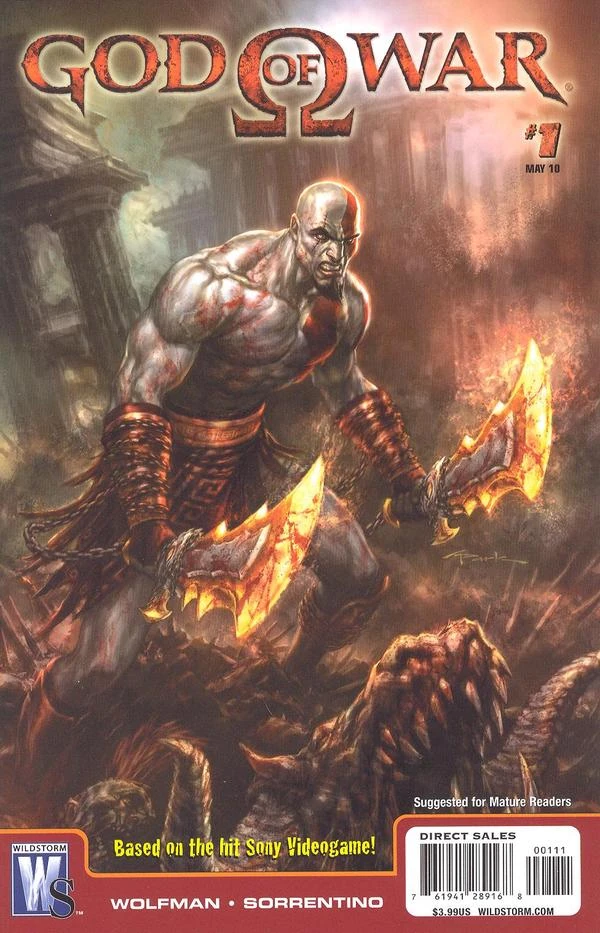
Second Look - God of War (WildStorm/DC Comic)


Note: This review contains spoilers for God of War (WildStorm/DC), God of War (2005) and God of War II.

While 2010 would see the release of two God of War titles, including the much-anticipated God of War III and the prequel game Ghost of Sparta, this would not be the only God of War media released that year. Coinciding with the release of the former, a God of War comic book was published on a bi-monthly schedule and ran for six issues, filling in yet another unseen gap in Kratos’ life. Rather notably, while the comic was initially published by WildStorm, an imprint of DC Comics at the time, only five issues would be published before WildStorm was shut down, with the sixth issue and trade paperback collection being published by DC. While I would witness this happen in real time from buying the single issues as they came, including a copy of the first issue signed by writer Marv Wolfman and a less-documented variant cover of said issue, I was still dumb enough to also buy a copy of the trade when it came out, though it has made re-reads a lot easier. While revisiting the God of War series, I thought it fair to also take another look at this comic, not only due to its canon status, but also to hopefully make up for my more lackluster first review. Revisiting this comic again after so many years, I thought it still held up as both a good God of War comic and a decent book on its own merits, but it’s definitely not for people who aren’t already familiar with the games.

Wednesday, October 26, 2022

Silent Hill Downpour: Anne's Story


Note: This review contains spoilers for Silent Hill: Downpour.

Back in 2012, Silent Hill: Downpour (Downpour) released to very mixed reception and, unfortunately, ended up as the final main title in the Silent Hill franchise. Within the divisive story, Murphy Pendleton would occasionally cross paths with Anne Marie Cunningham, a corrections officer who spends most of the game wanting him dead for turning her father into a vegetable, or so she believes. Her infrequent appearances also hint at her experiencing her own personal nightmare while navigating the town, leaving gaps that writers Tom Waltz, Tom Hulett and Devin Shatsky had planned on filling through a DLC campaign. Although Konami had scrapped this planned content, Tom Waltz got permission to adapt the planned story into a four-issue IDW comic book in 2014 as Silent Hill Downpour: Anne’s Story (Anne’s Story), with art by Tristan "T-Rex" Jones. This comic would then receive a trade paperback in 2015.

Of the Silent Hill material I bought, this proved among the least expensive, as I found a copy of the trade on eBay in early 2022 for about $18. I didn’t have much interest in the comic at first, since I didn’t feel like I needed to read any supplementary material, but when I learned of its canon status and original intention, I decided I should properly complete my Downpour experience. Although our previous comic book reviews turned out pretty awful (displaying an embarrassing lack of understanding of the medium), I feel that with time (and experience from creating our own book), I’m now much better equipped at writing about Anne’s Story. Without further ado, let’s look into whether or not Anne’s Story does a good job at supplementing Murphy Pendleton’s story in Downpour.

Sunday, May 8, 2016

Captain America: Civil War - Are the Avengers breaking up?


Captain America: Civil War (2016) Starring Chris Evans, Robert Downey Jr., Scarlett Johansson, Sebastian Stan, Anthony Mackie, Don Cheadle, Jeremy Renner, Chadwick Boseman, Paul Bettany, Elizabeth Olsen, Paul Rudd, Emily VanCamp, Tom Holland, Frank Grillo, William Hurt, Daniel Brühl. Directed by Anthony Russo, Joe Russo. Screenplay by Christopher Markus, Stephen McFeely. Based on Captain America created by Joe Simon and Jack Kirby. Produced by Kevin Feige. Color. U.S.A. Run Time 147. Action, Adventure, Fantasy

In the ever-continuing and ever-expanding Marvel Cinematic Universe (MCU), no summer season would be complete without a new installment. This year’s entry comes under the Captain America (Chris Evans) sub-heading of the franchise, but it is in fact all but a reunion of the full Avengers; the only ones missing are The Hulk and Thor, which are more nice-to-haves than required for a quorum. In their stead are three “new” Avengers, the recently introduced Ant-Man (Paul Rudd), the oft rebooted Spider-Man (Tom Holland) and the soon to have his own film, Black Panther (Chadwick Boseman).

The story takes place a year after the events of Avengers: Age of Ultron (2015), in which the city of Sokovia was left as a pile of rubble and there were scores of deaths. The final straw comes when some innocents are killed in Lagos, Nigeria during an Avengers operation. The world has suddenly had enough and has proposed regulating the Avengers by having them overseen by a United Nations committee. Vengeance against and regulation of super-powers is as old as The Watchmen graphic novel and was also previously addressed in the kid friendly version of Watchmen, The Incredibles (2004). So the film doesn’t really break new ground here. In any situation, some will follow the law, while others will not.

When U.S. Secretary of State Thaddeus "Thunderbolt" Ross (William Hunt) informs them of this new law, it divides the Avengers. On one side is Tony Stark / Iron Man (Robert Downey Jr.), Natasha Romanoff / Black Widow (Scarlett Johansson), James "Rhodey" Rhodes / War Machine (Don Cheadle), Vision (Paul Bettany), Spider-Man and T'Challa / Black Panther. They support the law, though perhaps not willingly.

Team Iron Man includes Black Panther, Vision, Iron Man, Black Widow and War Machine.

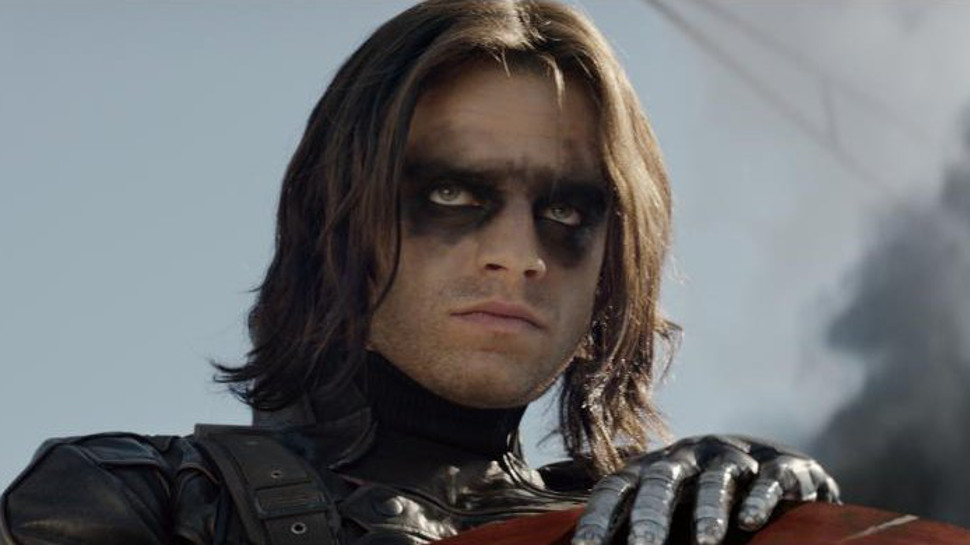
The other side of the divide is led by Steve Rogers / Captain America with followers in Sam Wilson / Falcon (Anthony Mackie), Clint Barton / Hawkeye (Jeremy Renner), Wanda Maximoff / Scarlet Witch (Elizabeth Olsen), Bucky Barnes / Winter Soldier (Sebastian Stan) and Scott Lang / Ant-Man. As a group they don’t want restrictions on when they act and worry that a committee might wait too long to call them up.

Team Captain America includes Falcon, Ant-Man, Hawkeye, Captain, Scarlet Witch and The Winter Soldier.

It is the relationship between Rogers and Barnes that drives the plot as Barnes is framed for a killing he didn’t commit and then, once captured, is turned back into the killing machine by Helmut Zemo (Daniel Brühl), a survivor of the destruction of Sokovia, who is seeking his own brand of vengeance.

Zemo manages to play the Avengers and the establishment like a fiddle as they act out just how he predicts they will, leading to several battles, pitting Avengers (and friends) against one another with more than pride getting bruised in the process.

There is also a lot of backstory involving Barnes as the Winter Soldier. What Stark finds out doesn’t help with either their working relationship nor Iron Man’s and Captain America's. Obviously, there will have to be some forgive and forget before the Avengers can all work together again as a cohesive group.

Bucky Barnes/The Winter Soldier's backstory plays prominently into the plot.

One of the problems in following a franchise like the MCU is trying to keep up with the barrage of characters that build up over time. Not only are there nearly a dozen or more super-heroes by now, there are the suddenly important supporting cast that you’re supposed to have kept track of all these years and films later. Ross as an example, first appeared as a Lt. General in The Incredible Hulk (2008). So if he seems familiar eight years later, he’s supposed to be. As is Sharon Carter (Emily VanCamp) who first appeared in Captain America: The Winter Soldier (2014), but in that movie she was Agent 13 and got a little more screen time than Stan Lee. Now, she’s back as a mid-level anti-terrorist expert working for the UN. And now she’s gone from girl across the hall to possible love interest for the good Captain.

Also from Winter Soldier, welcome back Brock Runlow (Frank Grillo). If you don’t remember him then you’re not alone. He was one of several S.H.I.E.L.D. agents who was a double agent for Hydra and one of several who attacked the Cap in an elevator at headquarters. Does that ring a bell? Well, he’s back, also seeking vengeance as Crossbones. But is it really revenge when you instigated the attack in the first place? Well, he’s not happy about getting his ass handed to him and having a building drop on his face, so he wants Captain America to suffer somehow. And like everyone who tries, he ultimately fails.

For any franchise to last, there has to be a mixture of the familiar and the new. The Avengers are no exception. Most of these characters, even the minor ones, have been the same actors throughout, so when you think of MCU Black Widow, you immediately think of Scarlett Johansson. For the franchise to continue, it needs to add new characters and situations. New character-wise, we get Black Panther, a newly crowned king turned superhero, played well by Chadwick Boseman, another actor with a relatively short list of credits. Still he’s a good addition to the cast and will get his own feature film in 2018. Hopefully we can all keep good mental notes of him until then.

When you think of MCU Black Widow, you think of Scarlett Johansson.

I think Sony has finally found a suitable replacement for Tobey Maguire as Spider-Man. Like several in the cast, Tom Holland might not have a long resume, but he seems to hold his own with the others, notably Downey’s Stark, with whom he shares the most screen time. His Aunt May also got a reboot and is now a younger and sexier Marisa Tomei.

The new Spider-Man (Tom Holland) makes an appearance and holds his own.

But characters are only a part of the formula. These films require action and there is a lot of action in this film. The action is surprisingly easy to follow and despite the obvious use of CGI, it never loses its sense of humor. Some of that goes with the territory of a MCU film, but one has to give a nod in the direction of the Russo brothers, who are directing their first superhero film. If this film is any indication, then Avengers: Infinity War Part 1 (2018) and Part 2 (2019) are probably in pretty good hands. But I felt the same with Joss Whedon after the first Avengers film.

Having seen all the previous films, I’m not sure if that’s a help or a hindrance. I come into this with certain expectations, both good and bad, that someone who hasn’t seen them wouldn’t have. No film should require you to have seen another to make the story work. Certainly, you could watch Civil War without having seen Ant-Man, though there are subtleties you will miss.

Captain America: Civil War is an ensemble uptick after the somewhat disappointing Avengers: Age of Ultron. Maybe it has to do with resetting our expectations. Maybe it has to do with taking the overall storyline in a new direction so that it can regroup later. While I don’t think this is the greatest super-hero film of all time, it is definitely fairly high up there. But I must say I’m looking forward to the next chapter and isn’t that what a franchise is supposed to do, make you want to come back for more?

Saturday, March 26, 2016

Batman v Superman: Dawn of Justice - What the?


Batman v Superman: Dawn of Justice (2016) Starring: Ben Affleck, Henry Cavill, Amy Adams, Jesse Eisenberg, Diane Lane, Laurence Fishburne, Jeremy Irons, Holly Hunter, Gal Gadot Directed by Zack Snyder. Screenplay by Chris Terrio David S. Goyer. Based on Characters published by DC Comics Produced by Charles Roven, Deborah Snyder. Color. USA. 151 minutes. Action, Fantasy.

Sometimes you go to movies because you want to keep up. In that case, you hope for the best as you settle into your theater seat with your overpriced bag of popcorn and your overpriced drink. But nothing can prepare you for the disappointment that is Batman v Superman: Dawn of Justice.

Overlong, it clocks in at just over two and a half hours; slow, you will find yourself looking at your watch fairly often and the biggest sin of all, disappointing on so many levels when it comes to story and character. Like bad porn, the film has no social redeeming qualities. While I don't want to go too much into the plot, I wasn't too far off when I speculated in my review of Superman/Batman: Apocalypse; in this case substitute Darkseid with a CGI Doomsday.

In the best of worlds, you should leave a superhero film, especially one trying to launch a franchise, in this case, the DC Extended Universe, feeling upbeat and wanting more. This is not the case with Batman v Superman, which leaves the viewer feeling that the time they've spent has been a colossal waste.

This is one of those films that stupid determination drives forward. Even though everything else in the film tells you it's the wrong thing to do. It is clear to everyone that Superman (Henry Cavill) is not the right target for his anger, but Batman (Ben Affleck,) does not and he proceeds with a dogged determination that is not admirable.

Batman (Ben Affleck) is wrong when he decides Superman
(Henry Cavill) is a villain, but he can't see it.

Worse yet, the villain of the piece, Lex Luthor (Jesse Eisenberg), comes off as an annoying millennial who never gets the comeuppance he so badly deserves. Again he is an all-knowing psychopath like the Joker from Christopher Nolan's The Dark Knight (2008). And like those trilogy of films and Man of Steel (2013), this film is also dark, overly so.

Lex Luthor is as annoying as he is evil, if not more so.

Wonder Woman (Gal Gadot) almost feels like an add-on for the sake of launching her own film, which will also be directed by Patty Jenkins, coming in 2017. Her introduction is almost welcomed relief, but she comes in too late to save the film.

More Wonder Woman (Gal Gadot) might have helped.

Batman v Superman is chock full of conveniences that it would otherwise fail without. Not only are Gotham City and Metropolis both in the film, but they are conveniently close together, only separated by a river. (Makes you wonder where Superman was when Gotham was being occupied in The Dark Knight Rises (2012)). Alfred (Jeremy Irons) is no longer merely a clever butler, but more of a sidekick skilled with whatever talent is necessary at the moment. The fact that this Batman does not gel well with Nolan's trilogy and seems more in line with the pigheaded sadistic version Frank Miller conceived should say bad things are afoot.

Convoluted and boring are not a good combination for any media and are certainly not here. If you're nothing more than a casual viewer of DC Superhero films, then go see this at a matinee if you insist on going; save your money for hopefully better films to come.

Saturday, December 13, 2014

[OLD] Skylanders #2 (Comic)


Though I’m not used to reviewing comics as they come out, the reason this review is delayed is due to Finals hitting in college as well as a delay in acquiring this issue. With that out of the way, I’m going to discuss the second issue of IDW Publishing’s Skylanders comic, based on the popular game series from Activision. As with issue #1, it seems to be a reprint of a mini-comic, but it still advances the current arc.

Like the first issue, there are two stories, “Mini But Mighty” and “Dark Night”, and they each share a creative team of Ron Marz and David A. Rodriguez as writers with David Baldeón as the artist. “Mini But Mighty”, colored by David Garcia Cruz, continues the story from “Forgetting Flynn” in issue #1, beginning with a celebration of the opening of a new Skylanders Academy. However, Cali (from Spyro’s Adventure, Giants) notices that Flynn isn’t there yet, at which point Tessa (from Swap Force) spots the Dreadyacht is out of control, as it is piloted by the Mini Skylanders. After landing it, Tessa goes to search for Flynn, finding Weeruptor, whose Kaos clone is at the Academy. The writing is good here as well, like in the first part, since it provides more character development for returning characters, especially Cali and Tessa (Auric and Wheellock from previous games appear, but they don’t get as much screen time). There’s also a moment that acts as an effective plot summary of the first three games while hinting at the events of Trap Team, which is good for people who have not played those games and only want to know the major events (it’s also good for me because I still have yet been able to play Trap Team). However, as with issue #1, while I understand that this was also available in a smaller format, it still bothers me that the story ends with an “End” rather than a “To Be Continued”, though it’s probably because I’m reading this comic as a monthly release; this is just a minor nitpick, though.

The backup story “Dark Night”, with colors by Ander Zarate, starts with Barkley trying to find a bathroom, but he ends up running into Bouncer, Night Shift, and Trigger Happy as they are leaving for a mission they were called for at the end of “The Secret Origin of Trigger Happy”. Barkley is thrown off by Night Shift’s appearance, leading to Night Shift expositing his backstory in order to calm him down. It’s essentially a visualization of his character bio, but it’s still presented well and it fleshes out Night Shift’s character more. (I expect next time we’ll see an excuse to tell Bouncer’s backstory in order to round things off.)

Tessa going after an out-of-control Dreadyacht.
(Cali is in the background.)

Both stories in this issue, as mentioned previously, are drawn by David Baldeón, whom I think is a really good fit for the Skylanders series. The respective colorists for both series also do justice to Baldeón’s style, which I discussed in my review of the preceding issue. While Mike Bowden’s art has some merits to it, I personally so far like Baldeón’s style a little better in regards to Skylanders and I wouldn’t mind seeing him contribute more to the book.

As with previous issues, the comic contains a set of four character bios at the back. For reference, they are Trigger Happy, Eruptor, Gill Grunt, and Krypt King. If you want to know Trigger Happy’s origin after having read “The Secret Origin of Trigger Happy”, you’ve come to the wrong place.

Skylanders #2 is a good continuation of the events of the first issue in both its main and backup stories. It does a good job with fleshing out the characters in the Skylanders universe and the art is really well executed. Again, I am glad that I have yet to be spoiled on the events of Trap Team and I would still recommend this comic to new and existing Skylanders fans, though it helps greatly if you read issue #1 first. Considering how well this issue turned out, I can’t wait to see what’s in store for issue #3.

Saturday, October 25, 2014

Plants vs. Zombies: Timepocalypse (Halloween ComicFest Comic) - It's About Time


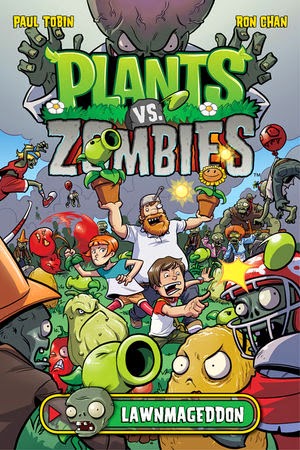
For those who don’t know, Free Comic Book Day is an annual event where, on the first Saturday of each May, participating comic shops are given special comics by participating publishers to give away for free (this can also extend to figures for the popular Heroclix tabletop game); these comics are mostly reprints of a company’s older comic, but can also feature original material (IDW has used the event twice recently to kickstart a Transformers-related series). Each year, there is also a (lesser-known) follow-up event on the last Saturday in October called Halloween ComicFest, which is essentially Free Comic Book Day Part 2, but usually features different free comics for distribution, often featuring Halloween-themed books in the line-up (this is also a mixture of reprints and original material). Today was one such Halloween ComicFest, and one of the comics up for grabs was a mini-comic from publisher Dark Horse, a print preview of a digital series called Plants vs. Zombies: Timepocalypse (in a similar fashion to the SDCC version of Plants vs. Zombies: Lawnmageddon). Aside from having a funny subtitle, this series is meant to tie in with the mobile game Plants vs. Zombies 2: It’s About Time. Though this is only the beginning of a larger story, I decided to review it anyway to see how well this comic does with interesting the reader in wanting to read more. Having read it, I can say wholeheartedly that this does the job well.

Following the events of Plants vs. Zombies: Lawnmageddon, Dr. Edgar Zomboss builds a Sun Vaccum that will, as the name implies, absorb all sunlight so that zombies can feast on brains unimpeded. However, when he tells a zombie to make some Pop Smarts (Strawberry flavor), the zombie puts them in the Sun Vaccum instead of the toaster, causing it to explode and open a portal, scattering the Sun Vaccum’s pieces throughout time. Zomboss then orders the zombies to go through and retrieve the scattered parts.

Paul Tobin returns as the writer for this comic, which he revealed to me when I got Lawnmageddon signed at Comic-Con, and he does as amazing a job as ever. There’s plenty of humor abound in this snippet of Timepocalypse, and I enjoyed every moment of it, since it’s the kind that fits within the Plants vs. Zombies universe. We also get to see how Nate, Patrice, and Crazy Dave are doing in this, as they are the main human characters, and so far the story does well with fleshing them out from the previous story. Ron Chan also returns as artist (and presumably Matthew J. Rainwater as colorist; the credits are listed in an ad for the digital release), and they again prove to be a great compliment to Tobin’s style of writing and add greatly to the humor value of the story, in addition to making the characters very lively and accurate to the source.

The Halloween ComicFest version of Plants vs. Zombies: Timepocalypse is a great way to get fans of the Plants vs. Zombies comic a reason to come back and make them want to see what happens next. The creative team from Lawnmageddon returns for this series, which is good as I think they did a wonderful job with the previous story and it seems the two will share a similar tonality and enjoyment level as a result. As a preview, I think it managed to hook me once again and I would recommend Plants vs. Zombies fans check this out via its digital release or the inevitable physical hardback; I personally am going to wait for the latter before I review the full comic in the future, mainly because I prefer physical releases. In any case, if you haven’t already and are interested (especially as a fan of the games), I would also recommend checking out the Lawnmageddon comic, as it, while not entirely required, provides some background on the events of Timepocalypse.

Friday, October 17, 2014

[OLD] Skylanders #1 (Comic)


Quite recently, IDW Publishing has begun releasing a comic book series based on the ever-popular Skylanders property, having released an exclusive issue #0 at San Diego Comic-Con to build interest in both this venture and the then-upcoming Skylanders: Trap Team. Thankfully, this first issue is not just a reprint of the #0 comic, beginning to tell new stories in the Skylanders universe to flesh out its world. Though it is obviously meant as a way to further advertise the toys (see: Transformers), this first issue does manage to expand on the games’ characters, even if it is a little rough around the edges.

This issue features a main story, “Forgetting Flynn”, and a back-up story, “The Secret Origin of Trigger Happy”, both written by Ron Marz and David A. Rodriguez. “Forgetting Flynn”, drawn by Mike Bowden and colored by Fernando Peniche, follows Flynn as he tries to transport the Mini Skylanders to Skylanders Academy. On the way, Flynn sees Kaos has disguised himself as Weeruptor (one of the Mini Skylanders) to infiltrate the Academy. In response, Kaos casts an amnesia spell on Flynn and a Skylander, Chopper, tries to snap him out of it. I thought the story was written fairly decently, since it does good at highlighting Chopper and Flynn’s dialogue was written such that it sounded like things he would say, especially when delirious (and of course it’s hard to un-hear Kaos with his dialogue). However, the whole business about Kaos taking the form of Weeruptor goes unresolved, and on top of this the story just says “End” at the end. Looking at an ad in the comic for the Skylanders Micro Fun Packs (micro comics plus extra goodies), it appears the story will continue in the next issue and this is part of a 3+-issue arc, so the “End” was probably included due to it being released as a separate micro comic. However, it was a little confusing for me, since I’m used to seeing a “To Be Continued…” or some other variant when a comic has a running story (the Adventure Time comic from Boom’s Kaboom! imprint does this with bigger arcs and it usually also has a back-up story). As far as the writing goes, however, this was my only real hang-up about it; also, “enchilada” eventually becomes a weird word, but that’s beside the point.

Buy our toys!

Mike Bowden’s art works pretty well for the main story, as it did for the Comic-Con comic, bringing his own style to the Skylanders characters while still drawing them accurately and expressively. Fernando Peniche’s colors compliment this style, adding extra life to the characters and helping to match the tone of the situation. An interesting thing about the art is that, while the characters themselves and other important objects use definitive outlines, the backgrounds go without outlines, which I think gives the comic a certain feel to it and helps the characters not blend into their brightly-colored backgrounds.

“The Secret Origin of Trigger Happy”, drawn by David Baldeón and colored by Ander Zarate, sees the Skylanders Trigger Happy, Night Shift (a SWAP Force member) and Bouncer (a Giant) at Skylanders Academy training out of boredom while they wait for Blades to show up, and in this boredom Trigger Happy tries to relay his backstory. This story was an interesting read, as it gives some insight into what Skylanders do when not trying to stop any villains (of which the new game contains a plethora), and it was kind of funny to see references to some known Marvel and DC heroes as Trigger Happy explains his origin. The story ends up being kind of a big tease, but it was still nice to see the Skylanders in their off-hours; it makes you wonder what others do with their spare time. I liked David Baldeón’s art here, since it was very energetic and expressive, and Ander Zarate’s coloring work only adds to this energy (in addition to some rather impressive lighting work that really adds some depth to everything, as well as some glow effects on places where there would be on Bouncer’s toy). It would be very interesting to see more from this art team in the future.

The artwork for the back-up story is very energetic.
(Page shown without its dialogue.)

Also, as with the #0, this comic contains character bios at the back, so it can be assumed that this will be a running feature. I like to make a point of reading stuff like this, as it gives me more background on the characters and helps me to appreciate them more (and I’m sure the same can be said for any hardcore fan). In case anyone is wondering, the bios in this issue are for the Skylanders Spyro, Jet-Vac, Prism Break, and Food Fight.

Skylanders #1 is a decent start for the Skylanders comic, even if it does have a couple of rough patches. The writing isn’t terrible, the art is nice to look at (especially in the back-up story), and it does a good job of trying to flesh out the characters (which is a little more than I can say with the games themselves), which I hope to see more of in future issues. This is definitely a comic that any Skylanders fan should pick up, and anyone interested in playing the games but does not have the money or resources to do so can use this as a more cost-effective jump-on point to understanding the game’s world (the main story even offers a brief and concise summary of the overall backstory for newcomers). As someone who has not been able to play Skylanders: Trap Team yet, I’m glad to see that there aren’t any spoilers for that game anywhere, so anyone in a similar situation can pick up this comic without worry.

Sunday, August 3, 2014

Plants vs. Zombies: Lawnmageddon (Full Comic)


I have previously covered the comic Plants vs. Zombies: Lawnmageddon, based on the popular PopCap game, on this blog, although it was a print preview from SDCC of the digital comic that was coming out at the time. I am covering that same comic again, only this time it’s the full package after reading it from a hardcover collection. I have also mentioned a desire to play a couple of Plants vs. Zombies-related games that were then coming out, Plants vs. Zombies: Garden Warfare and Plants vs. Zombies 2: It’s About Time; my interest on those games has since waned, with a complete disinterest in the former due to lack of an offline multiplayer function and being unsure about the latter (despite the fact that I now have a smartphone) due to it being a free-to-play game with micro-transactions (I was somehow lead to believe it would also come to PC, my preferred platform for using plants to kill zombies). I recently acquired the hardcover collection of Lawnmageddon at the last San Diego Comic-Con, even getting it signed by writer Paul Tobin (I wasn’t really aware of when he was signing stuff, I just happened by his signing on the same day I got the hardcover). After having waited to read the comic until it came to print (my preferred way to read about using plants to kill zombies), I would say the investment was totally worth it.

In the city of Neighborville, a large horde of zombies has risen from the sewers in search of brains to devour. Meanwhile, a boy named Nate Timely arrives home and goes up to his treehouse, unaware of the approaching zombies. In his treehouse, Nate hears a noise and, mistaking it for a threat, attacks. However, he receives a counterattack and it turns out to be a girl named Patrice Blazing. The two quickly become friends, but soon afterwards the zombies begin to invade the treehouse. As the two flee from the zombies, they are saved by attacks from sentient plants while Patrice leads Nate to the home of her uncle, known to everyone else as Crazy Dave.

Nate and Patrice's first encounter.

Paul Tobin’s writing definitely captures the spirit of Plants vs. Zombies, working in the various plants and zombies of the game while still managing to tell an interesting and humorous story. While the story can be somewhat serious, its setting allows it a sense of humor that lets it not take itself too seriously. This works in the comic’s favor, since the game itself never really took itself that seriously to begin with. What helps sell the tone of the comic is not only the personalities and interactions between the central characters, but also the occasional gag involving some of Neighborville’s residents, which are always good for a chuckle.

Ron Chan’s artwork does an amazing job replicating the general art style of Plants vs. Zombies, with any new characters drawn such that they seem to fit in with everything else from the game. While everything is represented from the games really well, there is a great range of emotion in many of the plants, allowing you to feel bad for them when something goes wrong while fending off waves of zombies. This is helped by the coloring by Matthew J. Rainwater, who gives the comic a suitably brighter color palette to match the look of the game and give the art more life than it already has.

Crazy Dave is crazy.

Plants vs. Zombies: Lawnmageddon is a comic I would highly recommend to any Plants vs. Zombies fan. The writing has a good amount of humor to it without detracting from the story and the art accurately represents the game while still being fun to look at on its own. If you are interested in reading this comic, I would suggest picking up the physical hardcover collection since you can have the entire comic in one spot. Those that read the comic when released digitally might also want to consider the hardcover if they desire having a physical copy. Though I would recommend this to fans of the series, the comic does a good job of holding up on its own, so those looking for a good laugh may also want to consider checking this one out.

Wednesday, July 30, 2014

[OLD] Skylanders #0 (Comic) - Zero Toys Required, Still A Good Start


While the Skylanders franchise has proven itself to be a very profitable/successful Spyro reboot and toy seller (even if Spyro himself isn’t really in the spotlight), it doesn’t seem to have much in the way of supplementary material, aside from a few spin-off games and a handful of books. To rectify this, IDW Publishing has recently announced a Skylanders comic book series, which more recently made its debut with an exclusive issue #0 at San Diego Comic-Con, its own story serving as a prequel to the upcoming Skylanders: Trap Team. As a Skylanders player myself, I wasn’t sure what to think of it at first, but as the Con drew closer I decided to give the comic a shot so as to invest myself further in the series lore; to this end, I ended up (unintentionally) getting two copies of the comic at the IDW Booth (I was aiming for one), as well as copies of the variant cover after attending the Skylanders panel at the Con (this seems to be the only way to get this particular variant) and getting each copy of the comic signed by the issue’s writer, David A. Rodriguez (he had a signing each day at IDW throughout the Con). After reading the series’ debut issue, I would say that this new comic series is off to a good start, though it’s much too early to tell how good it is at transitioning into the story of Trap Team (since, you know, the game’s not out just yet).

When Lord Kaos makes a discovery, he explains to his servant Glumshanks about a prison in Skylands known as Cloudcracker Prison, wherein Skylands’ biggest villains are encased in a material known as Traptanium, the most durable substance in all of Skylands. When Glumshanks asks what this has to do with anything, Kaos explains that he has a plan that will eventually grant him total control over all of Skylands. Later, The Skylanders Pop Fizz, Stealth Elf, and Wash Buckler are flying with Flynn as Stealth Elf practices, but no sooner do they have to join other Skylanders in fending off an army of Trolls attacking a supply of Radiance Crystals, the element used to make Traptanium. If that’s not enough, a Doom Raider named Wolfgang appears to overwhelm the Skylanders.

David A. Rodriguez, the aforementioned writer of this issue, does an amazing job of capturing the spirit of the characters Kaos, Glumshanks, and Flynn, as their personalities and actions lined up with what they would normally do in the games (I have not really played or read any supplementary material), to the point where I could hear the characters saying their respective lines. I personally don’t know much about the personalities of the Skylanders themselves, since I haven’t read many character bios and any personality I have seen from them comes mainly from whatever they say in toy form, commercials, and a handful of cutscenes. However, the actions of the Skylanders present in the story, especially those that got the most screen time (Spyro himself appearing in only a single panel), felt like things they would do in the situations they were presented with. Again, it’s too early to tell how well this comic lines up with the plot of Trap Team, but I would nonetheless say it was well-written as it seems to set up plot points present in said game.

The Doom Raider Wolfgang shows up in this comic.

Mike Bowden’s art on the comic does well with capturing the general art style of the game, as well as having each character looking accurate to how they look in-game (and on-toy). The colors by David Garcia Cruz suit Bowden’s art well and help each character pop out in their respective surroundings, helped by the use of a generally bright color palette. There is one gripe I have with the art through, but this isn’t a mistake original to the book: the Trap Master Snap Shot uses a bow-and-arrow as his oversized weapon (a visual gimmick of the Trap Masters), but, as with his toy and official artwork, the bow lacks a bowstring (which is, you know, an important part of a bow’s anatomy), so even in the context of a comic it looks like Snap Shot is holding some weird-looking object rather than a proper weapon. Aside from this one thing, I don’t really have any complaints about the artwork.

There is also a set of four character bios in the back, namely for four of the Trap Masters introduced in Trap Team (Jawbreaker, Wildfire, Snap Shot, and Wallop). I find this feature to be interesting, since it allows the reader to know more about characters from the game series without having to look them up online. Though laid out much differently, this reminds me of a similar feature that was included within the issues of IDW’s Transformers: Last Stand of the Wreckers mini-series, as well as the bios included in Fun Publications’ Transformers material. In any case, I find that these bios aid in adding more depth to the universe and fleshing out the characters more.

So far, I would say the Skylanders comic is off to a good start. I would have to read more issues once the comic officially debuts in October to get a better idea of the comic’s general quality, but I would still say that this issue from Comic-Con was really well-executed. As a prequel, it seems to set up the plot of Trap Team well, though again I can’t judge that fully until I get to play the game. The writing and art are both executed well and the story gives potential players a glimpse of what Trap Team will be like in terms of new characters and plot. This comic is a must-have for Skylanders fans, and if you didn’t attend Comic-Con, I would suggest trying to seek this one out if you are interested. Hopefully this issue becomes reprinted in the future, perhaps in a trade paperback of some sort, so that those who didn’t attend the show will be able to read this story, but for now eBay is probably your best bet if you don’t have a copy already.

Sunday, July 13, 2014

American McGee's Grimm (Comic)


Comic books, like fairytales, can also be a good source of amusement, with comics available in a wide variety of genres to appeal to readers with different tastes and interests. However, as their stories are told (and sometimes retold) over time, many genres have fallen into a number of clichés, which many comics can’t seem to get out of. If you are someone who thinks this needs to end, read on.

Following the success of the game American McGee’s Grimm from Spicy Horse, a five-issue comic book mini-series with the same name was launched by IDW Publishing as a way of continuing the series. Unlike the game on which this comic is based, I had actually read this comic as it was coming out, being one of the first non-Transformers comics I had read when starting to get into the medium (this was some time after my time with the Bionicle comic). Despite not having actually played the game beforehand, it was a comic I decided to read anyway due to my interest in said game. Having read the comic again after finally being able to play Grimm (I was originally going to review it shortly after the Akaneiro comic since both were based on American McGee properties, but the timing didn’t work out), I have to say I actually enjoyed it more than I did originally.

Having conquered all fairytales and remade them in his own image, Grimm wonders if there’s another form of storytelling that would require his abilities. He then eyes a comic book stand, deciding to take that for a spin. During the course of the mini-series, each issue tackles a different comic book genre, including superheroes (but primarily a Marvel/DC parody), romance, western, Japanese manga (but primarily Pokémon), and what seems to be a parody of the relatively-obscure comic book series Bone by Jeff Smith (I have not actually read Bone, but I’m aware of its existence), though the third and fourth issues also briefly touch upon the horror and space genres respectively in throwaway scenes. Each of the genres is presented such that they highlight the various clichés associated with them (the romance and western parodies I understood based on having seen movies from those genres); I wasn’t sure if the fourth issue in particular was using Pokémon tropes as an umbrella for the entirety of manga, but at least they got the point across about that particular series.

Pictured: How most superhero stories usually go.

Dwight L. MacPherson, the writer of the comic, does a good job of capturing the spirit of the games, including its sense of humor. Grimm’s actions over the course of the series seemed like something he would do, and I was able to not only hear Roger L. Jackson’s Grimm performance in my head (likely helped by me having just played the game), but a few times I had also thought about what some characters would sound like if they had actually been voiced by Jackson. MacPherson also makes good use of the Theater segments, which help the comic feel even more like an extension of the game. Another interesting thing about the comic is that we also get to see what life is like for Grimm ruling over the darkened fairytale world, fleshing it out and making it seem like more than just a copy of whatever the game did.

The art, by Grant Bond, who also drew the primary covers for the series, also helps with capturing the game in comic book form, with scenes in the darkened fairytale world and Theater segments accurately replicating the art style of the source material; at times during the Theater portions, I could also imagine what they might have been like in motion. When the comic focuses on Grimm invading and darkening the genres highlighted in each issue, Bond makes interesting use of two different art styles, with Grimm still in the style native to the original game, giving a good impression of just how out of place the titular evil dwarf is in each of the different settings. What also helps this is the different panel styles and page background colors used, with black pages and unique panel borders used for the fairytale world (with appropriate panel shapes used for Theater sections) and off-white pages with normal panel borders to showcase the comics that Grimm is messing around with. These artistic choices give the comic a unique feel that makes the experience more worthwhile and interesting to read.

The American McGee’s Grimm comic is one that I would wholly recommend to fans of the game. The writing and art for the comic help create a unique experience that really feels like an extension of the game and manages to do a good job of translating parts of the gameplay to a different medium. If this is a comic that interests you, I would suggest playing the game first (if you haven’t already) in order to get the most out of it, otherwise it can be found online in trade paperback form. Also, there is a reason the comic says it’s not recommended for readers under 13 years old, as it contains some mild swearing, though the imagery doesn’t really get as heavy as it can in the original game.

May all our stories end so well. Until next time!

Sunday, September 15, 2013

Akaneiro (Comic)


American McGee is a name in the gaming industry that is today probably most associated with his popular alternate take on the Alice in Wonderland story, a PC game entitled American McGee’s Alice, which recently received a sequel, Alice: Madness Returns, on multiple platforms. While I am not one to subscribe to one person’s entire catalog of work, I do find his alternate takes on fantasy stories, or at least the ideas behind them, to be very fascinating, such as the concept behind the free-to-play ARPG Akaneiro: Demon Hunters, from his Shainghai, China-based company Spicy Horse, which takes the popular Little Red Riding Hood fairy tale and places it in a Feudal Japan setting. While I haven’t actually played the game, I did show some interest in a tie-in comic from Dark Horse, simply titled Akaneiro, since I figured I could at least experience the story that way. The existence of this comic took me completely by surprise, since I only found out when my local comic shop listed the comic on their website. It was only when the third and final issue had come out that I thought to request back-orders, which I did so I could read the story in one shot. After reading the whole thing in one sitting, I found the comic to be overall worth the purchase.

The Iomante ceremony is about to begin in the Ainu village, which aims to help a deceased bear move on to the afterlife. A village girl named Kani, however, doesn’t feel comfortable trying to follow every Ainu tradition, mainly because her father wasn’t an Ainu villager to begin with, being a Ronin samurai who wandered into the village; a traditional facial tattoo was being applied to Kani before she kicked the tattooist in the face, resulting in only a small dot on her upper lip. As her father tries to comfort her, however, a Yokai (demon) interrupts the Iomante ceremony, turning the bear carcass into a demon as well. As Kani’s father tries to take down this new Yokai, it proves to be too much for him, at which point Kani takes his axe and attempts to fend off the demon herself. Soon, the Red Hunters of the Order of Akane, who are specifically trained to hunt Yokai, show up to finish the evil bear off, gathering the Karma Crystals that appear as a result. While most of the Ainu villagers are mad at the Red Hunters for their actions, Kani disagrees, wishing to join the Red Hunters to make peace between the two groups. After negotiations have been made, Kani sets off to find the village of the Order of Akane on her own, knowing not what exactly she had just gotten herself into.

The story, written by Justin Aclin, is actually fairly well-written and has a pretty good pace to it. While it is based on a video game, it feels self-contained, which is a good thing for people like me who are not familiar with the game proper. Being a story that’s also based on Little Red Riding Hood, it also hits on all the right points of the original tale, but with a nice twist on them to suit the narrative. For instance, the red hood takes the form of a red-dyed cloak given to Kani by her father before beginning her journey, while the role of the wolf in the story is played by a large pack of wolf demons. There’s more to the connections than this, but you will know them when you see them (assuming you are familiar with the fairy tale in some way, which you most likely are). The story also has a nice amount of foreshadowing and twists for its 3-issue run that will keep you going until the very end. I also like the way Karma Crystals are worked in, which from what I gather is an actual mechanic in the original game, their inclusion written such that they don’t really feel out of place.

I wasn’t entirely sure what to make of the artwork by Vasilis Lolos, since I found it a little odd at first, but the more I thought about it, the more I realized the style actually fits the story, considering its Feudal Japan setting. The characters are at least distinguishable from each other and the Yokai that Kani encounters have a nice variety to them. The colors by Michael Atiyeh aid Lolos’ pencils and help give the comic a nice feel to it that further matches the setting of the book. Even more impressive are the covers by Shu Yan, which are very nicely done and do the job well of catching one’s eye to the comic, displaying a lot of well-placed lighting and shading while still making Kani the focal point of the composition. While the style of the interiors may be off-putting at first to people who are regularly spoiled by big-name artists in the comic book crowd, Vasilis Lolos’ style is at least more up to par than the artists on the Mirror’s Edge and Chronicles of Vergil comics.

At the end of the journey, the Akaneiro comic is actually pretty good. The story does a good job of getting readers interested in Akaneiro: Demon Hunters by being self-contained, free Karma Pack codes on the back of each issue aside, and the art, while not the greatest, is actually a great fit for the story and is better than a few other video game comics I have seen. If you are an American McGee fan, whether you have played the actual game or not, this is a comic you can definitely get into. Even if you aren’t that familiar with an American McGee product, this is definitely a comic you can just pick up and read. The codes included with each comic are something more to entice Akaneiro players with for picking up the comic, but they also provide a perfect incentive to get non-players to start playing the game. Regardless of whether you decide to use the code or not, the comic itself should provide a good-enough experience on its own.

Sunday, August 11, 2013

The Last of Us: American Dreams (Comic)


Two months ago, The Last of Us was released. It's an amazing game that represents the best of Naughty Dog's development skill and managed to repeatedly push the "Father" button in me despite me not being a father; the imagery and storytelling is that powerful. Right before the release date, Dark Horse started publishing a four-issue prequel comic titled The Last of Us: American Dreams, which focuses on a point in Ellie's life before the events of the game begin. I was intrigued just by its existence, but I became more curious about the story as it came out, wondering what would happen next. Now that all four issues have been released, I think that this tie-in comic manages to retain the atmosphere and level of writing really well, but is much better when read within some proximity to playing the game.

After getting kicked out of several schools, Ellie arrives at yet another and is told by a familiar guard to stay out of trouble. Very quickly however, she gets into a fight with bullies who were trying to take her stuff. Another girl, Riley, helps her out and chases the bullies away, but Ellie still gets in trouble for her actions. During her punishment, she finds that Riley managed to steal her Walkman, causing her to find the girl to retrieve it the next day. On that night however, Ellie finds that Riley, a supporter of a rebel group known as the Fireflies, is about to sneak out of the school (again). Riley allows Ellie to join her and the two set off into the night, unaware of what they're about to encounter.

The story of American Dreams is done very well. What helps is that the writer, Neil Druckmann, also wrote the game the comic is based on, which helps with consistency of characters and atmosphere, which he nails. Ellie's story explores how the world has changed around her and gives us a better idea of how things work in a world where the Infected are the major threat. For instance, there's a part where she and Riley go to an abandoned mall and come across an empty arcade. Ellie is genuinely excited to see the machines, having read about them before but never growing up in an environment where she would've been able to play one. Riley talks about another machine in particular, describing a character who is hinted to be one she'd like to be more similar to. As they leave, Ellie imagines what the arcade must have been like when it was full of life, only to then imagine the crowd of happy children to be extinguished by the arrival of the Infected. This one moment is especially powerful, as it shows how the world took a turn for the worse years ago and how people have lost their childlike innocence to the new reality they live in; they can no longer enjoy themselves and just have fun because now survival is key. The story is very good even until the end, with moments that continue to put the new world on display and give us more insight into Ellie's past, which I feel ties into the story and themes of The Last of Us incredibly well.

Concept art for Ellie in The Last of Us: American Dreams.

Faith Erin Hicks, who co-wrote American Dreams, also shows her talent as an artist. Her style is unique, but I think it suits the tone of The Last of Us well. The characters are very expressive and their body language helps communicate how they're saying their dialogue. I'll admit that I found Ellie's reactions to things to be cute at times based on how she was depicted. However, I'll also admit that there's only one thing about the art that's just a little odd, which would be Ellie's lips. In close-up shots, we are more likely to see more realistic lips, which is a bit of contrast with the more cartoonish design (for lack of better words) she, and other characters, exhibit at times. It's a minor thing that doesn't take away too much from the art, I just found it to be a little jarring.

I'd also like to commend Rachelle Rosenberg's colors, which smartly utilize a darker palette to showcase how dismal the world is. More specifically, I'm glad that there aren't very many browns and that a good variety of colors are represented, but the selection is very fitting and the excellent lighting helps, especially in the daytime. I also like the covers done by Julián Totino Tedesco, which are darker than the book, at least color-wise, but give a good idea of what happens and are very eye-catching. The more paint-like style works and the compositions are top-notch.

Like the Uncharted comic, The Last of Us: American Dreams is a comic worth reading. It gives us more insight into Ellie and the world around her while introducing other characters from the game and filling people in on some background with the things she tells Joel in the game. However, it's best read by someone who is either about to play the game or has already played the game. You could read it by itself, but this is a tie-in that's more about going together with the game instead of being a stand-alone story.

Saturday, July 27, 2013

Batman: Arkham Unhinged #3 (Comic)


Early last month, I took a look at the second issue of the Arkham Unhinged tie-in material for the outstanding Batman: Arkham City. While it managed to be a pretty good follow-up to the first issue, its art could have been better, since the odd penciling and inking proved to be distracting. This issue, which is very self-contained compared with the previous one, not only shows how well Derek Fridolfs can write Batman characters, but the art is also a better step in the right direction.

Before I truly begin, I want to say that I am aware of the length of time it is taking me to review the Arkham Unhinged issues. The thing is, I'd like to review them quicker, but at the same time I have other things going on and plenty of other reviews planned, be they video games or otherwise. At this point, it's the best I can do based on how I've prioritized things (the DmC comic in fact was reviewed before this because it was a collection of a completed comic, which has higher priority for review than a comic still being published).

The story of this issue, "Ruffled Feathers", deals this time with The Joker and The Penguin, more specifically their relations from the latter's point of view via narration (this is despite Joker being prominent on the cover). Basically, a deal conducted by The Penguin for supplies has gone awry, thanks to Joker's intervention. After scolding his remaining henchmen, Penguin decides to explain how his "no clowns" policy came into being. The execution of the plot in this manner creates a pattern that is obviously influenced by the book originally being in three digital parts, but it works well for separating the story into a good beginning, middle and end coupled with an effective framing device. What motivation is revealed for the aforementioned "no clowns" policy actually makes sense, since it's revealed that it has to do with Joker publicly humiliating Penguin, as Oswald Cobblepot, at the Iceberg Lounge. Based on how Penguin explains this, I can understand the animosity toward Joker and its influence on his actions. I'm not quite sure what to think of the last third of the book, since I'm not sure when during the game that could have happened, but it does end the story on an interesting note that seems to be there only to cement this animosity. Overall, the writing proves to continue being good.

Thankfully, the art is also up to par. This time, however, there are two pencilers, Simon Coleby and Bruno Redondo, whose art styles seem to better match the tone of the Arkhamverse than last issue. Gabe Eltaeb's coloring is also good, with darker colors to compliment the atmosphere nicely. The only chink in the art this time, I'd say, is the inking. I can't tell who of the three inkers, Coleby along with Santi Casas and Cliff Rathburn, did which section, but there's an odd bit of over-inking that seems to emphasize the circle around the eyes a little much, as well as making Penguin look just a little older than necessary (yeah, he's old, but come on). Still, I like the art better and I hope that this quality, with a little tweaking, persists in future issues.

Arkham Unhinged thus far hasn't been able to legitimately disappoint me in these rereads. The writing continues to be strong and the art has only gotten better (though it did hit a low last time, so it's more noticeable). The inking is a little off, but otherwise everything comes together well to create a Penguin-centirc issue that is worth reading to understand what's going through his mind during Arkham City.