Showing posts with label Assassin's Creed. Show all posts

Thursday, October 12, 2023

Review Hub - Assassin's Creed


Ever since its release in 2007, the original Assassin's Creed, which started off life as a Prince of Persia game, took on a life of its own and spawned a huge multimedia franchise. In the years since, the game series itself has gone through several of its own highs and lows, some of which we've covered on this blog in one form or another.

Below is a list of links to every Assassin's Creed review on this blog, listed in order of release and separated by category.

Main Series


Side Games


Other Media


Friday, November 12, 2021

Second Look - Assassin's Creed


Note: This review contains spoilers for Assassin’s Creed.

When I last played the original Assassin’s Creed in 2011, I didn’t think as much of it in comparison to other entries in the series and even wrote a review that, regrettably, didn't go into nearly enough detail. While playing the Sands of Time Trilogy on the PS2, however, I was intrigued by this game’s connection to Prince of Persia. After development of Prince of Persia: The Sands of Time finished, director Patrice Désilets started work on another entry for seventh-generation hardware. As more information about those systems came to light, he considered an assassin character in an open world setting and called it Prince of Persia: Assassin. During development, however, the story and gameplay took on its own identity, which resulted in 2007’s Assassin’s Creed. With this knowledge, I replayed the game and found it not only better than I remembered, but a real breath of fresh air after the overly bloated direction of modern Assassin’s Creed titles.

Sunday, December 31, 2017

2017 - The Highlights (EHeroFlareNeos)

With 2018 upon us, we here at Trophy Unlocked would like to take a look back at the best and the most disappointing movies and video games of 2017. This year we got a lot of quality entertainment, perhaps more than last year, though that didn't stop a few duds from popping up. In no particular order, here are the highlights of the year, a subjective list of what to check out and what to avoid. As usual, however, we are limited by our own time and money, so if you don't see something you think should be on this list, that is likely a reason why.

Top Movies of 2017


Admittedly, this barely qualifies for the list considering it’s mainly a nostalgia movie. However, for a childhood Yu-Gi-Oh! fan, the latest film in the franchise, penned by Kazuki Takahashi himself, is an absolute ride from start to finish. The animation never falters and the increased focus on Seto Kaiba was actually a nice change of pace. The main villain, Aigami, might not have the same presence as other villains like Bakura or Marik, and the internal logic behind Dimension Dueling doesn’t make the most sense, but that did nothing to take away from my enjoyment of the story. Watching this movie is like hanging out with old friends, which can be a good feeling to have from time to time.


This movie is easily one of the more emotional ones of the year. The setup, though somewhat reminiscent of films like The Lake House and Freaky Friday, gives way to a compelling “Boy Meets Girl” story with equally compelling characters and an engaging plot with a few smart twists at just the right moments. Your Name. also has some of the best traditional animation out there and a soundtrack that kicks in at the most impactful moments. If you only see one anime film from this year, this is the one to see.


After a string of notoriously awful movies, the DCEU managed to finally get one good entry in the form of Wonder Woman. The film, directed by Patty Jenkins, features great acting, particularly by Gal Gadot and Chris Pine, good action and a more compelling plot than its predecessors. If you only ever see one DCEU film, make it this one.


Logan stood out for a number of reasons. It takes Wolverine and places him within a slightly futuristic noir framework, a relatively rare R-rating (meaning children shouldn’t watch) allows the story to use the character without pulling any punches and the movie is able to use a very dark take on a popular character without feeling overly bleak or joyless. The characters are very well-written, backed by very powerful acting, particularly from Hugh Jackman and Dafne Keen, and the plot moves along at a balanced and engaging pace. If you decide to view on it on home video, make sure to also view Logan Noir, a black-and-white version which contributes very well to the noir atmosphere (though it is otherwise unchanged).


Wonderstruck is one of the more interesting films to come out this year. Thanks in part to a screenplay by Brian Selznick, the author of the original novel, the movie is a mostly faithful adaptation that makes some respectable changes that would allow the story to work better on film. What makes it really stand out, however, is that it focuses on two protagonists separated by time whose stories eventually intersect. One is shown in the style of a black-and-white silent movie while the other is more or less in the style of a 1970s movie. Although the movie spends a little too long establishing 1970s New York at one point, the story and characters are very compelling and the way the stories intersect is quite a surprise. A good film to check out for those who are looking for something a little different with a unique presentation or fans of Brian Selznick’s work.


After two previous attempts, the MCU finally does a Thor movie right. Thor: Ragnarok is in many ways the opposite of the first two, as it contains more humor and makes use of a generally brighter color palette and more variety in the setting than just Asgard and Earth (aka Midgard). Along with Chris Hemsworth’s great performance as Thor, we also get more character development for Bruce Banner/Hulk and an interesting villain, Hela. As one of the better films in Phase 3 of the MCU, Thor: Ragnarok is one entry not to miss.

Top Video Games of 2017

Resident Evil 7: Biohazard


Although I hadn’t really played any of the Resident Evil games, I was aware that the series had been in decline with Resident Evil 5 and 6, which took the action elements of Resident Evil 4 a bit too far. Cue Resident Evil 7: Biohazard, which returns to the series’ survival horror roots in a big way, placing the action in first-person and telling a very personal story in a smaller, more intimate environment. The new story and gameplay direction presented by Resident Evil 7 creates a persistent and somewhat more realistically frightening atmosphere that is able to pull the player in and not let go. While it remains to be seen how the franchise will continue form here, this is a great foundation to build upon and is perfect for both fans and newcomers.


As someone who had absolutely next to no knowledge of Persona, let alone Shin Megami Tensei, I had an absolute blast playing Persona 5. While the story may feel uneven at times, the gameplay is a huge step forward for turn-based RPGs, especially in terms of speed, and the world is highly immersive thanks to surprisingly interesting social simulation elements. Combine that with a unique sense of style, an acid-jazz soundtrack that won’t quit and some memorable characters and you have a game that rightfully earns a spot on this list.

Cuphead


Cuphead stands out from the competition due to its unique visual style. A labor of love by Studio MDHR, all of Cuphead’s assets and every single frame was hand-drawn, hand-painted and animated using the same techniques as a 1930s Fleischer cartoon. Additionally, the game has a 1930s Jazz soundtrack recorded in a similar fashion. The sheer amount of dedication to developing Cuphead paid off, as the stunning visuals are married with a challenging run and gun gameplay style that makes taking down each boss feel incredibly satisfying. Easily a game that lives up to the hype and one that shouldn’t be missed.

South Park: The Fractured but Whole


South Park Digital Studios’ follow-up to The Stick of Truth is a remarkable improvement over its predecessor. On the story side, in spite of feeling a bit muddy as it goes on, the jokes just keep coming one after another and pretty much all manage to hit their mark. The South Park style of humor and political commentary is ever-present and feels right at home with its setting. The idea of using the kids’ superhero personas is taken full advantage of in the gameplay, which features an evolution of the combat system where instead of a traditional turn-based system, it now involves one where field position and the range of each ability actually matters. It may be kind of easy overall and the idea of a “perfect team” is a very real thing, but the game is still consistently fun all the way through.

Assassin’s Creed: Origins


Ubisoft’s latest entry in the Assassin’s Creed franchise has proven that taking a year off between installments was worth it. The more open ancient Egypt setting feels fresh and the gameplay, though in some ways familiar, feels different and unlike any other game in the franchise. The story feels uneven at times, but goes very well with the setting and is able to immerse the player in a rather fascinating time in history, complete with opportunities to learn more about ancient Egyptian culture. If taking time off allows the series to gain a breath of fresh air, then I wouldn’t mind if two-year gaps between installments become the norm.

Super Mario Odyssey


When I bought a Nintendo Switch for some future releases, I also got a copy of Super Mario Odyssey to have something to play on it in the meantime. I wasn’t sure what to expect, but it turned out to be really fun. The plot is very simple, Mario has to stop Bowser from marrying Peach, but the gameplay strikes the right balance of simple and difficult. There’s always something new for the player right to the end and the boss battles take full advantage of the different mechanics at play. From my own limited experience, Super Mario Odyssey felt like a modern and natural extension of Super Mario 64, which seems like a pretty good foundation. If you need something to go with your Switch, this is a good game to start with.

Top Disappointments of 2017


The latest installment in the Sharknado franchise is an absolutely unenjoyable mess. It manages to be almost soullessly bad as the nonsensical plotline, lower-tier celebrity cameos and overabundance of increasingly terrible special effects make it perfectly clear that Sharknado has outstayed its welcome. When a Sharknado movie of all things is capable of jumping the shark, you know something’s truly wrong.

Ghost in the Shell (2017)


While Ghost in the Shell (1995) is fondly remembered as an artistic masterpiece which helped spawn a well-loved and influential franchise, the same will likely never be said of the recent live-action remake. Pre-release nontroversy aside, Ghost in the Shell (2017) falls very short of its main influence by managing to near-faithfully execute the visual identity of the franchise, but without the same heart that would allow it to feel like Ghost in the Shell. On top of this, it decides to try and recreate memorable scenes from the original animated film, but without any of the original motivation that made those scenes so iconic. If you have interest in Ghost in the Shell (2017), you’re better off watching the 1995 original and the subsequent Stand Alone Complex anime.


Illumination’s latest entry in the Despicable Me franchise was definitely a disappointment. While it may be an improvement over Minions, itself a very low bar, the story features an overstuffed plot backed by a premise normally reserved for the creatively bankrupt. Not even Trey Parker’s legitimately enjoyable performance as Balthazar Bratt is enough to redeem the overall quality of the movie. Perhaps it’s time for Illumination to reconsider the direction of the franchise, considering they still haven’t been able to recapture the spark that made the original Despicable Me work so well.


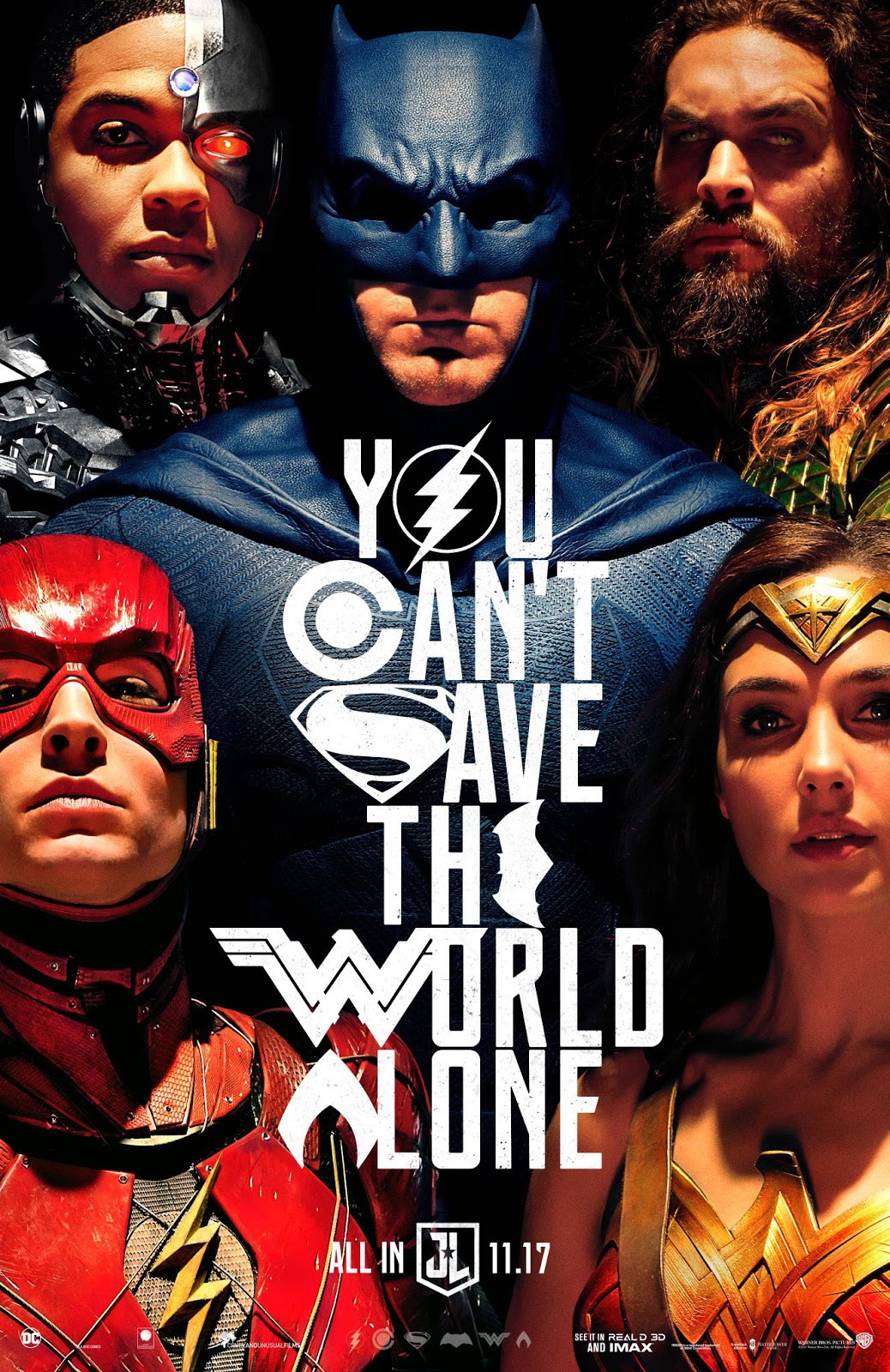
While Wonder Woman gave the DCEU its first real winner, the follow-up in Justice League nearly erased a lot of the goodwill the franchise had. There were plenty of issues, from a cast assembled too early to an uninteresting villain and slow-moving plotline that had me looking at my watch a few times too many. It’s obvious Warner Bros. needed the team-up to happen before the upcoming Avengers: Infinity War, but this might have turned out better if audiences actually had time to get used to each member of the team before putting them together. Justice League may be one of the better DCEU movies, but when compared to Batman v Superman and Suicide Squad, is that really saying much?

Saturday, December 24, 2016

[OLD] Assassin's Creed (Film)


It is only natural for a fan of a video game series to want to see a movie based on that series. Also natural is the hope that it will be a video game movie that’s actually good, which is quite a rarity. Since I had played nearly every game in the Assassin’s Creed series, I had anticipated the release of the Assassin’s Creed movie to the point that I pre-ordered a ticket (this is apparently a thing now). After finally getting the opportunity to see it, I would consider it a good movie, but it manages to hold itself back from being great.

Convicted criminal Callum Lynch (Michael Fassbender) is taken in by Abstergo Industries during what is meant to be his execution. Sophia Rikkin (Marion Cotillard) informs Callum that Abstergo is looking for a powerful artifact known as the Apple of Eden. She also reveals that he is descendant of an Assassin named Aguilar de Nerha (Michael Fassbender) and makes him the next subject of the Animus, a machine which allows the user to relive ancestral memories. By having Callum relive Aguilar’s memories during the Spanish Inquisition in 1492, Abstergo hopes to learn the current whereabouts of the Apple of Eden.

The story is, unfortunately, rather thin. It’s not bad by any stretch, but it suffers from uneven pacing, as it gets into itself rather quickly, but has a slow time leaving. The scenes in the present also take up more screen time than the Spanish Inquisition, resulting in a time period that’s not as thoroughly explored as it could have been. On the upside, it did manage to introduce the concept of the Animus fairly well, although the shift in the style of the machine from the games, while certainly more visually exciting for a filmgoing audience, does take some getting used to.

If anything, the real weak link is the character development. We only know the bare minimum about Callum Lynch to know some semblance of a background, but we otherwise know too little about him to truly care what happens to him. I extend this sentiment to Sophia Rikkin, who goes through a character arc that is also difficult to care about. What’s really criminal, however, is the complete lack of background about Aguilar or his partner, Maria (Ariane Labed). We have no clue about his motivation for joining the Assassins or how he truly feels about Maria. In short, the central characters feel more like vehicles to get from Point A to Point B as opposed to people you can get emotionally invested in.

In an odd contrast, the acting is fairly decent, or at least good enough. Michael Fassbender and Marion Cotillard show their capability as actors in their own right and Jeremy Irons plays the part of Alan Rikkin fairly well. The pedigree of the actors, then, feels somewhat wasted on characters who aren’t given proper depth.

A high point for this film is definitely the action sequences, particularly the ones in the past. Along with his partner Maria, Aguilar shows off his skills and ingenuity as an Assassin during his fights in 1492 Spain, some of which we see Callum imitate. The fights are pretty well choreographed and fit in well with the style of the games. They even recreate a leap of faith as a nod to one of the most iconic elements of the franchise. What aids these scenes are the well-done special effects and a setting in the past which seems to faithfully recreate 1492 Spain. The quality of the fight scenes is somewhat counterbalanced, however, by the dark lighting, which can make it difficult to keep track of what’s happening in the present.

While Assassin’s Creed is one of the better video game movies out there, itself a big accomplishment, it could have spent more time developing its characters and providing a reason to invest in them further than what the plot requires. The uneven pacing and relative lack of development for the characters and story in 1492 Spain also hold it back from being a truly great film. I recommend this movie to all fans of Assassin’s Creed who want to finally see one of their favorite franchises hit the silver screen, but it would be harder to recommend to others who want more than an underdeveloped adaptation with good fight scenes. This film is also apparently supposed to act as the beginning in a trilogy, so hopefully the sequel makes an effort to rectify the mistakes made the first time around; I know I’d still watch it.

Thursday, January 2, 2014

[OLD] Assassin's Creed IV: Black Flag - The High Seas Caesar


Over the last couple of years or so I have become more of a fan of the Assassin’s Creed franchise. Each game has managed to improve on the last one in some way, but also introduced ideas that don’t really pan out very well. This became more pronounced when the franchise started going to a yearly release schedule with Assassin’s Creed: Brotherhood and Revelations, which helped pave the way for the divisive Assassin’s Creed III (though this divisiveness came more from reactions to the main character and setting). That said, it was a little surprising to me that they would announce a fourth numbered game shortly after the last, but I was still on board anyway and wanted to find out what it was like. Though I had pre-ordered Assassin’s Creed IV: Black Flag and picked up on the day of release, I was only able to play it after finishing a couple other reviews after college finals, so I apologize for that delay on my end. Once I finished it, I did find myself overall liking this game more than its predecessors.

Black Flag follows the life of Edward Kenway, aka Connor’s grandfather. Edward wants to impress his estranged wife, Caroline, by becoming a “man of quality” and making a lot of money. To accomplish this, he becomes a privateer for the navy. While out to sea, he turns to pirating and ends up killing an Assassin named Duncan Walpole and taking what’s on his person. Afterwards, he meets up with Templars and, in the guise of Walpole, sells off valuable information that concerns the Assassins. Later in Nassau, after freeing a man named Adéwalé, he forms his own pirate crew and gains his own ship, which he dubs the Jackdaw. In search of further fortune, he ends up on a search for a place called the Observatory and eventually finds out just how big of a mistake he made in his meeting with the Templars.

The story moves along at a pretty good pace and is written well to boot. I was very fascinated by the information the player is given about the Templars and the First Civilization, as well as a more in-depth look at the titular Assassin’s Creed: “Nothing is true. Everything is permitted”. Edward is a man who at first runs his life purely out of love for money and with a blatant disregard for the safety and livelihood of everyone around him, even the allies who begin to trust him. As a result, he kind of deserves all of the scorn that he gets for his initial philosophy and way of life. Not only do I like having a protagonist in the franchise who is this deeply flawed, as opposed to a total ladies man, I also found it to make his character development later in the game that much more satisfying as he comes to realize the consequences of his actions. He does try to right his wrongs throughout the story, especially in a particular lengthy side quest, but eventually he grows to care about more than simply monetary gain and it was nice to see him fully understand the meaning behind the Assassin’s Creed and care for the lives of others. This real progression of character is what helps make him my favorite Assassin yet.

Yes, that is Blackbeard (left) and Black Bart (right) with Edward Kenway (middle).

Of course, the other half of the story is the modern day segments, which I found to be handled surprisingly well. Rather than focusing on a single Desmond-like character using the Animus, it follows an unnamed Abstergo Entertainment employee who is hired to look into the life of Edward Kenway and help the company get footage for a couple of their upcoming projects, those being a video game and a feature film. Since these segments are also in first-person, this implies that the employee is you, specifically, which helps some of the bigger twists in the story carry more impact. Also, in an effort to appeal to everyone, these segments are deliberately designed so that you can spend either a few minutes or a few hours trying to explore everything and learn more, so if you really dislike the modern day parts of the story, you can pretty much skip them entirely. This is a great move, though I ended up trying to get everything in the modern day anyway and one should be aware that there are points where you must interact with the real world to advance the plot.

In an intriguing twist, the setting of Black Flag is in a time before the events of Assassin’s Creed III, taking place in the Golden Age of Piracy instead of Colonial America. As such, the world itself is quite different, taking place in a much larger section of the globe. There are many different islands to explore, both big and small, all with varied environments that help them stand out from each other much more than Colonial America (though I wish to stress that I liked Colonial America anyway because my ancestors were involved in America all the way back to the Mayflower). I noticed a brighter color palette with Black Flag, which is actually very realistic and sells the very open setting as well as highlighting the high level of detail put into every part of the environment. The water is also very well animated, though I must say that the splash animations were a little sub-par. In any case, this is definitely the best looking Assassin’s Creed game yet.

True Fast Travel is a returning feature from Assassin’s Creed III, which is good because the world of Black Flag is absolutely gigantic. Getting to a spot on an island on foot isn’t so bad, but bigger levels may require you to traverse through dense jungles, so Fast Travelling on larger islands is more attractive. To get between individual islands however, you may need to sail all the way from one island to the next, which can take a really long time. There are ways to ease the length of the journey, but unlocking Fast Travel points becomes absolutely essential to cut down on travel time if you’re trying to go to a very specific location. Fluid movement among the platforms and trees is a returning element as well, albeit much more refined and less glitchy than before.

In searching for an appropriate image, I am assured that
this represents at least part of the game's world.

Combat is pretty similar to that of Assassin’s Creed III, but at the same time it seemed to be missing some features that I liked from the latter. Edward can still dual wield swords, but the effectiveness is limited to the individual stats of the swords, which was a little disappointing due to the lack of a single weapon to rely on. Unarmed combat and wristblade-only combat is also pretty much useless, a major disappointment as I had to depend almost purely on my swords to quickly get rid of enemies. Guns are also a viable option, though if you want to rapidly chain shots together, which you can with up to four shots, you have to wait a bit for Edward to reload before you can do that cool feature if you’ve fired already, and even then I was never able to reload back up to four (I have no idea if that was tied to my upgrade choices, so that could just be player error). Thankfully the momentum-based combat is still present, but the toughest enemies still can’t be taken down through this method, which awkwardly forced me to resort to breaking their guard even with a number of the enemies around me. This situation worsens as soon as a grenade gets thrown, so there was hardly an opportunity to kill a group with momentum alone. The blowpipe and rope dart also return for use both in combat and in the field, though the rope dart arrived too late in the game for me to really integrate it into my strategy all that well, though firing darts in the field is a good way to thin out the enemy forces before initiating combat. Also, smoke bombs are very helpful in a pinch to quickly eliminate a wave of unnecessarily tough opposition.

Since this is a pirate game, you will see the water quite a lot, mostly if you’re travelling somewhere for the first time. Fortunately there’s a lot on offer to keep things interesting and core ship mechanics introduced in III are greatly improved upon in Black Flag. The Jackdaw was very easy to maneuver and combat between ships is very refined and much easier to execute. Naval Battles are where the most improvements were made, including the ability to fire mortars and more advanced versions of specific weaponry. It takes a little getting used to, but after that it feels very intuitive and you feel like you can take on any ship. While locked in combat between ships, you can take two routes, those being to either sink or personally raid the ship. Sinking the ship offers less of a reward, that being half of whatever cargo that ship was carrying at the time; sometimes this is unavoidable once the Jackdaw is upgraded high enough. Boarding the enemy ship after crippling it will net you all of its cargo, though you may also need to complete other objectives like killing a certain number of crew members or destroying a flag. This option is the best route for gathering supplies for upgrades, so it’s fortunate that they made Naval Battles more fun to go through.

The Jackdaw (appearance can be manipulated by the player).

With that said, upgrading the Jackdaw can be extremely difficult if you don’t know what you’re doing. You’ll not only need Reales, the currency of the game, you’ll also probably need some amount of cloth, wood or metal, sometimes a combination of them. Earning the coin is easy, since you can just sell off all of the valuable sugar and rum you find, but getting the materials presents a challenge. There are a few ways to do it, but it can take forever no matter what you do, not helped by the noticeable lack of metal compared to the other materials. For this, there is both good and bad news. The bad news is that at certain points in the story you will be forced to upgrade the Jackdaw if you want to survive, making grinding for materials a necessity. The good news is that there is an exploit you can use if you haven’t been spending your time finding ships to raid, or don’t have the time, which requires you to repeatedly destroy a downed Man-o-War at a specific point in the story (I will only say Sequence 8, Memory 1) and reloading the checkpoint over and over before quitting to the Main Menu to save everything you earned. It may take a while, and the cargo may be random, but it’s the fastest and most consistent way to get everything you may need.

While you’re out to sea, you can also complete a number of side activities, enough to keep you busy for quite a while if you’re looking to do absolutely everything possible in Black Flag. Aside from Naval Battles, you can also go harpooning for a variety of whales and sharks [NOTE: While you can hunt whales, Ubisoft has stated that they do not condone whaling and that you are able to hunt whales for the sake of historical accuracy], explore underwater wrecks or even go on treasure hunts across the different islands in the game. There’s even more to do besides those, but being able to do so much in the first place allows the water sections to have even more of a purpose and I found what I did do to be a lot of fun. I haven’t tried to collect everything yet, due to the sheer number of Animus Fragments hidden underwater for instance, but I may go back in the future to try and find everything Black Flag has to offer.

Whaling doesn't look like this, but you can hunt what you see here.

The mission structure in Black Flag is improved over its predecessor, with no difference between gameplay and story to be seen (e.g. you actually follow instead of lead). I can see that more time was put into making sure that the missions were balanced and playable, but I found myself to not enjoy doing missions as much as I did just roaming around and doing my own thing. Eventually the story missions became a little monotonous, such as having to repeatedly tail people to find out information or accomplish something. When wandering through the world I felt more freedom and less constraint from the story, but I still went through it anyway to fully unlock everything, including the rope dart and diving bell (required for underwater exploration).

Before I get to PS3-specific content, I want to note that this is the first game I’ve played where sea shanties are a feature. You can find them around the world to have your crew sing them in a manner akin to a naval jukebox. Having your crew sing a shanty can make trips on the open sea less stressful and adds a bit of atmosphere. Collecting them, however, is another story. These things fly away when you try to get them, so you end up having to chase them down and you may not get them. This led me to do one thing I had previously never thought I’d say out loud: spawn camp the sea shanty. When you know exactly where they spawn, you can simply camp where they would be and you’ll get them without any problems except for the part where you have to wait what can feel like an eternity; still worth it in the end to get some vocal variety.

Running after a sea shanty can be difficult.

Since I played the PS3 version of the game, I also got access to an additional hour of gameplay (actual completion time may vary). Surprisingly, it follows the point of view of Aveline from Assassin’s Creed III: Liberation, so it felt a bit jarring to go between protagonists and time periods for only a small amount of time. This section has Aveline freeing a slave whom Connor mentioned via letter would be of interest to her. The story was more straightforward than the game she’s actually from, though I didn’t really find any trouble with combat thanks to the über powerful machete in her possession taking down enemies with ease. It might be worth it for some fans to get the PS3 version just for this one bit of story, but it feels like it could be safely skipped as it has no bearing on the events of any of the related games (including the tangentially related Black Flag). In any event, the controls for Aveline were a little better than the Vita, so I am now curious about the HD version of her original game just to see how much differently it controls.

Assassin’s Creed IV: Black Flag is a yearly sequel that is actually fun to play. Edward is a deeper character than others before him and his time period is a very interesting one to explore. Improvements made across the board also help his story stand out, though I think the missions were less fun than going out to sea or just running around on my own. Assassin’s Creed fans should pick this up to continue the adventure, though it is getting increasingly difficult for newcomers to jump on without spending a lot of money. This is my favorite Assassin’s Creed game yet, but I really hope that Ubisoft actually waits another year to put out the next one because playing the games is now more of a thing that happens instead of a real event worth getting excited for.

Tuesday, January 1, 2013

[OLD] Assassin's Creed III: Liberation - An Assassin That Needed More Training


At the same time that Assassin's Creed III was released, October 30, Ubisoft released a related game on the PlayStation Vita named Assassin's Creed III: Liberation, which was to focus on a new female Assassin in a different setting taking place at around the same time. This game happened to be released in a bundle with a special white Vita, which I received as a Christmas present. After finishing Metal Gear Solid 2, I immediately jumped at the chance to see how Liberation played on the Vita, only to find it lacking in quite a few areas.

Assassin's Creed III: Liberation follows the story of Assassin Aveline de Grandpré in New Orleans near the end of the French and Indian War. As I don't own the manual or the game box, since the bundle just has the game with a 4GB memory card between two pieces of plastic, I must garner the basic premise through other means. From what I gather, Aveline uncovered a plot by the French governor Jean-Jacques Blaise d'Abbadie, who made a deal with the Templar Rafael Joaquín de Ferrer to stay governor of New Orleans. Following this, Aveline trails someone known as the Company Man while also assassinating Templars for some reason or another.

I'll be honest, I'm not really quite sure how the story is supposed to go even if I read a plot summary of it online. Unlike the tale of Connor Kenway in Assassin's Creed III, Aveline's story has almost no narrative flow, since her goals and motives change constantly. During my playthrough I kept asking myself questions to try and make sense of it all, questions such as "Why should I care about this Baptiste fellow?"; "What was the setup for this minor character's betrayal?"; "Why is Aveline suddenly poking around in caves for First Civilization technology?"; "What is the purpose of going to Chichén Itzá?"; and "When the heck did the Company Man suddenly become an issue?" Unfortunately, it seems that the development team must have been pressed for time, as the potential of Aveline being born from parents of two different social classes is wasted, as is the backdrop of the French and Indian War, which just barely qualifies as a factor in the events. The ending also felt a bit rushed while also introducing new characters and plot threads at the last second, something a good story should never expect to get away with. It's a shame that they couldn't have done more with the very first female Assassin in the franchise.

Fortunately there is a gameplay system where the ever-mysterious Erudito will reveal an extended version of six of the game's cutscenes if you manage to find and kill six of someone known as Citizen E. Unfortunately, the extended versions don't make the story anymore comprehensible, seemingly serving mainly to shoehorn in references to the Templars. You also unlock the real ending of the game this way, but sadly there is no real reward for actually killing every Citizen E beyond getting the extended cutscenes. I just felt that there should have been something more for going through the effort.

Moving onto the gameplay, it's no easy feat trying to replicate the Assassin's Creed III experience on  a handheld, which the development team manages to do a decent job of. Navigation is easier thanks to the presence of two analog sticks on the device, as opposed to single thumb stick nub, though the lack of being able to click either stick means a completely manual camera operation. Not really a problem though, since I got used to it pretty quickly. However, the running action sometimes didn't seem to react, which I think is a slight problem with reading the R button to perform the action, that or it's pressure sensitive somehow, which would just seems pretty odd to me either way. They managed to retain the fluidity of Connor to some degree, which is a very welcome touch.

The environments themselves are very beautifully detailed and look great on the Vita's screen. New Orleans and the bayou are the most impressive, since they seem to have received the most attention due to how often you're going to be in them. What I noticed though was that while the number of unique locations is limited like previous games in the series, they also seem to be much smaller, likely due to the space available on the Vita cartridges. However, this means that there is much less to explore as well, so eventually you will have seen it all and will still need to cross it multiple times. After a while I got a little tired of following the same paths over and over again, but I suppose it was good to have a mental map of everything for a bit.

One unique gameplay mechanic exclusive to Aveline is the Persona mechanic. During the course of the game, Aveline can switch between three different Personas, Assassin, Slave and Lady, to accomplish her missions, each with their own strengths and weaknesses. The Assassin Persona is the strongest, but always has a minimum Notoriety of 1; Slave is weaker in combat, but can blend in more easily; and Lady is able to charm guards and more easily kill people without anyone noticing (even if the death happens right in front of guards), but is the weakest in combat and has a movement speed that makes every location seem like they take up miles. Juggling the three Personas via dressing chambers is key to victory, as well as getting a 100% completion rate. This is a unique idea, though the game doesn't really require a Persona change that often and in fact may have you just sticking with the Slave Persona anyway since it's much easier to lower the Notoriety level; it's interesting how a game about being an Assassin doesn't take full advantage of being one out in the open.

Being a relatively early Vita title, Liberation also feels the need to take advantage of as many features of the system as it possibly can, for good or for ill. Using the touchscreen as an alternate means to navigate menus and open up the weapons wheel or map makes sense, since the capability is there and it is thankfully very responsive. Beyond that however, some of these features seem very gimmicky. Pinching the touch screen and rear touch pad to open letters was the most interesting use by far, though a gyroscope puzzle became a little infuriating and having to put the Vita up to a physical light source to read a secret and then having to use the touch screen on top of that was annoying due to having to frantically search for a light at an odd time of day while lying on the floor. Overall, some of these features seemed superfluous to the overall design and didn't really improve my experience with the game.

Liberation also has connectivity with Assassin's Creed III, which allows access to, among other things, the ability to play as Connor in a certain mission. Yeah, there's a mission where you meet Connor in the Frontier between New York and Boston and he helps Aveline to invade a fort and catch the Company Man. Naturally this piqued my interest, so after completing the main campaign I went back to that mission to play as Connor and...found myself a little disappointed. Controlling him takes you through almost the exact same path as Aveline, you just do a couple things as Connor that are different, being from his perspective and all. It was cool to control him and see the thought they put into his design here, yet unsatisfying to use him due to the execution of the idea. Essentially, I wish that there was more than maybe a 30% difference between the two of them in the mission.

Combat is an important part of the Assassin's Creed franchise, especially considering the improvements they made in the third main installment to make it more exciting. Aveline has access to the regular arsenal, including expies of Connor's weapons, such as the use of a blowpipe to shoot two different dart types or a whip that functions similarly to the rope darts and allows easier platforming. The free-flow combat was kept in as well, which is good news since combat pretty much works as intended, that is except for the ability to counter. It seemed to me that the counter button was very unresponsive, since when I pressed it in combat, it only visibly worked when the enemy had a yellow triangle over their heads. Perhaps they changed the timing window or I'm simply not doing it right (it's been a while since I played Assassin's Creed III after all), but it made combat a little more complicated than it needed to be, forcing me to rely mostly on offensive tactics and running away to give space to perform said tactics. I died more often than I should have in a couple plot-specific fights, but I was at least able to get through it despite the failure to counter.

The game's sound design is also up to par, largely using the same sounds and similar, if not the same, soundtrack as its parent game. Voice acting is also good, with good performances all around. I'm not sure what else I would say about this, since I don't really have that much of an opinion about it.

Assassin's Creed III: Liberation has a lot of interesting ideas, but was unable to execute a lot of them properly. Its environments are great and unique mechanics function well, but the narrative seems to skip around and the use of the Vita's capabilities seemed unnecessary in the long run. I had hoped for something much better out of Aveline, but it seems that we are stuck with this product anyway. I'd only recommend this to the most die hard fans of the series or Vita owners looking for a big name to have in their library. Otherwise, it is not required to go on this adventure.

Monday, November 12, 2012

[OLD] Assassin's Creed III - New Blood


While I did start playing Assassin's Creed from the second game, I did do something last year where I played through every single game from the beginning to build up to Revelations. Personally, I felt that the first game was a somewhat rocky start, the second showed higher promise and the other two games in the Ezio trilogy showed signs of decay from having yearly releases. This year saw the release of the franchise's third major entry, Assassin's Creed III, only a couple of weeks ago to positive acclaim. Assassin's Creed has been building up to this game through the previous four, taking a total of five games to align its release with the end of this year. So now this review will try to answer the simple question of whether or not the payoff is totally worth it.

In the present day, Desmond Miles and Co. take the Apple of Eden into an underground Temple in New York constructed by the precursors. While there, they hope to use the Animus to peer into Desmond's memories and discover the location of a key that will help prevent a great disaster: a solar flare so powerful that the Earth will be destroyed on 12/21/2012. Since Desmond has learned all that he can from Altaïr ibn-La'Ahad and Ezio Auditore da Firenze, he takes to learning from following a different ancestor, a half English half Mohawk named Connor Kenway, real name Ratonhnhaké:ton (pronouned "Ra-doon-ha-gay-doon"), through the American Revolution. After his village is burned down as a child, Connor, as a teenager, learns of a destiny involving an unfamiliar symbol and heads to the home of Achilles Davenport for guidance. Though reluctant as first, Achilles agrees to help train Connor as an Assassin to combat the Templars. During his training, Connor gets involved in the events of the American Revolution and learns more about the events leading up to that faithful day in his village, as well as how much of it may involve his father, Haytham Kenway.

The story of Assassin's Creed III shows just how well the game can handle the story and tie up loose ends. There is a lot of narrative depth in both time frames, though mostly in the world of the Animus, which I found actually helped me remember smaller details about the setting better. Connor's journey is a tough one for him, but he finds the perseverance to find the Templar named Charles Lee and make him pay for the crime against his people (and is a total badass at the end when he finally offs him). It was also interesting to watch the American Revolution unfold from his point of view, partly since I have an ancestor (Major John Buttrick) who was involved in the battle of Lexington and Concord, and I trust that any creative liberties didn't get in the way of historical accuracy. I enjoyed Connor's thread and felt that his story was the overall strongest aspect of the game. While some may feel that the number of cutscenes can get in the way of this, I actually felt the opposite.

As for the present day, the story of Desmond Miles was concluded in a way that was surprisingly satisfying. I wasn't jumping for joy every time I got to control him, but he was definitely fleshed out better as a character. My least favorite bit about him was the missions he performed to gather the power sources for the precursor Temple, since the villains are defeated in a very anticlimactic fashion, but the rest of the time was certainly interesting. He has time to actually bond with his dad (voiced by John de Lancie), adding some weight to his backstory as seen in Assassin's Creed: Revelations. The information we also learn about the precursors while inserting the devices however is nothing short of fascinating, making the climax of the game more emotional and somehow transforming Desmond from a character we don't usually care about to one that we can actually feel emotion for in the final minutes. The ending, especially its twist, was pulled off rather well and can be seen as setting up a potential sequel.

The world of the Animus itself however is very impressively constructed. Between Boston, New York and the Frontier, this world is massive and simply fun to explore, though a little tiring at times. The two cities look similar to each other in some places, though I did find that enough differences existed to make them feel unique. The Frontier avoids this however by having plenty of environmental obstacles to navigate, mainly trees and steep cliffs. Everything is also beautifully rendered, with graphics that actually surpass those in the Ezio trilogy of games. The colors stand out a little more and the lighting combined with the dynamic weather help everything look visually appealing.

Of course navigating the world is important and can be accomplished in brand new ways. You could run and climb or go on horseback to get to your destination quicker, but now it is possible to climb up trees and navigate through them quickly from branch to branch simply by holding down one button while running. This method is very convenient for stealth as well, letting you strike from above with the element of surprise at your advantage. Other ways of climbing are carried over from previous games and also tweaked in just the right ways to help emphasize the focus on fluidity. Then there's the newly introduced Fast Travel mechanic, allowing Connor to go between certain locations at any given time, instead of just when you get to a station that allows it, provided you have discovered some of them first. Fast Travel comes in really handy, so it's a great idea to take advantage of it when you can and it really cuts down the time required to get to most missions.

In the heat of combat, it's always good to consider your options, and the latest installment has been tweaked in all the right ways to make that decision easier. Long gone are the days of struggling with your weapons to have any effect on your enemies, horrible block timing windows and relying solely on counterattacking. Okay, that last one is still there, but it's been reduced to an option rather than something to lean on. By that, I mean that combat is still based on countering the opponent, but you can now reliably attack an enemy, be they Redcoat or Patriot, in a much more fluid manner. Weapons can now be dual-wielded, a feature that's both useful and powerful. Because of this, I was able to rely on Connor's Tomahawk rather than a hidden blade during a struggle. It is also possible to use items such as rope darts, an immediate favorite, to bring some enemies down to where you could end their life with one blow.

Thanks to the advanced combat, it's also much easier to battle unarmed, since there are now enemy types with tactics to defeat them that are easy to remember, especially if you know that you can trip them up or use alternate weapons in combat. Performing kill streaks will also increase Connor's power gradually and create flashier kills, so eventually a tougher guy will die in one hit. Better block timing also helps make combat more of a breeze, since blocking enemy strikes is now more of a real possibility. Assassin's Creed III, with regard to timing and combat abilities, seems to have taken some cues from Batman: Arkham Asylum, but I think that by doing so it's much better off and has the best combat system of any Assassin's Creed game.

Also new to this game are Naval Battles, also known as combat between ships. When missions within the story required these I was able to get the hang of them and felt good with each victory, but it wasn't a feature I was ready to jump back into. It definitely increases the replay value however and is a good compression of actual naval fights, though it's rather interesting how ordering the crew to duck from cannon fire avoids any and all damage to even the ship.

As for the economy system of this installment, I couldn't really get into it. In the Ezio trilogy the economy was simple enough that I could get hooked on increasing the value of the property and earning more money extremely quickly and efficiently. In this game however, I felt that the economy system either wasn't explained well enough or it didn't do enough to grab my attention. The way they set it up is interesting and fits the time period, but I won't be trying to up the Davenport Homestead anytime soon.

I also have a couple other complaints, the first involving a rather annoying glitch. You see, there's a lock picking mechanic that involves turning tools with both sticks and mashing on one button to brute force the lock. While a little annoying from slight mistakes leading to everything coming undone in a second, it still worked pretty well. However, there were times where it was completely obvious that Connor's animations for this minigame were meant for a certain height, a very specific one at that. Sometimes the tools would be completely misaligned with their proper locations and be above the intended slot. I even had it where I just held the tools in the right spot, but then the lock would undo itself all the way without the chest opening, forcing me to redo the entire operation. I would question whether or not someone caught that in testing, but thanks to Tales from the Trenches, I know that someone must have, the developers just probably didn't have the time or didn't want to iron that bug out for release.

I also felt disappointed somewhat with the mission structure. There seem to be fewer missions this time around thanks to there only being 15 memory sequences, but at least five of these sequences are more like extended tutorials even though they advance the story. Aside from these, even though the game has a heightened sense of freedom, there are still some very strict constraints on what you can do, such as staying on one set path. Sometimes it seemed a little vague on whether or not the target could die during a chase, of which there are quite a few that are also poorly handled, but in one instance I tackled a target properly and the game still registered them as being dead! In some of them, there's even somewhat of a limit on your margin of error, which is to say none. If you get hit by one guy during a chase, you're pretty much screwed and might as well just start over, unless the environment is lucky enough to give you some way of anticipating them. In one specific instance near the end of the game, a particularly linear chase sequence with no way to get ahead of my target (Charles Lee), an explosion occurred and the game physics collided in a way that forced Connor to spin in the air and land in the water, ruining my chances of success. Then there's also the case of Samuel Adams telling you that he'll lead you through the underground, only for the game to really mean "You're leading him to your destination without a real guide. Good luck!"

Before I end my review however, I should go over a couple of bonuses I received. First off, I got the PS3 version of the game, granting me access to an extra hour of gameplay (actual time may vary, by the way). In these exclusive missions, you play through West Point missions that have Connor interacting with Benedict Arnold. This I felt was alright, since it retained the same level of mission structure as with the core game, but the story is definitely what you play them for, since it gives you an alternate insight into what went on with him at the time. However I will point out that one cutscene in particular felt more like an obvious machinima. The other bonus is from pre-ordering the game at GameStop, granting access to the "Lost Mayan Ruins" mission and the exclusive Sawtooth Sword weapon, belonging previously to Captain Kidd. This mission is pretty short, but I enjoyed it for taking advantage of Connor's skills in the core game, the weapon serving as an extremely useful and powerful reward. I felt this "GameStop Edition" was worth it.

So, is the payoff totally worth it? Yes and no. In terms of narrative, the game delivers on all fronts and is a very satisfying journey through the American Revolution with a great protagonist and a very fitting finale for Desmond Miles' journey as well. However, despite some very good tweaks, there is the occasional odd glitch and some poor mission design choices that can bog down the enjoyability for some, though the quality of the economy and the Naval Battles are more dependent on who's playing. It's a great trip for returning fans of the franchise, who have no doubt already bought this. If you still haven't played anything in the Assassin's Creed franchise, I would really recommend playing it from the beginning. The games aren't really that hard to get at this point and it seriously helps the narrative flow, especially considering the continuity lockout at the gorgeously animated opening cutscene. Otherwise, this is probably one of the best games of this year.

Saturday, December 31, 2011

2011 - The Highlights (EHeroFlareNeos)

With 2012 upon us, it's time to look forward to what we can enjoy in the new year. However, this is also the perfect time to look back at what releases made 2011 so great, as well as others that didn't quite hold up. Below is my list of the top movies, games and disappointments of the year (in no particular order), along with links to the reviews of each title on this blog for further reading.

Top Movies of 2011

Captain America: The First Avenger
Among Marvel Studio's run of contributions to comic book movies, Captain America is easily one of the best. With a great cast and a greater emphasis on the title hero's original time period, this film provides a great balance of action, comedy, and drama to stand as one which all Superhero movies should aspire to be. If other studios took notes from this, then the comic book movie would definitely blossom into a much more widespread and competent genre than it is now.

Harry Potter and the Deathly Hallows Part 2
If you're like me and have read the Harry Potter series of books since you were a child, then you were no doubt looking forward to seeing this movie for years. As an adaptation and continuation, it sticks very closely to the book and yet manages to make the final fight against the powerful Voldemort even more of a spectacle worthy of cinema. It served as a fitting conclusion to the franchise, save for perhaps the epilogue, and I'm very happy to be able to say my final goodbye to the boy who lived.


Kung Fu Panda 2
As one of the few movies from Dreamworks Animation that feels worthy of being called a movie, Kung Fu Panda 2 shows just what the studio is capable of creating without stuffing a film with dated pop cultural references. In addition it stands as a great modern martial arts flick, with plenty of over the top action and lore to keep the action fan in you satisfied, combined with a great blend of humor and character development to leave you wanting more.


The Artist
As a black & white silent film, The Artist sticks out among every other movie released in the past few decades. When viewing it as a movie in general, it is a masterpiece of cinema that lets the audience learn not only what life was like for stars during the transition from silent films to talkies in the earlier days of Hollywood, but also that sometimes a movie doesn't need to be filled to the brim with special effects and sound to be enjoyable. It is one of the few films I have ever cried at as much as I did during one especially emotional scene and also one of the few that gave me time to actually care about what happened to the characters onscreen. I would encourage anyone interested in this era of film making to watch this masterful throwback to a time where less was more.

Top Video Games of 2011

Batman: Arkham City
For a studio with only two other games under their belt, it is very clear how passionate Rocksteady is about Batman. With an absolutely powerful script penned by Paul Dini, fantastic performances by Mark Hamill and Kevin Conroy, improved combat, and plenty of incentive to explore the titular city, Batman: Arkham City is a game that literally no one with a gaming system should pass up. For me personally, it stands as a great contender for the best video game I have ever played, though it is safe to say I feel that way regarding Superhero games in general.


Dead Space 2
While Dead Space 2 may reside in a genre I would normally avoid, it managed to build up the right atmosphere and tension to get me sucked into the action onscreen. Having to retrain yourself to shoot the limbs instead of the head also brings out the player's more tactical side in a great effort to stay alive in space. If more games like this and Bulletstorm existed to help introduce more variety in this fashion, then there would probably be more worthy single player campaigns out there for the FPS genre today.

Portal 2
While the original Portal was a very short game, it also provided plenty of entertainment to make repeat trips into Aperture Science enjoyable every single time. For the sequel, Valve Software managed not only to retain what made the first one fun, they made the overall experience even better. From expert integration of Cross-console Co-op to wildly fun new game mechanics, there is hardly anything this game gets wrong.

Uncharted 3: Drake's Deception
As action games continue to set the bar in video games, the Uncharted franchise will continue to vault over it. Drake's Deception not only defines what is possible to display on PS3, but also sets a new limit on how many setpiece moments you can put in a game without taking away from an outstanding plot and characters. While at least one mechanic hiccups despite improvements to combat, there is a lot to like about Uncharted 3 for PS3 owners, even if the series is just starting to feel a little formulaic at its core.

Top Disappointments of 2011

Cars 2
Right off the heels of Toy Story 3, Cars 2 is a perfect example of what happens when you make a sequel with the sole purpose of selling more merchandise. This movie is not only a drastic drop in quality from most of Pixar's earlier works, it takes a swan dive through every spy movie cliche imaginable and heads straight toward the number in the title. Hopefully their next project, Brave, will restore faith in Pixar enough to help audiences pretend this one never existed.

Green Lantern
While I hadn't been looking forward to this film as much as I did the ones coming out from Marvel Studios, I at least wanted to see if Warner Bros. could help satiate my interest in Superhero movies in between releases. Unfortunately, the overemphasis on loud visuals and constant exposition seemed to really make this the blackest night for its genre in 2011.

Assassin's Creed: Revelations
I wanted to like Assassin's Creed: Revelations after my buildup of playing every other game, really I did. But when you take the increased emphasis on Multiplayer, abysmally incorporated Den Defense, and zero incentive to take advantage of bomb crafting into account, it creates a game that, while more enjoyable than Brotherhood, almost looks like a mess when you look at the big picture. With 2012 comes a new protagonist to the Assassin's Creed franchise, and hopefully one whose story isn't nearly forgotten in the pursuit of attracting the multiplayer crowd.