Showing posts with label Marvel Entertainment. Show all posts

Saturday, July 26, 2025

Second Look - Fantastic Four (2015)


Following the failure of the second Fantastic Four film, Rise of the Silver Surfer, Fox would later announce a reboot of the series (seemingly for the purpose of holding onto the rights as the MCU was taking off), simply titled Fantastic Four (2015) (Fant4stic). This film, directed by Josh Trank of Chronicle fame, would be the subject of an infamously troubled production that exposed the limitations of studio secrecy regarding comic book films, resulting in a box office disaster that I witnessed firsthand in the theater. Although I did not like the movie when it first came out, enough to believe it made the 2005 film look like a masterpiece by comparison, I decided to revisit it alongside the original duology, opting to stream it through Max. Needless to say, my opinion did not change much in the decade since my first viewing.

Saturday, July 19, 2025

Fantastic Four: Rise of the Silver Surfer


Note: This review contains spoilers for Fantastic Four (2005) and Fantastic Four: Rise of the Silver Surfer.

Early 2000s Marvel films have an interesting place in superhero film history. For every cultural phenomenon like Sam Raimi’s Spider-Man trilogy or the original X-Men film trilogy, we also received middling releases like the original 2005 Fantastic Four, which still proved profitable enough to receive a 2007 sequel, Rise of the Silver Surfer (Silver Surfer), from the same director, Tim Story. Silver Surfer itself represents an interesting point in the cinematic landscape of the time: It released one year before Iron Man forever changed the approach to superhero films, one month before Transformers revived a dying brand (for better or worse) and four years before Chris Evans joined the Marvel Cinematic Universe (MCU) as Captain America. Although Silver Surfer itself did receive slightly better praise than the first film and did make a profit, it still earned less than its predecessor, which led to Fox axing plans for a third film.

Rewatching the film now, it’s not hard to see why the franchise wouldn’t have continued and why it didn’t leave much of a lasting impact. However, I don’t feel quite as negative towards it as I did when I saw it in the theater as a young and impressionable teenager. After all, the 2015 reboot proved that the quality could, indeed, get worse.

Saturday, July 27, 2024

The New Mutants

As someone who had been watching a lot of superhero movies at the time, the idea of a superhero horror movie sounded interesting to me when I learned of The New Mutants, one of Fox’s later installments in the X-Men film series. However, while the quality of Dark Phoenix had nothing to do with Disney’s acquisition of Fox, The New Mutants unfortunately did, which resulted in it being the last of the X-Men films to be released. Although production went smoothly for an April 2018 release, things got a bit dicey when the merger occurred, with planned reshoots being continually delayed until the film was declared complete without any having been done at all. On top of this, the COVID-19 pandemic affected distribution plans, with Disney initially planning on a streaming release before changing their minds and finally giving it a theatrical run in August 2020. As it stands, while the final product is surprisingly decent considering the circumstances, it serves as an example of what can happen when your project becomes a crossfire victim of a corporate merger.

Tuesday, July 23, 2024

Second Look - Deadpool 2 (All Three Cuts)


Note: This review contains spoilers for Deadpool and Deadpool 2.

Deadpool 2 sits in a unique position within the X-Men film series. Not only did Fox greenlight this sequel by the time the first film released, but after its premiere in May 2018, it would receive two additional cuts within the same year: the direct-to-video extended Super Duper Cut in August and the theatrically-released PG-13 Once Upon a Deadpool in December. Due to a lack of an official word on the matter, one could conclude that Fox wanted to make as much money as possible ahead of the Disney/Fox merger that completed in March 2019, but in any case, Deadpool 2 did break additional box office records on in its initial release, including highest-grossing R-rated film of all time (by just $3 million over Deadpool) until 2019’s Joker.

Since I’ve made it no secret that I’m a fan of Deadpool, it should come as no surprise that Deadpool 2’s existence piqued my interest enough that I watched all three cuts of the film as they came out. Although I still liked the film after rewatching it in the context of the rest of the X-Men films, I now find that the difference between Deadpool and Deadpool 2 feels more like the difference between Shrek and Shrek 2: while the sequel has more narrative complexity and shows more technical competency than the original, it doesn’t age as well due to the dated humor rooted in the exact moment it came out.

Saturday, July 20, 2024

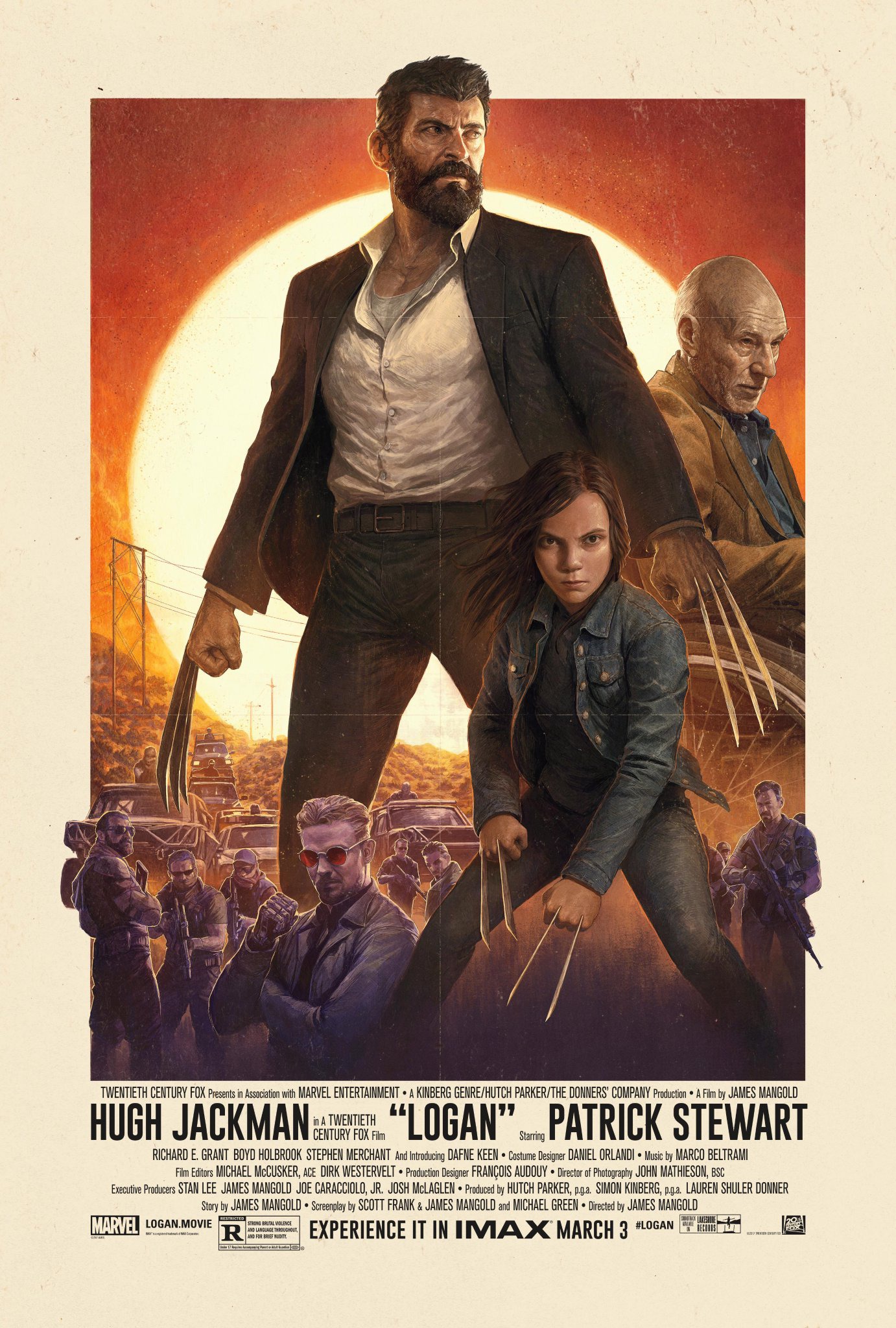
Second Opinion - Logan (+ Logan Noir)


Note: This review contains spoilers for Logan and X-Men Origins: Wolverine.

As the X-Men film series started going beyond the original trilogy, it was natural that the fan favorite Wolverine would receive his own solo films with the rough X-Men Origins: Wolverine and the improved The Wolverine. This would be later followed up on with the R-rated third film, Logan, and although Deadpool’s own R rating did not factor into Logan’s, Deadpool’s success paved the way for further R-rated superhero films in the Hollywood landscape, as well as Logan’s own critical and financial success. While I had barely any familiarity with the X-Men films on my initial viewing, extending only to the first two Deadpool films and maybe the original X-Men film, I thought it was one of the best comic book films I had ever seen, enough to also watch the alternate version, Logan Noir. During my recent deep dive of the X-Men films in release order, I found it interesting to rewatch Logan again in the context with the rest of the series, finding it to still be just as good as I remembered.

Tuesday, July 16, 2024

Second Look - Deadpool (Film)


Note: This review contains spoilers for Deadpool

Back in 2016, the original Deadpool film left a major impact, as it not only stood out within the superhero landscape at the time, but also altered Hollywood’s perception of the R-rating when it raked in a massive profit (~$782.8 million against a budget of $58 million) and broke several box office records, including the highest-grossing R-rated film ever made. However, the film faced a tough road before it saw the light of day. Although the idea of a Deadpool film with Ryan Reynolds attached had floated around since the 2000s, it hit some resistance at multiple points, including Tom Rothman (chairman of Fox Filmed Entertainment) rejecting the film, believing it wouldn’t be successful, and having his mouth sewn shut in X-Men Origins: Wolverine (Origins). Origins still proved successful enough that a Deadpool project moved forward, though it didn’t get greenlit until some test footage leaked onto the internet to a very positive reception. Even then, however, Fox gave the project a much smaller budget than usual for a superhero film, an amount Ryan Reynolds once described as the “cocaine budget”.

At the time I first saw Deadpool, as someone already a fan of the character, I found it a breath of fresh air in the otherwise serious superhero landscape between the MCU, which had just finished Phase Two and would start Phase Three that year, and the DCEU, which would finally have a second movie in the gloomy Batman v. Superman after the dreary Man of Steel. Watching the film again now, in the context of viewing the entire X-Men film series in anticipation of Deadpool & Wolverine, I still enjoy it and appreciate its significance to the history of comic book films, but I admit that it lost a little luster with time.

Saturday, July 13, 2024

X-Men: Days of Future Past

Following the release of The Wolverine, the next film in Fox’s X-Men series, X-Men: Days of Future Past (DOTP), returns to the greater ensemble cast. Released in 2014 while the concurrent Marvel Cinematic Universe was in the middle of Phase Two (both figuratively and literally), this film notably beats Marvel Studios to the time travel punch by five years, serving as a soft reboot of the X-Men films (while incidentally serving as the literal middle of it) by setting up an alternate timeline. While I was aware of this film as it came out, I did not end up watching it until I began my earnest viewing of the series as a whole, though I did know about the timeline reset going in. While it actually does a good job with this premise, there are places where it gets a little muddy.

Friday, July 12, 2024

The Wolverine


Note: This review contains spoilers for X-Men, X2 and X-Men: The Last Stand.

Despite the cold reception X-Men Origins: Wolverine (Origins) faced on release, the X-Men film series continued going strong and development began on a follow-up film simply titled The Wolverine, based on the original Japanese arc of the Wolverine comics. Although development began in 2009, with Darren Aronofsky later set to direct, it ran into certain production troubles along the way. These troubles included a delay brought on by the 2011 Tohoku earthquake and tsunami, Aronofsky’s departure and finding a replacement director willing to take on the lengthy commitment. In spite of these obstacles, the final film released in 2013 to higher critical praise than Origins and greater box office returns, earning $414.8 million against a budget of $100-132 million.

Considering how much Origins had missed the mark, I knew going into The Wolverine that there would be some improvement, especially after seeing some fans characterize it as an “apology” for its predecessor. What I didn’t quite expect, however, was that The Wolverine not only held up very well after over a decade, but is easily one of the stronger films in the franchise.

Monday, July 8, 2024

X-Men Origins: Wolverine

Note: This review contains spoilers X-Men Origins: Wolverine.

Despite X-Men: The Last Stand’s mixed reception among fans and critics, the X-Men property still proved lucrative enough for Fox that they greenlit the film series’ first prequel and spin-off, X-Men Origins: Wolverine (Origins). The final film, which came out in 2009 during the earliest stages of the Marvel Cinematic Universe, went through a rather troubled production and received the lowest critic scores in the series up to that point, with most criticism aimed at the lackluster script. While Origins does have its fans, I can’t say I disagree with the criticisms, especially with one contentious aspect in particular. I’ll also freely admit that while aspects of a film’s production shouldn’t necessarily factor into a review, it’s difficult in this case to ignore just how much of a negative impact an out-of-touch executive can have on the finished product.

Saturday, April 13, 2019

Venom


Note: This review contains spoilers for Venom (2018).

Although I like to keep up with Superhero films, I haven’t necessarily had the desire to see all of them. Case in point, Venom (2018), released only last year by Sony. Simply put, the trailers didn’t appeal to me and I felt turned off by the inability to determine its actual place within Sony’s deal with Marvel Studios. It was only on a recent flight, however, that I decided to finally watch it to form my own opinion (and so I wouldn’t otherwise have to pay to see it). I realize now that I had initially made the right call to avoid it.

Friday, December 28, 2018

Spider-Man: Into the Spider-Verse


When I first saw a trailer for Spider-Man: Into the Spider-Verse, in spite of several recent blunders from Sony’s live-action and animation departments (some of which I only know through negative word-of-mouth), I was a little surprised that I actually wanted to see it, as it looked like a genuinely fun Spider-Man movie with some interesting art direction. With the reveal that the film would also feature a crossover between no less than six versions of the Spider-Man character, I was curious how this would be balanced, though the trailers kept my hopes up. While I could not see this film opening weekend, my recent viewing of it did not disappoint in the least.

Miles Morales (Shameik Moore) has been going through some issues, such as having trouble adjusting to a new school (to the point of trying to get expelled), and he silently rebels against his father (a police officer) by placing custom stickers around New York and spraying graffiti in secret locations. While placing one of his pieces up with his uncle Aaron (Mahershala Ali), Miles gets bitten by a radioactive spider, soon having to deal with newfound abilities. Following a battle between Spider-Man and Kingpin, that he ends up getting involved in, Miles ends up running into Peter B. Parker (Jake Johnson), a Peter Parker from another universe, whose help he needs to control his powers and stop Kingpin’s device that creates wormholes to alternate dimensions. It isn’t long, however, before the two discover they aren’t the only Spider-Men running around.

In spite of the number of Spider-Men and the general amount of characters present, the movie is actually pretty easy to follow and balances its cast surprisingly well. When a new Spider-Man is introduced, it goes through a quick recap of their backstory such that it’s very casual and playfully assumes you already know, which allows the movie to more quickly get back into the action and inform you of the multiverse at the same time. The movie also features a sizeable number of villains from Spider-Man lore (most of which are spoilers), however, unlike films such as Spider-Man 3 and The Amazing Spider-Man 2, it somehow never feels like there’s too many; Kingpin, the most prominent villain, actually has an interesting backstory that gives a good motivation for wanting to risk tearing up the multiverse, while at the same time making it clear he needs to be stopped because of said risk.

The six Spider-Men trying (and failing) to avoid detection in Miles' dorm room.
From left: Gwen Stacy/Spider-Gwen (Hailee Syeinfeld), Peni Parker/SP//dr
(Kimiko Glenn), Miles Morales (Shameik Moore), Peter B. Parker/Spider-Man
(Jake Johnson), Peter Parker/Spider-Man Noir (Nicholas Cage),
Peter Porker/Spider-Ham (John Mulaney)

The animation and art direction are both phenomenal. Similarly to Scott Pilgrim vs. The World, Into the Spider-Verse feels like a living comic book, while taking full adventage of the animation medium to explore this concept to its fullest potential. Three of the six Spider-Men, Peni Parker aka SP//dr (Kimiko Glenn), Peter Parker aka Spider-Man Noir (Nicholas Cage) and Peter Porker aka Spider-Ham (John Mulaney), each also feature their own animation styles, which the movie manages to blend really well with its own “comic book” style nature while taking opportunities to embellish the characters’ own styles when necessary. Spider-Ham in particular has a style more akin to a Looney Tunes cartoon, which is taken advantage of for very well-timed comedy.

Though brief, the late Stan Lee also makes an animated cameo in this film, as his lines were recorded sometime prior to his passing. Similarly to Once Upon a Deadpool, the movie also features a tribute to Stan Lee in a mid-credits scene, during which it properly credits him alongside the late Steve Ditko as co-creators of Spider-Man.

Spider-Man: Into the Spider-Verse is one of the best cinematic interpretations of Spider-Man. The animation is amazing (pun intended) and takes full of advantage of the comic book aesthetic, backed by great writing and characterization. It’s clear a lot of passion was put into this film, as it’s essentially a love letter to the character that fans can appreciate while allowing itself to be more open for newer fans as well. It should be noted that some of the different Spider-Men (all of which aside from Peter B. Parker are pre-existing characters) are more obscure than others, so some research may be required for anyone that doesn’t know them. It is also worth staying after the credits for a very special scene.

For a list of links to additional Spider-Man reviews, visit our Spider-Man Review Hub.

Saturday, December 22, 2018

Once Upon a Deadpool


Note: The following review contains spoilers for Deadpool 2.

Following the success of Deadpool 2 and, presumably, the Deadpool 2 Super Duper Cut re-release, Fox has decided to re-release Deadpool 2 yet again, this time as a PG-13 version titled Once Upon a Deadpool. While this is obviously a blatant cash-grab, Once Upon a Deadpool features 16 minutes of additional content that actually makes the third viewing worth it.

At Christmastime, Fred Savage (Fred Savage) wakes up in a bedroom, only to quickly realize that Deadpool (Ryan Reynolds) has kidnapped him and is holding him in a perfect recreation of the bedroom from The Princess Bride. Deadpool reveals that he won’t release him until he hears a bedtime story, actually a sanitized version of Deadpool 2. Desperate to leave, Savage decides to hear the story, read to him from a book whose spine reads Deadpool 2: The King James Edition.

Fred Savage (left) is forced to hear Deadpool (Ryan Reynolds; right) read
him a sanitized version of Deadpool 2 during Christmastime.

The rest of the story plays out largely the same as Deadpool 2, but cut and censored to appeal to the PG-13 market. As with most PG-13 superhero movies, this involves a general lack of blood and gore and swearing limited to a single f-word, but liberal usage of “shit” and “bitch”; ironically, despite Deadpool stressing the limit of one f-word, none are uttered throughout the entire film (unless you count one used during Juggernaut’s (Ryan Reynolds) theme). Additionally, a mosaic censor is applied to some nudity and a few scenes are shortened to remove certain jokes. For example, Deadpool now only asks Cable (Josh Brolin) one question about the future, regarding whether or not dubstep is still a thing.

Although the central story of Once Upon a Deadpool is a slightly abridged version of Deadpool 2, the footage that was cut is replaced with new footage featuring brand new jokes, including a reference to Pixar’s Up (2009), and the larger Fred Savage framing device. Though most of the remaining footage is from the original cut, some of the footage is notably taken from the Super Duper Cut, likely to help pad out the running time to still remain just below two hours.

The biggest and most obvious change, of course, is the aforementioned Fred Savage framing device. This framing device not only makes the PG-13 rating possible, it also allows the opportunity for more jokes and meta-humor, which largely includes mocking the PG-13 rating and Fred Savage poking holes in the story. The additional back-and-forth between Deadpool and Fred Savage showcases the latter’s acting ability and provides the biggest incentive for those who had previously seen a cut of Deadpool 2 to return for another round.

If you stay for the credits, there’s not only a new post-credits sequence, concluding the story of the framing device, but also a heartwarming tribute to Stan Lee directly after.

Once Upon a Deadpool is largely a retread of Deadpool 2, this time through a sanitized PG-13 lens, but the new footage and commentary are enough to keep the same story fresh. As an added bonus, Fox donated a dollar from every ticket to the organization Fudge Cancer. I’d recommend Once Upon a Deadpool to fans of Deadpool 2 who don’t mind seeing another cut, as well as families with kids who were previously unable to see the original R-rated release, though with the caveat that Once Upon a Deadpool is a harder PG-13 than other superhero films.

To read reviews of other Christmas films, please see our Christmas Review Hub.

Wednesday, September 12, 2018

Deadpool 2 Super Duper Cut


Note: This review contains spoilers for Deadpool 2 (2018).

After the original Deadpool (2016) broke numerous box office records, Deadpool 2 (2018) was produced and released. Though its box office fell just shy of its predecessor, $734 million vs the original’s $783.1 million, its success was enough to spawn a special home video release, dubbed the Deadpool 2 Super Duper Cut (written on the box as the Deadpool 2 Super Duper $@%!#& Cut). This cut boasts 15 minutes of additional footage, including all-new jokes and extended sequences. After we got our hands on a copy, we proceeded to watch it to see how well it stacks up against the original theatrical cut (although we did not watch the original theatrical cut again prior to this review).

At its core, both versions of Deadpool 2 are nearly the same. The story is still about Deadpool (Ryan Reynolds) wrestling internally with the aftermath of Vanessa’s (Morena Baccarin) death while also dealing with a man named Cable (Josh Brolin) who has come back in time to prevent a dystopic future, no matter the cost. The main theme of family is still a running thread that’s explored in different ways throughout the movie.

Beyond this core, however, the Super Duper Cut is features a number of differences from the original within the extra 15 minutes, some more obvious than others. Among the most noticeable are extended sequences which include new dialogue and quips, including the scene where Domino (Zazie Beetz) and Deadpool argue over whether or not luck counts as a superpower, as well as new scenes inserted into others, such as showing additional methods of Deadpool trying to kill himself in the wake of Vanessa’s death. Some of the subtler changes involve using alternate takes of a scene and, in turn, alternate jokes. One such alternate take is when Deadpool, in this version, asks Cable three different questions about the future, while another is when Deadpool has different dialogue with Russel (Julian Dennison) outside of the orphanage. There are also a couple changes made to the soundtrack, most noticeably the song that plays while Deadpool’s group walks toward the orphanage before the climax.

While many of these alterations to the movie are worked in really well and are often still funny in their own right, they’re not all perfect. For example, when Deadpool is trying to “win back” Colossus (Stefan Kapičić) outside of the X-Mansion, there seemed to be some alternate dialogue inserted through an overdub, noticeable through a slight change in audio quality and Ryan Reynolds’ dialogue not quite matching Deadpool’s expressions. There’s also an extended sequence during Cable’s arrival to the past that involves two farmers having a lengthy discussion about a toilet paper-based government conspiracy. This scene is raunchier than in the original cut, as it now has an extended bathroom joke, and falls flat compared to the rest of this cut as a result.

Deadpool 2 Super Duper Cut is worth checking out. While not everything is seamlessly integrated and some of the new jokes may not be as funny as the original cut, it’s still an enjoyable way to watch Deadpool 2, particularly if you’re already a fan of the movie and want to experience it in a new way. If you have yet to see Deadpool 2, however, it’s best to watch the theatrical cut first before deciding whether or not you want the uncut experience.

Monday, May 21, 2018

Deadpool 2


Two years after the box office record-setting Deadpool (2016), especially for an R-rated movie, Fox has released a sequel, Deadpool 2, previously teased during the post-credits scene of the original. In that time, director David Leitch took over for Tim Miller, who had left after creative differences with lead actor Ryan Reynolds. In spite of this, Deadpool 2 is true to the spirit of the original, though perhaps a little too true to the original in some minor areas.

In the two years since the ending of Deadpool, Wade Wilson (Ryan Reynolds) has been killing people all over the world as an international hitman. One time, however, he fails to kill a target and pays the price for it. He recovers at the X-Mansion and assists Colossus (Stefan Kapičić) and Negasonic Teenage Warhead (Brianna Hildebrand) in stabilizing a standoff involving a young mutant named Russell Collins (Julian Dennison), aka Firefist, though Wade’s intervention does more harm than good. At the same time, a man named Cable (Josh Brolin) travels back in time in an effort to change the past and undo a dystopic future.

Deadpool (Ryan Reynolds) briefly becomes an
X-Men Trainee, only to make things worse.

The story of Deadpool 2 features a more complex plot due in part to its larger cast of characters and three running plotlines, one each for Deadpool, Cable, and Firefist. Thankfully, however, the movie is still easy to follow and the plotlines all actively contribute to the running theme of “Family”. As such, Cable’s backstory is kept simple and to the point, which helps greatly with time travel involved; on that note, the time travel logic is also kept simple and consistent. The pacing also effectively helps the nearly two-hour runtime breeze by.

What also helps is that like the original Deadpool, Deadpool 2 has a good sense of humor. The scope of the jokes is greater this time, now including a number of meta jokes that poke fun at not only other Marvel movies, such as a reference to Josh Brolin’s role as Thanos, but also the DCEU and other Fox films. At the same time, however, the sexual humor is a little raunchier this time around and, in some instances, they seemed to stick too closely to the style of the original by recycling a handful of jokes. Though they didn’t repeat these jokes wholesale and introduced enough variation on them that they could still elicit a laugh, it was still hard not to notice the repetition.

The action also has an increased scope this time around, with one sequence creating collateral damage across a small stretch of a city. However, the damage is relatively minimal compared to superhero films with a larger budget and I appreciate the fact that the final fight once again takes place in a controlled area, this time a small plot of land. The special effects and choreography are also very impressive, especially one sequence which perfectly demonstrates Domino’s (Zazie Beetz) luck-based mutant ability.

All of the returning actors do an amazing job reprising their roles, especially Ryan Reynolds as Deadpool, since he’s the most prominent. Newer characters are also portrayed very well by their respective actors, including Josh Brolin as Cable and Zazie Beetz as Domino. Brolin’s Cable effectively communicates the loss he felt from his decimated future and his relentless quest to find the one responsible for it while also giving him a sense of depth and emotional growth. Beetz’ Domino is fun to watch due to her interactions with Deadpool as well as her confidence in her mutant ability, though she is fully capable of fighting seriously when the situation demands it.

Josh Brolin gives a great performance as Cable.

Deadpool 2 is largely an example of how to properly do a sequel, increasing the scope of its story without feeling overly ambitious or hollow and effectively maintaining its style of humor. In exchange, however, some of the jokes are raunchier and some minor story beats, and nearly entire jokes are lifted straight out of its predecessor. This doesn’t, however, prevent the movie from being thoroughly entertaining and I highly recommend it to people who either liked the first movie or have been keeping up with the superhero genre and want something that’s sure to stand out (or want the tonal opposite of Avengers: Infinity War). As with the original, however, Deadpool 2 has an R rating for a good reason and parents should seriously take this into consideration before deciding to bring kids along, especially with the more explicit nature of the sequel.