Showing posts with label 1934. Show all posts

Saturday, November 2, 2024

Stubs - The Man with Two Faces

The Man with Two Faces (1934) Starring: Edward G. Robinson, Mary Astor, Ricardo Cortez, Mae Clarke, Louis Calhern. Directed by Archie Mayo. Screenplay by Tom Reed and Niven Busch. Based on the play The Dark Tower by George S. Kaufman and Alexander Woollcott, produced by Sam H. Harris Theatrical Enterprises, Inc. (New York, 25 Nov 1933). USA Black and White. Run time: 72 minutes. Drama.

Films based on plays are nothing new. The Dark Tower is a mystery drama by George S. Kaufman and Alexander Woollcott, first produced in 1933. The play ran at the Morosco Theatre in New York from November 25, 1933 until January 1934.

The film version, entitled at various times: The Strange Case of Mr. Chautard, Dark Victory and The Dark Tower, was in production from March 5 until April 4, 1934.

Saturday, May 1, 2021

Stubs - The Secret Bride


The Secret Bride (1934) Starring Barbara Stanwyck, Warren William, Glenda Farrell, Grant Mitchell, Arthur Byron, Henry O'Neill, Douglas Dumbrille. Directed by William Dieterle. Screenplay by Tom Buckingham, F. Hugh Herbert, Mary McCall Jr. Produced by Henry Blanke. Run time: 63 minutes. Black and White. USA Political, Drama

By 1934, Barbara Stanwyck’s time at Warner Bros. was coming to an end. While it started with such films as Night Nurse (1931), So Big! (1932), Ladies They Talk About (1933), and Baby Face (1933), she was growing tired of the films the studio was placing her in. Director William Dieterle wasn’t happy with the film and was surprised Stanwyck wasn’t more upset about the project. For Stanwyck, she saw it as a means to an end, anything to get her out of her contract. After one more film at the studio, The Woman in Red (1935), she would go on to a very successful career as a freelance actress.

Saturday, December 26, 2020

Stubs - The Thin Man


The Thin Man (1934) Starring: William Powell, Myrna Loy, Maureen O'Sullivan, Nat Pendleton, Minna Gombell. Directed by W. S. Van Dyke. Screenplay by Albert Hackett and Frances Goodrich. Based on the novel The Thin Man by Dashiell Hammett (New York, 1934). Produced by Hunt Stromberg Run time: 91 minutes USA Black and White Comedy, Mystery, Detective, Christmas

Dashiell Hammett was a private detective turned writer. Using his real-life experiences, he wrote hard-boiled detective novels and short stories. He is responsible for creating such well-known characters as Sam Spade from the Maltese Falcon and Nick and Nora Charles from The Thin Man. The latter novel was first published in Redbook in December 1933 before being published in book form by Alfred A. Knopf the following month. It is said Hammett based Nick and Nora's banter upon his rocky on-again, off-again relationship with playwright Lillian Hellman.

Saturday, June 27, 2020

Stubs - Heat Lightning


Heat Lightning (1934) Starring: Aline MacMahon, Ann Dvorak, Preston Foster, Lyle Talbot, Glenda Farrell, Frank McHugh, Ruth Donnelly Directed by Mervyn LeRoy. Screenplay by Brown Holmes, Warren Duff. Based on the play Heat Lightning by Leon Abrams and George Abbott (New York, 15 Sep 1933). No Producer Credited. Runtime: 64 minutes USA Black and White Drama, Pre-Code

Some films are sadly forgotten over time even though they were, in their own time, controversial or milestones. Case in point, Warner Bros.’ Heat Lightning (1934), which was not only banned by the Legion of Decency but was also one of the last studio releases before the Production Code was fully enforced. A lot of times with so-called Pre-Code films its hard to see what made about the film couldn’t have been made during the run of the PCA (Production Code Administration).

Saturday, February 2, 2019

Stubs - Tit for Tat


Tit for Tat (1935) Starring Stan Laurel, Oliver Hardy, Charlie Hall, Mae Busch, James C. Morton, Bobby Dunn. Directed by Charles Rogers. Screenplay by Stan Laurel, Frank Tashlin. Produced by Hal Roach. Runtime: 19 minutes. USA Black and White. Comedy

The story for Tit for Tat actually starts a couple of years earlier with Them Thar Hills (1934), in which Stan and Ollie co-starred with Mae Busch and Charlie Hall, both who were contract players at Hal Roach Studios. In Them Thar Hills, the boys travel to the mountains for Ollie’s health. They park their caravan next to a well used by moonshiners to dump their stash. While they’re there, they make the acquaintance of a married couple, the Halls played by Busch and Hall. The Halls’ car has run out of gas and Stan lends him his spare can of petrol. Left alone with the Boys, Mae shares supper and ladlefuls of water from the well. They get roaring junk and upon his return, Hall fears that something more has happened. There is a tit for tat sequence which culminates in Mr. Hall being tarred and feathered with a toilet plunger stuck on his head and Ollie being violently ejected from the well when he jumps in trying to put out his pants which are on fire.

In Tit for Tat, Stan and Ollie open an Electric supply store next door to the grocery store owned by, who else, the Halls. On opening day, Stan and Ollie go next door to introduce themselves to their neighbors, not realizing they’d already met. Leaving their store wide open, the miss a customer (Bobby Dunn) who enters the store.

Charlie Hall has not forgotten Laurel and Hardy from their first meeting in the short Them Thar Hills.

Ollie may have forgotten they’ve already met but Charlie Hall has not. He rebuffs Ollie’s overtures to prompt each other’s store and orders him out of his store and warns him not to return. Going back to their store, the customer leaves with a waffle maker tucked under his arm. The Boys don’t seem to notice and are pre-occupied with getting the lights up on their sign.

While Ollie is high on the ladder, Stan goes into the basement to get more light bulbs and uses the sidewalk elevator or dock lift to get up to street level. Too bad its right below Stan and launches the ladder up into the air, landing Ollie on the window sill outside the Halls’ living quarters above their store. Mae, who has gone upstairs, is only too happy to oblige Stan, letting him through their window and down their stairs.

Charlie worries that something is going on between Oliver and his wife (Mae Busch).

Charlie isn’t happy to see a man coming down from their apartment and tells Ollie not to even look at his wife or he’d hit him so hard, Stan would feel it. While they figure out what to do, the customer exits carrying a clock and a lamp, which doesn’t seem to warrant Ollie’s attention. To him, it’s more important that his character has been besmirched.

They go over to tell Charlie off, and as they leave, Ollie causes the drawer in the cashier to open, hitting Charlie on the chin. As if to add insult to injury, Ollie eats a marshmallow from an open container on the counter as they leave.

Oliver eats one of Charlie's marshmallows out of spite.

Charlie comes over to tell Ollie off, picking up a hair curling iron on the counter. As he’s holding it by the curler, Stan plugs it in, burning his hand. The Boys laugh at him, to which Charlie uses the iron to pinch and burn Stan’s nose before storming out. Stan tries to help, but ends up spraying himself in the face with the seltzer bottle.

Charlie uses a curling iron on Oliver's nose.

Back over at the Grocery store, Ollie splats Charlie in the face with shortening that is on the counter.

While Charlie fumes, Ollie and Stan leave, stopping once more to help themselves to a marshmallow each. Charlie starts to follow them but stops to sprinkle the marshmallows with powdered Alum, a colorless astringent compound used in baking powder and pickling, just in case they come back.

On their way back into their shop, the customer exits carrying a floor lamp with him, as if he were taking it out for a walk.

Charlie sees the milkshake maker and gets an idea.

Charlie comes over and takes several $1 pocket watches and puts them in a milkshake blender, obviously destroying them before storming out.

The watches are ruined after Charlie runs them through the milkshake maker.

In their tit for tat, the boys return to the grocery store and pour honey into another of the grocer’s cash registers. Charlie doesn’t waste time and takes Ollie's derby and runs it through a meat slicer, taking off the top of his hat. The boys up the ante by placing a vat of lard over Charlie’s head. This time on their way out, the Boys each take two marshmallows, not knowing they’ve been tainted.

Oliver pours honey into one of Charlie's register.

On their way back to the store, they pass the customer who has taken to using a dolly to remove an appliance and another floor lamp. Back behind the counter, the Boys realize they can’t speak until Ollie sprays their mouths with seltzer.

Neither Oliver or Stanley know that Charlie has sprinkled Alum on the marshmallows.

But Charlie isn’t done. He comes into their store and wreaks havoc, destroying any and everything that he can. He even manages to break all of the lights dangling from the ceiling and even smashes one of their front windows.

Charlie puts shortening in Oliver's and Stanley's faces.

With a crowd gathering, Stan and Ollie march next door with the idea to get an apology. But Charlie isn’t in the mood and splats them both in the kisser with shortening like they had done to him. The Boys pick up a large container of eggs but before they can do anything, Mae comes back downstairs to try to stop them. But Charlie tells her to mind her own business just before the boys push him down on one container of eggs and pour another one down over his head much to the laughter of the crowd outside.

A crowd gathers and watches as Stan and Ollie pour eggs all over Charlie.

A policeman (James C. Morton) finally moves in to stop them. When he asks what started it, Ollie and Stan proceed to tell him that Charlie had accused him of a clandestine rendezvous with Mae, a charge to which Ollie pleads his innocence. They finally shake hands and let bygones be bygones.

A policeman (James C. Morton) finally tries to put an end to the squabble.

By now, having received no resistance, the mysterious customer has pulled a rented truck up to the store and has cleaned them out.

The short ends with the policeman, having taken a marshmallow for himself, finds he has trouble talking to disperse the crowd.

Shot in December of 1934 and released on January 5, 1935, Tit for Tat would be nominated for the Academy Award for Best Live Action Short Film (Comedy), losing out to Robert Benchley’s How to Sleep.

The film is very funny, something a dry synopsis can’t really capture. Much of it is due to the physicality of the performers. There is some very humorous dialogue, but the real source of the humor is involved in the "reciprocal destruction," wherein one little act of vengeance leads to another until all hell breaks loose. This is something that is seen over and over again in Laurel and Hardy films, going back to some of the earliest films, such as The Battle of the Century (1927), wherein a pratfall on a banana peel leads to a pie fight. This comedy technique was also utilized in Them Thar Hills as described above, which is not really required viewing to get the jokes.

This is not a film showing the development of Laurel and Hardy but rather a testament to their genius. They show that they are a finely tuned comedy team adept at both physical humor and witty dialogue. Tit for Tat is one of their funnier efforts and well-worth watching.

Saturday, December 15, 2018

Stubs - Babes in Toyland


Babes in Toyland (aka March of the Wooden Soldiers) (1934) Starring: Stan Laurel, Oliver Hardy, Charlotte Henry, Felix Knight, Henry Kleinbach, Florence Roberts, Virginia Karns. Directed by Gus Meins, Charles Rogers. Screenplay by Frank Butler, Nick Grinde (and uncredited: Stan Laurel). Based on the operetta Babes in Toyland, music by Victor Herbert, book and lyrics by Glen MacDonough (New York, 13 Oct 1903). Produced by Hal Roach. Run Time: 79 minutes. USA Sepia (Black and White) Christmas, Comedy, Musical

There are few comedic acts in film was well loved as Laurel and Hardy. Please see our review of The Music Box (1932) for more information about the duo. Two years after that Academy Award-winning short, the pair, still under contract to Hal Roach and Metro-Goldwyn-Mayer would make Babes in Toyland, only their eighth feature film appearance.

Unlike The Music Box, this film did not have its roots with a silent film the duo had made but owed its origins to a Victor Herbert operetta, Babes in Toyland. Herbert, an Irish-born German-raised American composer and musician was best known for writing operettas including The Serenade (1897) and The Fortune Teller (1898). Those he composed after the turn of the 20th century were more successful, including Babes in Toyland (1903), Mlle. Modiste (1905), The Red Mill (1906), Naughty Marietta (1910), Sweethearts (1913) and Eileen (1917). He would later turn to writing musicals for Broadway.

The original production of Babes in Toyland opened at the Chicago Grand Opera house in June 1903 and toured the East Coast before opening in New York. The show ran at the Majestic Theatre for 192 performances from October 13, 1903, to March 19, 1904. It would have three revivals, one at the Majestic during January 1905; at Jolson’s 59th Street Theatre from late December 1929 to January 1930 and one more at the Imperial Theatre from December 1930 to January 1931.

Hal Roach wrote his adaptation in late 1933, but the final script is credited to Frank Butler and Nick Grinde, though Laurel is known to have contributed as well. The idea all along was to star Laurel and Hardy in the film, though some of the supporting cast would change. Testing began in January for actors and shooting “stop-motion and miniature materials”, according to the Hollywood Reporter.

Originally, Roach had Ramon Novarro in mind for the male romantic lead, Tom-Tom Piper. Donald Novis and Earl Oxford were considered before Felix Knight as selected.  For the female romantic lead, Patricia Ellis was the first choice. Then Doris Paxton was tested and then Anita Louise for “Little Miss Muffet” before the role was turned into Bo-Peep and given to Charlotte Henry, best known on this blog for Alice in Wonderland (1933).

Charles Rogers, who would become a co-director on the film, was originally tested for the role of Gumio, the toymaker’s apprentice, but that role was cut from the film before production began. Rogers, who had worked with Laurel and Hardy

Production got underway in early August 1934 with a budget of $500,000 but Laurel suffered a serious leg injury and production was halted on August 16th. That delay led to a change in the cast. Margaret Seddon, who had been hired for the role of the Widow Bo-Peep, was no longer available and the role went to Florence Roberts. When production picked up it continued until late October.

The village of Toyland is inhabited by a roster of nursery rhyme characters: Mother Goose (Virginia Karns); The Cat and the Fiddle (Pete Gordon); Little Miss Muffet (Alice Dahl); Little Jack Horner (Sumner Getchell); Simple Simon (Charley Rogers); Mary Quite Contrary (Marie Wilson); Little Boy Blue (Johnny Downs); the Three Little Pigs, Elmer (Angelo Rossito), Willie (Zebedy Colt) and Jiggs (Payne B. Johnson); and Mickey Mouse (a monkey in a costume).  Toyland is ruled by Old King Cole (Kewpie Morgan) and the Queen of Hearts (Alice Moore). The only industry in town seems to be the Toymaker (William Burress) who appears to be a subcontractor for Santa Claus.

Ollie Dee (Oliver Hardy) and Stannie Dum (Stan Laurel).

There are other residents, the Bo-Peeps, who live in a shoe, yes, the Mother Widow Peep (Florence Roberts) is also the Old Woman Who Lived in a Shoe. While she has several children, her eldest is Little Bo-Peep (Charlotte Henry). In addition to her children, the Widow Peep has two boarders, Stannie Dum (Stan Laurel) and Ollie Dee (Oliver Hardy).

Little Bo-Peep (Charlotte Henry)
The biggest problem for the Beeps isn’t that Bo loses her small flock of sheep on a regular basis, but that Mother Peep has a mortgage with evil old Silas Barnaby (Henry Brandon) that she can’t afford to pay. Silas offers her a deal, the hand of Bo for the mortgage. But the widow refuses much to her daughter’s relief. Ollie intercedes and tells the widow that he’ll help her out. Not only will he contribute all of his money, but he’s going to get the rest from their boss, the Toymaker.

Stannie and Ollie work for the Toymaker  (William Burress) who appears to be a subcontractor for Santa Claus.

But they arrive late to work and lose their jobs when it is discovered that they made a big mistake on the order from Santa. Instead of 600 one-foot tall wooden soldiers, Stannie took it down as 100 six-foot tall soldiers. They are fired on the spot and only make things worse when the wooden soldier they’re controlling wreaks havoc in the shop, even knocking Santa back on his butt.

Tom-Tom Piper (Felix Knight) proposes to Bo-Beep.

Meanwhile, Bo-Peep has lost her sheep and Tom-Tom Piper (Felix Knight), singing one of the six songs in the film, "Never Mind Bo-Peep" helps her as well as make his feeling known. He announces to the villagers who have gathered that they are going to be wed.

When Stannie and Ollie return home just as Silas is there to collect his payment. The Widow Peep, however, is smug about it until she finds out that they don’t have the money. Silas tells the widow that he will start the process of getting her evicted.

But the boys are not through trying to help. That night, Stannie delivers a large box that is supposed to be a Christmas present for Silas. The plan is for Ollie to get out of the box and search the house for the Peep mortgage. It is late at night, but Stannie explains to Silas that it is their way of apologizing. Even though it is only July, Silas accepts the present. But the boys blow the cover when Stannie, as he is leaving, says goodnight to Ollie and he responds.


Toyland is ruled by Old King Cole (Kewpie Morgan).

The next day, Old King Cole proclaims that the would-be thieves are to be dunked in the pond and then banished to Bogeyland. (Justice in Toyland makes no sense as there are no trials just punishment, which is never anything short of total banishment.) Ollie is the first one to be punished, but the pulley breaks under his weight. Bo-Peep puts an end to things when she agrees to marry Silas, who then asks the King to call off the punishment.

Stannie and Ollie are punished as thieves. 
Later, Bo-Peep and her mother are waiting with dread for the wedding ceremony to begin. Ollie has been selected to give Bo-Peep away, even though he doesn’t want to. Mother Peep goes to plead with Silas but to no avail. Ollie arrives with the bride, who is covered up with a heavy veil. The wedding goes on, but before Silas can kiss his bride, Ollie demands the deed. Only after Ollie rips it up, Barnaby lifts the veil to find that he’s married Stannie rather than Bo.

Silas vows revenge and later that night tries to kidnap one of the Three Little Pigs. He is rebuffed by Willie and Jiggs but does manage to grab Elmer and stuff him in a bag. He takes him back to his house and has evidence planted in Tom-Tom’s that point to his guilt, including linked hot dogs as if to suggest he has also eaten him.

Old King Cole, based on this, sentences Tom-Tom to banishment in Bogeyland and has two of the king’s guards deposit him there. Ollie and Stannie start to eat the hot dogs and discover they are not made of pork, but beef. Stannie then discovers Elmer in Silas’ cellar and takes him to the King, who reverses his order and offers a reward for Silas’ capture.


Stannie and Ollie got to Bogeyland to save Tom-Tom and Bo-Peep.

While Ollie and Stannie take chase, Bo-Peep rushes to Bogeyland to retrieve Tom-Tom. Silas jumps down a well and while Ollie and Stannie think they have him trapped, he escapes through a secret passage to Bogeyland. There he finds Tom-Tom and Bo-Peep and calls the Bogeymen to capture them.

Ollie and Stannie finally follow after Silas from the bottom of the well and find the path to Bogeyland. While they manage to rescue Bo-Peep and Tom-Tom, they don’t escape Silas’ wrath. He leads the bogeyman to attack Toyland.

Mickey Mouse (a monkey) gets into a blimp.

Back in Toyland, Stannie and Ollie are treated as returning heroes and Ollie is bragging to the King about ridding the village of Silas and the bogeyman just as the attack starts. The village is overrun before Mickey takes to the air in a toy blimp and drops miniature torpedoes on the bogeyman.

Stannie and Ollie fight back with darts before unleashing the 100 toy soldiers stored in a warehouse. The wooden soldiers are relentless in their pursuit of the bogeymen and manage to drive them out of Toyland. Silas is trapped under an avalanche of spelling blocks that spell out RAT.


100 Wooden Soldiers pursue the bogeymen who have invaded Toyland.

Stannie attempts to shoot a parting volley of darts at the fleeing monsters, but the cannon tips over and covers Ollie's backside with darts.

The film was released on November 28, 1934. Despite good reviews, Hal Roach would later admit the film lost money on its first release. It was re-released several times over the years, with the title changed to Laurel and Hardy in Toyland, Revenge Is Sweet (for a 1948 European reissue title), and March of the Wooden Soldiers.

On TV, the film, now called March of the Wooden Soldiers, would become a perennial during the 1960s and 70s between Thanksgiving and Christmas and still does appear on TV to this day.

In a rather twisted history, this is one of the few films released by MGM that now resides (at least partially) in the MGM library. Hal Roach sold the film to Federal Films, which in turn leased the rights to Lippert Pictures. In the early 1960s, Prime TV took over the distribution of the film, eventually passing it on to WPIX which became part of Tribune Broadcasting. In the 1980s Tribune leased the film to The Samuel Goldwyn Company, the legacy company of that famed film producer.

In 1991, the film was restored and colorized by The Samuel Goldwyn Company for TV and home video release. Non-Goldwyn produced films became part of Orion Pictures, which MGM purchased as part of the assets of the bankrupt company.

It should not come as a surprise that there was a remake of the film. In 1961, Walt Disney Productions made their own version for TV, starring Ray Bolger, Tommy Sands, and Annette Funicello.

While Laurel and Hardy may be the stars of this film, this doesn’t really feel like a Laurel and Hardy movie. In fact, it feels like a real mess. Laurel and Hardy are good and funny as they usually are. I’m impressed that their blend of dialogue and physical slapstick humor are still funny to this day but the rest of the film seems like a premise with songs looking for a story.

The whole idea of a Toyland populated with nursery rhyme characters from Mother Goose seems a bit like a mixed metaphor, which I’m sure isn’t the right term, but it feels like a jumble of ideas. While that mixing originates with the original operetta, the film goes a step further and maybe a step too far emptying out Mother Goose to populate the village. If this were Storybook Land, that would make more sense, but there is also a mixing in of Santa that sort of confuses the concept further.

And then there are the songs, which are sung in that opera-style that you see in the films of Jeanette MacDonald and Nelson Eddy. I find this sort of singing to be my equivalent of fingernails on the chalkboard. Here the singing is done by the likes of Felix Knight and Charlotte Henry. Henry whom I found to be a disappointment in her starring role in Alice in Wonderland, is slightly better here, but not spectacular by any stretch. She is cute and has talent, but not the kind that appeals to me.

There is a melodramatic feel to the film, emphasized by the Snidley Whiplash-like villain, Silas Barnaby, played by Henry Brandon. A German-born actor, Brandon was only 22 and in his first credited role in Babes in Toyland. He would on to appear in over 100 films in a career that would last until 1989. Given the stereotypical limitations of the role, Brandon is fairly good and plays older than he really is. I would hope that with time and better roles, his acting would improve.

The rest of the cast seems to be caught in their own narrow range of acting choices. There is not much you can do with Tom-Tom or Old King Cole without risking audience expectations. I seriously hope and doubt that this is anyone’s best film role unless this is their only film.

Babes in Toyland has a surprisingly claustrophobic feel to it. You’re always aware that this is being shot on a soundstage, which ruins some of the potential fantasy quality of the film. The way the film is edited with a lot of medium shots only adds to that feeling. While contemporary reviews called it “packed with laughs and thrills” and “quite the merriest of its kind that Hollywood has turned loose on the nation's screens in a long time”, I must admit to being disappointed.

Not surprisingly, Babes in Toyland has not aged well for what is supposed to be a holiday perennial film. I’d like to say that it appealed to its original audience, but since it didn’t supposedly make money on its first release, perhaps it didn’t work that well back then either. I’m frankly surprised this film is as highly regarded as it is with a 100% rating on Rotten Tomatoes. I wonder if those rating it have actually seen it or are just assuming that it is better than it really is.


If you’re a big fan of Laurel and Hardy, then you might want to check this out. They are funny and a joy to watch, but they are not enough to save this film from itself. 

To read reviews of other Christmas films, please see our Christmas Review Hub.

Saturday, January 20, 2018

Stubs - The Man Who Knew Too Much (1934)


The Man Who Knew Too Much (1934) Starring: Leslie Banks, Edna Best, Peter Lorre, Nova Pilbeam, Frank Vosper. Directed by Alfred Hitchcock. Screenplay by Charles Bennett, D.B. Wyndham-Lewis. Produced by Michael Balcon (uncredited). Run Time: 75 minutes. The United Kingdom. Black and White. Thriller

While Alfred Hitchcock is probably best known for the films he made in Hollywood, he was a prolific filmmaker back in his native England. Born in 1899, Hitchcock got his start in the film business in 1919 as a title card designer. He was studying to be an engineer when he read that Famous Players-Lasky, the production arm of Paramount Pictures, was planning to build a studio in London and was planning to make The Sorrows of Satan by Marie Corelli there. He made up some title card designs and sent them and they hired him.

The first film he directed was Number 13 (1922), the same year Famous Lasky pulled out of London. He went to work for Gainsborough Pictures where he was an assistant director. In 1925, he directed The Pleasure Garden, a co-production between Gainsborough and the German film company Emelka which had him working in Munich. Even though the film was a flop, Hitchcock was hired to direct a second film in Germany, The Mountain Eagle (1926), which even Hitchcock called "a very bad movie".

Things turned around for the young director with his film The Lodger: A Story of the London Fog (1927), which turned out to be both a commercial and critical success. A series of films followed: The Ring 1927); Downhill (1927); The Farmer's Wife (1928); Easy Virtue (1928); Champagne (1928); and The Manxman (1929). Hitchcock made the transition to sound with Blackmail (1929) followed by Juno and the Paycock (1930); Murder! (1930); Elstree Calling (1930); The Skin Game (1931); Mary (1931); Rich and Strange (1931); Number Seventeen (1932).

In 1931, Hitchcock began working with screenwriter Charles Bennett on preparing a scenario based on the "Bulldog Drummond" series of books, written by Herman Cyril McNeile. However, the head of the British International Pictures studio where Hitchcock and Bennett worked, John Maxwell, thought the project, then called Bulldog Drummond’s Baby, was too costly to make and shelved the project.

When Michael Balcon signed Hitchcock to Gaumont-British in 1933, the studio also acquired Bulldog Drummond’s Baby from BIP. But when they couldn’t acquire rights to the Bulldog Drummond book, Hitchcock and Bennett jettisoned the Bulldog Drummond character from their screenplay. Needing a new title, Hitchcock took the name "The Man Who Knew Too Much" from a G.K. Chesterton book which he owned the film rights to.

Hitchcock worked on the screenplay with screenwriter Charles Bennett; Ivor Montagu, who became Hitchcock's supervisory producer; Angus MacPhail, who was in charge of Gaumont's story department; and Alma, Hitchcock’s wife, and frequent contributor. Hitchcock began to plan out two climatic set-pieces for the film — the assassination attempt at the Albert Hall during an orchestral performance, and a shoot-out between the police and the kidnappers. The latter was based on a real event, the notorious 1911 "Siege of Sidney Street" gunfight that took place in Stepney, London. (The siege marked the first time the police had requested military assistance in London to deal with an armed stand-off.)

Before the screenplay was finished, satirist D.B. Wyndham-Lewis, actor and playwright Emlyn Williams, playwright Edwin Greenwood, and actor-writer A.R. Rawlinson had also made contributions to the final script. While Bennett sought to downplay the contribution of the other writers, D.B. Wyndham-Lewis would receive a screen credit for his work.

Casting included French actor Pierre Fresnay, whom Hitchcock had seen in a stage production in London; Nova Pilbeam, a then fourteen-year-old actress who had been called "the world's greatest child actress" by the British press; and Peter Lorre, the Hungarian-born actor, who had found his success in Germany. His best-known film until then had been M (1931). Jewish, Lorre fled Nazi Germany in 1933, traveling first to Paris and then to London. Associate producer Ivor Montagu referred Lorre to Hitchcock.

In their first meeting, Lorre made a good impression on Hitchcock by smiling and laughing as Hitchcock talked, disguising his limited command of the English language. Originally considered for the role of the assassin Ramon, Hitchcock wanted him to play the larger role of Abbott. During filming, Lorre would learn his lines phonetically.

The film began principal photography on May 29, 1934, and wrapped on August 2.

The film opens in St. Moritz Switzerland, where Betty Lawrence (Nova Pilbeam) runs out onto the course of a ski-jumping competition, affecting the landing of Frenchman Louis Bernard (Pierre Fresnay). She is looking for her father, Bob (Leslie Banks), and while Louis could have been severely injured, the incident is more or less laughed off. Louis says that he’s done with jumping for the day because he has a train to catch that night. In the crowd is Abbott (Peter Lorre).

Betty (Nova Pilbeam) and her father Bob (Leslie Banks) come to watch her mother Jill (Edna Best) shoot skeet.

Bob and Betty end up at a clay pigeon shooting contest that her mother Jill (Edna Best) is competing in. She has reached the finals against a male sharpshooter, Ramon (Frank Vosper). Jill gives her daughter a brooch.

At a crucial moment, Jill is distracted and loses the match.

At the crucial moment, Jill is distracted by a chiming watch that Abbott tries to show to Betty. Jill loses, but once again, the incident is laughed off, especially when Louis arrives. While Jill and Louis openly flirt, their relationship is never really spelled out. We learn later that they’re staying at the same hotel, but they do seem very chummy for being only passing acquaintances.

Louis (Pierre Fresnay) is shot while dancing with Jill.

Later, that evening, while dancing with Jill, Louis is fatally shot. As he lies dying on the floor, he tells Jill that there is a note in his hotel room that must be delivered to the British Consul. She tells Bob, who goes and searches Louis’ hotel room, just ahead of investigators and Ramon. Bob reads the note which he finds rolled up in Louis’ shaving brush, “Wapping G Barbor Make Contact A. Hall March 21st”.

Bob reads the note Louis was hiding.

Since they can’t retrieve the note, the criminals involved in the shooting kidnap Betty, threatening to kill her if the parents tell anyone about what they know.

In what seems almost inexplicable, the couple returns to London. The Lawrences are questioned by the police and by an official from the British Foreign Office. The latter informs them that Louis had been a spy working for the British and was trying to prevent a politically-motivated assassination of an important foreign official.

Clive (Hugh Wakefield) joins Bob on his quest.

Since it is March 21st, Bob with their friend Clive (Hugh Wakefield) in tow, uses the clues from Louis’ note and goes to the Wapping, a district in London near the Docklands. There they find a dentist’s office with the name of George Barbor (Henry Oscar). They gain access to the office by pretending Clive needs dental treatment. When Clive is given quick treatment, Bob claims he needs help, too.

They find the dentist office in Wapping.

Once inside, he discovers that two people he’d met in St. Moritz, Abbott and Ramon, are involved in some intrigue, using Barbor’s office as a front. Bob manages to turn the table on the dentist, who tries to kill him. Using the anesthesia, Bob keeps Barbor unconscious and pretends to be him when Abbott and Ramon leave the office.

Bob turns the table on George Barbor (Henry Oscar).

Having escaped detection, Bob and Clive find a nearby tabernacle devoted to Sun Worshipping that has the same building markings as were on Louis’ note. The vaguely sinister-appearing cult members inside are suspicious of the two interlopers and refuse to let them leave. Soon afterward, Abbott and Ramon show up, and it is clear that Abbott is the gang ringleader and that Betty is being held prisoner there. Ramon, the marksman, is to be dispatched to the Royal Albert Hall to carry out the planned assassination at a concert that night. Bob manages to cause enough chaos to enable Clive to escape and to inform Jill to rush to the Albert Hall.

Bob creates a diversion by fighting using the chairs in the tabernacle.

Bob is taken prisoner and is in the room when Abbott shows Ramon the musical clue he’s to listen for to mask the sound of his gunshot. Ramon must be a quick study, because Abbott gives him one needle drop to figure it out.

Abbott (Peter Lorre) shows Ramon (Frank Vosper) the musical cue to listen for.

Jill does as instructed but soon after arriving, she is approached by Ramon who gives her the brooch belonging to her daughter. Apparently, the concert is not a sellout as she manages to get a seat near the center of the auditorium. Jill grapples with indecision about what she should do. She can clearly see the target of the assassination but her daughter’s life hangs in the balance if she makes any move. During the concert with Jill sitting in the audience and the orchestral music building up to a deafening crescendo, the pressure becomes unbearable, and Jill screams, which startles Ramon’s intended target and prevents Ramon’s shot from being lethal. After the shot is fired, Ramon rushes from the building, with the police and Jill in hot pursuit.

Jill waits in Albert Hall, unsure what to do.

Ramon returns to the Tabernacle and soon a shootout develops between police and Abbott’s gang with members on both sides being killed. Inside Bob and Betty are both being held prisoner in separate rooms. The criminals hold out until their ammunition runs low and nearly all of them have been killed. In the commotion, Bob helps Betty to get up on the roof of the building. However, Ramon follows after her and aims his gun at her.

Bob helps Betty escape to the roof, but she's not out of danger.

The police sharpshooter can’t get a clear shot on Ramon since he’s too close to Betty. But Jill, who has arrived on the scene, takes his rifle and, in a rematch of sorts, shoots Ramon dead.

Jill takes the sharpshooter's rifle and kills Ramon.

The police storm the building. Abbott is the only one of his gang still alive. He hides behind a door, but his chiming watch gives him away and he is shot and killed by police. Soon after, a terrified Betty is reunited with her parents.

At the end, Betty is reunited with her parents.

The film was released in England in December 1934 and had its general release in the US on April 15, 1935. Reviews at the time were mostly positive, with C.A. Lejeune of The Observer calling it “the most promising work that Hitchcock has produced since Blackmail". The New York Times praised the film as the "raciest melodrama of the new year.”

If you’ve seen Hitchcock’s own remake of this film The Man Who Knew Too Much (1956) starring James Stewart and Doris Day, you’ll see a remarkable change in the way the director tells the same basic story, aside from the fact that the remake was in color and starred two well-known Hollywood stars. Hitchcock developed a very leisurely directing style, taking his time to set up characters and story points. As an example, the remake has a run time of 120 minutes, the original only 75 minutes.

The expanded length of the remake may have as much to do with Hitchcock’s evolving story-telling but the original film seems to be in a hurry to get from start to end, which means things get shorted sometimes. There is no time to really explain why the Lawrences are in St. Moritz. Is it a family vacation? Or is Jill there specifically to take part in what seems like an amateur skeet shoot? We’re really never sure and there is no time wasted explaining.

Everything seems to get short shrift. The initial relationship between Louis and the Lawrence family seems too intimate at first blush. He is major-league flirting with Jill, but Bob doesn’t seem to mind, as if he’s a harmless old friend that they’ve known for a long time, when, in fact, they haven’t. This might seem like a small plot point, but it might have helped better explain how much of a stranger Louis really was, especially since they don’t know his real secret.

Likewise, the relationship between Bob and Jill seems a little ill-defined. They are obviously not newlyweds and seem to spend a good deal of the film apart. To say they're reserved is an understatement.

That seems to be typical of the film; relationships are never spelled out. Clive, an old and trusted family friend, appears out of nowhere and becomes integral to the plot, but only long enough to serve a purpose and then disappears when his job is done.

The acting is fairly good, though I never really get the feeling Jill or Bob is all that worried about finding Betty. No sense of urgency from either parent. Leslie Banks, in particular, takes a very laidback approach to pretty much every situation, from a man flirting with his wife, to his daughter being held hostage, to thwarting an attempt on his own life to meeting the man who had his daughter kidnapped. I never get the sense he is ever desperate, scared or worried.

Nova Pilbeam, for all the press, has very little to do in the film after the first sequence and, even then, she comes off as little more than a spoiled brat. To be honest, none one in the cast is all that memorable, save for Peter Lorre.

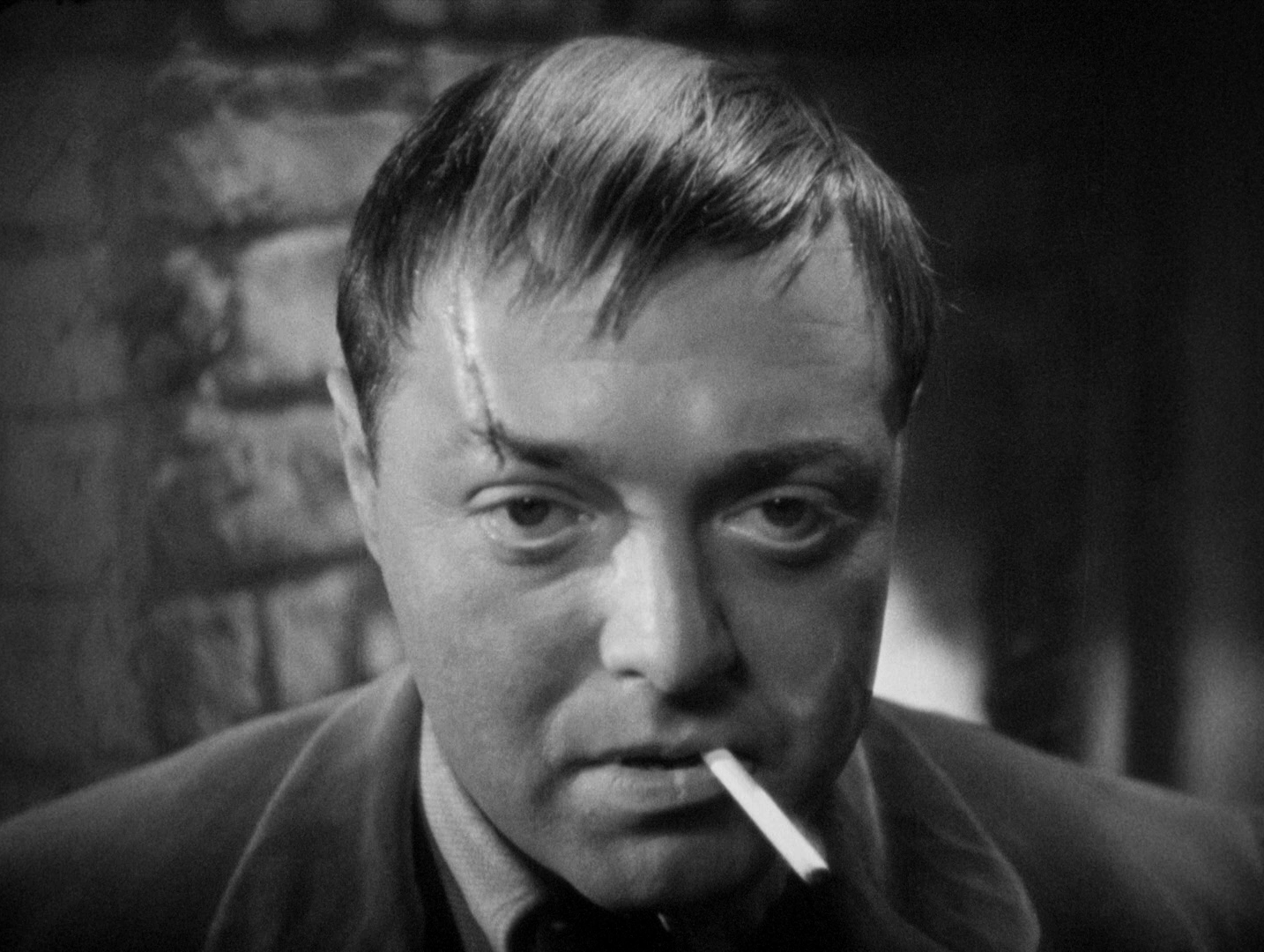
Peter Lorre in his first English-language film.

Even Lorre’s performance lacks subtlety. He’s presented as being the evil leader of the assassination plot and we learn nothing more about him than we do the members of his gang. He’s so flat as to almost not be interesting. But you have to cut him some slack as this was his first English-language film. He would go on to deliver more memorable roles, after moving to Hollywood, in such films as The Maltese Falcon (1941) and Casablanca (1942).

Still, there are earmarks of better Hitchcock films to come. In what would become a hallmark of his Hollywood films, the most exciting scene is at the end of the film. Everything seems to be building toward the final confrontation between assassin Ramon and mother Jill. While he may have gotten the better of her on the deck of the lodge, this time her aim is true. This gives the film a good bookend.

According to a Hitchcock wiki, The Man Who Knew Too Much saw the first proper introduction of a "MacGuffin" — a storytelling device often attributed to Angus MacPhail, which appears in many of Hitchcock's subsequent films. A MacGuffin is defined as “a plot device in the form of some goal, desired object, or other motivator that the protagonist pursues, often with little or no narrative explanation. The MacGuffin's importance to the plot is not the object itself, but rather its effect on the characters and their motivations”. In this film the MacGuffin appears in the guise of the message about the planned assassination of a foreign dignitary in London.

Hitchcock must have thought he could do better by the story but turned down the first opportunity to remake it. Producer David O. Selznick, to whom Hitchcock was under contract, bought the rights to the original movie in 1941 and urged Hitchcock to make a U.S. version. At the time, Hitchcock thought he had no new spin to put on the story and declined. Instead, he would direct Mr. and Mrs. Smith (1941) and Suspicion (1941). When Hitchcock was his own producer he came back to the story in 1956, looking for a picture to help fulfill his contractual obligations with Paramount Pictures.

The original The Man Who Knew Too Much may not be the greatest film Hitchcock made, but it does deserve to be viewed. There are many of the trademarks present here that Hitchcock would develop in his later films. The pace is quicker and the acting flatter, but the film has a much more satisfying ending than then his own remake in 1956.

Saturday, May 13, 2017

Stubs - Of Human Bondage


Of Human Bondage (1934) Starring Leslie Howard, Bette Davis, Francis Dee, Kay Johnson, Reginald Denny. Directed by John Cromwell. Screenplay by Lester Cohen. Based on the novel Of Human Bondage by W. Somerset Maugham (London, 1915). Produced by Pandro S. Berman. Run Time: 83 minutes. USA. Black and White. Drama

Bette Davis, like most Hollywood actresses, got her real start on the Broadway stage. She made her debut in 1929 in Broken Dishes, and followed it with Solid South. In 1930, she came out to Hollywood, with her mother, for a screen test at Universal. Though she failed a couple of screen tests and Carl Laemmle, the head of Universal Studios, considered terminating Davis' employment, cinematographer Karl Freund saved her. He told Laemmle that Davis had "lovely eyes” and she made her film debut in Bad Sister (1931).

Universal renewed her contract for six months and gave her a small role in Waterloo Bridge (1931) and then lent her out to Columbia for The Menace (1932) and to Capital Films for Hell's House (1932). After one year and six unsuccessful films, Laemmle elected not to renew her.

Davis was ready to return to New York, when actor George Arliss chose her for the female lead in The Man Who Played God (1932), his film at Warner Bros. This was the break she needed. Originally signed to a five year contract, she would remain at Warner Bros for the next eighteen years.

She would appear in about 30 films in the next few years before The Cabin in Cotton (1932) brought her to the attention of John Cromwell, who wanted her for his film adaptation of W. Somerset Maugham’s 1915 novel, Of Human Bondage. Not only did Cromwell think she was right for the role of Mildred, but so did producer Pando S. Berman at RKO, who owned the film rights to the novel. Even Maugham was said to approve of her being cast in the role.

But Jack L. Warner objected at first, instead casting her in Fashions of 1934, The Big Shakedown (1934), Jimmy the Gent (1934) and Fog Over Frisco (1934). Warner felt playing the role of Mildred would damage her glamorous image and pointed to Katharine Hepburn, Irene Dunne, and Ann Harding already having declined to play it for that reason. The only reason Warner relented was that producer Mervyn LeRoy wanted RKO contract actress Irene Dunne for Sweet Adeline, the screen adaptation of the Jerome Kern-Oscar Hammerstein II musical, and the two studios agreed to trade actresses.

To prepare for her role as Mildred, Davis hired an English housekeeper with a Cockney accent that she secretly studied for two months. But this did not impress Leslie Howard, who resented an American actress being cast as a British woman. Howard let it be known to Davis, who recalled the production in her memoirs, “The first few days on the set were not too heartwarming. Mr. Howard and his English colleagues, as a clique, were disturbed by the casting of an American girl in the part. I really couldn't blame them. There was lots of whispering in little Druid circles whenever I appeared. Mr. Howard would read a book offstage, all the while throwing me his lines during my close-ups.

Production began on February 19, 1934 and continued until April 7th. Retakes were done April 30, May 7 and June 1-2 1934. The film was released July 20, to fairly positive reviews, especially for Davis.

The film opens in Paris, where British-born wannabe artist, Philip Carey (Leslie Howard) has been studying painting for the past four years. When his art teacher tells him that his work lacks talent, Philip returns to England and attends Medical school. There he is humiliated by his professor, Dr. Jacobs (Desmond Roberts), who uses Philp’s club-foot as a teaching moment for other students when the club-foot on a young patient isn’t very interesting.

Philip (Leslie Howard) is taken by Cyril (Reginald Sheffield) to help
make an impression on tea room waitress Mildred (Bette Davis).

Philip is taken to a tea room by another medical student, Cyril Dunsford (Reginald Sheffield), hoping to make an impression on a waitress, Mildred Rogers (Bette Davis), that the other student sort of fancies. Mildred is anemic and pale-faced and more interested in another customer, Emil Miller (Alan Hale), a loud but well-to-do womanizer. While Cyril has had enough, Philip is infatuated by her and falls passionately in love with her.

Philip is infatuated with Mildred and goes back to ask her out.

He comes back the next day and asks her out to dinner, to which she tells him "I don't mind," an expression so uninterested that it infuriates him – which only causes her to use it all the more. They go out a few times, but she continues her cold, bored behavior and refuses Philip a goodnight kiss. She even stands him up for a theater date in order to see Emil.

Mildred skips out on Philip to keep a date with Emil Miller (Alan Hale).

That doesn’t keep him from daydreaming about her, even seeing her in one of his medical school anatomy books. Philip is so distracted by her that he fails his medical exams.

Philip finds himself fantasing about Mildred.

But Mildred doesn’t change her mind about him. When Philip finally proposes to her, Mildred declines, informing him that she will be marrying Emil instead. She even goes so far as to berate him with insults about being romantically interested in her in the first place.

To help him forget, Philip is introduced to Norah (Kay Johnson), an attractive romance writer, who falls in love with him. With Norah, it seems that Philip finally seems to be getting over Mildred. But just when he is finding true happiness, Mildred reappears in his life. She is pregnant, having been abandoned by an already married Miller, and turns to Philip for help.

In order to take care of Mildred, Philip breaks off his relationship with Norah (Kay Johnson).

Philip provides Mildred with a flat and arranges to take care of her financially. He then breaks off his relationship with Norah, who loves him very much. Norah and Philip admit how bondages exist between people linking Norah to Philip and Philip to Mildred and Mildred to Miller.

Mildred is an uninterested mother and gives the baby to a nurse to take care of.

After Mildred gives birth, Philip intends to marry Mildred, but she is an uninterested mother and gives the child to a nurse to take care of. Mildred is easily bored and to celebrate their engagement, Philip invites another medical school classmate, Harry Griffiths (Reginald Denny). Griffiths is gregarious and flirts with Mildred and she reciprocates. After dinner, Philip makes a point to tell Harry to leave Mildred alone and Harry agrees, saying he has no interest in her at all.

Philip invites Harry (Reginald Denny) to dinner and he steals Mildred away.

But the next morning that has changed. Mildred delights in showing Philip a letter that Harry sent her, written overnight and delivered by special messenger, confessing his love for her. She informs Philip that she loves Harry too and the two run off to Paris.

Philip returns to his studies and makes a very positive impression on Thorpe Athelny (Reginald Owen), who takes a liking to the young doctor and invites him out to his house for Sunday dinner. Athelny has a large family with nine children. The eldest daughter, Sally (Frances Dee), serves them and Philip takes an interest in her. A romance blossoms as Philip returns over and over again as we’re shown a montage of Sally against the pages of a calendar.

Former patient Thorpe Athelny (Reginald Owen) invites Philip
to dinner, where he meets his daughter Sally (Frances Dee).

But like a bad penny, Mildred returns with her baby, expressing remorse for leaving Philip. He brings her and the baby into his apartment and lets her take his bedroom. Mildred objects to the paintings of nude models that Philip still has out as a reminder of his artistic past. She can’t believe that Philip isn’t interested in her and lashes out at him one night calling him a laughable, "gimpy-legged monster." He wants her out and she goes, but not before destroying everything in his place, including slashing his paintings and burning the bonds his Uncle had sent him to pay for his medical school.

Mildred does not take well to Philip's rejection.

Without money, Philip loses his apartment and is forced to drop out of medical school. But before he leaves, Dr. Jacobs insists that they take care of his club-foot first. Now Philip is able to walk normally, but has no job. The Athelnys take him in and Thorpe gets him a job working with him as a window dresser.

A note arrives from Mildred asking to see Philip, who reluctantly goes. Mildred has fallen on hard times. Now working as a prostitute, her baby now dead, Mildred is sickly and drawn. She asks Philip to examine her and he quickly diagnosis that she has tuberculosis. He leaves her what little money he has on him.

Philip gets dragged into Mildred's world and diagnoses her with tuberculosis.

The next letter Philip gets is a notification that his Uncle has died and has left him a small inheritance, which appears to be equal to the bonds that Mildred had destroyed. Philip returns to medical school and passes his tests. He signs up to be a doctor on a ship heading to Australia, much to the disappointment of Sally, who wants to marry him. He promises that he will if she still feels the same about him when he returns and she agrees as long as he still feels the same about her.

Now that he has his license, Philip tells Sally that he's going to Australia onboard a ship.

Meanwhile, Cyril and Harry are dispatched to retrieve a sick woman from a rundown flat, which turns out to be Mildred. Later, Philip hears about the interesting case, but Cyril and Harry won’t let him into the room. They inform him that it was Mildred and that she has died.

Mildred near death.

Her death frees Philip from his obsession and he decides not to go to sea after all, but Sally still needs some convincing but she agrees to marry him.

Freed from Mildred, Philip convinces Sally to marry him.

While this film is sometimes referred to as Pre-Code, make no mistake the film was affected by the Production Code Administration, which apparently had many misgivings about the story and did demand some changes. As an example of this, Mildred’s illness was changed from syphilis in Maugham’s novel to tuberculous. It is therefore still a little surprising to see Philip’s paintings of topless women getting such prominent display.

This film made a true star out of Davis. Maybe she sensed its importance as well, as she was able to convince the director to let her design her own makeup for the scenes depicting the final stages of Mildred's illness. Even though she was not one of the three actresses nominated by the Academy for Best Actress, Warner instructed all employees with voting rights to write her in. So while not officially nominated she did receive votes. She would lose out to Claudette Colbert, who starred in It Happened One Night (1934), another role that Davis wanted, but that Warner wouldn’t loan her out to Columbia to play. He didn’t like the idea of lending her out for two consecutive films. The Academy would also change their rules and no longer allow for write-ins. Davis would have to wait a whole year to be officially nominated and win her first Academy Award for Dangerous (1935). It was said at the time that award was really recognition for her work in Of Human Bondage.

While Davis is very convincing as a cruel and manipulative Mildred, she is not enough to save the film for me. The film, which is now in the public domain, has not aged well. It suffers from several maladies, including slow pacing through the first half, quick transitions and the character of Philip, played by Leslie Howard.

While Howard is a bit stiff as an actor, the trouble is really the character of Philip. It is hard to have much sympathy for such a milquetoast. He keeps going back to help Mildred who shows him no love, only derision. We’ve all had people who we can’t shake in life, but it is unfathomable that after she destroys everything he owns and wrecks him financially that he would go to see her again. He doesn’t even grow a pair until after she’s dead. He doesn’t overcome her as much as he outlasts her. That doesn’t speak well of his future with Sally, since she is obviously second choice.

There is very little in the way of development of characters. Philip’s relationship with Dr. Jacobs, as an example, seems to turn on a dime. The first time we see him Jacobs is making an example out of Philip’s club-foot, but only when Philip is forced to leave school does he offer to cure his deformity. Where does this compassion suddenly come from?

And why as an example, would Philip have anything to do with Harry after he stole away the woman that he loves? The next time we see them together after the incident, they are civil to one another. Where is the punch in the face that Harry so desperately deserves?

Most of the supporting actors don’t really get to do much. Frances Dee as Sally gets to do little more than smile pretty when she’s on screen. Even actors like Alan Hale, Kay Johnson and Reginald Denny are saddled with one-dimensional characters who are usually the most active off-screen. We hear more about their antics than actually see them performed.

The editing in the first half seems rather uneven. The individual scenes can be rather stagy and slow, but the story moves in time jumps which can make it a little hard to follow.

The character of Thorpe Athelny as portrayed by Reginald Owen is almost enough to pull the film out of its nose dive. Thorpe is a breath of fresh air and Owens enthuses him with wit, humor and passion. His performance helps make the second half of the film much more watchable than the first. Owen would later go on to portray Ebenezer Scrooge in A Christmas Carol (1938).

Of Human Bondage was a film that I wanted to see for a long time, but sadly it is not one that I can truly recommend. Bette Davis’ performance might be enough for some, but the film does not really draw you in and the central character’s passivity doesn’t really give you someone to identify with in the film. If you feel compelled to watch, then be sure to watch Reginald Owen as Thorpe. Too bad there isn’t more of him in this film.