Showing posts with label 1914. Show all posts

Saturday, February 16, 2019

Stubs - Making a Living


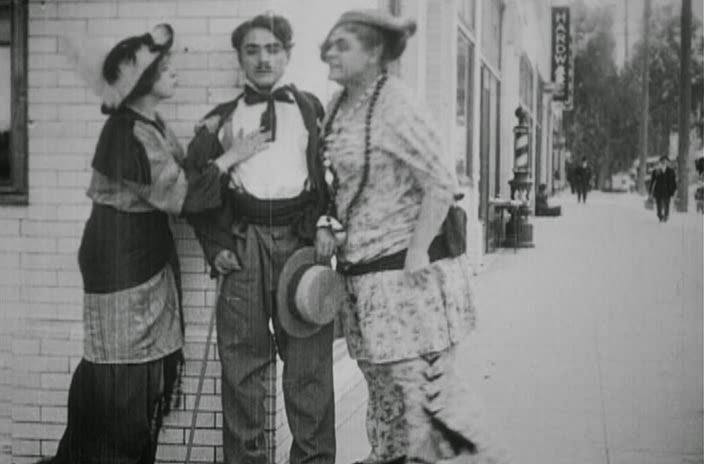
Making a Living (1914) Starring: Charles Chaplin, Henry Lehrman, Emma Bell Clifton, Chester Conklin. Directed by Henry Lehrman. Written by Henry Lehrman. Produced by Mack Sennett. Run Time: 13 minutes. U.S.A. Black and White, Silent, Short, Comedy

Fred Mace might not be a name that you’ve ever heard of before but if it wasn’t for his desire to leave Mack Sennett’s Keystone Studios, Charles Chaplin may not have ever gotten into films. He was on his second U.S. tour with Fred Karno’s comedy troupe when he was approached by a representative of Keystone who saw his performance and thought Chaplin could be a good replacement for Mace, who would appear in more than 150 films from 1909 and 1916 and was at the time the big star at the studio and wanted to leave. Though Roscoe Arbuckle would take over the roles Mace would have played, Chaplin was signed to a $150 a week contract in September 1913. He arrived in Los Angeles in December and began work for Keystone on January 5, 1914.

Almost immediately he began working on his first film that was written and directed by Henry Lehrman, who would also appear in the film. Chaplin was used to rehearsing parts was also not used to films which are made out of sequence. There are stories that he and his director butted heads early on.

Edgar English (Chaplin) swindles a reporter (Lehrman) out of money and a ring.

The short film opens with Edgar English (Chaplin), described as a swindler is in conversation with a man on the street who later turns out to be a newspaper reporter (Lehrman) whom he is apparently trying to convince him to give him money, as Edgar is down on his luck. Somehow during their talk, Edgar manages to steal a ring from the man.

The reporter is not happy to find that his sweetheart (Minta Durfee) is now engaged to
 Edgar. The girl's mother (Alice Davenport) looks on.

Edgar goes almost immediately to a mother (Alice Davenport) and daughter (Minta Durfee) who are standing out in front of their mansion. Edgar comes on to the daughter and they become engaged when he gives her the ring he’d taken from the reporter.

The butler moves to break up the ensuing fight.

The reporter, who had stopped to buy the daughter flowers, soon arrives to not only find out that his girl is engaged, not only with the ring he intended to give her but the bum on the street who asked him for money. The two get into a fight, which is eventually broken up by the butler, who gives the reporter the old heave-ho.

Edgar sees a help wanted sign outside what was the old
LA Times Bldg. The Bum is played by Chester Conklin.

Later, Edgar is looking for work and sees a sign looking for a writer on the local newspaper. Before he goes in to apply, he has some interplay with a Bum (Chester Conklin) who is hanging around outside. When he goes in to apply to the manager, he finds the Reporter works there. The reporter gets the Editor of the paper (Charles Inslee) to throw Edgar out.

The Editor of the paper throws Edgar out.

Later that day, the Reporter is out on the street when he sees a car lose control and go over the edge crashing down a hill, pining the driver under the car. The reporter is the first on the scene and takes photos with his camera and interviews the victim. He is about to leave the scene when others arrive and try to right the car and free the driver. The reporter is encouraged to help and he puts down his notes and camera.

The reporter interviews and photographs the victim of a traffic accident.

Edgar, who happens to be walking by, sees the accident and goes to investigate. While there he sees the reporter's notes and camera, which he scoops up and runs away. When Edgar sees a Keystone Kop policeman (Chester Conklin), he runs up the stairs to hide in a house where the woman living there (Emma Clifton) tries to throw him out. However, the reporter takes chase and follows him into the house. Edgar manages to get away but the reporter ends up in the bed with the woman and is discovered there by her husband (Billy Gilbert).

Husband (Billy Gilbert) finds his wife (Emma Clifton) in bed with the reporter.

Edgar takes the story and camera back to the newspaper. An extra is issued based on his story and the paper is on the street almost before the reporter realizes his things are missing.

Edgar's story rates an Extra edition of the paper.

He chases Edgar down and the two get into a fight on the street, ending up in the cow-catcher of a passing trolley car.

Edgar and the reporter take their fight out into the streets.

Chaplin was apparently disappointed in the finished film, feeling that his best performances were left on the cutting room floor. Supposedly, Lehrman would admit to having done just that out of spite for Chaplin.

The film was released on February 2, 1914 and despite his own misgivings, he received very positive reviews from Moving Picture World, an influential early trade journal for the American film industry, which wrote, "The clever player who takes the role of the nervy and very nifty sharper in this picture is a comedian of the first water, who acts like one of Nature's own naturals. It is so full of action that it is indescribable, but so much of it is fresh and unexpected fun that a laugh will be going on all the time almost. It is foolish-funny stuff that will make even the sober-minded laugh, but people out for an evening's good time will howl."

Henry Lehrman may not be a name that gets a lot of attention today, but back in the beginnings of silent films, he was very prominent, working with not only Mack Sennett but also D.W. Griffith. The next year, he would leave Sennett to start his own company, the L-KO Kompany, making two-reelers for Universal. He had a bad reputation for putting his actors in precarious and dangerous situations, earning the name "Mr. Suicide." One more connection to silent films is that Lehrman was engaged to Virginia Rappe, the actress whose death in 1921 led to the downfall of Roscoe "Fatty" Arbuckle's career.

The film also features Chester Conklin, a film comedian, and one-time Keystone Kop. He would go on to co-star with Mabel Normand in a series of films, including  Mabel's Strange Predicament (1914), Mabel's New Job (1914), Mabel's Busy Day (1914) and Mabel at the Wheel (1914). He was also teamed with Mack Swain and became known for his Walrus-like mustache. In 1920, he left Sennett and went to work at Fox Film Corporation. Conklin would have a significant role in Erich von Stroheim's acclaimed Greed (1924). However, his part was cut from the finished film and lost. Conklin would also appear in Chaplin's films Modern Times (1936) and The Great Dictator (1940).

Minta Durfee was married to Arbuckle at the time the film was made with whom she would appear in several films. A close friend of Mabel Normand, Durfee would be best remembered for her role in Normand's Mickey (1918).

Just a quick note, the Billy Gilbert in this film is not the same Billy Gilbert from The Music Box (1932) or His Girl Friday (1940). Even though they were acting at about the same time, the two only share a name.

But the star of the film is Charlie Chaplin. This is certainly not the best work Chaplin would ever do but it does show certain glimpses of what was to come. Chaplin would be a quick study and it wouldn’t be long before he was one of the most famous people in the young fledging film industry, becoming a worldwide phenomenon.

Making a Living is one of the few films when Chaplin is not seen as his trademark Little Tramp. That character would appear in his next film, also directed by Lehrman, Kid Auto Races at Venice. Here he is dressed in a long grey coat and a large mustache with a more villainous look.

As far as should you watch this short, the answer would be a qualified “yes” though I would not say it would be for everyone. If you’re a fan of Chaplin’s already, you owe it to yourself to see all of his films that you can. If you’re not a fan then there are other films I would suggest, like City Lights (1931), which may be my favorite of his.

Saturday, September 13, 2014

Stubs – Tillie’s Punctured Romance


Tillie’s Punctured Romance (1914) Starring Marie Dressler, Mabel Normand, Charles Chaplin, Mack Swain. Directed by Mack Sennett. Written by Hampton Del Ruth (Scenarist) Based on the musical comedy Tillie's Nightmare, book by Edgar Sloane, lyrics by A. Baldwin Sloane (New York, 5 May 1910) by A. Baldwin Sloane and Edgar Sloane. Produced by Mack Sennett. Black and White, U.S. Comedy, Silent

Late last year, we celebrated the 100th anniversary of the production of The Squaw Man (1914), the first full length feature film shot in Hollywood. Earlier this year, we celebrated the 100th anniversary of Charlie Chaplin’s first film, Kid Auto Races at Venice (1914). To round out our celebration of 1914, we’ll take a look at Tillie’s Punctured Romance, known as the first full length American comedy.

In 1914, the center of the film comedy world was Mack Sennett’s Keystone Studios in Edendale, California, now called Echo Park. The Canadian born Sennett had first appeared as an actor in films, but moved into directing films at Biograph. Sennett was definitely prolific as an actor (according to the IMDb he appeared in over 360 films), a writer (95 films), director (311) and producer (1115). He was also experimental as well, directing and producing this, the first feature-length comedy; he would also be the first to get a talkie short to market in 1928.

Mack Sennett, founder of the Keystone Studios.

He founded Keystone in 1912, with the financial backing of the New York Motion Picture Company; Keystone was the testing grounds for many of the big names of comedy, including Chaplin (whom Sennett discovered), Mabel Normand (whom he made a star), Marie Dressler, Roscoe Arbuckle, Harold Lloyd, Ford Sterling and Chester Conklin. Gloria Swanson made comedies here, but was not one of Sennett’s Bathing Beauties, before moving to romantic roles at Paramount.

Based on the Broadway musical, Tillie's Nightmare, Sennett had big plans for this movie. To begin with, he planned on taking two weeks to film and set a budget for $200,000. For a studio that was releasing multiple shorts a week, two weeks is a long time. And with a lot of money riding on the project, Sennett enlisted Marie Dressler, the musical’s star, to appear in the film and, according to Sennett, "a star whose name and face meant something to every possible theatre-goer in the United States and the British Empire." Sennett himself would direct this film.

Tillie Banks (Marie Dressler) is a country girl who meets Charlie (Charlie Chaplin) when she hits him in the head with a brick that she is using to play fetch with her dog. Tillie brings Charlie inside, where he meets her abusive father (Mack Swain) and observes the father’s large bankroll of money, which he uses to pay his workers.

Chaplin plays Charlie, the stranger from the big city about to be hit in the head.

Charlie begins to flirt with Tillie, chasing after her outside. The father follows after them and does not approve. Charlie manages to convince Tillie to elope with him back to the city, which she does, putting on a special outfit for the occasion. But before they leave, Charlie gets Tillie to steal her father’s money. Tillie puts it in her purse, which she keeps close to her.

Charlie (Charlie Chaplin) flirts with Tillie Banks (Marie Dressler)
once he finds out her father had a large wad of cash.

Once they’re in the City, they run into the woman Charlie left behind, Mabel (Mabel Normand), who is not happy to see her boyfriend with Tillie. Charlie takes Tillie to a restaurant and Mabel follows soon afterwards. Tillie has never had alcohol before and spits her first drink into Charlie’s face. But it doesn’t take much for her to get drunk.

Charlie gets caught in the middle between Mabel (Mabel Normand) and Tillie.

While Charlie sneaks away to speak with Mabel, Tillie is entertained by some of the waiters and ends up dancing. She eventually asks Charlie to hold her purse, which he then takes and steals away with Mabel. They go out on a shopping spree, while Tillie, who is broke, drunk and far from home, is thrown into jail.

Mabel and Charlie spend the money they stole from Tillie on new threads.

With their new threads, they go to the movies, watching a faux Keystone film entitled A Thief's Fate, in which they see themselves in the tale of thievery. They openly discuss the similarities between themselves and the characters on screen until they realize they are seated next to a police detective (Charley Chase), after which they leave, feeling guilty over what they’ve done, but not guilty enough, of course, to return the money.

Charley Chase plays the movie patron on the right, who turns out to be a policeman.

Meanwhile, a police matron finds out that Tillie is the niece of millionaire Donald Banks (Charles Bennett). Once they confirm that, they let her go. Penniless, Tillie gets a job as a waitress for a restaurant owner played by Edgar Kennedy. Mabel and Charlie, of course, go into the restaurant where Tillie serves them. Recognizing them, of course, Tillie faints allowing Charlie and Mabel to escape. But Tillie is not out for long and starts to go after them with a knife before the other waitresses bring her back into the restaurant.

Mabel and Charlie try to eat at the restaurant Tillie is working at as a waitress.

Meanwhile, the Uncle leaves for vacation about the same time and goes mountaineering. While observing the view, he falls, rolling down the mountain where his body lays motionless at the bottom. His guide calls his house and informs the help that Mr. Banks is dead.

Even though the body is not cold as it were, Tillie is declared as his own heir and Secretaries from his company are sent out to find her.

Meanwhile, Mabel and Charlie have taken refuge in a city park and are still wondering what to do next with all that money when Charlie buys a newspaper from a paperboy. There he reads that Tillie has been declared the heir and will inherit $3 million. When Mabel turns her back, Charlie hurries away and goes back to the restaurant where Tillie is working and unaware of her inheritance.

Charlie knows Tillie has inherited a fortune and pressures her to marry him before she finds out.

Declaring his undying love for her, he convinces her to marry him immediately. Even though Tillie is reluctant, they are married. Back at the restaurant, the Secretaries have arrived looking for Tillie and they are still there when the newlyweds arrive back and Tillie finds out about her Uncle’s fate and her good-fortune. The Secretaries discover the newspaper in Charlie’s jacket and even though Tillie also realizes Charlie’s hurry, she is somehow convinced that she loves him and they go back to their new home, her Uncle’s mansion.

Charlie and Tillie arrive at her Uncle's mansion, which they think is their new home.

Mabel, however, has not given up on Charlie and follows after them, taking a job as a maid on the household staff.

Meanwhile, the Uncle’s body is recovered and the Uncle is still alive. He is taken to a remote cabin to recover, but no one is informed of his status.

Back at their new mansion, Tillie and Charlie are playing host to “The Four Hundred”, which are assumed to be the rich and powerful of the city. It is quickly apparent that Tillie and Charlie are not refined or cultured and don’t fit in with this crowd. During the party, Charlie discovers that Mabel is working there and sneaks away to speak with her.

Mabel takes a job as a maid at the Bank's mansion so she can be near Charlie.
Here she sneaks a kiss, which Tillie sees during a party they're throwing.

When Tillie finds out about Mabel’s presence, she grabs a gun and starts shooting, sending the party into disarray. The Uncle returns and is not amused at the damage that has been caused and chases everyone, including servants, from his house. Tillie keeps shooting her gun, chasing Charlie and Mabel down to the pier.

A publicity shot for Tillie's Punctured Romance depicting the aftermath of Tillie
discovering Charlie and Mabel kissing. This isn't how it happens in the movie, but we do
get a look at Uncle Donald Banks (Charles Bennett), who had been thought dead.

The Uncle, meanwhile, wants the police (The Keystone Cops) to arrest Tillie for what she’s done to his mansion. They drive down to the pier with much abandon, bumping Tillie through the rails and down into the water. Charlie calls for the Sea Police (Keystone Cops with boats) and they proceed to the scene. One group is in a powerboat and one in a row boat. You don’t need me to tell you, but the speedboat bumps into and sinks the rowboat.

Meanwhile, back on the pier, the police try multiple times to pull Tillie up from the water. Over and over again she gets dropped back into the water. Even one of her rescuers ends up in the water with her. More weight makes it even harder to pull them up, but eventually Tillie is pulled back up on the pier.

Now that she’s safe, Tillie doesn’t want to have anything to do with Charlie. Mabel feels the same way and Charlie leaves. Alone on the pier, the two women commiserate and hug one another.

You have to give Sennett credit for adapting a stage musical into a silent film. Being unfamiliar with the source material, I can only imagine the Keystone version has probably only a passing resemblance to the stage play. Shooting on Tillie’s Punctured Romance took a whopping 12 weeks, finishing on July 25, 1914, but the film, which was 6000 feet, was not released until November 14, 1914.

The film was so successful that Dressler would go onto star in the sequel, Tillie’s Tomato Surprise (1915), and use the character name Tillie in other films, including The Scrub Lady (1917) and Tillie Wakes Up (1917). She would also write and direct a short film, Fired (1917), and write and produce The Agonies of Agnes (1918) before leaving Hollywood for seven years.

The film would also be one of Chaplin’s last with Keystone; he would release only two more films for the studio, Getting Acquainted (1914) and His Prehistoric Past (1914). Even before Tillie’s Punctured Romance, Chaplin had already become an international star. He was also becoming hard to work with at Keystone. He wanted more autonomy and after the success of this film, he wanted more money. Sennett and his financial backers bristled at this demand and let him go. Chaplin would sign with Essanay by the end of the year, taking the Tramp character with him.

I’ve gone on record as not being a big fan of Marie Dressler’s in my review of Min and Bill (1932). At the time she made this film, Dressler was already 42, about 17 years older than her love interest and about three times Chaplin’s size. She doesn’t look right in the part of an ingénue, even though she had successfully played one on stage.

Marie Dressler as Tillie Banks at the beginning of the film.

One of the promises of film is the ability to have a similar experience to someone who watched it 100 years before. With so many films that have been lost over time, it is clear that promise is not always kept. The problem with watching an older movie like this one is the condition of the film. The version I watched via TCM was patched together from various prints of varying qualities from sharp black and white to third or fourth generation reprints.

The version I watched also had very few title cards. I don’t know if that’s how it was originally released, as if Sennett was sure that the visuals would tell the story so completely that few would be needed, or if they’d been edited out to shorten the running time. While I don’t know for sure, I lean toward the latter, though I’m sure it was not TCM’s doing. There are also bits and pieces missing, as the action will jump cut and sometimes repeat. While the film has been saved, this is not a restored version. (I had a similar experience with watching The Squaw Man).

The story pushes the limits of believability, even for a comedy. Maybe title cards would have helped, but the film is presented as happening in a very short amount of time, perhaps even in a single day, as night is never presented or any time is shown as passing. Never mind the speed of the dissemination of information that is worthy of the internet-age we live in now. Uncle Banks is thought to be dead and the afternoon papers already have a story about his heir, even before she knows of the accident. I would have to imagine that even audiences of the day would have noticed this.

I can’t say that the film has aged well. There is a lot of slapstick humor, but I can’t say I ever laughed and I do enjoy silent comedy. Part of this may be that what was new in 1914 has by now been copied and redone so much that I’ve seen everything that might have been unique about the film when it was released. But some of it may have to do with the changing times between 1914 and 2014. Humor has changed, not always for the better, and the novelty of a feature-length comedy can’t be over looked for its initial success, not to mention the caliber of the stars in it.

Besides Dressler, who headlined the film, the other star, besides Chaplin, was Mabel Normand. Having met Sennett in New York at Biograph, she had worked at Vitagraph before moving out west with Sennett when he founded Keystone.

A main stay at the studio, Mabel would appear in 32 films in 1914 alone working with the likes of Chaplin, Arbuckle, Ford Sterling, Mack Swain and Chester Conkling. Like Chaplin, Mabel grew artistically from performer to writer and director; even directing Chaplin in Mabel at the Wheel (1914), co-directing with him Caught in a Cabaret (1914) and being directed by him in such films as The Masquerader (1914) and A Gentleman of Nerve (1914).

Mabel Normand was a major star at Keystone Studios.

When her personal relationship with Sennett ended, she left Keystone and signed a $3,500 a week contract with Samuel Goldwyn and opened a studio in Culver City. While she continued to make films, she would be involved in a couple of scandals, the type that seemed to be too common in Hollywood. First was the murder of director William Desmond Taylor. Taylor was deeply in love with Mabel and had tried to wean her off of cocaine, even going to the police to get her suppliers arrested.

Mabel got involved in the scandal
surrounding William Desmond Taylor's murder.

On February 1, 1922, Taylor was shot to death in his apartment. Mabel was the last person to see the director alive. Though she would be ruled out by the police as a suspect, his murder remains officially unsolved.

Two years later, Mabel’s chauffeur Joe Kelly shot and wounded millionaire Cortland S. Dines with Mabel’s gun. Dines was at the time romantically linked to Edna Purviance, who was Taylor’s next door neighbor.

In 1926, Mabel signed with Hal Roach Studios. It was there she made her last film, One Hour Married (1927), directed by Jerome Strong and Hal Yates, co-written by Stan Laurel. Her health in decline, Mabel would die in 1930 at the age of 37.

Chaplin, who gets third billing here, is not the saving grace of the film. He is not playing The Tramp (gone, too, is the mustache we associate with that character) and while he performs many of the same pratfalls and antics, he is not likable this time out. This Charlie is much meaner as he woos, leads on and marries a woman just for the money. And while he’s still in love with Mabel, he is not above trying to cut her out when a better opportunity to make money comes his way. He actually leaves her in the park and runs to marry Tillie before she finds out she’s a millionaire. While the Tramp can be scheming, he is never so nakedly greedy and beyond reproach.

Charlie has a lot in common with, but is a meaner version of, the Little Tramp. Here he's
convinced Tillie to run away with him to the city, as long as she steals money from her father first.

While his performance shows some depth, he was capable of playing more than just the Tramp, it also shows that he is at his best when he plays that character. Charlie must have realized that, too, as he pretty much only plays the Tramp for the rest of his career. With that character, he would grow to be the biggest comedy star in the world and develop into one of cinema’s first great directors.

Typical of the era, the film was shot both on the lot at Keystone and in and around Los Angeles. Many of the locations, including the Hollywood Hotel and the Castle Sans Souci, are now gone from the urban landscape. The Hollywood Hotel, demolished in 1956, was once the center of Hollywood life. The Hollywood and Highlands shopping center now stands in its place. The Castle, built by Dr. A.G.R. Schloesser located at 1901 Argyle above Franklin, used to command breathtaking views from Hollywood from its six-story tower.

Dr. A.G.R. Schloesser poses on a post card in front of his house, which notes its use in the film.

Another locale, now gone, is the Abbott Kinney Pier in Venice, then the most prominent amusement pier at the time. The film makes it seem like the pier is near the Castle, as Charlie and Mable flee Tillie’s gun firing. The amusement park was destroyed by a fire in December 1920, but was rebuilt and reopened in six months. The pier’s demise came in 1946, when the City of Los Angeles did not renew the lease on the tidelands.

Tillie’s Punctured Romance was a film I wanted to like, but as I wrote, I never laughed at it when I watched it. I found this to be more of a curiosity than a real comedy and I’m sorry to say I can’t recommend it. Others may have a different experience that I did, but with the poor quality of the print and the scattered storytelling, I could never get into this film.

Friday, February 7, 2014

Stubs - Kid Auto Races at Venice


Kid Auto Races at Venice (1914) aka Kid Auto Races in Venice Starring: Charlie Chaplin, Henry Lehrman, Frank D. Williams. Directed by Henry Lehrman. Written by Henry Lehrman. Produced by Mack Sennett. Run Time: 6 minutes 33 seconds. U.S. Black and White, Comedy, Silent

While Trophy Unlocked doesn’t usually review shorts, the exception is made here for Kid Auto Races at Venice, released one hundred years ago on February 7, 1914. While not the first short Charlie Chaplin appeared in, this is the first film released to feature the Tramp character that is synonymous with the actor/writer/director/producer and a character he would play for the next 22 years.

Chaplin had been recruited by Mack Sennett after seeing his performance in the travelling Fred Karno company from England then touring America. Chaplin arrived at Keystone in December 1913, but wasn’t called in for work until January 5, 1914, because Sennett was initially concerned that the 24 year-old Chaplin looked too young.

Chaplin went to work right away, shooting the short Making A Living (1914) that day. In that film, Chaplin plays a con man who charms the fiancée of a newspaper reporter. Making A Living was directed by Henry Lehrman, a Austro-Hungarian born actor turned director. Lehrman got his start with Biograph Studios as an actor for D.W. Griffith. There he met another aspiring actor, Mack Sennett. Lehrman’s first directorial assignment was in 1911, actually co-directing with Sennett.

Mack Sennett
Sennett founded Keystone Studios in 1912 and started producing comedies. In addition to Chaplin, Sennett and Keystone are responsible for launching or shaping the careers of Mabel Normand, Marie Dressler, Harold Lloyd, Roscoe Arbuckle, Gloria Swanson, Ford Sterling, Ben Turpin, Chester Conklin and Harry Langdon. Sennett also brought Lehrman to Keystone as an actor, writer and as a director. Lehrman would become known as Mr. Suicide for his willingness to place his actors in dangerous situations.

Henry Lehrman’s reputation is certainly evident in Kid Auto Races at Venice, where many times the action is only feet away and a wayward car, driven by a child, could have ended Chaplin’s film career before it had really begun. Several times you can see the kid drivers maneuvering to avoid hitting the comedian.

Henry Lehrman
The thin plot of the film is that a newsreel crew is attempting to record a kid’s car race on the streets of Venice, California, but their filming is disrupted by what we would now call a persistent “photo bomber”, The Tramp (Charlie Chaplin). Despite the best efforts of the Director (Henry Lehrman) and the Cameraman (Frank D. Williams) to clear him out of the way, the Tramp keeps returning, standing in the way. The Tramp is pulled out of view of the camera and pushed to the ground several times, only to bounce back and get in the way.

Lehrman (l) plays the Director with an annoying man, the Tramp, who keeps getting in his way.

Kid Auto Races appears to be six and a half minutes (I've seen reports the film was 11 minutes long, but I can only find versions that are about half as long to view.) of improvised scenes in front of the crowd gathered to watch the Junior Vanderbilt Cup on January 10th and a follow up pushmobile event the following day. The shots intercut between the two events, so there is really no effort to tell a linear story here.

Here the Tramp clowns in front of the Pushmobile ramp.

The Vanderbilt Cup Race was an international car race founded by philanthropist William K. Vanderbilt in 1904 on Long Island. The race was held in Santa Monica in 1914. The city decided to sponsor a junior version of the race, which is what provided the background for the Tramp’s antics. News reports of the day refer to 40 fourteen-aged participants driving one and two cylinder homemade cars around a ten mile course. The push-mobiles went down a broad wooden incline which “most of the boys had trouble in getting to the bottom right side up." Take a look at the drivers and they’re only wearing a hat, if that. Hard to imagine authorities would approve of anything like that nowadays.

At the end of the film, the Tramp gets right up on the camera lens.

While Kid Auto Races at Venice was the first film released to feature the Tramp, it was not the first film shot with the character. Earlier in the week, Chaplin had shot Mabel’s Strange Predicament (1914) and according to Chaplin’s autobiography, he put the costume together on the way to the set with every article being a contradiction: baggy pants, tight coat, small hat, large shoes. The small mustache was added to age the character.

The Tramp first appeared in Kid Auto Races, but would evolve over the years.
Over the years, the Tramp, or The Little Tramp as he was sometimes called, mellowed from being drunk as he is in Mabel’s Strange Predicament, and appears to be in Kid Auto Races, to a more childlike, but good-hearted character, a vagrant who tries to act with the dignity and manners of a higher social status. Chaplin’s Tramp is the most iconic and most copied character to come out of silent cinema. The Tramp made Charlie Chaplin one of the world’s biggest stars. He played the character in films until 1936’s ModernTimes. The Barber in The Great Dictator (1940) may have many of the same characteristics as the Tramp, but Chaplin was emphatic that he was not. During the Tramp’s run, Chaplin would not only learn the craft of making films, but become one of the great film directors of all time in the process.


The Tramp character would make Chaplin an international celebrity.
Overall, Kid Auto Races at Venice comes off as rather disjointed with repetitive action. It’s a little like a Beta test of the Tramp character. There are only so many ways someone can disrupt a camera crew, but this is only the beginning of a long creative process to fully develop the Tramp. Seeing the short, after having seen many of his films, there doesn't appear to be anything new, but at the time it was all new. Kid Auto Races at Venice, as an example, is the first film recording of Chaplin's signature flick kick, which he used many times since.

As they say, from small things big things one day come, so while the first appearance of the Tramp may not be the funniest thing I’ve ever seen, you do see the kernel of what would become one of the most beloved characters of all time.

You can view a public domain copy of history below:


or you can buy a restored copy as part of the Chaplin at Keystone Collection from Flicker Alley.

Sunday, December 29, 2013

Stubs – The Squaw Man (1914)


The Squaw Man (1914) Starring: Dustin Farnum, Monroe Salisbury, Red Wing, Winifred Kingston. Directed by Oscar Apfel and Cecil B. DeMille. Story and Screenplay by Beulah Marie Dix. Based on the play The Squaw Man by Edwin Milton Royle. Produced by Cecil B. DeMille and Jesse L. Lasky Run Time: 74 minutes. Black and White. U.S. Silent, Western, Drama

It’s not always you get to see a first. And while films pre-date The Squaw Man, there are still a lot of firsts tied up in it. The first feature film shot in Hollywood, the first film directed (sort of) by Cecil B. DeMille, and the first film made by the Jesse L. Lasky Feature Play Co., the precursor to Paramount Pictures. I had been interested in this movie since helping one of my sons, then in middle school, do a project on Los Angeles. We found a sepia still on the internet we used in his Powerpoint presentation.

Further fueling my interest was reading the Early Paramount Studios book from the Images of America series. While it is mostly photos and thus a fairly quick read, since The Squaw Man plays so prominently in the history of Paramount, the film gets more than a fair amount of attention.

Recently, TCM showed it as part of a series of films having to do with the development of films and tied to Story of Film documentaries. When the opportunity to see a film you’ve been interested in seeing is only a DVR recording away, it’s hard to resist.

We might be singing “Hooray for Flagstaff”, since that was the original location selected for the filming. Flagstaff was chosen for its exotic sounding name and the hopes it would provide picturesque vistas that could be used as background for the filming. But DeMille found the location unsuitable and pushed westward, settling on a barn at the corner of Selma and Vine as headquarters and the rest, as they say, is history.

Cecil B Demille (far left) and The Squaw Man cast. Dustin Farnum is in the white shirt.

Originally a Broadway play, The Squaw Man opened in 1905 and was revived four times, including a 1911 run that lasted for only 8 performances, but starred Dustin Farnum. Farnum was a singer, dancer and actor who had been appearing on Broadway since the then turn of the century. While he’s not a legendary actor per se, one modern day actor, Dustin Hoffman, was reportedly named after him. He would, like so many actors that followed, including his namesake, leave the great white way for Hollywood. He appeared in movies from 1914, starting with Soldiers of Fortune (1914) and staying in films until 1926’s The Flaming Frontier.

While oft credited as the first film Cecil B. DeMille directed, the lead director was really a man named Oscar Apfel. Originally an actor, appearing like everyone, on Broadway, he left the stage and went to work for the Edison Company in 1911. He started his directing career there, before moving to Reliance-Majestic Studios and then to the Jesse L. Lasky Feature Player Company in 1913, becoming one of the two main directors for that company. The other was DeMille. On The Squaw Man, DeMille learned the craft from Apfel. Up until then, DeMille’s entire film experience was one day observing at the Edison Company.

Cecil was not the DeMille that Jessie Lasky was originally interested in. He was trying to get a hold of William C. DeMille, Cecil’s older brother, to collaborate on an operetta, but he was already tied to another project. William’s agent, his mother, who ran a theatrical agency, suggested Cecil, who was not without experience, but did not have as much as William. Lasky was skeptical, but agreed to meet with Cecil and the two quickly became close friends, deciding to work together, but on a film rather than a play. Together, they formed the Lasky Feature Play Company.

Apfel was hired to show DeMille the ropes and The Squaw Man was that learning session. After Lasky, Apfel moved to Fox, where he directed William Farnum, Dustin’s brother, in a series of films. Apfel would eventually retire from directing to become a sought after character actor in other people’s films.

The cameras began to roll on the Squaw Man on December 29, 1913* and the film would be released the following year. Sadly a hundred years later, while the film has been preserved, TCM even went so far as to have H. Scott Salinas write a new score, it has not been restored. The print TCM showed was rife with omissions, even including a jump cut that makes an Aunt appear to disappear into thin air in one scene.

The movie is not easy to follow, partly due to the sheer age of the film, though I think it may also have to do with the style of storytelling used. There are few title cards and the story sometimes leaps forward by months and years. For example: Hal goes from baby bump to about five years-old in the blink of an eye. I don’t know if that’s due to missing footage or if the movie was released like that. Another problem is that in the beginning all the members of the same regiment look pretty much identical, same haircut and mustache, that it’s really hard to tell them apart.

Hard to tell them apart, but I believe the man on the far left is Captain James Wynnegate (Dustin Farnum).

Melodramatic, The Squaw Man tells the story of Captain James Wynnegate (Dustin Farnum), who is the executor of a fund set up by members of his regiment for the families of men killed in battle. When his cousin, Sir Henry Wynnegate, the Earl of Kerhill (Monroe Salisbury), embezzles money from an orphans' fund to pay his gambling debts, James is talked into taking the blame and to leave England in order to save the family’s honor. 

The discovery that the funds have been embezzled.

The person who convinces him is Henry’s wife, Lady Diana (Winifred Kingston), with whom James is in love. James accepts banishment from high society and sets out on a ship.

On board, James makes friends with the Captain and his family, but he is also followed on board by an inspector from Scotland Yard. It is not clear if he plans to arrest James or not. But James overpowers him and keeps him tied up until the boat is out of the harbor. (Frankly it is not clear what happens to the inspector. He tries to get a boat to shore but is turned down by the Captain and disappears from the film.) One day while in James’ cabin, the daughter of the Captain accidentally sets curtains in the room on fire. The fire gets out of control, the ship burns and sinks. James, with the other passengers, is rescued from the ocean by a ship headed to America.

Soon after arriving in New York, James watches a man, Big Bill (Dick La Reno), get pick-pocketed and intervenes. Grateful, Big Bill invites James to travel with him back to the plains. The sophisticated Britisher immediately changes into riding boots and jodhpurs and he is the laughingstock of the train station. 

Big Bill takes James out to meet a tribe of Ute Indians, including Chief Tabywana (Joseph E. Singleton) and his daughter Nat-u-rich (Red Wing). The men spend the night and it is obvious Nat-u-rich is attracted to James.

Big Bill (Dick La Reno) introduces James to Nat-u-rich (Red Wing). Her father,
Chief Tabywana (Joseph E. Singleton) is to her immediate left.

The next day, James, now calling himself James Carston, buys the Lone Butte Ranch for $6750 from current owner Bull Cowan. James quickly earns the respect of his ranch hands and proves himself to be a tough but fair boss.

Meanwhile, back in England, Diana’s health has worsened and it is decided that a trip to Yellowstone is in order and off she and Henry set.

Back in Wyoming, James is getting cozier with the Ute Indians. But his feud with Cash Hawkins (William Elmer) is only beginning. Jim catches Cash and his gang in the act of trying to rebrand his cattle. Cash also tries to cheat Tabywana in some sort of cattle deal while Nat-u-rich tries to stop it. James happens to arrive at the tavern when Cash is starting to get physical with Nat-u-rich. Cash isn’t able to conclude his deal and words between James and Cash are exchanged.

At about that time, Diana’s train, which is delayed because of something odd to do with the track, arrives. (There is smoke in the ties, but nothing more is explained) and is sent to the station in his town. James sees Diana and tries to avoid her seeing him. But when Cash returns, guns a blazing, demanding everyone in the Long Horn drink with him, their reunion is unavoidable. Cash, who is a real ass, threatens Henry and Diana and James is forced again to intercede and disarm Cash.

James makes an odd declaration “I won’t drink with a man who robbed the orphans of the King’s soldiers,” but then goes on to drink with Henry and Cash. When the all clear is given and everyone goes back on the train, Diana and James share a sweet and brief good-bye. The tavern clears out, but Cash who is still mad, goes back to kill James. Nat-u-rich, who arrives before Cash, hears him coming and hides in a storage room behind the bar. James, who is depressed after seeing Diana, doesn’t even notice that Cash has returned. But before he can react, Cash is shot from behind and killed.

James is too depressed to hear Cash Hawkins (William Elmer) return.
In the back, Nat-u-rich observes before she takes action.

Everyone, including the Sheriff, returns when they hear the shooting. James is not considered a suspect since his gun is still fully loaded. The Sheriff sniff checks the other guns in the bar and none have been fired. Only after everyone has left does Nat-u-rich come out of hiding. But the bartender returns and goes into the storage room, where he finds an Indian-beaded pouch. While they are alone, Nat-u-rich confesses to James that she indeed killed Cash.

Nat-u-rich confess that she killed Cash Hawkins to save James' life.

The title card skips ahead six months. James is obviously still thinking about Diana when his thoughts are interrupted by news that his horses have strayed into the hills in the dead of winter. With his ranch hands he heads out to retrieve them. They seek help from the Utes and Big Bill finds the horses. James meanwhile is snow blinded and falls off his horse. Big Bill rides back to the Utes looking for help and Nat-u-rich rides out on her own to look for James. She finds him overtaken by the poisonous fumes of the death hole. Braving evil spirits, she rescues him and takes him back to her village to recover. A witch doctor is brought in and eventually James is taken home to the ranch to recover. Nat-u-rich stays with him.

Nat-u-rich stays with James and nurses him back to health.

Lonely, James recovers and succumbs to Nat-u-rich’s charms. Several months later, the title card tells us, and Nat-u-rich is pregnant. James rides into town and fetches the Justice of the Peace and brings him back to the ranch to marry the couple. The JOP is reluctant and only officiates the wedding when Big Bill pulls a gun on him.

There has to be a piece of film missing because in a blink of an eye, the baby bump is now Hal (‘Baby’ Carmen De Rue) and is old enough to ride and shoot. Hal is also very close to his father. Nat-u-rich is kept at arm's length it seems.

While on a climbing expedition with Diana in the Swiss Alps (which appear to be Chatsworth), Henry falls. Mortally wounded and surrounded by the hiking party, Henry writes out a confession, clearing James of blame for the embezzling of the funds.

Diana and Henry in the Swiss Alps, which look a lot like Chatsworth, California.
Henry falls to his death, nearly pulling Diana down with him.

Now that he is cleared and the Earl of Kerhill, Diana goes to America to retrieve James.

Meanwhile, the local sheriff, in a bid for re-election, is forced to solve Cash’s murder, which is years old by now. The only clue is the beaded pouch that the bartender found, which Tabywana recognizes as Nat-u-rich’s and he rides off to tell her.

At this time, the train carrying Diana and her party arrive in town. She sends a dispatch to the ranch while she waits back in town.

Diana's envoy meets Hal (Carmen De Rue) at the ranch.

James is going through some hard times and has to pay his men with possessions he has, including his rifle and the medals he earned in the British army. Big Bill doesn’t need money and continues to stand by his friend. Just then Tabywana arrives and warns James that the Sheriff is coming after Nat-u-rich. But first they must smoke a peace pipe, a scene which frankly seems a bit forced.

The sheriff indeed arrives with his posse, but Bill tells them she’s gone and they ride off. Just then, Diana’s envoy arrives and tells him that he’s been cleared and he’s the new Earl of Kerhill. James fondly remembers home, but Hal interrupts his thoughts. When James realizes his son will someday be the Earl, he is willing to send him back to England to get a proper gentleman’s education. Nat-u-rich doesn’t like the idea, but Jim overrules her.

The next morning, the Sheriff returns and searches the ranch house, finding Nat-u-rich’s gun, but Tabywana, who has been keeping a close eye on him, jumps the sheriff and fights him for it. Bill arrives and takes the gun back, telling the Sheriff that it belongs to Nat-u-rich. That, along with the other evidence, points to her guilt. James arrives as Bill puts the gun back and then has him chase the Sheriff off his land. Tabywana follows after him and warns the sheriff that if he arrests Nat-u-rich, there will be a trouble with the Indians. He is laughed at, but goes back to his village to gather warriors.

An impatient Lady Diana and her party arrive at the ranch. She is happy to see James again and surprised to hear he has a son, but does embrace Hal. Nat-u-rich returns to the ranch just ahead of the sheriff, whom she knows now is coming to arrest her.

Tabywana leaves his village armed and with braves in tow. Meanwhile, back at the ranch, Diana and party leave with Hal, who everyone is sorry to see leave. Even Nat-u-rich, but she is not given a chance to say good-bye to her own son. But the wagon is stopped by the sheriff and forced to return to the ranch so they can be witnesses to the arrest. Tabywana and his Ute braves arrive. James finds that Nat-u-rich’s gun is gone.

Taking the gun, Nat-u-rich goes off into a field to commits suicide. The pending arrest, the loss of her son and the loss of James’ affection were apparently too much for her to take. Her father, Chief Tabywana, arrives too late to stop her and he brings her body back to the ranch. While Diana tries to shield young Hal’s eyes, James eulogizes over Nat-u-rich, “Poor little mother.”

Nat-u-rich dies in James' arms, while Diana tries to shield Hal's eyes.

There is a lot of story for such a relatively short film. And some of the action seems superfluous at best. Why have James get on a boat to leave England, just to have that boat burn and sink, so he can get on another boat to America? You can’t blame that on a loss of film footage. It just doesn’t make sense, nor does having so many of the characters, in the beginning, look like clones of each other. Without sound cues to help differentiate the men, having them look so much alike makes it hard to distinguish one from another, let alone identify with them.

But the age of the film and its state of disrepair make judging it somewhat difficult. I’m not sure what should be in the film and what the directors chose to include. Maybe there are scenes that help put the story together better, but I don’t know if that’s the case or not. The film was a big success in its time, so there must be more in 1914 than I can see today.

As historic of a film as The Squaw Man may be, the version we’re left with is sadly not very good. Perhaps that is why Cecil B. DeMille remade the film in 1918 and again, with sound, in 1931. Interesting to note that early versions of this film showed DeMille’s inexperience. During screenings, the film would shift up and down on the screen. DeMille and Lasky prepared a lawsuit against Eastman Kodak blaming the film for the problem.

However, Sigmund Lubin, a German-born early American film pioneer, was consulted and he pointed out that the problem was with the filmmakers themselves. They had used two separate cameras to make the movie, but had not calibrated them properly. Lubin was paid a lot of money to fix the negative and process new prints of the film.

But DeMille would grow into the role of director and his riding boots and jodhpurs attire becoming synonymous with film director in any depiction of Hollywood in film or on TV. DeMille would go on to direct dozens of silent and sound films. He is probably best remembered for his epic films, including Cleopatra (1934), The Plainsman (1936), Samson and Delilah (1949), The Greatest Show on Earth (1952) and The Ten Commandments (1956). He also famously played himself in Billy Wilder’s Sunset Boulevard (1950).

DeMille learned how to be a director on The Squaw Man (1914).

While I can’t say that DeMille’s first effort is all that great, the film does deserve a look, seeing how it helped to launch not only feature films in the U.S., but the film industry in Hollywood. If you’re looking for a solidly entertaining film, I would tell you to keep looking. But if you’re in the mood to see something historic, then you might give The Squaw Man a look during its centennial anniversary. Perhaps my opinion would be higher if I ever had a chance to see a fully restored version of the film.

*Source: Images of America Early Paramount Studios (2013)