Showing posts with label 505 Games. Show all posts

Wednesday, February 23, 2022

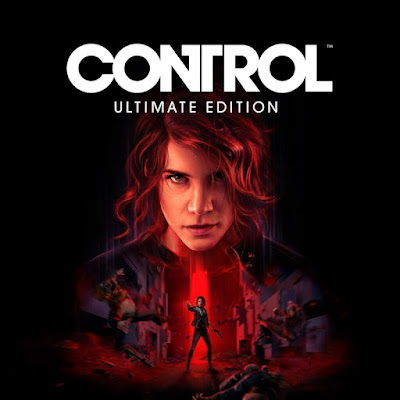
Control Ultimate Edition (PS5)

Note: This review contains spoilers for Control, The Foundation and AWE.

Sometime after the release of Quantum Break, Remedy Entertainment would announce their next game, Control, which released in 2019 and played on themes of the paranormal while adding in a mild sci-fi twist. Since I enjoyed two of the studio’s previous games, Alan Wake and Quantum Break, I looked forward to Control, despite not knowing much about it. Since the game had its own set of DLC, I waited for the physical Ultimate Edition of the game on PS4 and took advantage of the free upgrade to the PS5 version. After playing the game without any expectations, but with the knowledge of a crossover with Alan Wake, I found myself having a good time with the final product, even if it’s not perfect.

Sunday, October 29, 2017

Abzû


When I first heard about Abzû, what caught my attention was that its development team included several team members from the thatgamecompany game Journey, including its director, Matt Nava, and its composer, Austin Wintory. This combined with its art direction and underwater setting, I had been eager to play it when it was released digitally, however I decided to wait on it once a physical release had been announced, receiving it last month as a birthday present. Having finally played the game, I think the wait was worth it.

The game follows an unnamed diver in the middle of the ocean. Once the player learns how to swim, the diver is able to explore the ocean floor beneath them, following a path to an undisclosed destination. The diver can also interact with the sea life before them, including the ability to ride them.

The game’s controls are very simple, making it easy for anyone to pick up and play. The camera and swimming controls can also be adjusted in the pause screen, which mainly affects whether the y-axis is inverted or not. The gameplay itself is very easy to get into, allowing one to get absorbed into the game world. In terms of graphics, the Abzû is a visual spectacle, with a surprisingly wide variety of marine life and a very stylized aesthetic reminiscent of Journey. The music by Austin Wintory works really well with the game’s setting and is actually available on CD for those who are curious.

There isn’t much I can say about the game (even with avoiding spoilers), as the game can be beaten in roughly two hours on the first go. You can, however, get more out of the experience by searching for hidden collectibles within each level, as well as some hidden wells that can release new fish into the game world. There’s also a Meditation mode, which allows you to visit Meditation Spots you have found within the game and observe the fish in each area. Interestingly, the game is also slightly educational, if only because it will often actually tell you what species of fish you are looking at.

While short, Abzû is an experience that’s well worth going through at least once. Though developed by Giant Squid Studios, it can easily be mistaken for a thatgamecompany game (which I would consider a complement), due to it having a similar experience to Journey, helped by its development team including members of that team. If you are a fan of thatgamecompany’s games and are looking for a similar experience from a different team, I would highly recommend picking up this title. Fans of the ocean and ocean life may also enjoy this game, as it is a very enjoyable diving simulator that seems to have done its homework on marine life. If any of their future games prove to be this good, I can’t wait to see what kind of experience Giant Squid Studios will deliver next.

Sunday, October 15, 2017

Inside + Limbo Double Pack


Limbo is a game I knew about back when it released in 2010, however I had never actually played it for whatever reason. By contrast, I knew absolutely nothing about Inside, even when it first released in 2016, so I did not know that it had been done by the same developer as Limbo, Playdead, until the release of the recent Inside + Limbo Double Pack for PS4 and Xbox One. Though I saw this as an opportunity to finally see what the fuss was about with Limbo, my lack of knowledge on them sharing a developer led to me playing Inside first, as it had gotten top billing on the package. Either way, from playing the PS4 version of the collection, I found it overall to be a rather interesting experience.

Both games follow a young-looking boy on a mysterious quest, which is all I can really say about the stories of both games without possibly spoiling it. I can say, though, that the way each game drops you into the present situation is actually pretty engaging, as it makes you want to try and figure out what’s going on the further you get into it. Whether or not it pays off is entirely subjective, however the minimalist presentation of each game does keep you guessing until the very end (and possibly even afterwards).

The gameplay is similar across both games, utilizing minimal controls to solve environmental puzzles to move forward; this also gives the game more accessibility akin to a Thatgamecompany game, only with a much less family-friendly tone (Limbo and Inside are each rated T and M respectively by the ESRB). Both games also use a rather minimal soundtrack, which helps to highlight key moments as they come up and build up an atmosphere that the player can get sucked into. As an additional feature between games, there’s also some secret collectibles that the game gives you no warning about and can reward you with a different ending for finding them all. I managed to miss all of the collectibles in Inside and stumbled upon some in Limbo, however I don’t feel like scouring the games again to find all of them.

Though there are many similarities between both games, let’s look at the little things that make them stand apart from each other.


The graphical style of Inside contrasts with the previously-released Limbo, presenting itself in 2.5D with bright colors. The general aesthetic is rather minimalist, taking on a uniquely blocky appearance that is pleasing to the eye. The deaths the player character can face for messing up can get still get rather graphic, much like its predecessor Limbo, however the fact that the gore is largely bloodless does not stop it from earning its M rating. The fact that the setting is more 3-dimensional leads to some stunning backdrops, however the details found within them are what add to the game’s own sense of atmosphere and overall experience.


By contrast with Inside, Limbo employs an even more minimalist 2D style, with silhouettes very heavily employed to give the game its very iconic look. So iconic is this style, in fact, that electronic musician Deadmau5 (himself a gamer) used it as inspiration for the music video to his song “The Veldt”, the lyrics to which draw from the Ray Bradbury story of the same name (incidentally, due to the timing of the music video’s release, it is dedicated to Bradbury’s memory). Though it, too, has some gruesome death animations (I even jumped the first few times it happened), the game has a T rating and features a complete lack of blood. I would draw a comparison to the film Logan, in that the Logan Noir version somehow appears less bloody despite being the exact same movie, which can be attributed to the fact the Noir version is in black and white as opposed to color.

On their own, Limbo and Inside are both interesting games to play at least once, as each are good at creating an atmosphere with great visuals. Though their gameplay styles have some general similarities, they do enough in other areas to stand out from each other and immerse you in their respective worlds. As each one can be purchased individually, the collection doesn’t provide anything new to existing fans aside from owning both games on a physical disc. Notably, the game takes a page from Journey Collector’s Edition and allows you to install each game separately from the disc, so those that have only played one of the games on consoles can simply install and play whatever they haven’t already played. Those that have not played either game will get a great deal out of this collection, especially if they can get it at a discount. If you are new to either game, it really is best to go in blind and experience their stories for yourself firsthand.

Sunday, December 15, 2013

Brothers: A Tale of Two Sons


You might have heard of a Swedish gaming developer named Starbreeze Studios. Among their output is the first The Darkness game (which I previously reviewed) based on the Top Cow comic book series of the same name, and, for a newer example, they were one of the developers attached to the more recently released Payday 2, the sequel to the popular Payday: The Heist from Overkill Software, who had recently been acquired by Starbreeze. Though they’ve developed a handful of other titles, it was their entry into the Darkness series of games that I was familiar with, so I was surprised they’d developed Brothers: A Tale of Two Sons, the subject of this review, which seemed to have the feel of an indie game even though it wasn’t (this is not to say that indie games are bad; check out my positive reviews of Thatgamecompany’s output). When I learned of this game’s concepts and that it was being made in collaboration with a Swedish film director, Josef Fares, I decided to check out a demo of it on Xbox 360. However, like with Dust: An Elysian Tail, I wasn’t sure which system to purchase the game for, since it later came to PS3 and Steam, but I eventually got it on Steam thanks to the recent Autumn Sale it had when I purchased The Stanley Parable. Now that I’ve played it, I can say that Brothers is well worth the price tag.

The game opens with the younger brother mourning at his mother’s grave as he has a flashback of unsuccessfully trying to rescue her from drowning. The older brother soon has to him help with carrying their father, who has become very sick. When they take their father to a doctor, they are told they need to get the Water of Life in order to cure him. With a map in hand, the brothers set off on a journey to save their father.

Before I get into the controls, I must first bring up that, while I did play the Steam version of this game, which has its own control scheme, I took advantage of the controller support, since that is what the developers recommended Steam players to do, so my experience is based on using that option. As for the controls themselves, they are actually pretty simple: To control the older brother, you use the left analog stick to move him and the Left Trigger to interact; to control the younger brother, you use the right analog stick to move him and the Right Trigger to interact. Since the right stick is reserved for controlling the younger brother, the camera is manipulated with the Left and Right Bumpers. While the controls are minimal, they may require a little time to get used to. Since the right stick in most modern games is used to control the camera, the younger brother sometimes ended up going in a different direction than his older sibling, often leading me to have to stop so I could reorient the brothers’ positions. However, given the context of the story and this being a conscious gameplay design choice, this actually adds to the experience of the game rather than detracting from it.

I’ve given some other games I have reviewed before credit for having good visuals, but I still must say that in Brothers, the visuals are absolutely gorgeous. Since the game is presented in a top-down perspective, I sometimes tried to get a small look at the world around the titular brothers, only to be further amazed by the amount of detail put into the background visuals, including such things as rendering entire forests or sunlight peeking into an underground mine. There are some benches scattered throughout the game that you can have one or both brothers interact with to sit on, giving you an excellent look at how much depth there really is in the game’s world. No matter where I went in the game that showed off this much detail, it never failed to leave me stunned.

Brothers: A Tale of Two Sons has some really lovely scenery.
Another thing I enjoyed about this game was the sound design. The music matched the tone of the respective scenes quite well, matching the situation at hand to create joy or peril while adding depth to a particularly emotional scene when necessary. I have felt sadness at a game before whenever a sad scene was handled in the right way, but Brothers actually made me want to cry at one point; being a brother myself, there was one particular scene that not only struck a chord with me, but also made me momentarily pause the game so I could hug my brother. As for the voice acting, I’m not sure I can really say anything. Given that Starbreeze and film director Josef Fares are Swedish, I’m not sure whether the characters in the game were speaking a form of Swedish or a kind of made-up language, but even then I think the characters sounded in such a way that matched their appearance (to an extent in some cases), and while the game has a lack of a subtitle option, I learned how to generally tell what was going on thanks to the great work with the characters’ body language.

I’ve already mentioned how the brothers can interact with the world around them, but I think this is one of the best aspects of the game experience. There is a good amount of puzzle solving present in the game, most of which involves both brothers interacting together with environment in a variety of ways. A more common interaction, aside from the occasional bench, is when you see a ledge with part of a ladder on top, meaning you must use the older brother to give his younger sibling a boost, usually with another way provided to reunite the two soon after; some of the variations not only show some nice creativity from the developers, but also provides another chance to enjoy the beautiful scenery around them.

Other forms of interaction are with NPCs, including animals and other people. These interactions can be very interesting, since the brothers might each react differently to someone else, often ending up with the older brother being able to get information that will advance their quest. Some of these interactions will also earn you special achievements, some of which I was able to figure out how to do better than others, and these seem to be heavier moral choices than the regular interactions. One that I felt especially impacted by was the option of whether or not to rescue an NPC from committing suicide after his house on a cliff had burnt down, taking the rest of his family with it; I decided to rescue him, after which he broke down due to the weight of his loss, but then I rescued a music box from the wreckage to bring to him, after which he seemed to feel better, having found a new reason to continue living. Though it feels good to get some of these achievements, just as soon as you figure out how, the one I got for saving the NPC’s life was one I felt the most proud to obtain.

Brothers: A Tale of Two Sons is an engaging, emotional journey that must be experienced. The scenery is beautiful and the controls are somewhat easy to grasp, while the body language of each character can create a tense scene even if you can’t understand what they are saying, helping to make the experience more universal. Some moments of the game can become very powerful, a number of which may actually bring you to tears. The game has a fairly short length, taking roughly 4 hours to beat, but if the game were made any longer, it probably wouldn’t be as good as it already is. If you are a fan of short, simple games with a lot of depth to them like Journey, I would tell you to seek this one out. If you play a lot of AAA titles but are looking for something to take a break from them, I would highly suggest Brothers: A Tale of Two Sons. Like Journey, this game isn’t so much about the destination as it is about the journey getting there.